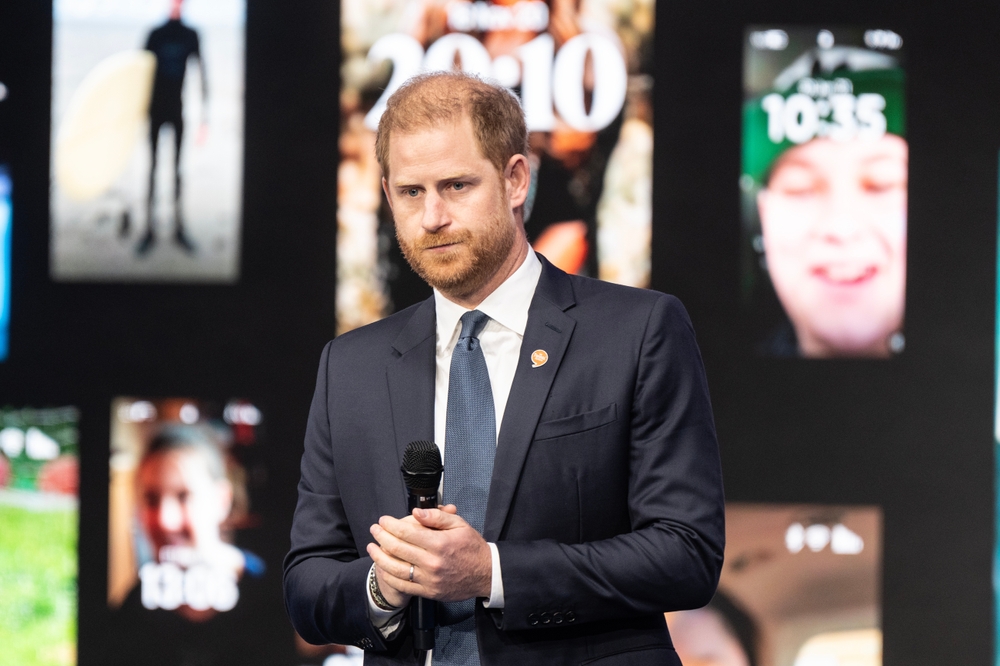

In January 2023, Prince Harry – the Duke of Sussex and second son of King Charles III and the late Princess Diana – published his memoir Spare through Penguin Random House, and it became one of the fastest-selling nonfiction books in publishing history. The 407-page book covers his life from childhood to his decision to step back from his senior royal role in 2020, and it pulls no punches. The book gives a detailed account of Harry’s rift with his family, his decision to leave his senior royal role in 2020, and how he felt growing up as the “spare” to his older brother Prince William, the heir to the throne. But the revelation that has stayed with many readers – and that keeps resurfacing in conversation – is far more personal than palace politics. According to People, Harry states plainly in the book that he never actually wanted to be royal, and traces that feeling directly back to the death of his mother.
To understand why that admission matters so much, it helps to know a little about the title itself. The title Spare is a nod to a comment Charles allegedly made to Diana after giving birth to their second son, saying, “Now, you have given me an heir and a spare – my work is done.” That framing – heir and spare – defined Harry’s entire experience of royal life, and the book is, at its core, his attempt to explain what it actually felt like to live inside that label for almost four decades.
Spare is not a conventional tell-all. It reads, in many places, more like an extended therapy session: raw, self-examining, and at times surprisingly funny. Harry wrote the book with ghostwriter J.R. Moehringer, and for the first time, Prince Harry tells his own story, chronicling his journey with raw, unflinching honesty. The book is described as full of insight, revelation, self-examination, and hard-won wisdom about the eternal power of love over grief.
What Prince Harry Says About Being Royal in Spare
The central emotional thread of the Prince Harry memoir Spare is not the feud with William, the tabloid battles, or even the decision to move to California. It is the question of identity – specifically, what it means to spend your whole life playing a role you never chose. Harry is direct about this in the book. He describes the “heir and spare” dynamic not as a piece of harmless family shorthand but as something that shaped – and in many ways narrowed – his entire sense of self.
“Two years older than me, Willy was the Heir, whereas I was the Spare,” he writes. “This was shorthand often used by Pa and Mummy and Grandpa. And even Granny.” Later in the book, describing his disinterest in learning about British history, Harry writes, “My family had declared me a nullity. The Spare. I didn’t complain about it, but I didn’t need to dwell on it either… no one gave a damn who I traveled with; the Spare could always be spared.”
That sense of being optional, of being structurally irrelevant to the institution he was born into, threads through the whole book. What makes Harry’s account so compelling is that he does not frame this as a complaint. He frames it as context – as the explanation for a long list of decisions, behaviors, and feelings that the public spent years misreading. He was not clinging to his bachelor life because he loved the spotlight. He was lost, and royal life gave him no map.
Harry writes in the book that people speculated that being a royal was “glamorous,” which is why the young prince was supposedly “clinging” to his bachelor life. Instead, he says there were many nights he’d think, “If only they could see me now,” then would return to “folding his underwear and watching ‘The One with Monica and Chandler’s Wedding.'” That is not the image of a man who loved his life. That is the image of a man who was quietly, privately struggling.
The Shadow of Diana: Why Being Royal Felt Impossible

The section of the Prince Harry memoir Spare that deals with the death of Princess Diana is the emotional center of the entire book. Harry was 12 years old when his mother died in Paris in August 1997, and the trauma of that loss – left largely unprocessed for years – shapes almost every page that follows. Before losing his mother, twelve-year-old Prince Harry was known as the carefree one, the happy-go-lucky Spare to the more serious Heir. Grief changed everything. He struggled at school, struggled with anger, with loneliness – and, because he blamed the press for his mother’s death, he struggled to accept life in the spotlight.
That connection – between Diana’s death and Harry’s hatred of royal life – is not incidental. It is, by his own account, the whole point. He links the institution that defined his childhood directly to the event that destroyed it. In his view, the royal family’s relationship with the British press was not just uncomfortable or awkward. It was lethal. In prepublication interviews, he spoke in despairing terms about his untreated trauma following the death of his mother in 1997, when he was 12.
The Duke regrets the last conversation he had with his mother, citing a phone call the two had the day she died in August 1997. “She’d called early in the evening, the night of the crash, but I was running around with Willy and my cousins and didn’t want to stop playing,” he writes. “So, I’d been short with her.” “Impatient to get back to my games,” Harry says he rushed his mom off the phone and wishes he had apologized for it. “I wished I’d searched for the words to describe how much I loved her,” he writes. “I didn’t know that search would take decades.”
The grief never fully landed, either. Harry has spoken about not crying at his mother’s funeral – walking behind her coffin at age 12 in front of a global audience, trying to hold it together the way he had been taught to. Years later, he describes that emotional shutdown as something he carried into adulthood without fully understanding it. Harry mentions that he always thought his memory was dead, but through therapy, he started remembering so many moments with Diana. When he brought a bottle of his mother’s perfume to therapy – First, by Van Cleef and Arpels – he unlocked even more moments. “A thousand images returned, some so bright and vivid that they were like holograms.”
The anger that grew from that unprocessed grief is another recurring theme. As a teenager and young adult, Harry struggled with his mental health in ways that the palace never fully acknowledged or addressed. “I had a lot of anger inside of me that luckily I never expressed to anybody,” he says. For Harry, drugs and alcohol became a way to cope: “I wanted to distract myself from whatever I was thinking.” He is candid about this without being self-pitying, which is one of the reasons the book hits as hard as it does.
Did Prince Harry Always Want to Leave the Royal Family?
This is one of the questions readers and interviewers keep coming back to: was the 2020 departure a sudden decision, or was it a long time coming? Based on the Spare book revelations, the honest answer is both. The decision was triggered by specific events – the press treatment of Meghan, the refusal of palace officials to defend her, the toll it was all taking on the family’s wellbeing. But the desire to live a different kind of life had been simmering for much longer.
At twenty-one, Harry joined the British Army. The discipline gave him structure, and two combat tours made him a hero at home. But he soon felt more lost than ever, suffering from post-traumatic stress and prone to crippling panic attacks. Above all, he couldn’t find true love. The army gave him something royal life never had: purpose that was earned rather than inherited, a sense of identity that had nothing to do with his last name. The fact that he had to leave it behind and return to ceremonial duties clearly did not sit easily.
Harry described royal life as “a mix between The Truman Show and being in a zoo,” adding, “I think the biggest issue for me was that being born into it, you inherit the risk that comes with it – without choice.” He made these comments during an appearance on Dax Shepard and Monica Padman’s podcast in 2021. That phrase – without choice – is the recurring refrain. Nobody asked him whether he wanted this. He was simply born into it, and for most of his life, he had no way out.
High-profile interviews broadcast with the prince show that he says the book explains why he gave up his royal role to protect his family. But Spare goes further than protection. It makes the case that Harry never felt at home in the institution in the first place, that his years as a working royal were years of performance rather than belonging, and that his departure was not a betrayal of the family but the only honest thing left to do.
The Biggest Secrets Revealed in Spare
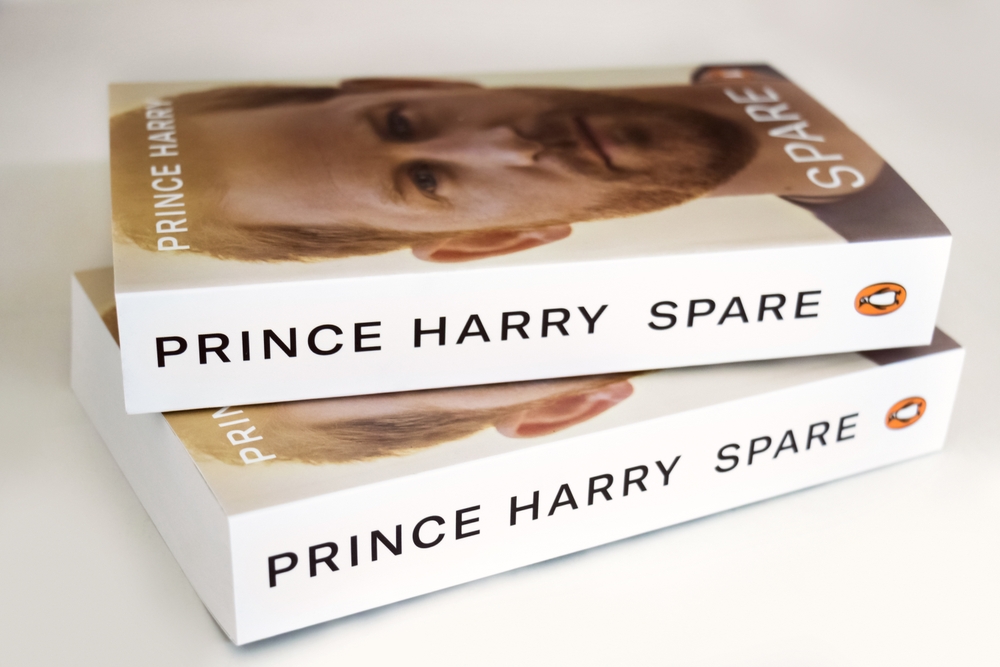
Beyond Harry’s feelings about royal life, the Spare book secrets span a remarkable range of topics – from the deeply personal to the genuinely strange.
The Physical Fight With William
One of the most-discussed passages in the book is Harry’s account of a physical altercation with his brother Prince William. The book includes Harry’s claim that William allegedly attacked Harry. Harry describes the incident in detail – William allegedly grabbed him by the collar and knocked him to the floor – and frames it as the moment the rift between the two brothers became something deeper than the usual sibling friction. William’s representatives did not comment publicly on the specific account.
The Truth About the Best Man Story
“The public had been told that I was to be best man, but that was a bare-faced lie. The public expected me to be best man, and thus the Palace saw no choice but to say that I was. In truth, Willy didn’t want me giving a best-man speech. He didn’t think it safe to hand me a live mic and put me in a position to go off script.” For many readers, this was one of the more humanizing moments in the book – not because it makes either brother look good, but because it shows the gap between the polished public version of royal events and what was actually happening behind closed doors.
Diana’s Engagement Ring
Harry claims in Spare that his brother had Princess Diana’s beloved sapphire engagement ring years before he proposed to Kate Middleton. “The papers published florid stories about the moment I realized Willy and Kate were well matched, the moment I appreciated the depth of their love and thus decided to gift Willy the ring I’d inherited from Mummy, the legendary sapphire,” he recalled. “A tender moment between brothers, a bonding moment for all three of us, and absolute rubbish: none of it ever happened. I never gave Willy that ring because it wasn’t mine to give.”
The Rules Around Affection
One of the quieter revelations in the book is how little warmth was permitted in everyday royal life, even within the family. Harry writes in Spare that as a royal, he and other family members were taught to maintain distance between “yourself” and “them,” meaning the public. He said the strict boundaries for personal space extended to the family, most notably to Harry’s grandmother, the queen. “I wanted to hug her, though of course I didn’t,” Harry writes, recalling sitting at a Jubilee event with his grandmother. “I never had done and couldn’t imagine any circumstance under which such an act might be sanctioned.” The fact that a man could not freely hug his own grandmother – and had been conditioned to feel that as normal – says something about the institution far louder than any tabloid story.
The Complicated Feelings About Camilla

Harry’s account of his father’s second wife is one of the more layered parts of the book. Harry’s feelings about Camilla – Charles’ longtime mistress, now his queen consort – are complicated and, according to the book, all over the map. As boys, Harry and William welcomed Camilla to the family but begged their father not to marry her, fearing unnecessary controversy. Harry wondered if she would become his “evil stepmother” but eventually realized that wouldn’t happen. She was the villain in his mother’s story about her failed marriage, but Harry can see Camilla has been good for his father.
Harry’s Relationship With the Royal Family Since Spare
Publishing Spare did not improve things between Harry and the rest of the royal family. He accused palace courtiers of failing to defend – or even briefing against – his wife Meghan from overblown allegations of a feud with her sister-in-law Kate. He had some sharp things to say about other members of his family, including his stepmother, but much of the duke’s contained rage was directed at what he described as predatory and mendacious British tabloids.
The question of whether Harry and the royal family will ever fully reconcile remains open. The pattern of strained overtures and unresolved tensions between Harry and Meghan and the rest of the royals has played out slowly and publicly over several years. Harry has made clear in interviews that he wants peace, but that peace – on his terms – requires an acknowledgment of what he and Meghan experienced. So far, the palace has not offered that.
What is less discussed, and perhaps more interesting, is that the book is not really about the royals at all. It is about a person trying to figure out who they are after spending their whole life being told what they are supposed to be. That is a more universal story than most royal coverage gives it credit for.
What Spare Says About Grief and Mental Health
Harry struggled at school, struggled with anger, with loneliness – and, because he blamed the press for his mother’s death, he struggled to accept life in the spotlight. That combination – unprocessed grief, an absence of emotional support, and a public role that offered no privacy in which to heal – is a significant part of what Spare is really examining.
The book’s treatment of therapy is worth noting. For much of his life, Harry resisted it. After Harry snapped at Meghan one night, she said “she would never stand for being spoken to like that,” adding she was not going to tolerate “that kind of partner. Or co-parent. That kind of life.” Harry told her he’d tried therapy, but it didn’t work. She told him to try again. That is a remarkably relatable dynamic for many readers – the person who resists getting help until someone they love refuses to accept the status quo. It also serves as one of the more direct endorsements of therapy to come from a public figure, delivered without a self-help book framework.
Harry says his wife is partly responsible for the change in him: “I’m really glad I changed because rather than getting drunk, falling out of clubs, taking drugs, I had now found the love of my life.” He says the opportunity to start a family with Meghan shifted everything. The role Meghan plays in the book is not just romantic. She is, in Harry’s telling, the person who pushed him toward the help he needed and the life he actually wanted.
For any parent reading Spare, the chapters dealing with unprocessed childhood grief carry a particular resonance. Harry lost his mother at 12, was discouraged from showing emotion publicly, and spent decades managing the fallout without adequate support. In prepublication interviews, he spoke in despairing terms about his untreated trauma following the death of his mother in 1997, when he was 12. The lesson that sits underneath all of it – that children need permission to grieve, and that the absence of that permission has real, lasting consequences – is one the book communicates more powerfully than any parenting guide.
What This Means for the Rest of Us
Prince Harry’s memoir Spare is, at surface level, a book about a royal family. But the reason it sold over 1.4 million copies in the US and UK on its first day of publication – according to publisher Penguin Random House – is that it is actually about something most people recognize. It is about what happens when the identity you were given at birth does not fit. It is about grief that nobody around you acknowledges. It is about watching someone you love suffer and deciding that loyalty to an institution is not worth more than loyalty to a person. Prince Harry said “It killed my mum,” as for the reason he didn’t want to remain a royal – he truly felt that the reason she died was due to her position in the family. Perhaps there is more there left unsaid.
Whether you have warm feelings about the royal family, skeptical ones, or none at all, there is something in Spare that speaks to a broader truth about how families carry their wounds and pass them down. Harry’s argument – that the institution he was born into contributed to his mother’s death, shaped his mental health in ways he is still untangling, and ultimately left him no choice but to leave – is delivered not with self-pity but with a kind of clear-eyed accounting. Did Prince Harry want to leave the royal family? Based on the book, the more accurate question is whether he ever really felt like he belonged there in the first place. And his answer, written across 407 pages, is a quiet but definitive no.
Disclaimer: This article was created with AI assistance and edited by a human for accuracy and clarity.