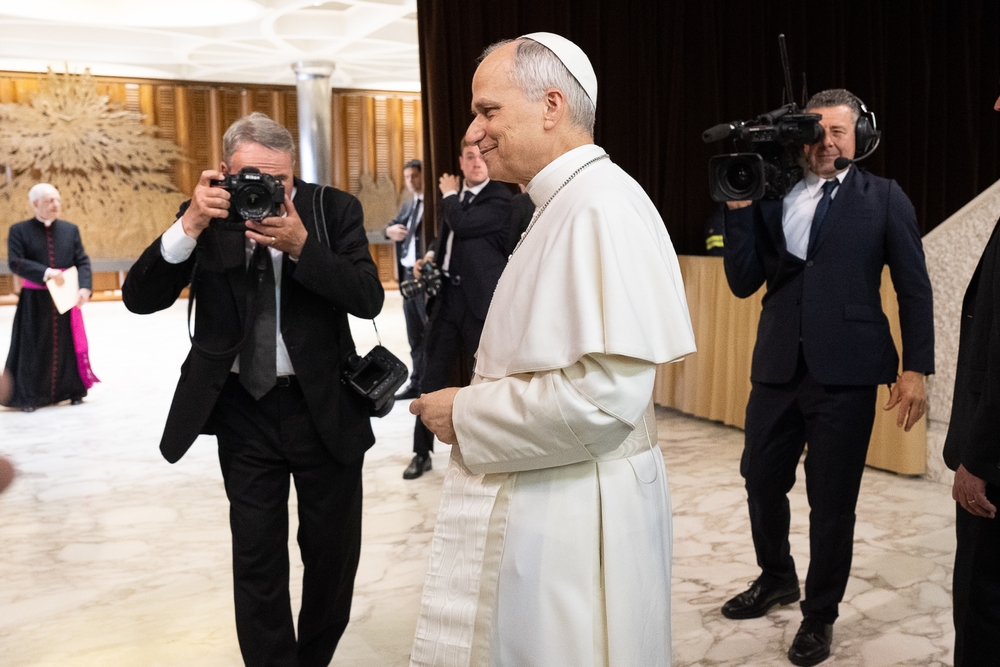

On Thursday, April 16, 2026, Pope Leo XIV led a meeting for peace at Saint Joseph’s Cathedral in Bamenda, Cameroon, with the local community, on the fourth day of his 11-day pastoral visit to Africa. Standing in a city that has become a symbol of one of the world’s most overlooked humanitarian disasters, the pontiff condemned the “handful of tyrants” who are ravaging Earth with war and exploitation, as he preached a message of peace in the epicenter of a separatist conflict considered one of the world’s most neglected crises. The Pope Leo XIV Cameroon visit landed like a thunderclap – not just for the region, but for the entire global community watching an American-born pope go where few leaders dare.
Pope Leo XIV condemns tyranny not from a press briefing room or a carefully managed summit, but from the broken ground of northwest Cameroon, in a city where children were barred from attending school for years. That choice of location was deliberate, and the message it sent was unmistakable. Before getting into what he said and why it matters, it helps to understand who he is and why this trip carries the weight it does.
Pope Leo XIV, born Robert Prevost, is the first U.S. citizen to lead the Roman Catholic Church, born in Chicago. Prevost was elected pope on May 8, 2025, the second day of the conclave, on the fourth ballot. In honor of Pope Leo XIII, who developed modern Catholic social teaching amid the tumult of the Second Industrial Revolution, Prevost chose the papal name Leo XIV – both to echo Leo XIII’s concern for workers and fairness, and as a response to the challenges of a new industrial revolution and artificial intelligence. His papacy has been defined from the start by a willingness to speak uncomfortable truths to power.
Who Is Pope Leo XIV?
Leo is the first-ever U.S.-born pope to lead the church and the first pope from the Augustinian order. Robert Prevost was born on September 14, 1955, in Chicago and raised in the nearby suburb of Dolton. His parents were Louis Marius Prevost, an educator, and Mildred Martínez, a librarian. Far from being a product of elite Vatican circles, he spent formative years doing grassroots ministry in South America. An Augustinian and a canon lawyer, Prevost spent over a decade ministering in South America before being called back to the U.S. to head the Midwest Augustinians. He later returned to South America after Pope Francis appointed him bishop in Chiclayo, Peru, in 2014.
Prevost is a Chicago native but also a Peruvian citizen. Italian newspaper La Repubblica called him “the least American of the Americans” for his soft-spoken touch. That quiet intensity, built through decades among the poor and marginalized, is precisely what has shaped his papacy’s sharp moral voice. As pope, Leo has consistently opposed armed conflict and nationalism while advocating for the rights of immigrants. His Africa trip – his third and longest apostolic journey to date – is the clearest expression yet of those priorities in action.
Pope Leo XIV departed from Rome’s Fiumicino Airport as he began his third and longest-yet Apostolic Journey, which takes him to four countries on the African continent: Algeria, Cameroon, Angola, and Equatorial Guinea. The Bamenda stop, on day four of an 11-day trip, was the centerpiece of the entire journey.
Why Pope Leo XIV Visited Cameroon
Pope Leo XIV arrived Wednesday in the central African nation of Cameroon with a message of peace for its separatist region and for talks with President Paul Biya, the 93-year-old leader whose grip on power was extended for an eighth term in a widely disputed election last year. The 93-year-old Biya, the world’s oldest leader, has been in power since 1982. That context matters: a pope choosing to visit a country run by one of the world’s longest-serving authoritarian figures, and choosing to deliver hard truths directly to his face.
The Vatican says fighting corruption in the mineral-rich country and insisting on the correct uses of political authority are expected to be themes of Leo’s visit. In his arrival speech, Leo demanded the “chains of corruption” in the mineral-rich country be broken and lectured President Paul Biya on the legitimate exercise of authority. He wasn’t there for the photo opportunity. He was there to make a point – loudly and in person.
“It is time to examine our conscience and take a bold leap forward,” Leo said in a speech delivered before President Biya, who has led Cameroon since 1982. That kind of moral directness, spoken in the presence of the very leader being addressed, is exactly what the Catholic Church’s social teaching framework has historically demanded but rarely delivered with such clarity in real time.
The Bamenda visit, specifically, carried its own symbolic weight. Leo’s two major events in Cameroon had as their highlight a “peace meeting” on Thursday in Cameroon’s northwest city of Bamenda, which has been plagued by separatist violence. The city sits at the heart of a conflict that has barely registered on the international radar despite years of devastating bloodshed.
The Anglophone Crisis: What’s Actually Happening in Cameroon
To understand why the Pope’s visit to Bamenda, Cameroon matters so deeply, you need to understand what has been happening there for nearly a decade. The conflict in Cameroon’s two Anglophone regions is rooted in Cameroon’s colonial history, when the country was divided between France and Britain after World War I. English-speaking regions later joined French Cameroon in a 1961 U.N.-backed vote, but separatists say they have since been politically and economically marginalized. In 2017, English-speaking separatists launched a rebellion with the stated goal of breaking away from the French-speaking majority and establishing an independent state.
The conflict has killed more than 6,000 people and displaced over 600,000 others, according to the International Crisis Group, a think tank. Each figure represents a home destroyed, a family shattered, a child who never returned to school. The region’s suffering has continued largely out of sight – eclipsed by higher-profile conflicts elsewhere.
The Archbishop of Bamenda, Andrew Nkea Fuanya, told Leo that the people of Bamenda had suffered from “a situation they did not create,” losing their livelihoods, homes and education: children were not allowed to go to school for years. “Most Holy Father, today that your feet are standing on the soil of Bamenda that has drunk the blood of many of our children,” he said. It was a raw, unfiltered greeting – the kind of words that get past diplomatic pleasantries and land in the gut.
On the eve of Leo’s arrival, the English-speaking separatists announced a three-day pause in fighting to allow “safe travel” for his visit. A warring faction voluntarily laying down arms, even briefly, for a papal visit says something meaningful. It signals that even those who have rejected the state’s authority still recognize the moral weight the Church carries in this region. Worth noting, however, that a ceasefire pause is a long way from a peace deal – and the structural grievances that started this conflict remain entirely unresolved.
The Right Rev. Fonki Samuel Forba, emeritus moderator of the Presbyterian church in Cameroon, said the Vatican had joined other faith groups in trying to bring the separatists to the negotiating table with the government, and meeting with their supporters abroad. Biya’s government has been accused of shunning dialogue with the separatists. That detail is important: the Vatican’s involvement here isn’t ceremonial. It reflects months of behind-the-scenes diplomatic work.
Pope Leo XIV’s Speech Against Global Tyranny and War
This is the part of the story that went global. The Pope Leo XIV speech against global tyranny and war delivered in Bamenda was direct, forceful, and addressed an audience far beyond Cameroon’s borders. The first pope from the US arrived in Cameroon on Wednesday, where he delivered remarks railing against the “whims of the rich and powerful” and called for peace in a country roiled by sectarian conflict.
By the time he stood in Bamenda on Thursday, the rhetorical temperature had risen further. The pontiff did not traffic in vague spiritual appeals. He named the problem plainly. Leo presided over a peace meeting involving a Mankon traditional chief, a Presbyterian moderator, an imam, and a Catholic nun. The composition of that gathering was itself a statement: the aim was to highlight the interfaith movement that has been seeking to end the conflict and care for its many traumatized victims.
Leo also addressed world leaders who reach for religious language to dress up military and political agendas. His words on this were sharp. According to reporting from the Associated Press, the pontiff declared: “Woe to those who manipulate religion and the very name of God for their own military, economic, and political gain, dragging that which is sacred into darkness and filth.” He called on leaders to implement a “decisive change of course” – language that functions as a direct rebuke to any government, anywhere, that funds war while invoking God’s blessing.
Leo also said he was heartened that Cameroon’s crisis, for all its horror, “has not degenerated into a religious war,” and expressed genuine hope that Christian and Muslim leaders working together could help broker a lasting peace. That’s not wishful thinking from someone removed from the reality on the ground. He was saying it from inside Saint Joseph’s Cathedral, surrounded by leaders from multiple faiths who had all agreed to be in the same room.
For families watching this story unfold, particularly those of faith, Leo’s message in Bamenda holds a particular resonance. The idea that religious leaders from different traditions can sit together and model the reconciliation they’re calling for – rather than just preaching it – is something that carries meaning well beyond Cameroon. You can explore more about how faith and spirituality shape everyday life across different communities and traditions.
A Complicated Welcome: Divisions Over the Visit
Not everyone in Cameroon greeted the papal visit with celebration. As rumors emerged of a papal visit, some of Cameroon’s Catholics voiced fears the trip would give longtime President Paul Biya a chance to polish his image six months on. He said that many perceived the visit as an “endorsement” given by the Pope “to the dictatorial regime, which imposes on Cameroonians the heavy burden under which they bend.”
Posters of the president standing next to the pope had already been plastered around cities in the run-up. That’s the uncomfortable reality of high-stakes papal diplomacy: even with the best intentions, a pope’s physical presence in a country can be used by its government as a legitimizing tool. Leo and the Vatican were clearly aware of this tension, which explains why his language at every stop was so direct about corruption and the abuse of authority. He wasn’t giving anyone a comfortable backdrop to hide behind.
Gerald Mambeh, a teacher in Yaoundé, said the pope’s visit needs to spark genuine dialogue and accountability to achieve lasting peace. “This visit feels like light entering a dark room… but peace will not come from symbolism alone,” said Mambeh, a Catholic. That’s about as clear-eyed an assessment as you’ll find, and it captures the dual reality of this trip: meaningful symbolism combined with the hard-nosed recognition that a visit alone changes nothing without political follow-through.
The Trump Friction and What It Reveals
No coverage of Pope Leo XIV’s visit would be complete without addressing the unusual backdrop of his deteriorating relationship with the White House. The Catholic leader’s outspoken position on issues such as the rights and dignity of migrants and criticism of the U.S.-Israel war on Iran has brought him into conflict with the Trump administration. The pope has called Trump’s threats to destroy Iranian civilization “truly unacceptable,” and U.S. Vice President JD Vance, a convert to Catholicism, recently stated that the pope should “be careful” when speaking about theology.
Trump himself lashed out at the leader of the Catholic Church in a series of social media posts, accusing him of being “weak on crime” and too close to the political left. The tension between a sitting U.S. president and the first American pope is historically without precedent – and it tells you something important about the character of both men. Leo didn’t soften his message in response to the criticism. He took it to Bamenda and turned up the volume.
According to Newsweek’s coverage of the speech, Leo’s condemnation of “tyrants” ravaging the world landed in the same week as Trump’s public attacks on the pontiff – which gave the already-newsworthy remarks an additional layer of geopolitical significance. The Vatican has made clear that Catholic social teaching disapproves of the types of authoritarian leaders that Leo is encountering on his visit, the first to the continent by history’s first U.S.-born pope.
What Leo is doing – traveling to the poorest corners of a war-scarred continent while being publicly attacked by the world’s most powerful political figure – is a deliberate statement about where the Church’s priorities lie. For those who follow Catholic social teaching, this is not a surprise. For casual observers, it might be the clearest signal yet of what Leo XIV stands for.
Read More: Words and Phrases That Fake People Frequently Use, According to Experts
Why This Moment Matters for Families

If you’re a parent trying to explain to your kids why a religious leader flying to a conflict zone in Africa is worth paying attention to, here’s the honest version: this trip is about what leadership actually looks like when it costs something.
Leo didn’t fly to Bamenda for a comfortable reception. He went to a city where thousands of people have died, where children missed years of school, and where the fighting paused specifically because he showed up. Leo traveled to the western Cameroon city of Bamenda, where jubilant Cameroonians clogged the roads, blowing horns and dancing to welcome him. They were overjoyed that a pope had come so far to see them and put a global spotlight on the violence that has traumatized this region for nearly a decade.
The image of crowds blowing horns and dancing in the streets for someone who simply chose to show up – to bear witness – says something worth holding onto. For families raising children in a world that often rewards self-interest over moral courage, Leo’s visit to Bamenda is a concrete, visible example of choosing presence over comfort.
The name Leo XIV was chosen in part to echo Leo XIII’s concern for workers and fairness, and as a response to the challenges of a new industrial revolution. But in Bamenda, on April 16, 2026, that legacy found its most vivid expression: a pope standing in a war zone, surrounded by a traditional chief, a Presbyterian minister, an imam, and a Catholic nun, telling the world plainly that the powerful have a moral obligation to stop hiding behind religion while building weapons and bank accounts.
Disclaimer: This article was created with AI assistance and edited by a human for accuracy and clarity.