

When a person changes in ways that are hard to name but impossible to ignore, the people who love them often spend months, sometimes years, trying to explain it away. They chalk it up to stress, or retirement, or the fact that everyone gets a little more stubborn as they get older. Some of those changes deserve a much harder look, and much earlier than most people realize.
The conversation around dementia has long centered on memory: forgetting names, repeating questions, losing the thread of a conversation. But research accumulating over the past several years points to something that precedes all of that, something that looks less like memory loss and more like a change in who a person is. When dementia begins, it doesn’t always start with memory loss. Sometimes the first thing to change is a person’s motivation, patience, humor, or mood, and families may sense these changes long before tests can measure cognitive ones. “He just isn’t himself anymore,” they say. And they are not wrong.
Professor Gill Livingston, a professor of psychiatry at University College London, has spent decades studying dementia prevention and care. She has stated publicly that decades before a diagnosis of Alzheimer’s disease, a person’s brain can begin to shrink, and things they’ve previously been able to cope with become harder to manage. In early 2026, she identified six personality changes that can appear in the years before cognitive symptoms, each worth knowing about whether you’re watching someone you love or quietly wondering about yourself.
What Is Actually Happening in the Brain
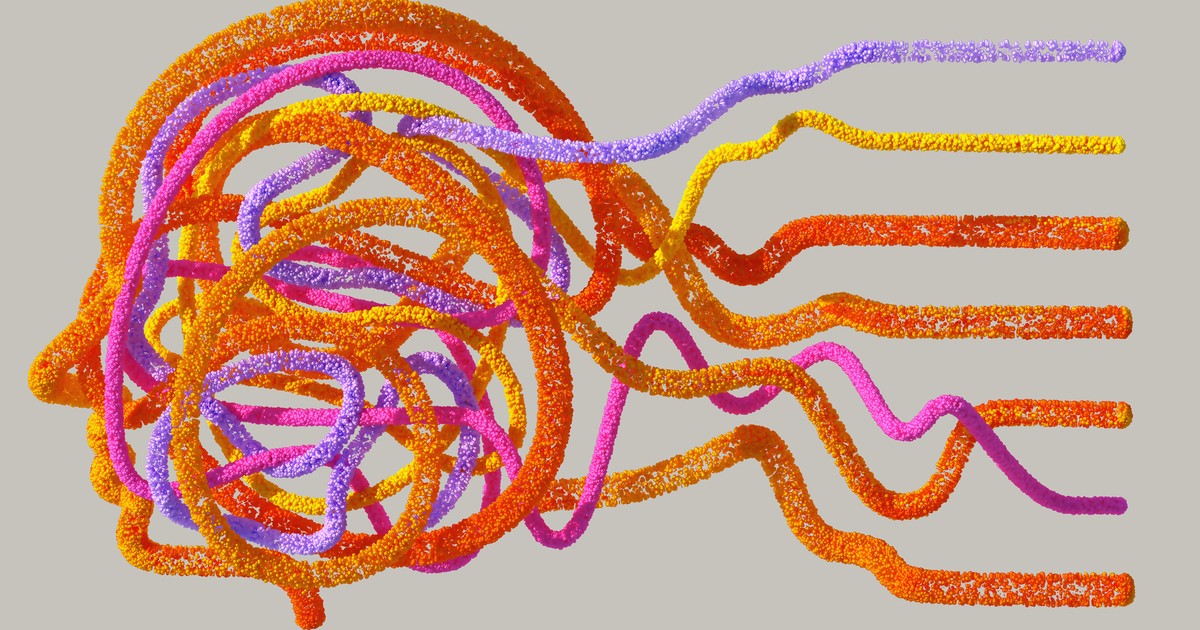
Late-life changes in mood, drive, or social instinct can be early footprints of the same biological processes that will, years later, erode memory. This idea now has a formal name: Mild Behavioral Impairment, or MBI. According to UCI MIND, it refers to new, sustained alterations in personality – including apathy, irritability, impulsiveness, emotional volatility, loss of empathy, or unusual thoughts – that persist for six months or more.
MBI is not a mood or a rough patch. It is a clinical framework developed to capture neuropsychiatric symptoms (behavioral and psychological changes rooted in brain activity) that appear in the window before dementia becomes diagnosable by standard cognitive tests. Mild cognitive impairment can be preceded or accompanied by behavioral changes, and MBI is a neurobehavioral syndrome that can indicate high risk for incident dementia by capturing new-onset and persistent neuropsychiatric symptoms.
The research on how personality traits evolve across disease stages is getting more precise. A systematic review and meta-analysis found that personality changes are a clinical criterion for dementia diagnosis, yet their progression across disease stages had, until recently, remained unclear. Prospective studies found more modest changes in the preclinical and transitional stages, which became more pronounced in the clinical stage, while retrospective studies based on informant ratings found large increases in neuroticism and decreases in extraversion and conscientiousness. In plain terms: the people who know someone best often detect these changes before any test does.
Losing Confidence Out of Nowhere

The first change Professor Livingston identified, and arguably the most counterintuitive, is a sudden or progressive loss of self-confidence, particularly in someone who was previously assured and capable. This was found to be the strongest predictor among behavioral markers, outperforming low mood and sleep problems, with affected individuals found to be 50 percent more likely to develop dementia, even when accounting for genetic risk factors.
Losing confidence in your sixties or seventies can look like a reasonable response to life: retirement, health changes, the general uncertainty of aging. But when someone who has always known their own mind starts second-guessing decisions they used to make without hesitation, or begins withdrawing from situations they once handled with ease, that pattern is worth paying attention to. Professor Geir Selbaek, a research director at the Norwegian National Advisory Unit on Ageing and Health, has suggested that low self-confidence creates loneliness, and that persistent loneliness has been shown to increase the risk of dementia. The chain runs: eroding confidence, then withdrawal, then isolation, then accelerated decline.
Being Overwhelmed by Ordinary Life

The second change is a new inability to cope with things that were previously manageable: the phone bill, a change in plans, a minor family dispute, the logistical complexity of a grocery run. Another recognized signal is when people find they can no longer handle everyday issues in life, particularly during their forties and fifties.
This matters because it sits at the intersection of what we already tend to medicalize (anxiety, stress) and what we attribute to personality (“she’s always been high-strung”). A person who starts struggling with tasks that formed part of their ordinary weekly routine – not because of new external stressors but because their threshold for difficulty has dropped – is showing something that warrants more than reassurance.
Apathy That Looks Like Peace

The third change is apathy, specifically the kind that arrives as a new feature rather than a longstanding personality trait. A person who used to care deeply about their garden, their grandchildren’s activities, their Friday card game, or their opinion on basically everything, starts not caring anymore. It can look, from the outside, like someone finally learning to let go. It is not.
In a meta-analysis of studies covering cognitively normal older adults, those with subjective cognitive decline, and those with mild cognitive impairment, affective dysregulation was the most commonly affected MBI domain. Research published in the American Journal of Geriatric Psychiatry found that decreased motivation was a significant behavioral predictor of functional decline in cognitively normal individuals – not memory, not language. Just a loss of drive in someone who previously had plenty.
You can read more on personality change as an early signal in our earlier deep-dive, which covers the neurobiological framework behind why behavioral symptoms often precede cognitive ones.
Irritability and Emotional Volatility

Fourth on Professor Livingston’s list is irritability, which is both common and commonly dismissed. Irritability in older adults gets attributed to pain, poor sleep, medication, or simply a shorter fuse that comes with age. And sometimes it is those things. But irritability that represents a genuine departure from a person’s lifelong baseline is a different matter entirely.
Research from the Health and Retirement Study found that higher levels of anxiety, anger, neuroticism, negative affect, loneliness, hopelessness, pessimism, and hostility were all associated with a higher risk of dementia. The irritability seen in early dementia tends to coexist with other emotional changes: disinhibition (saying things that would previously have been filtered), agitation, and a reduced ability to regulate responses to frustration. Families often describe it as the person becoming a harsher version of themselves, or as though the internal governor that managed their emotional responses has loosened its grip.
Anxiety That Appears Without Obvious Cause

The fifth change is anxiety, particularly late-onset anxiety with no clear external trigger. A person who has navigated decades of genuine difficulty with relative equanimity suddenly becomes preoccupied with worry, checking, reassurance-seeking, or catastrophizing about things that previously did not register as threats.
The NHS lists increased agitation, depressive symptoms, and anxiety among the behavioral changes that can develop in people with dementia. Anxiety in this context is not simply a mental health symptom that happens to occur alongside cognitive decline; research increasingly recognizes neuropsychiatric symptoms as clinical markers of decline along the dementia spectrum.
According to data from Practical Neurology, neuropsychiatric symptoms such as irritability, anxiety, depressive mood, apathy, agitation, and delusions affect up to 97 percent of people with Alzheimer’s disease and other dementias during the disease course. For many of those people, these symptoms were present before the diagnosis, not as a consequence of it.
A Personality That Becomes Unrecognizable

The sixth change is the most dramatic and often the most disorienting for families: a sudden, marked alteration in who a person seems to be. Professor Livingston, speaking from her own clinical experience as a psychiatrist, described a patient she characterized as a very conventional woman who suddenly seemed to want to socialize more without her husband and found him insufficiently adventurous. That patient was later diagnosed with frontotemporal dementia, a form of dementia known for its significant effect on personality and emotional wellbeing.
Frontotemporal dementia is particularly prone to this kind of presentation. Unlike Alzheimer’s, which tends to begin with memory disruption, frontotemporal dementia often attacks the frontal and temporal lobes first – the areas governing social behavior, impulse control, and personality. A person can remember recent events with complete accuracy while simultaneously becoming someone their family no longer quite recognizes.
This change can also manifest as a loss of empathy, a new rigidity or dogmatism, sudden disinhibition in social settings, or conversely, a withdrawal of warmth from people they have always been close to. According to the Alzheimer’s Society, dementia can also amplify existing personality characteristics, which means a person who was mildly stubborn may become immovable, and one who was naturally cautious may become paralyzed.
Why These Changes Are So Easy to Miss

None of the six changes listed here exist in a vacuum, and none of them on their own constitute a diagnosis of anything. The challenge for families, and for clinicians, is that each of them individually has a plausible alternative explanation. Stress explains irritability. Age explains withdrawal. Grief explains apathy. Life change explains anxiety. It is the pattern – the clustering of changes, their persistence over months, and most critically, the fact that they represent a departure from a person’s baseline – that makes them significant.
What to Do With This

You might recognize someone in this list. Maybe it’s a parent who has gotten harder to be around in ways you couldn’t quite explain. Maybe it’s a partner whose confidence seemed to drain away over a few years without any obvious cause. Maybe it’s something you’ve noticed in yourself.
New-onset persistent personality changes and behavior changes after age 50, rather than signaling a new-onset psychiatric disorder, could be an early manifestation of a neurodegenerative disease. If someone you love has shown several of these changes, sustained over months rather than days, and representing a real departure from who they have always been, a conversation with a physician who specializes in geriatric psychiatry or neurology is the appropriate next step. Bring notes. Bring a timeline. Bring the specific examples, not just the feeling.
The brain often sends its early signals not through memory but through character. Families have been noticing this for years without the language to describe it. Personality changes in dementia are not a checklist to panic over – they are a reason to pay attention sooner, and to take that attention seriously when a doctor’s office feels like the right next step.
Disclaimer: This information is not intended to be a substitute for professional financial advice, investment advice, tax advice, or legal advice, and is provided for informational purposes only. Always seek the guidance of a qualified financial advisor, accountant, or other licensed professional regarding your personal financial situation or investment decisions. Do not make financial, investment, or tax decisions based solely on information presented here. Past performance is not indicative of future results, and all investments carry risk, including the potential loss of principal.
AI Disclaimer: This article was created with the assistance of AI tools and reviewed by a human editor.