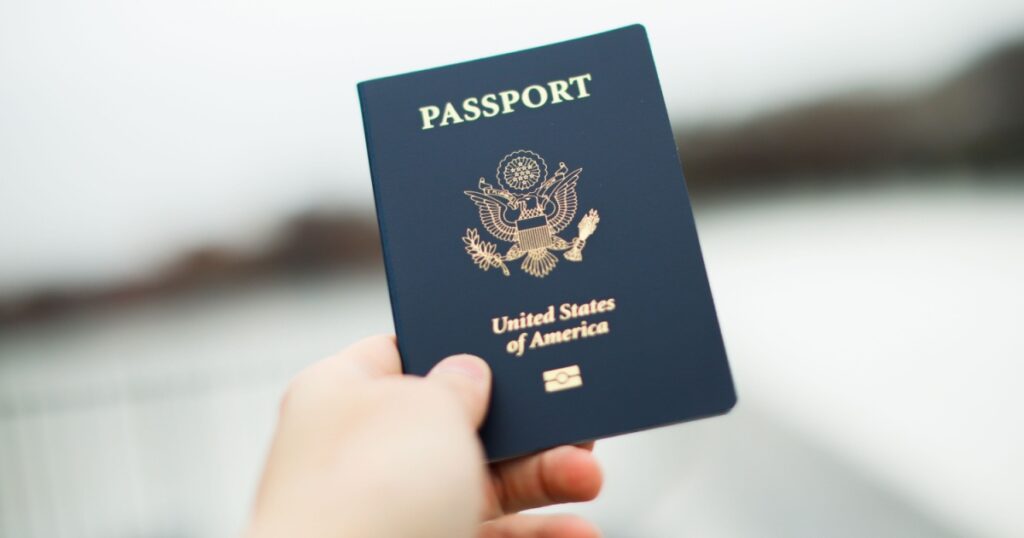

Most Americans carry a passport as a matter of routine convenience. It’s proof of identity, a gateway to travel, and for many professionals, an occupational necessity. The idea that a federal agency could remotely cancel that document without warning and without a court order sounds like something out of a foreign government’s playbook. But as of May 2026, that is exactly what is happening inside the United States.
The U.S. State Department has activated one of the most sweeping uses of a law that has been sitting on the books for thirty years. Most Americans never knew it existed. Many who will now feel its impact may not see it coming until a revocation notice lands in their inbox, or worse, at an old mailing address they no longer check. For the people caught in its reach, the consequences are immediate and in some cases life-altering.
This is the story of a 1996 welfare reform provision, a long-dormant enforcement power, and a federal crackdown that is now unfolding in real time. The scale starts small. It does not stay that way.
The Law Behind the Policy: A 1996 Welfare Reform Provision
The statutory foundation for this enforcement action dates back three decades. Then-President Clinton signed the Personal Responsibility and Work Opportunity Reconciliation Act into law in August 1996. That legislation included Section 370, which requires the Secretary of State to deny, revoke, or limit a passport upon certification of nonpayment of child support. The program was originally enacted to apply to individuals owing more than $5,000 in past-due support.
The debt threshold did not stay at $5,000 for long. The Deficit Reduction Act of 2005 reduced the arrearage amount triggering passport denial from $5,000 to $2,500, effective October 1, 2006. That lower bar has been on the books for nearly two decades, but its enforcement against existing passports has been, until now, largely theoretical.
Until the 2026 expansion, only those who applied to renew their passports were subject to the penalty. If you already held a valid passport and owed child support, you kept traveling. The federal government did not move proactively to strip existing documents. That changed on May 9, 2026.
How the Program Actually Works
The mechanics of the system involve three federal actors. Passport denial operates through a partnership between state child support enforcement programs, the Office of Child Support Enforcement (OCSE), and the Department of State. State programs identify and certify cases with past-due support exceeding the $2,500 threshold, inform the obligors, and submit them to OCSE. OCSE then forwards those records to the Department of State for inclusion in the Consular Lookout Support System, a federal database used to facilitate passport denial.
Under the new policy, the Department of Health and Human Services will inform the State Department of all past-due payments of more than $2,500, and parents in that group with valid passports will have their documents revoked. The critical operational difference from past practice is that HHS is now pushing data to the State Department proactively, rather than waiting for a passport application to trigger a check.
Notices about passport revocations will be sent from the Department of State directly to the passport holder via email or to the mailing address provided on the most recent passport application. Anyone who has moved without updating their records with the State Department faces a real risk of missing that notice entirely. Their passport becomes invalid regardless of whether the notice was received.
The Scale of the Enforcement: Phase One
Revocations began on May 9, 2026, initially focusing on parents who owe $100,000 or more in past-due child support, a group that includes approximately 2,700 passport holders, according to figures supplied by the Department of Health and Human Services. By the standards of large-scale federal enforcement actions, this opening phase is relatively contained. It is what follows that carries far greater reach.
Phase Two: The $2,500 Expansion
The program will then expand to cover everyone above the $2,500 threshold, potentially reaching hundreds of thousands of additional passport holders as HHS completes its data collection from state agencies. It was not clear on May 7 how many passport holders owe more than $2,500, because HHS is still collecting data from state agencies that track the figures, but it could encompass many more thousands of people, officials said.
The scale of unpaid child support in the United States makes the potential reach of Phase Two very large. According to a 2026 Congressional Research Service analysis, the federal child support program served 11.6 million cases in fiscal year 2024 and collected an estimated $26.7 billion in child support, of which $7.5 billion was for obligations that were past due. The amount of arrears paid represented about 6% of the $115.7 billion in cumulative arrears owed across all cases enforced by the program.
According to census data, in 2022, about 4.7 million custodial parents with legal or informal child support agreements were expected to receive, on average, $6,400 annually. Custodial parents were supposed to collectively receive around $29.9 billion in child support payments but received only around $19.2 billion. That gap of more than $10 billion annually explains why federal agencies view passport revocation as a serious deterrent, and why critics argue that enforcement alone does not address the structural reasons why support goes unpaid.
Congressional Action Running in Parallel
The executive enforcement push is not happening in isolation. H.R. 6903, formally titled the Ensuring Children Receive Support Act, passed the House by a voice vote on April 27, 2026. Previously, the bill was ordered to be reported by the House Ways and Means Committee by a 40-2 vote on January 14, 2026. The bill would amend Section 452(k) of the Social Security Act to clarify that passport revocation is a mandatory enforcement remedy and that temporary passports can be issued in emergency situations, changes that would more closely align statutory requirements with how the Passport Denial Program has already been implemented by HHS and the Department of State.
The legislation is currently awaiting further Senate action, but its House passage signals bipartisan institutional appetite for formalizing and expanding the enforcement framework already being deployed by the executive branch.
What Happens to People Whose Passports Are Revoked
The State Department has been explicit about the consequences. The department stated that any American with significant child support debt should arrange payment to the relevant state or states now to prevent passport revocation. It added that once a passport is revoked it may no longer be used for travel, and that eligibility for a new passport will only be restored after child support debt is paid to the relevant state child support enforcement agency and the individual is no longer delinquent according to HHS records.
If You Are Already Abroad
If you are overseas and receive notification that your passport has been revoked, you should contact the state where you owe child support to pay your debt. You may contact your nearest U.S. embassy or consulate for passport application procedures. You are only eligible for a limited-validity passport for direct return to the United States until HHS verifies repayment of the debt.
This is not an emergency exception that restores full travel privileges. It is a one-way document designed solely to get you home.
The Timeline for Reinstatement
Reinstating a revoked passport is not fast. The official process requires paying outstanding child support to your state’s child support enforcement agency, paying child support to all states where it is owed, waiting for the state to notify HHS that payment was made, and then waiting for HHS to remove your name from its records and report this to the State Department. That final administrative clearance process may take a minimum of two to three weeks. A revoked passport may no longer be used for travel even if child support debt has been paid. A new passport application is required after the clearance process is complete.
For anyone with urgent international travel – a work assignment, a medical procedure abroad, a family emergency – that two-to-three-week window is not academic.
The Notification Problem
Notices about revocation will be sent from the State Department directly to the passport holder, either via email if one is on file or via the mailing address provided on the most recent passport application. If you have moved without updating your passport application contact information, the notice may go to a stale address. Once the revocation processes, the document is invalid, whether or not the notice is in your hand.
That point deserves emphasis: the revocation is effective regardless of whether you actually receive the notice. Anyone with a current passport who has moved in recent years and owes more than $2,500 in child support should treat this as an urgent administrative matter, not a wait-and-see situation.
The Track Record of the Program
Officials have been consistent in framing this policy escalation as an extension of an existing and successful tool rather than a new form of punishment. Even before the policy was expanded, the department described the program as a “powerful tool” to get parents to pay what they owed. It reported that since the program began in earnest in 1998, states have collected some $657 million in arrears, including more than $156 million in over 24,000 individual lump-sum payments over the past five years.
According to the Congressional Research Service, since the inception of the Child Support Enforcement Passport Denial Program, combined collections due to this enforcement method have been nearly $621 million, with $30 million collected in 2024 alone.
That track record is why officials argue the expansion is justified. Assistant Secretary of State for Consular Affairs Mora Namdar stated: “We are expanding a commonsense practice that has been proven effective at getting those who owe child support to pay their debt.” The administration’s position, stated in an official release from the State Department, is that the action uses existing legal tools to enforce existing legal obligations.
Who Submits Cases and Who Gets Flagged
The Administration for Children and Families says state child support agencies submit qualifying cases, and federal officials forward those records to the State Department. This means the pipeline for enforcement runs through all 50 states, and a passport holder with arrears in any one of them can be flagged in the federal system.
Connie Chesnik, president of the Virginia-based National Child Support Engagement Association, told Newsweek that the process, as it currently existed, allowed for revocation but was “cumbersome and not utilized by many states.” She noted that states more routinely used the passport denial provisions in current law to seek the denial of initial applications for new passports and denials of renewal applications. The new policy changes that dynamic. States no longer have to wait for a passport application to trigger action.
The Complexity That Enforcement Doesn’t Solve
Supporters of the policy are focused on the results: over half a billion dollars recovered since 1998, and a concrete financial consequence for non-compliance. Critics point to a more complicated reality. Research has consistently found that a significant portion of child support arrears is owed by parents who cannot pay, not just those who refuse to. According to family law data compiled by Clio in 2026, more than 50% of parents obligated to pay support are pushed below the poverty line by child support obligations.
Revoking a passport does not generate income. For parents who are already struggling financially, losing the ability to travel internationally may have no impact on compliance, and could create new hardships if their employment involves international work. A child support obligor is automatically removed from passport denial once they have paid all their arrears, but if they owe arrears on more than one case, they must have paid arrears on all such cases. For parents with multi-state obligations, the path to reinstatement is correspondingly more complex.
What This Means for You
The core facts of this enforcement action are specific and actionable for any American who may be affected. The program is live: the U.S. Department of State began actively revoking passports on May 9, 2026, for Americans who owe significant unpaid child support. This is not a proposed rule or a pending policy. It is already in operation.
The threshold is lower than most people realize. U.S. law requires Americans to comply with child support obligations in order to receive a U.S. passport, and allows the Department of State to revoke the passport of an individual who owes more than $2,500 in child support. That threshold applies not just to people applying for new passports but to existing valid passports. The notification system has real limits. If you have moved without updating your passport application contact information, a notice may go to a stale address, and once the revocation processes, the document is invalid regardless of whether the notice reached you. Reinstatement takes weeks, not days. Once payment is made, the state must update HHS, and HHS must then update the State Department, a process that can take at least two to three weeks and can seriously affect urgent travel plans.
The expansion is coming, and the people in its path should not assume their documents are safe. Anyone currently holding a valid passport while carrying child support arrears above $2,500 is in the enforcement window. The State Department’s official guidance at travel.state.gov provides current procedural information on the steps required to resolve arrears and restore passport eligibility. Acting before a revocation notice arrives, not after, is the only way to stay ahead of this enforcement wave.