

Parenting comparison is almost universal among modern mothers, and it rarely feels optional. The other parent at school pickup whose child never seems to meltdown in public. The Instagram account with the Montessori shelves and the color-coded snack bins and, inexplicably, clean baseboards. The friend whose toddler already knows the alphabet, whose teenager communicates in full sentences, whose baby slept through the night at six weeks like it was nothing. Somewhere between the first glance and the next moment, a quiet verdict gets reached: they are doing this better than you are.
This is not a failure of character. It is a deeply human impulse – we have always looked sideways to figure out where we stand. But what is new is the scale and relentlessness of the comparisons available to modern parents, and the research increasingly confirms what many mothers already sense: that reflexive parenting comparison doesn’t just sting in the moment, it can genuinely chip away at parenting comparison confidence in ways that accumulate and ripple outward.
The mechanics of that erosion are worth understanding clearly. Not because understanding it fixes anything, but because knowing exactly what’s happening makes it a little harder for the comparison to land cleanly.
The Feed Was Designed for This

In the past five years, there has been a 101.6 percent increase in mom-influencers on social media, and the content they produce isn’t neutral information – it’s a curated performance of parenting that gets optimized for engagement, which means it gets optimized for aspiration. The lighting is good. The children cooperate. The struggles of daily parenting rarely make the final cut.
A 2023 OnePoll survey of 2,000 American mothers found they think they are a bad mother 156 times a year, with 65 percent of them being heavy consumers of influencer content. That’s roughly three times a week. Three times a week, before she’s had a chance to do anything particularly wrong, a mother has already filed a judgment against herself because someone else’s version of the job looked more polished than hers.
A 2025 systematic review found that increased exposure to social media influencer content focused on parenting has an array of unfavorable effects on mothers, including feelings of reduced self-efficacy and parental competence. Self-efficacy, in plain terms, is your belief that you are capable of doing the job in front of you. It’s not confidence in the abstract – it’s the specific sense that you can handle what your child needs right now, today, with the tools you actually have. And it turns out that sense is not as stable as we’d like it to be. It responds to what we see. It moves in the direction of the comparisons we make.
Upward Comparison and What It Actually Does

Social psychology has a name for the direction these comparisons tend to run: upward social comparison, meaning we compare ourselves to people we perceive as doing better. We do this for many reasons, some of them useful – it can motivate, inspire, give us a target. But parenting is a domain where the “target” is almost always a fiction. Nobody posts the afternoon where nothing worked. Nobody films themselves sitting in the driveway for twenty minutes before going inside because they need a moment.
Negative, upward comparisons are associated with increased stress and low levels of perceived parental confidence, which can lead to engagement in negative parenting practices that in turn adversely impact children’s behaviors and patterns. The comparison creates doubt, the doubt creates stress, and the stress changes behavior. The scroll isn’t just making you feel bad. It’s changing what you do next.
A 2025 study in the Journal of Family Issues examining the relationship between social comparison and parental self-efficacy found that social comparison is a meaningful predictor of how confident mothers and fathers feel in their parenting – not just a mood variable, but a real driver of parenting identity. Parenting comparison confidence is not simply a personality trait you either have or you don’t. It is, in part, a product of what you’re exposed to and how often.
The Standard Nobody Agreed To

Part of what makes the comparison trap so effective is that the standard isn’t explicit. No one told you that by age three, a child should be doing X. No one handed you a rubric. The standard is assembled from fragments – other people’s choices, influencer aesthetics, comment sections, the pediatrician’s waiting room, the way a friend phrased something at Easter brunch. It accumulates without your consent, and then you’re measured against it.
Social media platforms communicate narratives of motherhood, and the dominant parenting narrative in Western society is an Intensive Mothering Ideology – a set of ideals, norms, and practices that sets unattainable standards. The idealized version of motherhood on offer demands total availability, emotional attunement at all times, stimulating play, nutritious food presented attractively, and some kind of spiritual equanimity throughout. It is not a human standard. It is an editorial one. And yet repeated exposure to it, especially through comparison, makes mothers more likely to internalize the failure as personal rather than structural.
The insidious part is that the benchmark moves depending on who you happen to be looking at. Compare yourself to the highly structured, routine-driven parent and feel like you’re too loose. Compare yourself to the free-range parent and feel like you’re too controlling. The archive of “evidence” that you’re doing it wrong never gets smaller, only larger, because the standard is assembled from contradictory sources and recalibrates itself every time you look at a new account.
Why Confidence Matters More Than the Perfect Method

Studies consistently track parental self-efficacy rather than just parental behavior because the two are linked. Higher self-reported parental self-efficacy is linked to fostering adaptive, stimulating, and nurturing environments and effective parenting practices, including responsive and sensitive parenting. A parent’s confidence in their ability to care for their children is recognized as a critical factor in the healthy functioning between parents and children.
Your belief in your own capability influences your actual capability. It’s not just psychology-speak. A parent who feels confident is more likely to stay regulated when a child is dysregulated, more likely to try a different approach when the first one doesn’t work, more likely to trust their own read of what their child needs rather than reaching for the nearest parenting expert to override their instincts. Confidence isn’t vanity in this context. It’s a functional tool.
This is why building structure and routine that actually works for your specific family matters – not because there’s a universal system, but because having a system you believe in builds exactly the kind of parental self-efficacy that holds up when things get hard. Research has found that parents who report higher levels of parental self-efficacy are more confident and competent in their ability to manage competing demands and distractions without compromising the sensitivity and responsiveness of their parenting behaviors.
The Specific Cruelty of the Comparison Loop
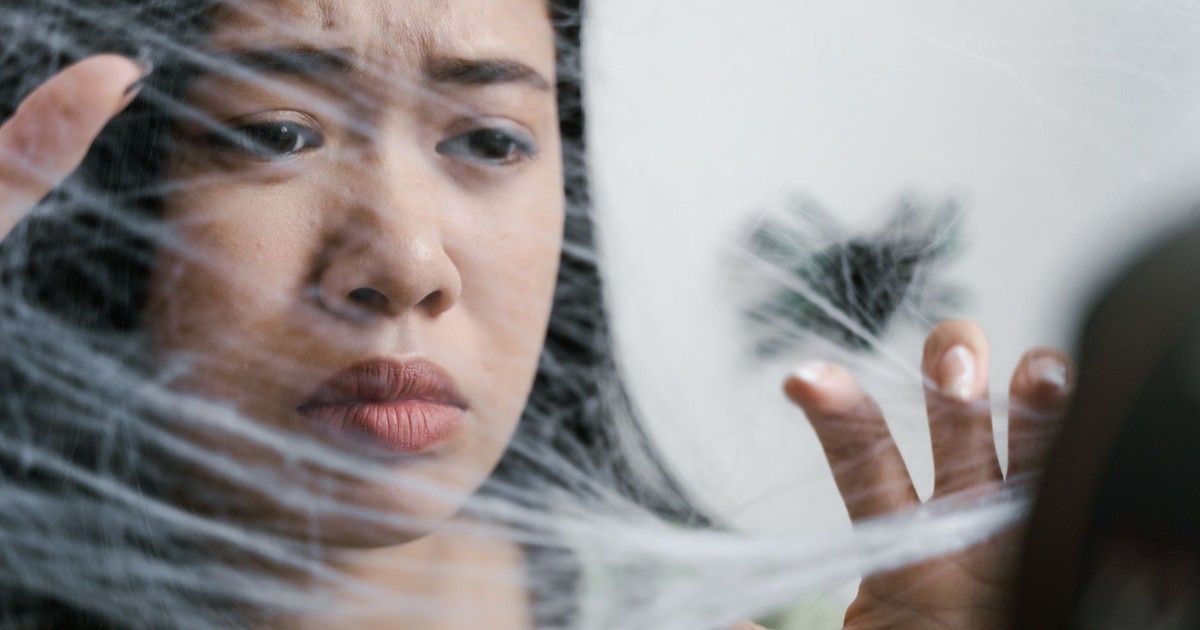
The comparison loop is not satisfied by evidence. You can have a genuinely good day with your kid, a moment where you got it exactly right, where you responded instead of reacted, where something clicked between the two of you – and then pick up your phone twenty minutes later and feel like a fraud because someone else’s version of a good day looks different from yours.
This happens because the comparison isn’t really about information. It’s about anxiety. When you’re uncertain about whether you’re doing a good enough job – and almost every parent, at almost every stage, is uncertain about this – comparison promises a quick answer. It does not deliver one. It delivers a new question, a new gap, a new area where you’ve just noticed you might be falling short.
A 2024 study from Korea University examining how millennial mothers experience social comparison on Instagram found that social comparison experiences with momfluencers and the envy they generate serially mediated mothers’ parental stress – meaning the path from comparison to stress ran directly through the damage done to parenting efficacy. The comparison doesn’t just make you feel bad in isolation. It destabilizes your sense of competence, and destabilized competence makes the next stressor harder to absorb.
When the Noise Is Coming from Inside the House
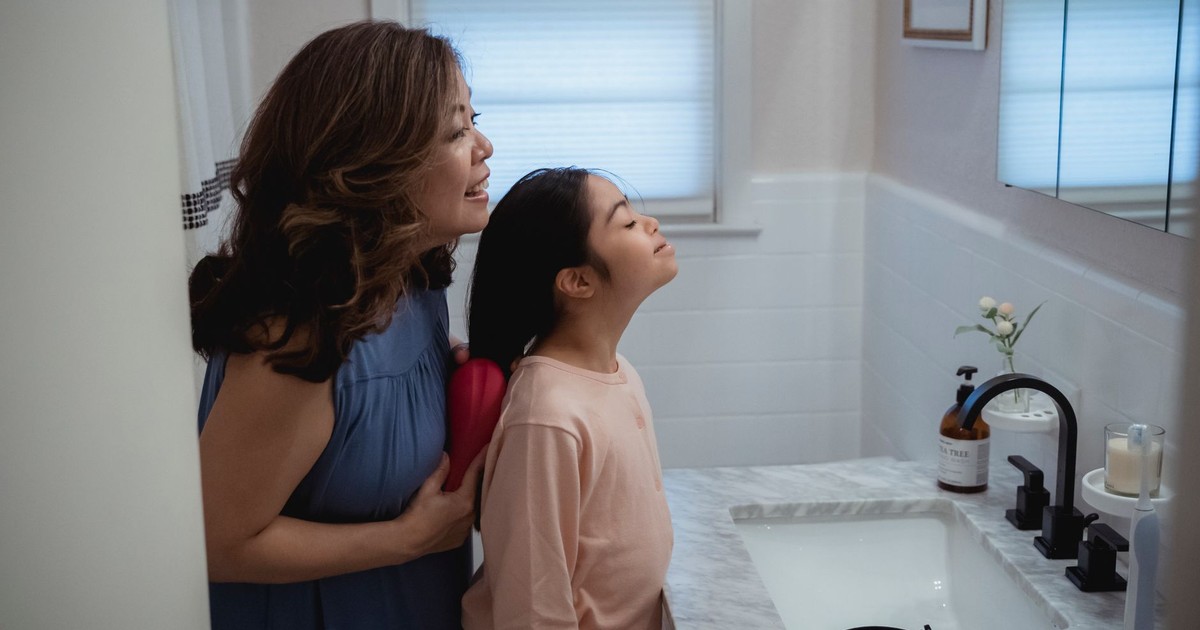
Social media gets most of the attention in conversations about parental comparison, but the comparisons that tend to cut deepest often happen in person. The grandmother who mentions, casually and repeatedly, that your sibling’s children are always so well-behaved. The partner who asks why you handle a situation one way when their friend handles it another. The other parent at the school gate who is clearly running a tighter ship, or a more relaxed one, or simply a different one – and whose different-ness your brain immediately codes as better.
These in-person comparisons carry extra weight because they’re harder to dismiss. You can remind yourself that an Instagram account is a performance. It’s harder to maintain that distance when the comparison is delivered by someone who loves you and means well, or someone who is standing right in front of you and looks, for all the world, like they have this figured out.
What you cannot see from where you’re standing is the doubt running underneath their confidence. You cannot see the three-hour conversation they had last week trying to work out what to do about the same thing you’re struggling with right now. Everyone is managing a version of this. The person who appears most certain is often the person most committed to appearing certain. You cannot see the version of themselves they’re not presenting in the parking lot.
What It Looks Like to Stop Competing

Not engaging with comparison is harder than it sounds, partly because some comparison is genuinely useful. Watching how another parent handles a difficult moment can give you an idea worth borrowing. Reading about a different approach can expand your thinking. The line between learning from others and measuring yourself against them isn’t always obvious in the moment.
But there are a few signals worth paying attention to. If you finish an interaction – online or in person – feeling worse about your own judgment than when you started, without having learned anything specific that helps, comparison is doing its corrosive work. If you find yourself preemptively justifying your choices to yourself before anyone has questioned them, you’ve already absorbed a comparison standard and are bracing for the verdict.
The antidote isn’t forced positivity and it isn’t pretending other parents don’t exist. It’s something more like returning, repeatedly, to the specific child in front of you. Not the child described in the development charts or photographed on the momfluencer grid, but this one – with this particular set of needs, this particular sense of humor, this particular way of telling you, in roundabout language, what they need from you today.
What the Doubt Is Actually Asking

The fact that you are worried about whether you’re doing this right is not evidence that you’re doing it wrong. It is evidence that you care, which is not nothing. The parents who have genuinely stopped caring are not the ones lying awake thinking about the comparison they made at school pickup. They’re not reading articles like this one at all.
The comparison instinct usually carries a legitimate question inside it: am I giving my child what they need? Sit with that question directly – not as a verdict and not in a punishing way, but as a genuine inquiry – because the answer, most of the time, is something more complicated than either the highlight reel or the worst-case story you tell yourself at two in the morning.
Some of the parenting choices you’ve doubted are the right ones for your specific child. Some aren’t, and you’ll find that out and adjust. Both of those things are how this goes. The standard that emerges from comparison – the one assembled from other people’s curated moments and confident presentations – was never calibrated to your kid, your family, your actual life. It was built by an algorithm, or by someone else’s anxiety, or by a cultural narrative that was unrealistic before social media existed and became actively destabilizing once it did. Parenting comparison confidence, at its core, is not about ignoring the world around you. It’s about trusting that you know your child in a way no feed or parking-lot observation ever could. That knowledge is real. The comparison was never a fair measure of it.
Disclaimer: This information is not intended to be a substitute for professional medical advice, diagnosis, or treatment and is for information only. Always seek the advice of your physician or another qualified health provider with any questions about your medical condition and/or current medication. Do not disregard professional medical advice or delay seeking advice or treatment because of something you have read here.
AI Disclaimer: This article was created with the assistance of AI tools and reviewed by a human editor.