

Look at the image. Don’t think about it. Don’t scan around looking for something. Just note what your brain grabbed first – the snake coiled in the foreground, or the elephant standing in the background. Your answer takes maybe half a second, and that half-second is the whole point.
These kinds of optical illusion tests have been circulating for years, and the reason they keep going viral isn’t because people are gullible. It’s because most of us are genuinely curious about the gap between who we think we are and how we actually operate when no one, including ourselves, is paying close attention. A split-second visual choice bypasses the version of yourself you’ve been carefully presenting to the world. It catches the one underneath.
What You See First

What you see first in this particular optical illusion test says something real about the way you approach the world – not in a mystical “the stars have spoken” sense, but in the way that certain personality archetypes are consistent and recognizable across cultures, traditions, and frameworks. The snake and the elephant have represented distinct human temperaments for centuries, across Chinese astrology, Hindu mythology, African oral traditions, and Western psychology alike. The convergence is worth paying attention to.
If You Saw the Snake First
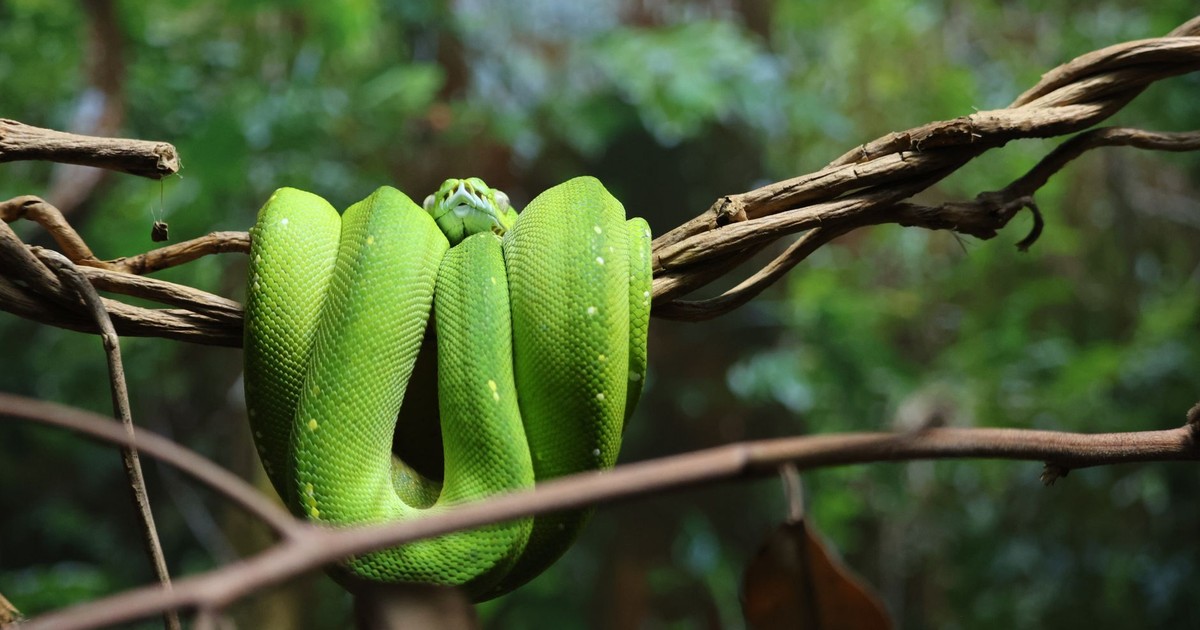
People drawn first to the snake archetype are often described as intelligent, intuitive, and graceful, possessing an enigmatic quality that draws others in and makes them natural influencers. If you’re a snake-first person, you probably already know that about yourself – and you’ve also spent some time in your life being misread because of it.
The core of the snake personality is a finely tuned inner radar. Snake types trust their intuition and can quickly sense when something isn’t right, giving them a keen sense of judgment. This isn’t paranoia dressed up as instinct. It’s the result of a mind that processes patterns faster than it can articulate them. You walked into a room once, felt something was off, couldn’t explain why, and turned out to be completely right. That has happened more than once.
Snake personalities enjoy analyzing information and drawing thoughtful conclusions, and many excel at identifying patterns and understanding hidden motives – an analytical nature that often makes them strong planners who tend to think several steps ahead. The flip side is something the snake-first people in the room will recognize: the tendency to think so many steps ahead that the present moment occasionally gets sacrificed on the altar of contingency planning.
Snakes are known for their sharp intellect, a natural curiosity, and deep thinking, thriving on solving problems and seeking knowledge – with analytical abilities that allow them to approach situations with insight and precision, making them strong strategists and decision-makers. This is the person who, in a group project, has already thought of the three ways the plan could fail before the first meeting is over. Other people call this pessimism. Snake-first people know it as preparation.
The Private Inner Life
Snake archetypes are often introspective, preferring to process emotions and situations before taking action. Despite their strengths, they can also be perceived as secretive or overly cautious, and their tendency to keep thoughts and plans to themselves can create an air of mystery – though it may also lead to misunderstandings.
If you’re a snake-first person, you’ve been called “hard to read” at least once in your life by someone who meant it as a complaint. What they were actually describing is your preference for earning trust before extending it. Being private protects the snake, but it can also create distance in relationships where others may struggle to understand what the snake is feeling. The distance isn’t indifference. It’s discernment, and there’s a real difference between the two – even if the person on the other side of it can’t always tell.
The shadow side of all this precision and perception is the tendency to overthink situations to the point of paralysis. The snake’s analytical mind can sometimes become excessive, and overanalyzing situations may lead to hesitation or unnecessary worry – learning when to act rather than continue reflecting can create healthier momentum. Snake-first people often have a vivid internal monologue running several conversations ahead of the actual conversation happening in front of them, which is both a superpower and a significant source of exhaustion.
What the Snake Archetype Looks Like in Practice
The snake-first person is the one who remembers the specific wording of something said two years ago, not because they’re keeping score, but because their mind archived it as relevant data. They read a room before they walk fully into it. They are deeply loyal to a small circle and genuinely baffling to everyone outside of it. They can appear calm in chaos because internally they’ve already run through the worst-case scenarios and made their peace with them. They are the friend who doesn’t say much at the party but somehow knows everything that happened there by the following morning.
If You Saw the Elephant First

The elephant-first person operates from a fundamentally different orientation. Where the snake scans for threats and patterns, the elephant anchors to community, memory, and the long view. If the elephant archetype resonates, you carry one of the most emotionally rich archetypes in the animal kingdom – the wise guardian whose extraordinary memory, deep empathy, and unwavering commitment to community make them the emotional backbone of every group they belong to. Elephant people are the institutional memory of the personality world: patient, nurturing, deeply loyal, and capable of a gentleness that belies their enormous inner strength.
You are probably the person people call when things fall apart. Not because you have all the answers, but because your presence makes the problem feel survivable.
Elephant types prefer patience, planning, and stability. They often appear calm on the outside, but beneath that calm is a powerful emotional world. They value family, loyalty, truth, and meaningful connections. This is not the calmness of someone who doesn’t feel things deeply. It’s the calmness of someone who has decided not to spend their emotional currency on every minor provocation – and that decision costs something, even if it doesn’t look like it from the outside.
Memory, Loyalty, and the Long Game
In many traditions, the elephant matriarch leads her herd not because she is the strongest but because she remembers – where water was found in past droughts, which paths are safe, and which relationships sustained the herd through crisis. This memory-based leadership is the elephant archetype’s greatest gift. Elephant-first people tend to be the ones who remember anniversaries, who recall that someone mentioned a difficult conversation six months ago and follow up on it unprompted, who notice when someone in the group has gone quiet.
The elephant’s intelligence, combined with a formidable personality, gives them a terrific advantage in business and social affairs, while their communication skills make them first-rate leaders. Trustworthy and honest, they always let others know where they stand. This directness is sometimes confused with bluntness, but it’s actually a form of respect – the elephant-first person doesn’t see the point in making you decode them.
The MBTI correlations for the elephant archetype are revealing. Elephant spirit animal personalities most frequently correlate with ISFJ, INFJ, and ESFJ types in the Myers-Briggs framework. ISFJs share the elephant’s reliability, deep memory, and quiet devotion to the people and institutions they serve. INFJs share the elephant’s empathy, long-term vision, and commitment to meaning. ESFJs share the elephant’s community focus, warmth, and ability to create environments where everyone feels included and valued. In other words, these are the people holding the group together from the inside, usually without announcing that they’re doing it.
Where the Elephant Gets Caught
Elephant personalities often remember betrayal or emotional wounds for a long time, and forgiveness may come slowly. Because they value stability, sudden change can feel stressful. They may appear calm while carrying heavy emotional burdens internally. There is a specific kind of tiredness that comes from being the person everyone leans on – and elephant-first people know it well, even if they rarely name it out loud.
The other vulnerability is harder to see from the outside. Sometimes their desire to help loved ones can become controlling or over-involved. When your default mode is to protect and sustain the people around you, the line between support and overreach can blur in ways you don’t notice until someone tells you. Usually someone you love.
What Both Types Share

Here is the thing that the snake-first and elephant-first results have in common: neither one is a personality flaw dressed up as a personality type. Research into illusion sensitivity and personality has found positive links between how people perceive visual stimuli and traits such as agreeableness and honesty-humility. The way your brain processes an image isn’t arbitrary – it’s a trace of how you’ve learned to move through the world.
The snake-first person and the elephant-first person often drive each other slightly crazy in close relationships. One reads a room by scanning for risk, the other by scanning for who needs something. One processes inwardly before speaking, the other processes by talking it through with people they trust. But they recognize something in each other, eventually – a seriousness about the people and things that matter, a depth that doesn’t always advertise itself. That’s not nothing. That’s actually most of what makes a relationship worth having.
The Honest Meaning
No optical illusion test has the final word on who you are. Your brain picked what it picked in that half-second based on years of accumulated experience, visual habit, the angle of your screen, whether you’d had coffee yet, and a thousand other variables that have nothing to do with your soul. The snake and elephant frameworks have real resonance because they’ve been refined across centuries and cultures, not because a single image can diagnose you.
What these tests do well is give you a frame. A starting point for a question you were maybe already asking. The snake-first person who recognizes herself in the overanalysis might have already known that about herself and just needed someone to name it without making it a problem. The elephant-first person who reads the part about carrying everyone’s weight might have felt something shift – not because it’s a revelation, but because it’s true and they haven’t said it out loud recently.
You already knew which one you are. The image just made it easier to look at directly.
AI Disclaimer: This article was created with the assistance of AI tools and reviewed by a human editor.