

The moment television cameras stopped rolling on September 13, 2004, the most celebrated giveaway in daytime TV history became something considerably more complicated. Two hundred and seventy-six people had just been handed the keys to a brand-new car. Within hours, each of them would be handed something else: a bill.
Two decades later, the Oprah car giveaway remains one of the most analyzed and misremembered events in American pop culture. What has been far less discussed until recently is what happened after the production crew packed up and the audience members drove home.
Lisa Erspamer, who served as Chief Creative Officer of the Oprah Winfrey Network and worked directly on the production, has given the most detailed insider account yet of what she calls a “devastating” aftermath. Her account illuminates not just the logistics of a television spectacle, but the way a well-intentioned moment can collide hard with tax law, public expectation, and the complicated economics of generosity at scale.
The Giveaway That Almost Wasn’t

The concept originated when Gayle King, Oprah’s best friend, sat next to an executive from Pontiac on a flight. The company offered up 25 cars for a giveaway, but Oprah’s team negotiated it up to 276 cars, one for each member of the studio audience.
On September 13, 2004, The Oprah Winfrey Show gave away 276 brand-new 2005 Pontiac G6 sedans. The cars given to the audience were equipped with the panoramic sunroof package, each valued at $28,500.
The production design of the episode was built around concealment and escalating revelation. Winfrey had insisted that the cars go only to those who genuinely needed them. Producers brought 11 people onstage who desperately needed a new car and announced their dream was coming true. The host then revealed a twelfth person would also get a car. Every audience member received a box, and Oprah told them a car key was inside just one of them. The twist was that a key was inside all of them.
A Corporate Marketing Operation Dressed as a Gift
The car was not really a gift at all in the legal sense. As Forbes reported, the cars were part of a promotion for Pontiac to promote the G6, a car introduced that same year as a replacement for the Grand Am. The moment was paid out of the car manufacturer’s advertising budget.
The scale of the marketing value was extraordinary. Michael Bernacchi, professor of advertising and marketing at the University of Detroit Mercy, called it potentially “the lowest-cost, biggest-bang-for-your-buck product launch in the history of automobiles.” Pontiac officials reported the vehicle’s website received 242,000 hits in the 24 hours after the show aired. On a typical day, the site averaged around 30,000.
For General Motors, the return on investment was enormous. For the 276 people sitting in Oprah’s studio that morning, the return on investment was about to get complicated.
The Tax Bill Nobody Warned Them About

While General Motors handled the state sales tax on each of the new cars, around $1,800 per car, plus licensing fees, audience members were tasked with paying federal and state income taxes on the full value of their new vehicle. For reporting purposes, General Motors issued 1099-MISC forms to the recipients. While actual taxes payable varied based on individual tax brackets, estimates settled around $7,000 per car.
That was hard to swallow for many in the audience, especially because Oprah had reportedly asked her staff to specifically seek out audience members who were in genuine need of a car. Those were not taxpayers likely to have an extra $7,000 sitting around.
The cars weren’t gifts in any legal sense. They were part of a promotion. Audience members were the lucky recipients of what the government considered prizes, and prize winnings are subject to tax. Receiving a new car this way is legally identical to winning the lottery, just in car form.
A Harpo spokesperson reportedly said at the time that the winners had three choices: they could keep the car and pay the tax, sell the car and pay the tax, or refuse the car altogether. As Jalopnik reported, neither Oprah, the TV network, nor Pontiac had accounted for all of the taxes the new vehicle owners would have to pay. Some recipients considered declining the cars, while others chose to sell their vehicles in order to cover the taxes.
Behind the cameras, the production team was watching a joyful moment curdle in real time.
Lisa Erspamer: “It Literally Hurt Our Feelings”

Image Credit: Pexels
Speaking on the WBEZ podcast Making Oprah: The Inside Story of a TV Revolution, Lisa Erspamer gave the most candid account yet of how the production team experienced the aftermath.
Erspamer described the situation as “devastating after, because ‘gift tax’ is a thing, and it’s always a complicated thing when you’re giving stuff away.” She clarified that the show did pay for the sales tax and the registration for each car, and that audience members were told after taping that if they didn’t want to pay a gift tax, they could take cash for the car instead.
But because the producers did not cover the gift tax, people complained to the press, “and that was devastating,” Erspamer said. “We put our whole soul into this moment of television and with real intention to do something good, and so when people had a negative reaction, it literally hurt our feelings.”
A production team that had orchestrated one of the most ambitious audience giveaways in television history felt personally wounded by the response. From inside the production, the criticism felt like ingratitude. From outside it, many of the recipients had been handed an unexpected tax liability that they genuinely could not afford.
The Audience Experience: Joy, Then Paperwork
Oprah had specifically directed her staff to find people who needed a car, not just fans who wanted one. The audience that September morning skewed toward people for whom a surprise $7,000 bill was not a minor inconvenience but a genuine hardship.
Recipients recalled being told off-air that the cars carried a tax obligation of about $7,000, which they had to pay if they wanted to keep the car. One winner described the situation as still getting the car at roughly a 75% discount, but acknowledged that the tax issue was a serious problem for many others.
The logistical reality that unfolded for each recipient was not simple. General Motors covered the $1,800 state sales tax as part of the promotion, but since the vehicles were classified as promotional prizes rather than gifts, the new G6 owners were on the hook for an estimated $6,000 to $7,000 in state and federal income tax.
The press coverage that followed focused almost entirely on the tax bill, which turned what had been wall-to-wall positive coverage into a more skeptical narrative. For Pontiac, which had invested in the stunt as a launch event, that shift in tone was an unwelcome development. For the Oprah production team, it was a bruise that clearly never fully healed.
What the IRS Actually Says About TV Prize Winnings

Image Credit: Pexels
The tax treatment of the Oprah car giveaway was not unusual or punitive. It was standard application of existing law. Under Section 74 of the Internal Revenue Code, created specifically to address giveaways on radio and television, any item of value received in such settings is considered taxable income. The IRS classified the cars as taxable income, not gifts, meaning each recipient was responsible for paying income taxes on the car’s estimated $28,500 value.
The public instinctively treated the transaction as a gift, because that is how Oprah framed it and how it felt emotionally. But the IRS does not base its classifications on emotional framing. A car that appears on a television set as a promotional prize sits in a different legal category entirely, and that category carries a tax obligation that falls on the recipient.
GM issued 1099-MISC forms to recipients, reporting the full value of the car and any taxes GM paid on their behalf. The reported income varied based on the car’s configuration and the tax rate in the winner’s home state. The giveaway sparked a national debate over how gifts on game and talk shows are taxed.
For anyone watching at home and wondering why a free car cost money, the answer was simultaneously simple and counterintuitive: winning something on television is treated, for tax purposes, exactly like earning it.
How Oprah’s Team Applied the Lesson
The controversy did not end Oprah’s giveaway culture. It reshaped it. In later promotions, the Oprah team had learned their lesson, writing checks and giving them to audience members along with the prizes in an effort to offset the sudden burden of a spiked income tax.
The producers were not put off from recreating a large-scale car giveaway, doing so again in 2010, when audience members received a Volkswagen Beetle. One 2010 audience member, Candi Davis, later shared her experience on TikTok, describing how Winfrey sat on the edge of the stage to talk with the audience while lawyers sorted out tax information, because Winfrey was going to “pay our taxes for all the things we had won.”
That single logistical detail represents the institutional lesson the Oprah production absorbed from the 2004 experience. The giveaway would remain. The tax burden would not be passed to the recipients.
In 2010, when Oprah gave her entire audience an all-expenses-paid trip to Australia for the show’s farewell season, she really meant all expenses, including taxes. A CPA was reportedly waiting in the wings to settle all of the tax issues associated with the trip.
The contrast between 2004 and 2010 is the clearest evidence that the criticism had its intended effect. The production heard it and changed.
What the Pontiac G6 Actually Did With the Attention
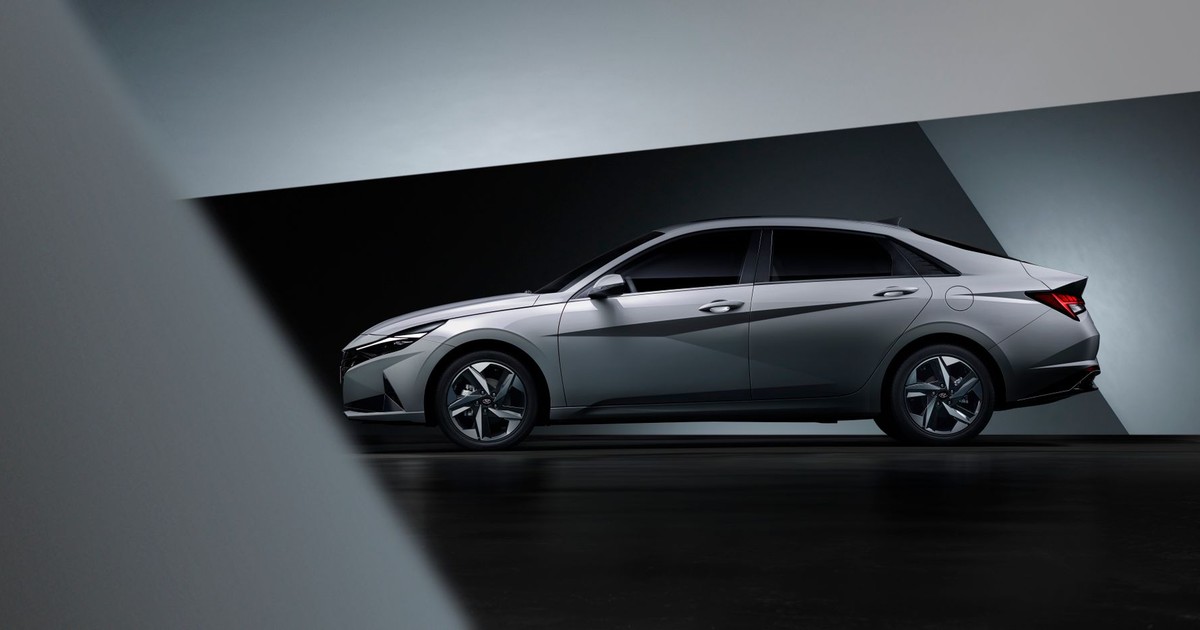
Image Credit: Pexels
The car at the center of the giveaway had its own complicated trajectory. The midsize G6 shared the General Motors Epsilon platform with the Chevrolet Malibu and went on sale in September 2004, the same month as the Oprah episode, for the 2005 model year. The Oprah appearance was not incidental to the launch. It was the centerpiece of it.
The short-term metrics were spectacular. Pontiac’s website traffic jumped from 30,000 to 242,000 daily visitors overnight. More than 500 media stories appeared within 48 hours of the episode airing. By any measure of immediate awareness, the giveaway delivered.
The longer-term picture was more complicated. Despite the historic marketing exposure, Pontiac production ended in January 2010, when the Pontiac brand was phased out as a result of General Motors’ Chapter 11 bankruptcy reorganization. The last Pontiac ever built was a 2010 G6 in Summit White. The brand that had used Oprah’s audience as a launch pad for its flagship sedan no longer existed within six years of that broadcast.
The G6 giveaway is now remembered primarily as a cultural moment and a tax cautionary tale. Within the automotive industry, it is also a reminder that even the most effective product launch cannot substitute for a product that earns sustained consumer loyalty.
The Part the Screaming Drowned Out
The Oprah car giveaway of September 2004 is best understood as three simultaneous events occupying the same moment: a genuine act of generosity toward people who needed help, a carefully orchestrated corporate marketing operation, and an unintentional demonstration of how U.S. tax law treats prize winnings. None of those three descriptions cancels out the others.
What Lisa Erspamer’s account confirms is that the production team understood the gift tax issue was a problem but believed the cash-alternative offer was sufficient mitigation. They were wrong, not because the offer was inadequate in principle, but because the people in the audience that morning often genuinely needed the car, not the cash equivalent, and a $7,000 liability on a zero-cost transaction felt like a punishment regardless of how it was structured.
The moment also raised a question that talk show producers have since had to answer directly: when you give something away on television, who is responsible for making sure the gift doesn’t become a burden? The 2004 Oprah team said it was the IRS’s classification, not their decision. The 2010 Oprah team said it was theirs to fix. That shift is where the real story lives, not in the screaming or the catchphrase, but in the accountability difference between “you get a car” and “you get a car and a tax bill.”
The audience members who drove home that evening in a new Pontiac G6 received something genuinely valuable at a steep discount. Some of them also spent the following months finding several thousand dollars they hadn’t budgeted for. The giveaway was real. The gratitude was real. So was the bill. All three things were true at once, and twenty-two years later, that tension is exactly why the story hasn’t gone away.
Disclaimer: This information is not intended to be a substitute for professional medical advice, diagnosis, or treatment and is for information only. Always seek the advice of your physician or another qualified health provider with any questions about your medical condition and/or current medication. Do not disregard professional medical advice or delay seeking advice or treatment because of something you have read here.
AI Disclaimer: This article was created with the assistance of AI tools and reviewed by a human editor.