

Few pre-tournament marketing moments in modern football have generated this much heat before a single ball has been kicked. When the Norwegian Football Federation unveiled its official squad portrait for the 2026 FIFA World Cup in early June, the image landed like a broadside from a longship: 26 players in full Viking warrior dress, shields in hand, weapons raised, arranged on a storm-lit coastal shore with ancient longboats rising from the fjord behind them. Globally, the reaction was close to unanimous awe. Inside Norway, it ignited one of the sharpest cultural arguments the country has had about football, identity, and history in years.
The photograph, formally titled The Vikings are Coming (2026), was not a casual Instagram gimmick. It was a high-concept, large-format art production orchestrated by one of the most celebrated sports photographers alive, shot across multiple Norwegian locations, and composited into a single frame with the deliberate ambition of becoming an iconic image. It achieved that. It also, almost immediately, attracted accusations of chauvinism, exclusion, and a visual language associated with neo-Nazi and far-right extremism in Scandinavia. The debate that followed is as revealing about contemporary Norway as it is about football.
And underneath all of it is a team that has waited 28 years for this moment – and arrived carrying genuinely historic expectations.
The Image: What Was Made and How
Titled The Vikings are Coming (2026), the large-format photograph captures the Norwegian men’s national soccer squad dressed as Viking warriors beside a fjord, featuring the full squad – including Manchester City striker Erling Haaland and Arsenal captain Martin Ødegaard – posing with longships, weapons, and storm-gray Nordic light. The Norway Viking photoshoot was captured by David Yarrow, a Scottish photographer with a decades-long record of iconic sports imagery, on a private beach near Oslo.
The shoot took place on a Saturday with all of the players except one: Arsenal’s Martin Ødegaard was busy playing in the Champions League final, but a space was deliberately left for him, and he was digitally inserted after flying to Oslo the following Tuesday. Some background landscape was also composited: elements were taken from Viking Valley in Gudvangen, photographed later that same day.
The project has roots in a 2023 solo shoot in which Yarrow photographed Haaland alone, waist-deep in an Oslo fjord, in full Viking dress. Having developed a rapport with the photographer, Haaland pushed for a full squad follow-up as part of Norway’s World Cup preparations. Four months before the shoot, the Norway Football Association contacted Yarrow with a proposal. Haaland – described as “the unofficial voice of the team” – was instrumental in getting buy-in from the squad.
The Norway print will fundraise for Norwegian charities and hang at the squad’s World Cup base in Greensboro, North Carolina. In an interview with the BBC, Yarrow said it was important not to allow any major figure, such as Ødegaard and Haaland, to dominate the shoot. “The one thing that was important about that picture,” he said. “In the Norwegian squad, you’ve got someone that’s worth £200 million ($267 million) and [a] goalkeeper that’s worth £250,000 ($333,881) – that they both occupy the same amount of the frame.”
The Photographer: David Yarrow and the Art of the Grand Gesture
David Yarrow is not a photographer who does understated. The Scot was 20 years old when he captured an iconic photograph of Diego Maradona holding the World Cup trophy on the pitch at the Estadio Azteca in Mexico City. Now the third best-selling sports photograph of all time, he says the picture “changed my life.”
Before Team Europe teed off at Bethpage Black in September 2025, he photographed the defending Ryder Cup champions in front of the Manhattan Bridge, dressed in prohibition-era suits and hats. The black-and-white photo, which featured at the team’s headquarters, was a talking point for the golfers as they successfully retained the trophy. Sales of the photo raised more than a million dollars for Irish charities.
Yarrow hopes that the Norway squad photo, which will sit next to a table tennis table at the side’s Greensboro base in North Carolina, will have the same impact.
On his intentions for the Viking shoot, Yarrow was direct. “I like to take people outside of how they’re normally photographed,” he said. “I knew it might get some criticism, but I wanted to play on that sense of journey that goes back to the Vikings, as if they’re setting sail for America.” He also set explicit conditions for how the shoot would be executed. “Then it was just a question of doing it right. If you do it in a half-hearted way or in a studio it can fall flat, but we really went for it. We got the boats in, got everyone dressed in proper Viking gear and not pantomime stuff,” Yarrow said.
An investigation by Norwegian outlet VG has also raised questions over the proposed auctioning of a range of limited edition prints, which could net Norway’s football federation over £3 million (39 million krone). After the sale got underway, the NFF confirmed that a portion of the proceeds will go to the country’s Children’s Cancer Association. However, VG claims this was only announced after the sale had begun, and that the NFF has failed to disclose what proportion of the proceeds will actually go to charity. The outlet also raised questions over the copyright of the photograph, with the federation, photographer Yarrow, and selling galleries – including London’s Maddox Gallery – all having a possible claim on a portion of any profits.
The Criticism: Chauvinism, Neo-Nazism, and the Politics of Norse Imagery
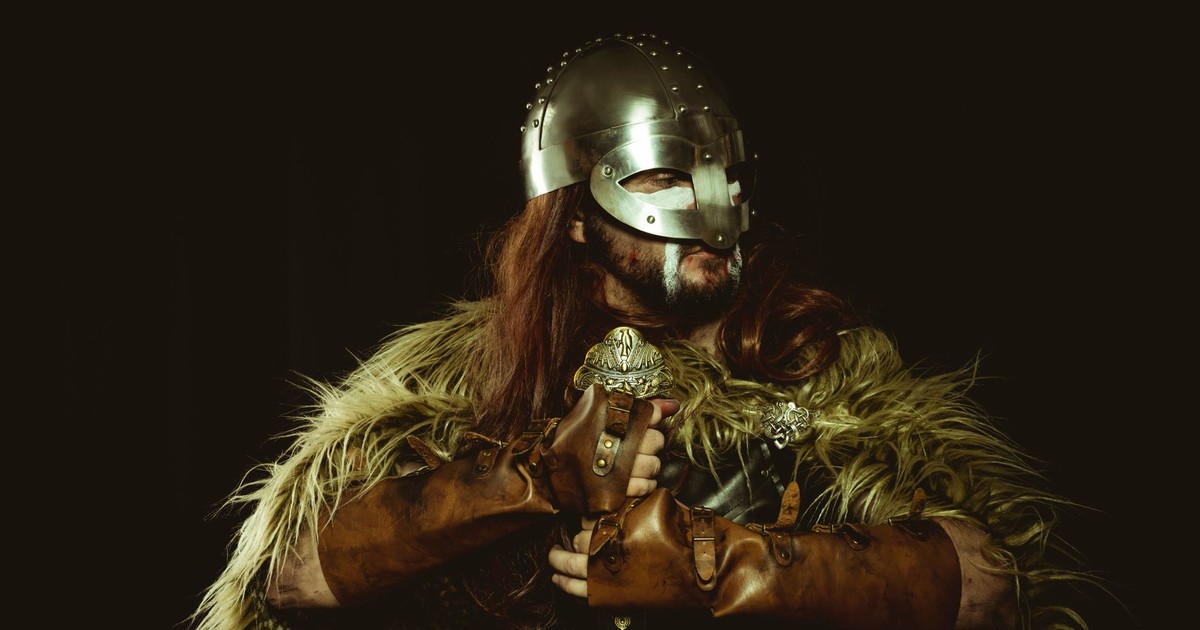
The artistic success of the image did not insulate it from serious criticism. Norway’s marketing campaign, which sees the players photographed armed with shields and swords along with captions about “Viking blood,” has caused uproar.
The sharpest objection came from Norwegian journalist Markus Slettholm, writing in Morgenbladet. Slettholm labelled the shoot “chauvinistic and exclusionary,” arguing that it carried problematic associations linked to Viking symbolism. In a subsequent interview with NRK, he went further, saying the imagery is “reminiscent of what neo-Nazis were concerned about ten years ago.”
Culture researcher Jane Haug Skjoldli, writing in Klassekampen, argued that pairing a hyper-masculine idealization of a national group with ancient Norse imagery sits uncomfortably close to symbolic language that far-right and neo-Nazi groups have deliberately co-opted for decades. The Viking aesthetic, critics argue, is not politically neutral – far-right extremists have been mining Norse runes and warrior imagery for years, and Norway’s national team should have known better before diving headfirst into exactly that visual language.
Similar criticism was directed at Norway’s World Cup home kit. Skjoldli told Klassekampen that the shirts appeared “hyper-masculine and right-wing extremist,” adding that rune-style lettering on the back reflected “unfortunate and typical neo-Nazi and fascist symbolic language.”
A third strand of criticism was cultural rather than political. VG commentator Hans Petter Sjøli called the shoot “too loud and Disney-like,” arguing it is time to “get the Viking out of football.” His point is cultural: Norwegians tend to value being understated and grounded, and this campaign, in his view, feels engineered for Instagram clout rather than anything authentically Norwegian. Speaking to NRK, Sjøli explained that the Viking motif is worn out and has already been used a hundred times. “It’s getting a little too loud and Disney-like for us Norwegians,” he said.
The Defence: Reclamation, Heritage, and Cultural Ownership
The Norwegian Football Federation and its president did not step back from the campaign. NFF president Lise Klaveness framed it as an act of reclamation: “We recognized early on that the Viking narrative would follow us regardless. That’s why we chose to take ownership of it and fill it with what truly defines us. It’s not about aesthetics alone, but about values: togetherness, team spirit, and standing united.”
The debate gained wider attention when Norway head coach Ståle Solbakken was asked about the controversy at a press conference. He dismissed the criticism, saying: “There are many bigger and more difficult topics than that. I can’t afford to waste time on that.” Photographer David Yarrow, who was recommended to the NFF by Haaland, defended the concept, saying he aimed to portray the players in a dramatic, historical style.
Among Norwegian politicians, the most vocal defender was Member of Parliament Mímir Kristjánsson. He said he is “sick and tired” of critics linking Norse heritage to right-wing extremism, and pointed out that when Mexico uses Aztec patterns on its jerseys, it is widely praised – so it is only fair for Norway to use runes on theirs. “The Nazis don’t own Thor, Odin, runic writing, or Valhalla,” Kristjánsson added. “We have to take that back from them. I think the national team is leading by a very good example.”
Museum experts and archaeologists backed this perspective, noting that the national team is successfully helping to reclaim historical culture. The NFF also maintained that the campaign aims to foster community and collective teamwork rather than celebrate historical violence.
The image also found a natural cultural hook in Norway’s own fan culture. Norwegian soccer fans had long embraced their Viking history by imitating rowing a longship in the stands and chanting during matches. Erling Haaland posted his solo portrait on Instagram with a two-word warning: “Norway is coming.” It played perfectly into the narrative of a historic voyage across the Atlantic – a deliberate echo of the 2026 World Cup’s North American host setting.
Norway’s World Cup Return: The On-Field Context
The cultural controversy exists within a sporting context that is genuinely historic. Norway’s national team had spent years on the fringes of major tournaments despite boasting a generation of talented players. This is the first World Cup Norway has participated in since 1998.
The qualifying campaign that ended that 28-year absence was extraordinary. With a perfect record in the UEFA qualifying phase, featuring eight wins in as many games and the most goals scored of any European team – 37 – Norway gave a clear warning of their calibre to their opponents. From their 11-1 thrashing of Moldova to their 3-0 and 4-1 victories over Italy, the Scandinavians did not put a foot wrong.
The architect of that campaign was Erling Haaland. Haaland topped the scorer rankings for the entire European qualifying group stage, registering 16 goals, a tally that included five goals in the 11-1 win against Moldova, a hat-trick versus Israel, and a remarkable record of at least one goal in each of Norway’s eight matches. His tally of 16 goals also matched the record for goals scored by a European player in a single World Cup qualifying campaign, set by Poland’s Robert Lewandowski over ten games for the 2018 edition.
He arrives at the tournament as Norway’s all-time leading scorer with 55 career international goals, at the age of 25.
Behind Haaland, the squad depth is genuine. Right behind him is Martin Ødegaard, fresh from captaining Arsenal to their first Premier League title in over two decades. Alexander Sørloth offers a physical, intelligent alternative up front after prolific spells in La Liga with Real Sociedad, Villarreal, and Atlético Madrid.
Norway find themselves in Group I alongside two-time world champions France, African heavyweights Senegal, and Iraq. An opener against tournament debutants Iraq in Foxborough should yield three points, followed by a tricky but winnable encounter against Senegal at MetLife Stadium. Six points from those two matches would make the final group game against Kylian Mbappé’s France a potential dead rubber.
The Fan Tradition Behind the Brand
To understand why the Viking concept resonated inside the campaign, it helps to understand what was happening in Norwegian football long before a photographer was hired. The Viking imagery did not originate in a marketing boardroom. Norway’s fans had already turned the away end into a Viking longship with a synchronised rowing display during Norway’s match against Sweden – a chant and physical display that drew comparisons to Iceland’s famous “Huh!” crowd thunder clap but with a distinctly Norwegian character.
That organic fan tradition gave the NFF what they needed: a narrative that already existed and an audience already invested in it. In a dramatic departure from the traditional, buttoned-up airport-departure photos, the Norwegian Football Federation opted for a striking aesthetic that leans heavily into the nation’s rugged heritage. The formal campaign, with Yarrow’s large-format artistry behind it, was the professional amplification of something supporters had been doing in stadium stands for years.
Whatever side of the debate one occupies, the campaign achieved the one thing a marketing push absolutely must: nobody is sleeping on Norway heading into the 2026 World Cup.
Key Takeaways
The Norway Viking photoshoot controversy is not really about a photograph. It is about who gets to use history, and on whose terms. The legitimate criticism – that Norse runes and hyper-masculine warrior imagery have been weaponised by far-right movements across Scandinavia for decades – does not disappear because a football team invokes them with warmth and humour. The visual language exists in a political context that the NFF cannot simply override by asserting good intentions. Jane Haug Skjoldli and Markus Slettholm are not responding to paranoid overreach; they are responding to a documented pattern of far-right co-option that is particularly acute in Norway’s own domestic political history.
At the same time, the counter-argument advanced by Mímir Kristjánsson and the museum community is not trivial. Ceding the entirety of pre-Christian Norse culture to its worst contemporary appropriators is its own form of defeat. The Mexican national team wears Aztec iconography without international demands that it answer for every atrocity committed in the Aztec Empire’s name. Cultural reclamation is a real and necessary act, and a football squad is not a uniquely strange place to try it.
What is harder to resolve is the financial transparency question. The potential £3 million in print sales, the undisclosed charitable proportion, and the competing copyright claims among the NFF, Yarrow, and his gallery partners sit alongside the charitable messaging in a way that has not yet been explained clearly to the Norwegian public. That is a governance question the NFF will need to answer before the tournament concludes, regardless of how far Haaland carries the team.
The photograph itself, on purely visual terms, is one of the more striking pieces of sports imagery produced in years – and Yarrow, a man whose defining image is still Maradona lifting the 1986 World Cup over a Mexico City crowd, knows better than almost anyone what it takes for a sports photograph to outlast the moment that made it. Whether The Vikings are Coming does that will depend as much on what happens on the pitch in North America over the next few weeks as on anything resolved in a Norwegian newspaper opinion column.
AI Disclaimer: This article was created with the assistance of AI tools and reviewed by a human editor.