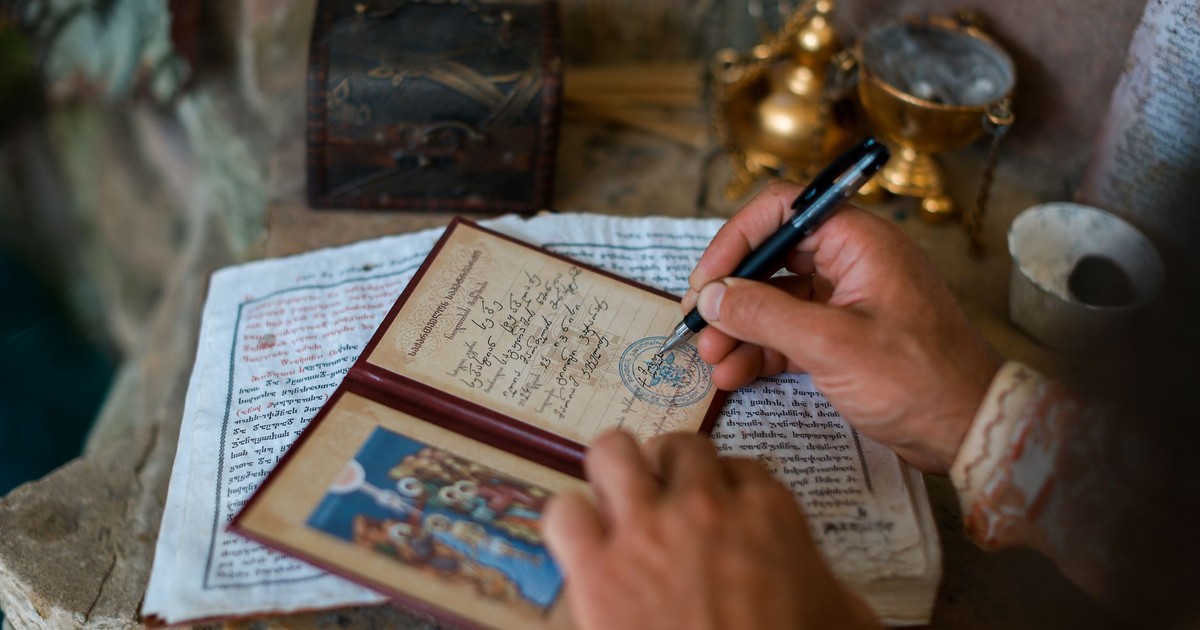

Every book you have ever read about the origins of Christianity rests, ultimately, on a physical object – a scrap of animal skin, a sheet of dried reeds, a bound stack of parchment leaves – that someone copied by hand, carried across a desert, and somehow did not burn. The New Testament we hold today did not descend from a single master copy. It was assembled, painstakingly and imperfectly, from thousands of manuscripts scattered across monasteries, garbage heaps, sealed jars, and the back shelves of Vatican storerooms. Some of those manuscripts sat undisturbed for more than a thousand years before anyone understood what they were holding.
New Testament history, and the discoveries made, are not insignificant. They involve a German scholar arriving on camelback, an Egyptian peasant stumbling over a buried jar, a British mining engineer haggling with an antiquities dealer, and two papyrologists sifting through what was, functionally, ancient trash. Each discovery reordered what scholars thought they knew about the earliest Christian texts, sometimes confirming them, sometimes complicating them in ways that still generate argument today.
Nine of those discoveries changed the field permanently. Not “important” in the abstract sense – important in the way that means translations shifted, theological debates opened back up, and entire assumptions about the reliability and transmission of the New Testament had to be revisited from scratch.
1. Codex Sinaiticus (1844 – 1859)
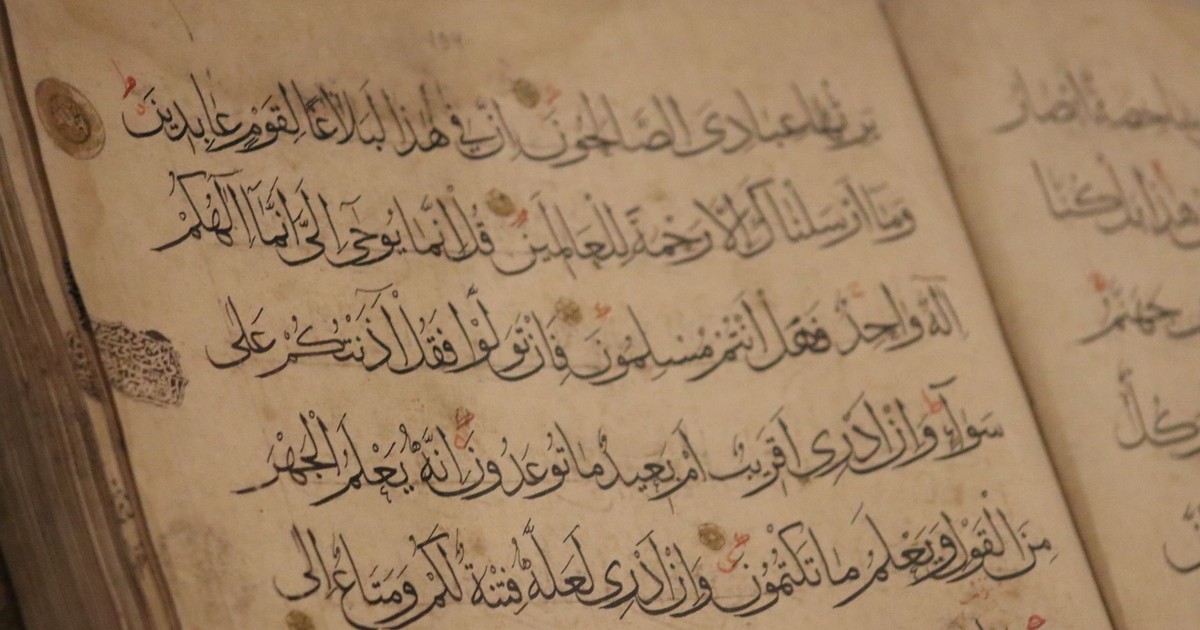
The discovery of Codex Sinaiticus by Constantin von Tischendorf in 1844 marked a turning point in biblical scholarship, providing a critical comparative tool for the analysis and study of the biblical text. The story of how Tischendorf found it has been told so many times it has taken on the quality of myth, but the bones of it are true: he arrived at St. Catherine’s Monastery in Egypt in 1844, not yet thirty years old, and recognized ancient parchment leaves in a basket that monks were apparently using as fuel.
The manuscript, named after the place of its discovery at the foot of Mount Sinai, originally contained the complete Greek Bible, both the Old and New Testaments, as well as two early Christian writings later considered outside the New Testament canon. Today, the whole of the New Testament has been preserved, and Codex Sinaiticus provides the only complete copy of the Greek New Testament that pre-dates the ninth century.
In 1859, Tischendorf made his third and final visit to St. Catherine’s, this time under the patronage of the Russian Tsar Alexander II, and on February 4 he first saw the 347 leaves of the Codex. After complex negotiations involving the Tsar’s court, the manuscript traveled to St. Petersburg. Some 800 of the original 1,400 handwritten vellum pages remain today, split across four institutions. What Codex Sinaiticus revealed was not just an ancient Bible but a living record of scribal correction – multiple hands had annotated, revised, and second-guessed the text across centuries, making it an unparalleled window into how the New Testament was transmitted and debated in its earliest centuries.
2. Rylands Library Papyrus P52 (Identified 1934)
If Codex Sinaiticus is the most complete early New Testament manuscript, P52 is the most extreme example of the opposite: a fragment so small it fits comfortably in the palm of your hand, and yet so old it redrew the scholarly map of when the Gospels were written.
Discovered in Egypt, P52 was published in 1935 and is housed in the John Rylands Library in Manchester, England. Its full name is John Rylands Papyrus P52, with the acquisition number John Rylands Greek 457, and the fragment measures just 3.5 by 2.5 inches. It was purchased in 1920 by Bernard Grenfell on the Egyptian antiquities market, but it wasn’t really “discovered” – in the sense of being recognized and translated – until 1934.
P52 is a small Greek manuscript fragment containing portions of John 18:31 – 33 and John 18:37 – 38, preserving part of the exchange between Jesus and Pontius Pilate, written on both sides of a single papyrus leaf. The manuscript is commonly dated to approximately AD 125 – 150 based on paleographic analysis. The Gospel of John had been considered by some scholars a late second-century composition, too far removed from the events it described to be historically reliable. A fragment dated to the first half of the second century, found in Egypt of all places, meant the Gospel had been circulating there very shortly after it was written – and that the original composition had to be earlier still. One tiny scrap, and an entire argument collapsed.
3. Codex Vaticanus (Formally Studied 19th Century)
Codex Vaticanus has been sitting in the Vatican Library since at least the 15th century. The Vatican’s own catalog from 1475 lists it. So it was not “discovered” the way Sinaiticus was discovered – no camelback journey, no basket of kindling. What changed in the 19th century was access, and access turned out to matter enormously.
The New Testament as we know it relies heavily on one particular parchment manuscript: the fourth-century Codex Vaticanus. For centuries, church authorities restricted scholars from properly examining it, offering only partial collations riddled with errors. It was only in the 19th century that full transcriptions were completed and scholars could engage with the text seriously. What they found challenged the dominant Greek New Testament in use at the time – the Textus Receptus, which had formed the basis of translations including the King James Bible.
Vaticanus belongs to what textual scholars call the Alexandrian text-type, widely considered the most carefully preserved tradition of the New Testament text. In the mid-20th century, most New Testament textual critics believed that the text preserved in Codex Vaticanus was the result of an editorial revision that took place in the fourth century – a suspicion that would eventually be overturned by an even more dramatic discovery (see Bodmer Papyri, below). The codex’s true influence on modern Bible translations only became clear when scholars could compare it against an expanding library of earlier papyri, each of which kept pointing back to Vaticanus as the most reliable anchor.
4. The Chester Beatty Papyri (Purchased 1930s)
The Chester Beatty Papyri arrived in Western scholarly hands not through excavation but through the antiquities market – and through the sharp eye of a British mining engineer turned collector named A. Chester Beatty. In the 1920s, Egyptologist Alan Gardiner was tipped off to the discovery of Greek biblical papyri found among a hoard of Egyptian texts from Dishna, Egypt. He alerted Beatty and encouraged him to purchase the entire collection so that it would remain intact, which Beatty did through an antiquities dealer around 1930–1931.
These papyrus codices are also known as P45, P46, and P47. P45 and P47 are third-century manuscripts: P45 contains part of a codex of Matthew, Mark, Luke, John, and Acts, while P47 contains the oldest known text of the Book of Revelation. P46, which contains letters written by Paul — Romans, Hebrews, 1 and 2 Corinthians, Ephesians, Galatians, Philippians, Colossians, and 1 Thessalonians — dates to around AD 200, placing it in the late second century.
What the Chester Beatty Papyri demonstrated, in ways no previous discovery had quite managed, was that the major New Testament texts were already being copied and circulated together at a very early date – Paul’s letters gathered into a single codex, the Gospels bound together across Egypt by the end of the second century. The collection is now housed at the Chester Beatty Library in Dublin.
5. The Oxyrhynchus Papyri (1896 – Ongoing)
Most famous manuscript discoveries happen once, dramatically, and then are done. The Oxyrhynchus Papyri are the exception: they have been happening continuously since 1896, and scholars are still working through what was found.
The Oxyrhynchus Papyri are a group of manuscripts discovered during the late nineteenth and early twentieth centuries by papyrologists Bernard Pyne Grenfell and Arthur Surridge Hunt at an ancient rubbish dump near Oxyrhynchus in Egypt. The manuscripts span the Ptolemaic and Roman periods of Egyptian history, covering centuries of administrative, literary, and religious life in the region. The location was not a library or a monastery but a garbage dump – the ancient city’s municipal waste site, where the dry Egyptian climate had preserved an extraordinary range of documents that would otherwise have rotted centuries ago.
Of the 127 registered New Testament papyri, 52 – or 41 percent – are from Oxyrhynchus. The sheer volume of material is staggering. Among the fragments recovered were early copies of the Gospels, Paul’s letters, and Acts, some of which date to within a century of the original writings. Beyond the explicitly biblical material, the Oxyrhynchus finds also included early versions of texts that were eventually excluded from the canon – sayings attributed to Jesus, fragments of gospels that didn’t make the cut – giving scholars an unparalleled view of the diversity of early Christian textual culture.
6. The Bodmer Papyri and P75 (Acquired 1950s – 1960s)
The Bodmer Papyri arrived in Western scholarship through Martin Bodmer, a Swiss bibliophile who assembled one of the most remarkable private collections of ancient manuscripts in the 20th century. The Bodmer Papyri are a set of Greek and Coptic manuscripts ranging from the 2nd to the 7th centuries, collected between the 1950s and 1960s by Bodmer, who obtained them across Egypt.
Among them, one manuscript stands apart. In 1961, a papyrus codex containing the Gospels of Luke and John in Greek – known as P.Bodmer XIV – XV, or P75 – was published. It is often called the most important New Testament papyrus so far discovered, because it was dated, on the basis of its handwriting, to about AD 175 – 225, and its text agrees very closely with that of Codex Vaticanus.
That agreement was the revelation. Recall that many mid-20th-century scholars believed Vaticanus represented a fourth-century editorial revision of the text – cleaned up and standardized by churchmen with an agenda. P75 demolished that theory. Here was a manuscript from a century before Vaticanus, produced independently in Egypt, with a text that was virtually identical. Vaticanus was not a revision. It was a faithful copy of a very early tradition. P75 didn’t just validate one manuscript; it validated the entire Alexandrian text-type that underlies most modern Bible translations.
7. The Nag Hammadi Codices (1945)
In December 1945, a group of Egyptian farmers digging near the cliffs of Jabal al-Tarif, outside the town of Nag Hammadi in Upper Egypt, unearthed a sealed earthenware jar. The discovery proved to be one of the most important manuscript finds ever made in Egypt: the Nag Hammadi Codices, 13 papyrus codices inscribed in the Coptic language. The farmers apparently debated whether to smash the jar, fearing it might contain a djinn. They smashed it. Out came a library.
The best-known tractate of the Nag Hammadi collection is the Gnostic Gospel of Thomas, which opens with words describing secret sayings of the living Jesus. The gospel contains 114 sayings. The manuscripts date from the fourth and fifth centuries and are in the Coptic language; they have since been translated into English and extensively studied by scholars of ancient Christianity.
The Nag Hammadi Codices are technically not New Testament manuscripts – they are a library of Gnostic and early Christian texts that existed alongside the canonical writings. But their discovery transformed New Testament scholarship precisely because scholars now had a mirror to hold up against the canon itself. For the first time, researchers had access to the breadth of early Christian literature that didn’t make it into the canon, written by communities who understood Jesus in radically different terms. Understanding what was excluded clarified, by contrast, what was deliberately kept. The Nag Hammadi find forced scholars to think about the New Testament not as an inevitable collection but as one set of choices among many.
8. The Dead Sea Scrolls (1947)
The Dead Sea Scrolls are primarily an Old Testament discovery – the oldest surviving manuscripts of the Hebrew Bible, predating the New Testament by centuries. Their inclusion here is not an error. Their impact on New Testament manuscript studies has been profound and is still unfolding.
The Dead Sea Scrolls consist of papyrus and parchment scrolls, and thousands of fragments, found beginning in 1947 in 11 caves around the upper west side of the Dead Sea. The discovery began, famously, when a Bedouin shepherd threw a rock into a cave and heard pottery shatter. Before the Scrolls, the oldest manuscripts of the Hebrew Bible dated to the 10th century AD. The Scrolls pushed that back by more than a thousand years, to roughly 250 BC through 70 AD – and they matched the medieval copies with remarkable fidelity.
For New Testament scholars, the implications were multiple. The Scrolls contained the same Jewish world from which Jesus and his earliest followers emerged: the same apocalyptic hopes, the same communal practices, the same scriptural language. Passages in the Scrolls illuminate phrases in the Gospels and Paul’s letters that had previously baffled interpreters. They confirmed that concepts once thought to reflect later Greek philosophical influence – light versus darkness, a community of the elect, a new covenant – were native to first-century Judaism. The Scrolls didn’t change the New Testament text, but they changed how scholars read every line of it.
9. Codex Alexandrinus (Arrived in England 1627)
Codex Alexandrinus is the oldest of the three great Greek Bible codices in terms of scholarly familiarity in the West, though the last to receive its due. The Codex Alexandrinus is an Egyptian text dating to circa AD 450. It arrived in England in 1627 as a diplomatic gift from Cyril Lucar, the Patriarch of Constantinople, to King Charles I – one of the more remarkable book transfers in history.
Where Sinaiticus and Vaticanus are fourth-century manuscripts, Alexandrinus is fifth century, and for much of the New Testament it represents a slightly different textual tradition. Its real significance came in the 17th century: it arrived in London just as scholars were beginning to question the Textus Receptus, the Greek New Testament that had underlain all major European translations since Erasmus. Alexandrinus gave those scholars their first access to a complete, ancient Greek manuscript of the Bible outside Vatican control. The early-5th-century Greek manuscript contains almost the entire Bible and is now held at the British Library, where it remains one of the most consulted ancient manuscripts in the world.
Its particular value in the modern era lies in its text of Revelation, where it preserves readings that neither Sinaiticus nor Vaticanus can fully supply, and in the range of early Christian writings it includes alongside the canonical text. Like all the great codices, it is not simply a Bible. It is a portrait of what a particular Christian community in a particular century considered worth preserving – and that curatorial act, repeated across centuries and continents, is what New Testament manuscript discoveries keep revealing: not a single document handed down intact, but a vast, imperfect, astonishing human effort to hold onto something they believed mattered.
What These Manuscripts Actually Tell Us
The cumulative picture assembled by these nine New Testament manuscript discoveries is not one of a text preserved in perfect amber. It is a picture of a text vigorously copied, carefully maintained, occasionally corrected, and sometimes debated – across centuries, languages, and continents – by people who thought it was worth the effort. That is a different kind of reliability than a single unbroken chain of custody, and it is arguably a more honest one.
What they reveal, collectively, is that the core of the New Testament text is extraordinarily stable across a very wide range of manuscripts, from a very early date. P52 places John’s Gospel in circulation within a generation of its composition. P75 proves that the text of Luke and John preserved in our oldest complete New Testament was not a fourth-century revision but a faithful copy of a much earlier tradition. The Oxyrhynchus fragments and Chester Beatty Papyri show the same basic text circulating across Egypt by AD 200. Scholars still debate individual readings, and some passages remain genuinely uncertain – but the broad picture has grown clearer, not murkier, with each discovery.
AI Disclaimer: This article was created with the assistance of AI tools and reviewed by a human editor.