

Living in an apartment building requires a specific kind of tolerance most of us didn’t sign up for consciously. You didn’t choose your neighbors. You chose a floor plan, a commute time, maybe a view. The people on the other side of your ceiling or wall came with the deal, as fixed and unchosen as the fuse box. And for months, maybe years, you work out a silent contract: I will pretend not to hear your 11 p.m. phone calls if you pretend not to hear mine. Everyone operates on a polite fiction of privacy that the construction of the building does not actually support.
And then one night, the TV is loud enough that you can make out specific lines of dialogue. The furniture sounds like it’s being rearranged at midnight. You are lying in the dark, staring at the ceiling, and the silent contract starts to fray. You run the calculation: say something and risk a confrontation with someone you have to live near indefinitely, or say nothing and lose another night’s sleep before an early alarm. Most people, in that moment, choose to say nothing. The cost of the conflict feels higher than the cost of the exhaustion, so you pull the pillow over your head and negotiate with yourself about whether this is really that bad.
A story that traveled widely online recently captures exactly why that calculation is so hard to trust. Not because it has a happy ending, though it does. But because of what it says about the assumption most of us carry into that ceiling-staring moment in the first place.
The Note Nobody Expected to Write
A woman had been living in her second-floor apartment for eight months. The downstairs neighbor’s television was loud, not in the way that suggests a party or a disregard for other people, but in the specific way that means you can hear what show is playing. There were also regular sounds late at night, closer to furniture moving than footsteps, happening around 11 p.m. She had done what most people do: endured it, told herself it wasn’t that bad, and avoided the whole uncomfortable conversation.
After one particularly bad Tuesday night, the kind that precedes an early workday, she made a different choice. She wrote a note. She kept it calm and specific, explaining that she wasn’t sure whether he knew how much sound was traveling through the floor. She mentioned the television, asked whether they might find a solution, and slipped it under his door. Then she went back upstairs and waited for one of the two outcomes she had prepared herself for: no response at all, or a bad one.
For three days, nothing changed. By Friday, she had largely written the attempt off. Then she found a folded piece of paper under her own door.
What the Note Actually Said
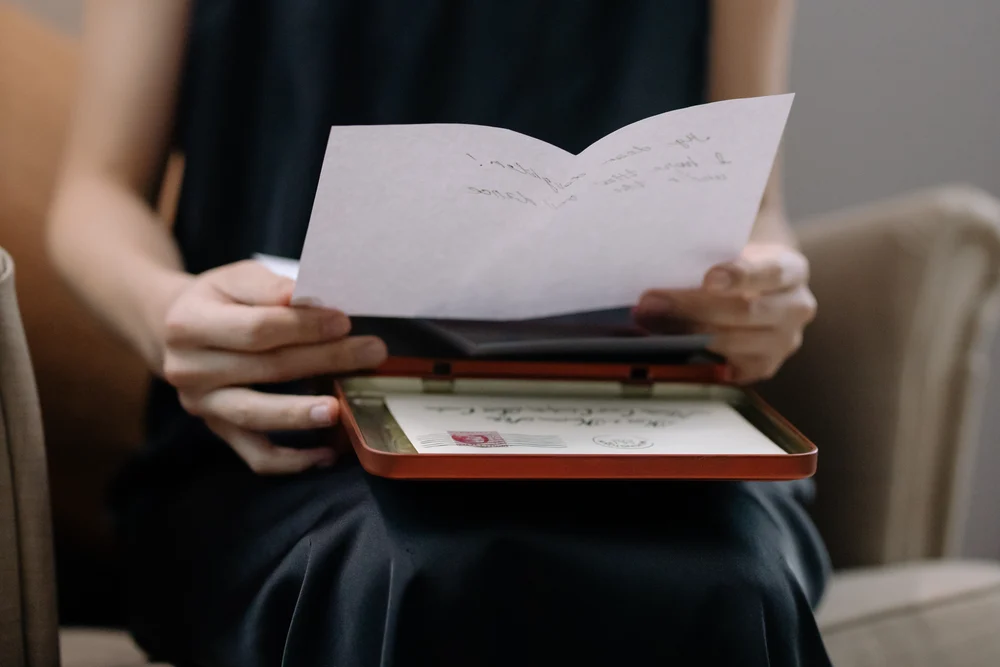
Her neighbor’s reply was not defensive. It was not a complaint in return, or a flat denial, or the passive aggression of someone who has decided to interpret a polite request as an attack. He apologized. He explained that he was hard of hearing in one ear and had genuinely had no idea how much sound was traveling upstairs. He had already ordered a soundbar that would let him use headphones at night. And at the bottom of the note, he thanked her specifically for coming to him directly instead of going straight to building management.
She wrote in her Reddit post that she stood in her hallway and read it twice. The noise problem resolved itself. The television went silent through her floor. The late-night sounds stopped. The thing she had been dreading for months turned out, when she finally addressed it, to take about four days to fix entirely.
The post spread because it landed in a specific tender spot. It amassed 84,000 upvotes on Reddit. People were not surprised that a noise complaint could be resolved – they were surprised that it was resolved like this, with grace on both sides and a result that left everyone better off.
Why We Don’t Just Knock on the Door
The reluctance to address a neighbor problem directly is not a personality flaw or a generational one. It is a near-universal instinct. According to a 2025 Anytime Estimate survey, among Americans who have neighbor complaints, noise issues are the most common at 33 percent, followed by parking concerns, trash, and pets. And yet the same surveys that document how frequently we are annoyed show that the vast majority of us absorb the frustration rather than address it.
The math is not irrational. Nearly a third of Americans are not comfortable knocking on a neighbor’s door, with that discomfort especially pronounced among younger generations – only about half of Gen Zers say they feel comfortable with their neighbors at all. The relationship is one of the stranger social categories we inhabit: someone you did not choose, who has claims on the same physical space you occupy, and with whom any conflict has no easy exit. You cannot simply stop seeing them. You live there.
So the default is silence. The pillow over the head. The quietly escalating resentment that never quite breaks surface. Most people would rather find workarounds and wait it out than have a conversation they are not sure will go well.
What this story suggests, and what made it travel so far so fast, is that the assumption behind the silence – the assumption that the conversation will go badly – is not as reliable as we treat it.
What the Noise Was Actually Doing

The health stakes of bad sleep are not minor, and anyone who has spent weeks lying awake because of a sound they can’t control knows it in their body before they know it in any study. A 2024 Harvard University study analyzed nearly 1 million deaths across five states and found a link between cardiovascular disease mortality and noise exposure, with a stronger association found in women.
That’s an extreme finding about extreme, long-term exposure. But the everyday effects of disrupted sleep are real enough at a much smaller scale. Noise does not have to be industrial-level to interrupt rest. A November 2019 study published in BMC Public Health found that neighbor noise annoyance is strongly associated with eight different physical and mental health symptoms, including headaches, fatigue, anxiety, and depression. The woman in this story was lying awake on a work night trying to make out dialogue from a television two floors below her. That is not a catastrophic health crisis, but it is also not nothing. Chronic sleep disruption compounds. It accumulates in the body the way debt accumulates – slowly, then all at once.
The neighbor had no idea. That is the part the story keeps returning to. He had a hearing impairment in one ear and had been operating his television at a volume that worked for him, completely unaware that it was audible to the person above. The problem was real. The cause was entirely innocent. And neither of those facts was knowable until someone left a note.
The Gap Between Assuming and Asking
Etiquette expert Jo Hayes, speaking to Newsweek about the viral post, described the exchange as “Example A of healthy, successful human interactions and conflict resolution” and called it “the gold standard of how noise complaints should be dealt with and resolved.” That framing is a little formal for what actually happened, which was two people treating each other like adults in a low-stakes situation and coming out the other side with a fixed problem and a small increment of mutual goodwill. But the framing points at something real: this is genuinely how it is supposed to work, and how rarely it does.
The thing the woman had been avoiding for eight months was a four-day resolution. The conversation she feared having turned out to require no conversation at all, just two pieces of paper and a bit of good faith on each side. The neighbor who apologized and ordered new equipment did not do so because she had phrased her note perfectly, though she clearly thought about it. He did it because his behavior was unintentional, the problem was solvable, and someone asked politely. None of that could happen until she asked.
There is a version of this story that plays out differently, and anyone who has lived in an apartment building long enough has probably experienced it. The neighbor who gets defensive when approached. The one who turns the volume up as a statement. The one who slides a rude note back under the door within the hour. Those outcomes exist and they are real, which is part of why the calculation feels risky every time. A conflict resolution expert told Newsweek that while disagreements between neighbors are common, escalating to a tit-for-tat battle is never wise. “This happens all too often, and it never ends well.”
But the outcomes that go badly are also the ones that get talked about. The story that went viral is the one where a polite note met a gracious reply, because that story is rarer and more surprising than the alternatives. The assumptions we carry into the ceiling-staring calculation are calibrated to the bad outcomes we have witnessed or heard about, not to any reliable accounting of how these situations actually tend to resolve.
Read More: Couple Adopts Neighbor’s 3 Children After She Passes and Then the Community Rallies Together
What Gets Left Unasked
When this story circulates and everyone agrees it is lovely, pay attention to the specific detail that most people skip past. She stood in her hallway reading the note twice. Not once, which is how you read a message you expected. Twice, which is how you read something that surprised you, something you need to run through again to confirm it says what you thought it said.
Eight months. Eight months of ambient frustration, of absorbing the problem, of choosing silence and writing off the idea of resolution. And the resolution, when it came, took less than a week. The note she had been putting off writing for months was not the hard part. The hard part was letting herself believe, before she knew the outcome, that it might work.
That’s the specific thing this story is actually about. Not that people are always gracious, because they are not. Not that conflict always resolves neatly, because it does not. But that the thing we are most afraid of in a difficult conversation is rarely the conversation itself – it is the moment before, when we decide whether we trust the other person to be a decent human being without yet knowing whether they are.
The woman took that risk. Her neighbor met it. And she had to read the note twice to believe that’s what had happened. She ended her post with: “Sometimes being the person who leaves the polite note actually just works and I forget that.” Which is as clean and honest a summary as you will find anywhere. The archive of bad outcomes is full. The good ones are in there too – not as often, but not as rarely as the dread suggests.
AI Disclaimer: This article was created with the assistance of AI tools and reviewed by a human editor.