

Someone you know has probably had one. They may not have told you. That’s the first strange thing about near-death experiences – they happen more often than anyone talks about, and the people who’ve had them often stay quiet about it for years, because they have no idea how to describe what they went through without watching the other person’s face go carefully blank.
The experiences don’t sort themselves neatly by religion, age, personality, or how close to death the person actually came. A cardiac arrest patient in a hospital, a child who nearly drowned, a soldier in combat – they come back describing things that rhyme with each other so closely it becomes hard to dismiss. The brilliant light. The feeling of overwhelming peace. The sense of watching their own body from above. The life review that arrives in seconds but somehow covers everything. These are not rare anomalies. They are, at this point, a documented pattern. What makes the research interesting isn’t just what people see. It’s what happens to them after they come back.
What One Psychiatrist Spent 50 Years Studying
Dr. Bruce Greyson is a Professor Emeritus of Psychiatry and Neurobehavioral Sciences at the University of Virginia, and he has been called the father of NDE research. He didn’t set out to become that. He was a conventional psychiatrist with a conventional materialist worldview – consciousness comes from the brain, full stop – until a patient told him something that didn’t fit.
In the early 1970s, Greyson was called to see a woman who had overdosed and was unconscious in the emergency room. Before going to see her, he’d been talking to her roommate down the hall. He’d also, in the chaos of the night, spilled spaghetti sauce on his tie. He covered the stain with his white coat. When the patient woke up, she described watching him speak with her roommate – down the hall, while she was unconscious in a different room. She mentioned the stain on the tie.
There is no physiological explanation that accounts for that. Greyson spent the next five decades trying to find one.
The Scale That Made Chaos Measurable

One of the practical problems with studying near-death experiences is that everyone describes them differently. How do you compare one person’s encounter with a brilliant light to another person’s life review? How do you distinguish a genuine NDE from a vivid dream or a medication-induced hallucination?
Greyson’s answer was the NDE scale, developed in 1983, a standardized 16-question questionnaire that helps researchers and experiencers quantify and compare near-death experiences. According to UVA Magazine, the questions cover four categories: cognitive features, affective features, paranormal features, and transcendental features. Each answer is scored from 0 to 2, and a total score of 7 or higher is generally considered indicative of a genuine near-death experience.
The scale was built from the ground up with input from both researchers and people who had actually had these experiences. The goal wasn’t elegance – it was rigor. Greyson wanted something that could travel across languages and cultures and still measure the same thing. The scale has since been translated into 20 languages and remains the most widely used tool in the field globally.
How Many People Are Actually Having These Experiences

The number is larger than most people assume. According to Scientific American, near-death experiences have been reported across time and cultures, with an estimated 5 to 10 percent of the general population carrying memories of one – including somewhere between 10 and 23 percent of cardiac arrest survivors. That last figure is worth pausing on. In any hospital cardiac unit, potentially one in five patients who survives a cardiac arrest will have had some version of this experience. A growing number of scholars now accept near-death experiences as a unique mental state that can offer novel insights into the nature of consciousness.
These experiences aren’t limited to people who were technically “near death” either. Researchers have documented them in people who merely believed they were about to die, which complicates any theory that locates the cause purely in the dying brain. The pattern of what people report – the light, the peace, the life review, the sense of a boundary they could choose to cross or not – holds whether or not the body was actually shutting down.
If you’ve ever wondered whether someone you loved who survived something terrible might have had an experience they never mentioned, you’re not imagining things. Accounts like these surface regularly, and they tend to share a consistency that’s hard to write off.
What the Largest Clinical Study Found
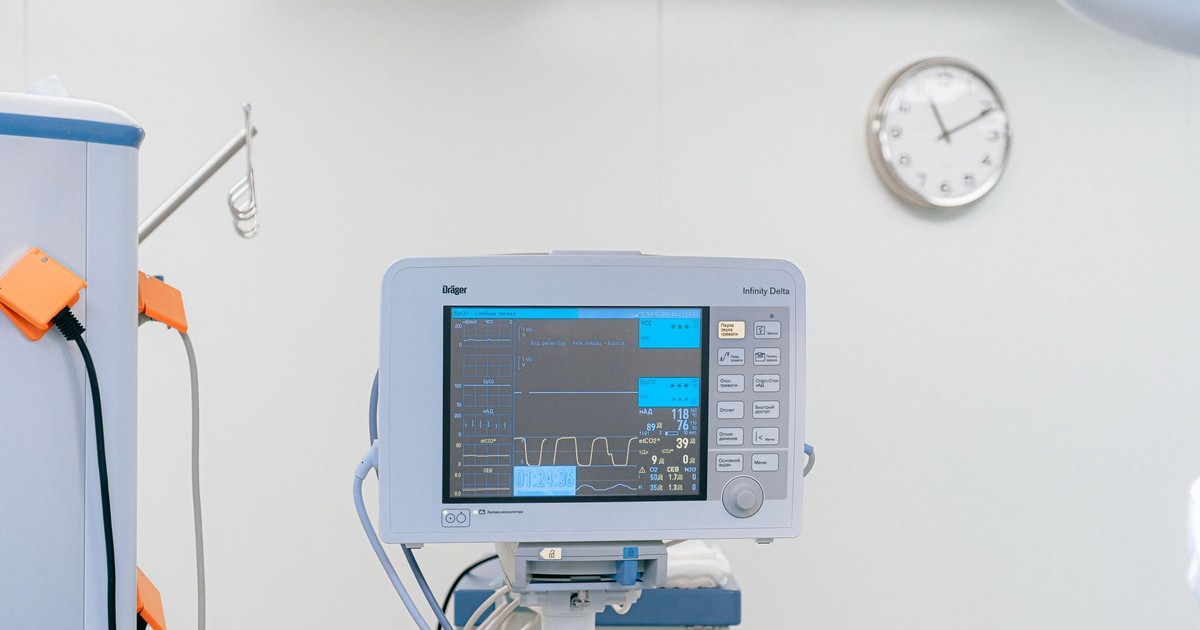
The most rigorous attempt to study near-death experiences in a controlled clinical setting is the AWARE study – AWAreness during REsuscitation. Results from a four-year international study of 2,060 cardiac arrest cases across 15 hospitals worldwide concluded that the human experience of death appears far broader than what has previously been called near-death experiences.
Dr. Sam Parnia, Assistant Professor of Critical Care Medicine and Director of Resuscitation Research at Stony Brook Medicine, was lead author of the study, published in the journal Resuscitation. One of his central observations was that many patients who survived cardiac arrest described having some form of awareness or mental activity during the time their hearts had stopped – but couldn’t recall it afterward. A higher proportion of people may have vivid death experiences but fail to recall them due to the effects of brain injury or sedative drugs on memory circuits.
That’s a significant caveat. What the study found isn’t just that some people have near-death experiences – it’s that the full picture of what the mind does at the edge of death may be even larger than the reported numbers suggest, with many experiences simply lost to the fog of recovery.
What Comes Back With You
The experience itself is one thing. What researchers find consistently more striking is what it does to the person who has it.
Positive near-death experiences often lead to increased spirituality, reduced fear of death, a deeper appreciation of life, and greater compassion. These changes have been documented across cultures, across age groups, and – notably – regardless of whether the person was religious before the experience. Negative near-death experiences, though less common, can cause confusion, emotional distress, and lasting trauma.
The shift away from materialism is one of the most consistently documented aftereffects. People who return from these experiences frequently report losing interest in status, money, and competition, often to a degree that surprises the people around them. Marriages strain. Careers change. The person who had the experience can seem, to their family, like someone different came back. According to a 2025 systematic review on PubMed, the aftereffects of a near-death experience are often more dramatic than the experience itself, with people consistently reporting a greater sense of purpose, deeper compassion, increased self-esteem, a stronger focus on spirituality, and a marked decrease in interest in material wealth or social status – and many describe a desire to serve others that wasn’t present before.
The most well-documented change is a reduction in the fear of death. In one study, 80 percent of people who had near-death experiences reported decreased fear of death, compared to 29 percent of people who came close to death without one.
The intensity of the experience matters. People who went through a life review, encountered what they described as a being of light, or felt profound joy during their NDE tended to show the greatest and most lasting changes. These changes tend to be permanent, and researchers have found that the intensity of the NDE correlates strongly with the degree of spiritual transformation afterward.
What the Science Still Can’t Explain

After five decades of work, Greyson himself has shifted position. He started his career as a strict materialist – consciousness is produced by the brain, the brain dies, and that’s the end of it. He no longer holds that view. His decades of documented cases have led him to entertain seriously the possibility that the mind has some element that isn’t fully accounted for by brain function alone.
That’s not a small thing to say out loud in a medical school. It’s the kind of admission that gets you looked at sideways at conferences. Greyson has made it anyway, because the cases he has studied don’t close tidily. The woman who described his stained tie while she was unconscious is one of hundreds.
The skeptical explanations are worth taking seriously. Oxygen deprivation, REM sleep intrusion into waking states, the brain flooding itself with neurochemicals during shutdown – these are real physiological phenomena, and they likely account for some portion of what gets reported. The problem is that they don’t account for all of it. They don’t explain the cases where people accurately report things they had no sensory access to. They don’t explain why the pattern holds so precisely across cultures that had no prior exposure to each other’s imagery.
Despite extensive research and various theories proposed to explain NDEs – ranging from brain chemistry to spiritual interpretations – no single explanation has been universally accepted. That’s where the science sits in 2026. Not at a resolution. At a genuinely open question.
What Nobody Tells You About Coming Back

One of the less-discussed aspects of near-death experiences is how hard the return can be. The experience is often described as the most real thing the person has ever felt – more vivid than ordinary waking life, more coherent than any dream. And then they come back to a body in a hospital bed, to fluorescent lights and worried faces, and they’re supposed to just go back to normal.
These experiences can bring real distress, as experiencers may struggle to communicate about their NDE, integrate it when it challenges their prior worldviews, or reconcile their changed values with those of loved ones. The person who had the experience often finds that the words for it don’t exist in ordinary language. They reach for metaphors. The metaphors fall short. The people listening try to be supportive, but there’s a gap between them that didn’t exist before.
This is the part that doesn’t make it into the headlines, which tend to focus on the dramatic details – the tunnel, the light, the deceased relatives. The quieter, longer story is the one about trying to fit back into a life that no longer quite fits, while carrying something you can’t hand to anyone else.
What We Don’t Have to Decide

You don’t have to land on a side. The research doesn’t require you to believe in an afterlife, and it doesn’t require you to dismiss these experiences as hallucinations. Both of those are positions people take because ambiguity is uncomfortable, and the honest answer here is that the ambiguity is genuine.
What the documented cases do tell us, clearly and repeatedly, is that something happens to people at the edge of death that changes them in measurable ways – ways that are consistent across cultures, religions, ages, and circumstances. A reduced fear of death. Greater compassion. Less interest in things they previously spent enormous energy pursuing. Whatever the cause of that, the effect is real, and the effect tends to last.
Greyson, who began this work because of a woman who saw a stain on his tie while she was unconscious, has spent half a century with that open question. He has not resolved it. The research hasn’t resolved it. The sheer number of consistent accounts hasn’t resolved it either. What it has done is made dismissal progressively harder to sustain. Some questions don’t close. They just get better documented.
Disclaimer: This information is not intended to be a substitute for professional medical advice, diagnosis, or treatment and is for information only. Always seek the advice of your physician or another qualified health provider with any questions about your medical condition and/or current medication. Do not disregard professional medical advice or delay seeking advice or treatment because of something you have read here.
AI Disclaimer: This article was created with the assistance of AI tools and reviewed by a human editor.