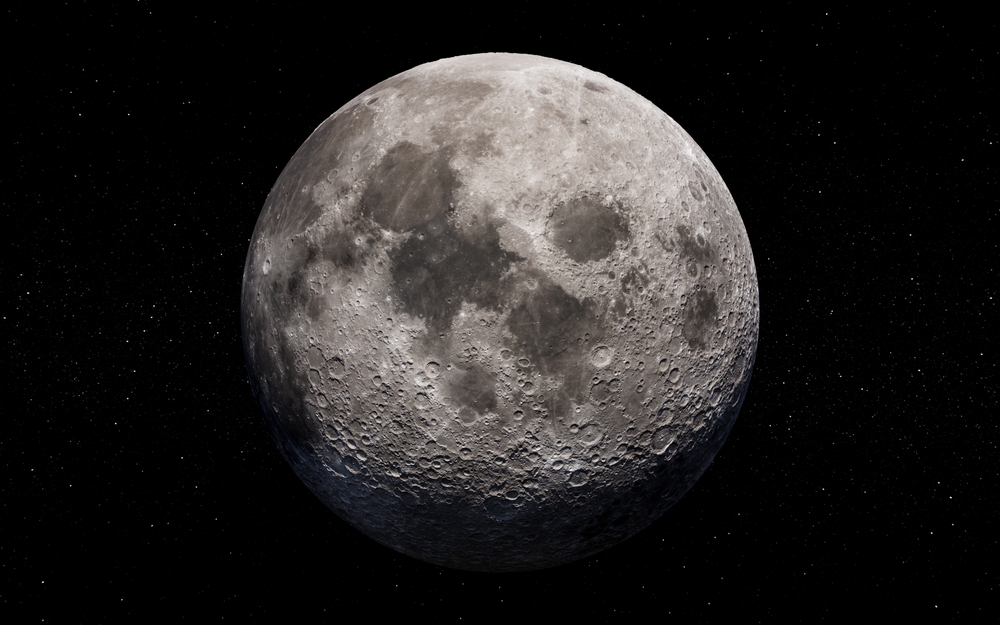

Every country that has ever looked up at the Moon has projected something onto it: ambition, wonder, a version of itself it hasn’t built yet. For the United States, that projection has been especially charged, because America once sent twelve men there and then, for reasons that were political as much as scientific, stopped. The question of when humans would go back has floated around Washington for five decades, attached to one administration after another, each of which announced a return and then handed the problem to the next one.
What makes 2026 different is not the announcement. Announcements are easy. What’s different is the specific, funded, industrially grounded plan behind this one: a permanent human base on the lunar surface, built in three phases, costed at $20 billion over seven years, and backed by a presidential executive order with a hard deadline. Whether that makes it more likely to happen than the programs that came before it is a genuinely open question. But the architecture itself, the logic of how NASA intends to build an address on another world rather than just visit it, is worth understanding in detail.
The plan was delivered at NASA headquarters in March 2026, at an event called “Ignition.” It ran for roughly seven hours. What the audience of space industry executives, congressional representatives, and delegations from more than 35 nations heard was a complete redesign of how the United States intends to occupy the Moon, not as a destination but as a permanent location. NASA Administrator Jared Isaacman called it a matter of urgency, not aspiration. The phrase that defined the day: “The clock is running in this great-power competition, and success or failure will be measured in months, not years.”
The Political and Policy Foundation
Before any hardware leaves Earth, the Moon base rests on a foundation of executive authority. The plan stems in part from a December 18, 2025, Trump administration executive order that directed NASA to turn its exploration focus to the Moon, with priorities including landing people on the Moon by 2028 and starting a permanent lunar outpost by 2030.
President Trump released the “Ensuring American Space Superiority” executive order in December 2025, which details “leading the world in space exploration and expanding human reach and American presence.” That directive gave NASA both a mandate and a deadline. These orders were reiterated by NASA’s recently confirmed administrator Jared Isaacman at the “Ignition” event at NASA Headquarters in March, where he told dozens of international partners and space industry figures that NASA was ready to jump-start its slow-going exploration of the Moon and Mars.
Isaacman was characteristically direct about why previous programs had failed to deliver. Previous schemes, he said, had gone nowhere since the end of the space shuttle era, resulting in “billions of dollars wasted, years lost, nonconforming hardware delivered, programs that never launch, fewer flagship science missions, virtually no X-planes and fewer astronauts in space.”
The Planetary Society, the space advocacy organization co-founded by the late astronomer Carl Sagan, estimates NASA will have spent about $107 billion on return-to-the-Moon plans through 2026 in inflation-adjusted dollars – owing in large part to repeated program changes over the past 20 years by successive presidential administrations. The Ignition plan is the Trump administration’s bid to break that cycle and end what Isaacman described as a pattern of ambition without execution.
The Three-Phase Architecture
To accelerate the mission, NASA is turning to the growing private space industry to fulfill a three-part Moon base plan: first, land astronauts on the Moon by 2028; next, build a base at the lunar south pole and begin bringing astronauts there every six months by 2032; and finally, establish a nuclear-powered permanent outpost by 2036.
The $30 billion, 11-year plan calls for 79 launches, 73 landers, 10 moon buggies, 12 “hopper” rocket drones, four habitat modules, and numerous other pieces of infrastructure, including a 20-kilowatt nuclear reactor.
Phase One: Build, Test, Learn
The Moon base will be built in three phases. Phase One will transition from infrequent, once-a-year Moon missions to “a templated approach that will generate significant learning through experimentation,” dramatically expanding lunar landings to deliver rovers, instruments, and technology payloads that test mobility, power systems, communications, navigation, surface operations, and science payloads.
To meet the ambitious timeline, NASA is adopting a phased task order competition approach for rovers, with the first phase seeing competition among three current Lunar Terrain Vehicle contractors: Astrolab, Intuitive Machines, and Lunar Outpost, with future phases opening opportunities for additional vendors through onramp competitions.
Phase Two: Early Infrastructure
Phase Two sees NASA and its commercial partners begin building semi-habitable areas for astronauts, with help from international partners including the Japan Aerospace Exploration Agency (JAXA), with this infrastructure enabling astronauts to operate on the Moon’s surface consistently.
Looking beyond Artemis V, NASA announced it will begin to incorporate more commercially procured and reusable hardware to undertake frequent and affordable crewed missions to the lunar surface, initially targeting landings every six months, with the potential to increase cadence as capabilities mature.
Phase Three: Permanent Human Presence
As cargo-capable human landing systems come online, NASA will deliver heavier infrastructure needed for a continuous human foothold on the Moon, marking the transition from periodic expeditions to a permanent lunar base – including contributions from Italy’s ASI (Multi-purpose Habitats), the Canadian Space Agency (Lunar Utility Vehicle), and additional opportunities in habitation, surface mobility, and logistics.
Carlos Garcia-Galan, whom Isaacman appointed as the Moon base “viceroy,” did not downplay the scale of the ambition. “It is very ambitious. We are doing that deliberately,” Garcia-Galan said, adding: “We want to understand what are the things that prevent a moon base.”
Canceling the Gateway and Repurposing Its Hardware
One of the most consequential decisions announced at Ignition was not a new program – it was the cancellation of an existing one. NASA is pausing plans for the Gateway space station to focus on building its permanent Moon base. Planned for 2027, Gateway was supposed to be a staging point for astronauts, research, and cargo to help establish longer stays on the Moon and Mars.
The rationale for the cancellation was partly pragmatic and partly forced. Part of the accelerated Moon base plan is to reuse modules already built for the now-canceled Gateway, but Isaacman later confirmed at a congressional hearing that the aluminum shells of the only two habitable Gateway modules so far delivered to NASA, both built by Europe’s Thales Alenia Space, were corroded – a problem that would have likely pushed Gateway’s launch past 2030 even if it had not been called off.
The lunar base will use components from the now-canceled Lunar Gateway, repurposing an orbital station that was designed to support Moon missions. Rather than letting billions of dollars of already-built hardware sit idle, the agency moved to redirect it toward the surface program and, as discussed below, toward a nuclear Mars mission.
NASA also changed the mission objectives for Artemis III. Scheduled for 2027, the mission initially planned as a Moon landing will now test spacecraft systems and operations in Earth orbit. The subsequent Artemis IV mission aims to bring humans to the surface of the Moon in 2028.
The Lunar South Pole: Why There, and What It Offers
The location chosen for the base is not incidental. The base will be situated near the lunar south pole in areas with confirmed water ice deposits and near-permanent sunlight for solar power generation.
The Moon circles Earth on a slight 5.1-degree tilt with respect to its orbit of the sun, meaning its poles endure odd, inconstant illumination in which they are dark for months and weeks. Some crater rims stand tall enough to receive unending sunlight, while others endure eternal darkness in their depths, with temperatures well below minus 328 degrees Fahrenheit. These permanently shadowed “cold traps” are where explorers hope to find water ice left over from comet impacts and other useful ingredients to help sustain a Moon base.
Water is the master resource. Water is a critical material for NASA’s plans to develop an enduring presence on the Moon: instead of relying solely on resources carried from Earth, astronauts could use the Moon’s water for breathable air, rocket fuel, and more.
To better understand the distribution and depth of that ice, NASA is contributing instruments to international missions already in development. The agency is providing a water-detecting instrument, the Neutron Spectrometer System, to the Lunar Polar Exploration (LUPEX) mission led by JAXA and ISRO, with the instrument – which detects ice under the lunar surface – installed on a rover planned to arrive at the Moon no earlier than 2028.
Even with ideal science, the physical environment presents engineering challenges that no simulation has fully solved. The Moon’s low gravity, one-sixth of Earth’s, makes it difficult for rovers to gain traction when moving rocks to build the berms envisioned to surround landing pads and habitats, or to uncover the minerals sought by astronauts. You can’t simply ship a heavy bulldozer to the Moon and fire it up. The dust is another adversary. “The fact is it’s a very low-gravity environment, which means the dust kicked up tends to stay there,” says robotics engineer Kenneth Stafford of Worcester Polytechnic Institute.
The Commercial Rocket Strategy
The plan’s success depends on a launch cadence that has no historical precedent in the post-Apollo era. NASA Administrator Isaacman envisioned launching two Moon landing missions per year to establish semi-permanent astronaut occupation on the lunar surface for exploration, research, and development of the technology needed for eventual flights to Mars.
To achieve that tempo, NASA is moving decisively toward commercial and reusable systems. “This revised, step-by-step approach to learn, to build muscle memory, to bring down risk and gain confidence is exactly how NASA achieved the near impossible in the 1960s,” Isaacman said, invoking the Apollo program. “But this time, the goal is not flags and footprints. This time, the goal is to stay.”
The Ignition plan calls for both SpaceX and Blue Origin to demonstrate a successful uncrewed landing of their astronaut landers next year. Both Starship HLS and Blue Moon are behind their original schedules, meaning if lander development slips, the entire Ignition timeline moves with it.
The CLPS (Commercial Lunar Payload Services) program, which governs robotic cargo deliveries, is itself being overhauled. Under CLPS 2.0, NASA anticipates an increased mission cadence coupled with greater government insight and collaboration with vendors to improve mission reliability and success, with an anticipated 10-year ordering period and a 15-year execution timeline, capped at $6 billion.
Nuclear Power and Propulsion: The SR-1 Freedom Mission
Among all the announcements packed into the Ignition event, one carried implications that stretch well beyond the Moon. NASA announced plans to launch a nuclear electric propulsion spacecraft to Mars in December 2028, alongside its three-phase plan to establish a lunar base incorporating nuclear-driven heat and power – announcements that follow a December 2025 executive order mandating the return of Americans to the Moon by 2028 and the establishment of lunar outpost elements by 2030.
The mission, called Space Reactor-1 Freedom (SR-1 Freedom), is set to launch in December 2028 and aims to showcase the use of nuclear fission in space to power electric thrusters. According to MIT Technology Review’s analysis of the program, astronauts in space are exposed to harmful cosmic radiation, but because nuclear propulsion makes spacecraft speedier and more agile, they’d spend less time in it – which “solves the radiation problem,” as one expert put it, and is “one of the main motivations for inventing better propulsion to and from Mars,” with SR-1 having opted for nuclear electric propulsion for this reason.
Announced in March 2026, the spacecraft combines a closed Brayton cycle fission reactor generating more than 20 kilowatts of electrical power with the Power and Propulsion Element previously developed for the Lunar Gateway space station. The mission, jointly sponsored by NASA and the U.S. Department of Energy, is intended to demonstrate nuclear propulsion and power technologies for sustained exploration beyond the Moon, including future missions to Mars, while data from SR-1 is also expected to support development of Lunar Reactor-1 (LR-1), a fission surface power system designed to provide continuous energy for a lunar base during periods without sunlight.
A key science payload, named Skyfall, carries three Ingenuity-class helicopters that will be deployed mid-air after atmospheric entry, landing themselves rather than relying on a sky-crane system; once on the surface, they will explore potential future human landing sites, equipped with ground-penetrating radar to map subsurface water – crucial for in-situ resource utilization to support future Mars missions.
Missing the 2028 window would push the next available launch opportunity to 2031 due to the 26-month orbital alignment cycle, giving the mission a hard deadline with virtually no room for delay.
The Geopolitical Backdrop: China’s Parallel Program
The urgency threading through every Ignition announcement has a single, unstated reference point: China. China is also working toward landing humans on the Moon by 2030, which is in part fueling a “geopolitical competition” between the two nations.
China’s lunar program operates through the International Lunar Research Station (ILRS), a project developed with Russia and other partners. By April 2025, 17 countries and international organizations, as well as more than 50 international research institutions, had joined the China-initiated ILRS; the station is projected to be built in two phases, with a basic model to be completed by 2035 in the lunar south pole region, and an extended model to be built in the 2040s.
Chinese descriptions increasingly present the sequence this way: robotic Chang’e missions prepare the south pole, the crewed lunar program establishes human access by around 2030, and ILRS grows into a larger science and infrastructure complex by 2035 and beyond. A low-altitude flight test of Long March 10 hardware in February 2026 showed that the crewed lunar campaign is progressing from paper studies into visible testing.
The two programs are converging on the same real estate at the lunar south pole, and both cite the same resource as their primary prize: water ice. The geopolitical dimension, as SpaceNews reported from the Ignition event, was explicit in Isaacman’s remarks throughout the day. The China-led ILRS has been described as part of a Second Cold War in terms of its contrast with the US-led Artemis Accords.
On May 4, Ireland became the 66th nation to sign NASA’s Artemis Accords, which call for the peaceful, cooperative human exploration of the Moon and Mars as outlined by the 1967 Outer Space Treaty – a sign that the coalition-building effort around the American program continues to gain momentum even as the technical challenges intensify.
Budget Pressures and the Funding Paradox
The single largest variable in the Ignition plan is not engineering – it is money. The White House is simultaneously requesting a major expansion of NASA’s human spaceflight activities and proposing to gut the scientific research base that underpins the broader agency.
The proposal includes a request to give a billion-dollar boost to the agency’s Moon-focused Artemis program. But President Trump is also requesting deep cuts to NASA’s science budget – nearly 50%. The difference between winning and losing the space race, Isaacman has said repeatedly, will be measured in months, not years – yet the proposed budget would cut the agency’s top line by $5.6 billion, or 23%.
Critics, including Jack Kiraly, director of government relations at The Planetary Society, have pointed out that “there are cuts to outer solar system programs, astrophysics, heliophysics – all things that feed into the human program and enable the human program.”
The proposed cuts would terminate 53 NASA science missions, throwing away more than $13 billion in taxpayer investment and halting the development of nearly every future NASA science mission. Congress has pushed back. The Trump administration sought similar cuts to NASA last year but was “resoundingly rejected” by the GOP-led Congress, and that may happen again – Sen. Jerry Moran (R-Kan.), who chairs the Senate subcommittee overseeing the agency, said it would be a “mistake” to gut NASA’s science funding, noting that NASA is “doing big things like Artemis faster” than it used to and therefore needs more resources.
The funding picture becomes stranger still when set against the stated mission. The Planetary Society estimates NASA will have already spent about $107 billion on return-to-the-Moon plans through 2026, owing in large part to repeated program changes by successive presidential administrations. The practical question hanging over Ignition is whether a seventh year of the same program – rebranded and resequenced – will finally break the pattern of commitment without completion.
Technical Challenges on the Path to 2030
The plan’s ambition is matched only by the difficulty of what it requires. Landing pads, for instance, must be prepared before astronauts can safely use them – yet that preparation depends on the very rovers and equipment that the landers must first deliver. Rovers that scoop rocks on both ends appear to have better traction in low gravity, while packing down a landing pad seems easier than building berms because the regolith – the Moon’s dusty surface layer – readily compresses, at least in simulations.
The supply chain challenge is also substantial. The space industry is capacity-constrained: scaling to monthly CLPS deliveries requires manufacturing capacity that does not yet exist. International coordination adds another layer. Redirecting Gateway contributions to surface roles requires complex renegotiation of existing agreements with partners who committed resources and technology to a program that has now been redesigned around them.
The SR-1 Freedom nuclear mission faces timeline skepticism even from experts who enthusiastically support it. Many in the scientific community are skeptical of its timeline, noting that a mission like SR-1 would typically take three to five years to design, build, and test, meaning NASA will likely need to move away from its historically careful approach to accomplish this within its truncated schedule. Missing the 2028 Mars launch window would push the next opportunity to 2031 due to the 26-month orbital alignment cycle – a delay that would ripple through the Moon base program’s nuclear power ambitions as well.
Key Takeaways
The Ignition plan represents a genuine strategic inflection point in American space exploration – the most comprehensive and funded rethinking of lunar ambition since Apollo. For the first time in generations, NASA is not describing a destination; it is describing an address. Moon Base was announced on March 24, 2026, when NASA unveiled a series of new initiatives designed to advance American leadership in space, reorient the agency’s exploration architecture around a permanent surface presence, and accelerate the timeline for both lunar and Mars operations.
What makes this iteration of the Moon program structurally different from its predecessors is the surface-first logic. The plan replaces the previous Artemis architecture centered on the Lunar Gateway with a surface-first approach that puts resources directly on the lunar ground where they are most useful. The cancellation of Gateway – despite the complications caused by corroded hardware and the need to renegotiate international agreements – allowed NASA to concentrate its resources, its timelines, and its political capital in one place.
The challenges are real and several of them are serious. Budget uncertainty remains the program’s most unpredictable element; the proposed 23% overall cut to NASA’s budget, combined with the near-50% reduction to science programs, could undermine the very research base that feeds into the human exploration pipeline. Lander delays, supply chain limits, the lunar south pole’s hostile physical environment, and the compressed schedule for SR-1 Freedom all represent genuine risks rather than political theater.
What is also real is the competitive pressure. China’s ILRS program, with 17 partner nations and construction phases targeting the mid-2030s, is not a hypothetical rival. It is a parallel program with overlapping geography, overlapping resources, and an overlapping timeline. Whether the competition between the two architectures ultimately drives faster progress for both – or calcifies into a territorial dispute over the Moon’s most valuable real estate – may be the defining geopolitical question of the coming decade.
Where This Lands
“But this time, the goal is not flags and footprints. This time, the goal is to stay.” That sentence, delivered at NASA headquarters in March 2026, is either the opening line of humanity’s next chapter in space or another entry in a long ledger of ambitious promises. The difference this time may come down to whether the industrial base, the funding commitments, and the geopolitical urgency finally arrive at the same moment.
The honest answer is that nobody knows yet. Every previous iteration of this program – from Constellation to the original Artemis architecture – had its own version of a compelling rationale and its own version of a hard deadline. What Ignition has that those programs lacked is a specific competitor operating on a parallel timeline, converging on the same crater rims and the same water ice deposits. That changes the politics of cancellation in ways that executive orders and budget requests cannot fully capture. Canceling a Moon base program when China is one decade from building its own is a different political calculation than canceling one when the competition is abstract.
None of that guarantees success. The budget fight is real, the engineering gaps are real, and the history of this program is not encouraging. But for the first time in twenty years, there is an architecture with a physical location, a construction sequence, a cost, and a rival who has announced they want the same address. Whether that is finally enough is the question the next decade will answer.
AI Disclaimer: This article was created with the assistance of AI tools and reviewed by a human editor.