
The window between “anything animated with talking animals” and “I want to watch whatever my older cousin watches” is genuinely narrow. Tweens – roughly ages 8 to 13, depending on your particular kid – have graduated past simple plots and bright colors, but they don’t yet need the full weight of R-rated drama dropped on them. They want stories with actual stakes, characters who feel like real people, and humor that doesn’t talk down to them. They want to feel taken seriously. That’s a taller order than it sounds.
Finding movies for tweens that actually hold a room is the real challenge. Pick something too young and you’ll spend the next hour watching your kid perform boredom with the energy of a Broadway actor. Pick something too old and you’re either pausing to explain things you weren’t ready to explain, or lying awake at 11 PM wondering if that scene was too much. The sweet spot is real, and it’s full of genuinely great films, many of which you’ll be happy to rewatch yourself.
A list like this is built on range. There are classics you grew up loving, newer releases your tween is probably already asking about, animated films that hold up for every age in the room, and a few adventurous picks that will make for good conversation on the drive home. Post-movie conversations matter more than most parents realize – the real value of family films is the discussion they spark afterward.
1. How to Train Your Dragon (2010)
The animated original still holds up as one of the best family adventure films ever made. Hiccup is the kid who doesn’t fit the mold of his Viking village, and his unlikely friendship with the dragon Toothless is both funny and genuinely moving. It’s the rare film where the emotional beats earn every single one of them.
The 2010 original spawned two sequels and, more recently, a live-action remake released in 2025. The live-action version seems positioned for current tweens who may have missed the animated trilogy – though if your kids haven’t seen the originals, start there, because the animated films are excellent and the live-action version rewards that context.
2. Raiders of the Lost Ark (1981)
Thanks to its 1930s setting, this rousing adventure doesn’t feel awkwardly dated even decades after its release – and there’s just no hero quite like Indy. The pace is relentless, the humor is dry, and the villain-melting finale remains one of cinema’s great “wait, did that just happen” moments for younger viewers.
At PG (rated before PG-13 existed), there are a handful of scenes – the snakes, the faces melting – that are intense enough to be worth a heads-up for more sensitive tweens. For most kids around 11 and up, it’s exactly the kind of film that makes them realize movies were fun before they had to be franchises. Common Sense Media’s list of best tween movies includes Indiana Jones action among its top-rated favorites, alongside sports dramas and classic comedies.
3. Jurassic Park (1993)
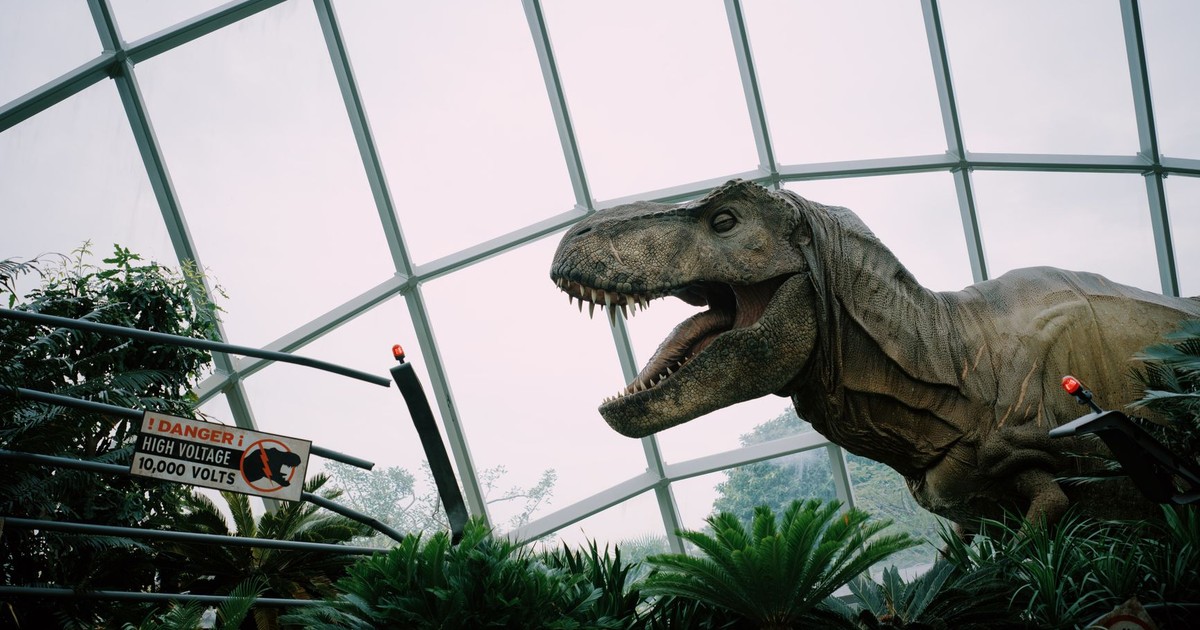
Steven Spielberg’s dinosaur thriller remains a masterclass in tension-building and practical effects. The scene with the cup of water and the approaching T. rex footsteps has been copied so many times that tweens often recognize it as the original without knowing why. Watching it with a kid who has only ever seen CGI-heavy blockbusters is a reliable way to spark a genuinely good conversation about filmmaking.
It’s rated PG-13 for a reason – a lawyer gets eaten on a toilet, people get mauled – but nothing lingers gratuitously. Most tweens in the 11-and-up range handle it without issue. The velociraptors in the kitchen sequence alone is worth the price of admission.
4. The Princess Bride (1987)
Romantic without being mushy, hilarious without resorting to potty humor, fast-paced without gratuitous violence – what’s not to love? This one is genuinely ageless: adults quote it obsessively and tweens discover it fresh. The deadpan comedy travels across generations in a way few films manage, working particularly well for kids who are starting to enjoy irony but don’t entirely trust it yet.
The movie is in on its own joke without ever winking too hard at the audience, and Timeout’s roundup of the best movies for tweens puts it squarely in the category of films that “remain unicorns in a sea of mean-spirited comedies.”
5. Back to the Future (1985)
The ’80s references soar right over the heads of today’s kids, but the clever premise, high stakes, and excellent performances still make it a rollicking good time. Marty McFly is the kind of protagonist tweens like: a normal, slightly frustrated kid who gets dropped into an impossible situation and has to think his way out.
The film also opens the door to one of those rare parent-child exchanges where you actually know more than they do for once. Explaining what a DeLorean is, why the mall was called Twin Pines, why a Walkman is funny – it’s unexpectedly fun territory.
6. Karate Kid: Legends (2025)
The 2025 installment brings together Jackie Chan’s Mr. Han and Ben Wang as Li Fong, a young kung fu practitioner who has to adapt his training to compete in a New York karate tournament. It bridges the legacy of the 1984 original and the 2010 remake in a way that works surprisingly well for tweens who came in through “Cobra Kai” and may not have seen either earlier film.
The action is clean and exciting, the mentorship dynamic is warm without being saccharine, and the New York setting gives it energy. It’s the rare franchise film that doesn’t require homework to enjoy.
7. Spy Kids (2001)
A case of role reversal where two spy kids attempt to save their mom and dad from evil, this action-packed flick comes from the mind of Robert Rodriguez, who proves his unique action vision applies as well to family fare as it does to his more adult films. The gadgets are ridiculous, the villain is campy, and Carmen and Juni Cortez remain some of the most entertaining tween protagonists in the genre.
For kids who are into the “kids are actually more competent than adults” fantasy – which is most of them at this age – Spy Kids delivers completely.
8. The Incredibles (2004)
Pixar’s superhero family film holds up as one of the studio’s finest. The film takes the idea of mid-life stagnation seriously (Bob Parr moping at a desk job he despises is somehow relatable even to an 11-year-old) while also delivering the best superhero action sequence to come out of an animated film. Edna Mode alone would justify the runtime. The sequel is fine; the original is great.
9. Moana (2016)
Moana set sail looking for the demigod Maui, but the film is really about the tension between who your family wants you to be and who you actually are. For tweens who are just starting to feel that particular friction, it carries more weight than it might seem from the outside.
The music ranges from genuinely great (“How Far I’ll Go” will be stuck in your head until further notice) to delightfully absurd (Tamatoa’s glam villain number), and the ocean animation is still some of the most beautiful work Disney has produced.
10. Encanto (2021)
The Madrigal family, each member gifted with a magical power – except Mirabel – is the kind of premise that sounds like setup for a heist film but arrives squarely as a story about family pressure, invisible children, and what gets lost when achievement becomes identity.
Lin-Manuel Miranda’s songs are catchy to the point of inescapability, and “Surface Pressure” in particular has become something of an anthem for middle children, overwhelmed older siblings, and parents who recognize themselves in Luisa’s exhaustion.
11. Mulan (1998)
The animated original remains one of Disney’s most straightforwardly exciting films, with a protagonist who earns every moment of her arc through actual skill and strategy rather than magic or luck. Tweens who feel like they’re constantly being underestimated tend to respond to Mulan with particular intensity.
Worth noting: the 2020 live-action remake has its admirers, but the 1998 film remains the one with the Donny Osmond banger and Eddie Murphy as Mushu, which puts it in a different category entirely.
12. Ratatouille (2007)
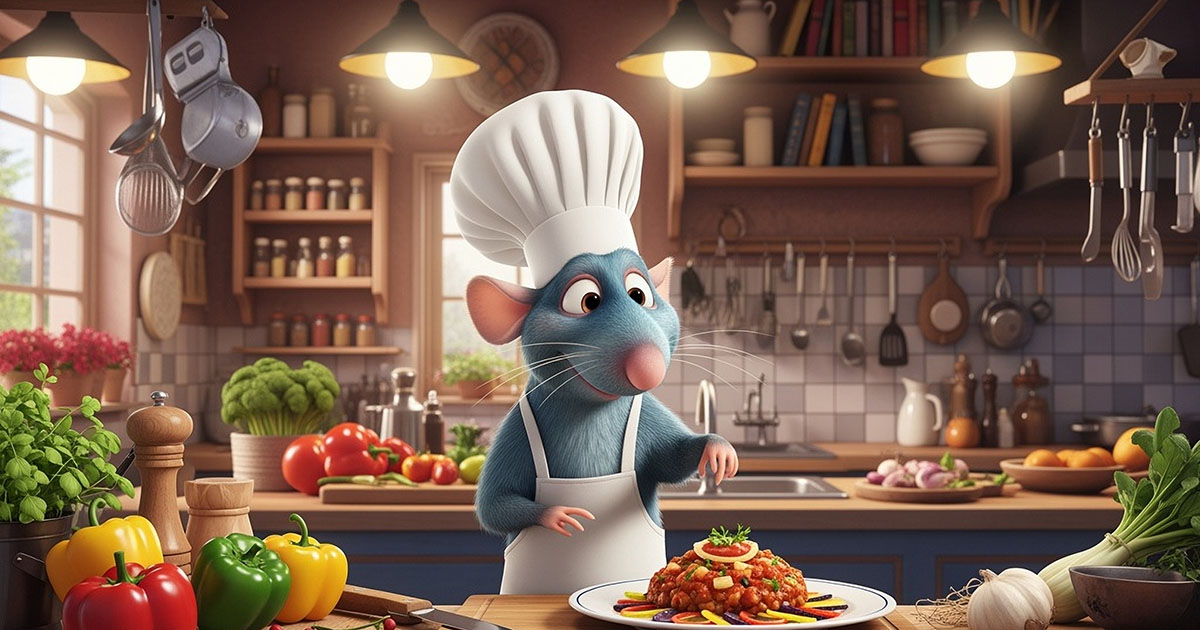
Remy the rat who wants to cook in a Paris restaurant is one of Pixar’s most genuinely peculiar premises, and it works precisely because the film never apologizes for its ambition. The animation of the Paris kitchens is extraordinary, and the late-film restaurant critic sequence – a grown man transported back to his childhood through a single bite of food – is one of cinema’s great small moments. For tweens with any creative interest being told they’re “not the right type” for something, this film will resonate completely.
13. Coco (2017)
Miguel’s journey into the Land of the Dead to reconnect with his music-playing ancestor is built on a mystery that genuinely surprises, and the film’s emotional climax – involving a grandmother and a song – remains one of Pixar’s most effective pieces of storytelling. It handles grief and family legacy in a way that is completely accessible to younger viewers without being simplified.
Fair warning: have tissues. Both of you.
14. Turning Red (2022)
Meilin Lee is thirteen, she loves a boy band, and she turns into a giant red panda when her emotions spike. The film is set in 2002 Toronto and is deeply, lovingly specific to a particular kind of first-generation immigrant experience – but even tweens who share none of those cultural details tend to recognize themselves in Mei’s desire to please her mother while also being her own chaotic, fandom-obsessed self.
It’s also one of the few animated films with a genuinely funny subplot about the boy band posters and the merch. Kids who are currently in their own intense fan phase will find it extremely comforting that the movie takes that seriously.
15. Brave (2012)
Merida refusing to be betrothed and accidentally turning her mother into a bear is a premise that sounds like a disaster but becomes, surprisingly, a genuinely affecting film about the mother-daughter relationship and the price of not listening to each other. For tweens in the middle of a rough patch with their own mothers (and their mothers), it’s oddly resonant.
The archery sequences are also legitimately thrilling.
16. Freaky Friday (2003)
Lindsay Lohan and Jamie Lee Curtis switching bodies remains a comedy that actually works. Curtis throwing herself into a teenager’s gait and slang is funnier than it has any right to be, and Lohan playing a grown woman trying to hold a law practice together while inhabiting her daughter’s body brings more layers than the script strictly required.
It’s also an unusually warm film underneath the comedy – by the end, both characters have genuinely understood each other more, and the film trusts the audience to care about that.
17. Freakier Friday (2025)
The long-awaited sequel brought Lohan and Curtis back with a new body-swap scenario involving Lohan’s character and her future stepdaughter. The concept leans into blended family dynamics in a way that feels current, and the chemistry between the leads picks up exactly where the original left off.
For tweens navigating step-parents or blended families, there’s something specific and useful in how the film treats the awkwardness of new family configurations with warmth rather than dismissal.
18. Ferris Bueller’s Day Off (1986)
This beloved ’80s comedy has some pretty salty dialogue, but kids adore Ferris and cheer as he gets away with the kinds of things most of us only daydream about. The fantasy of being seventeen, effortlessly charming, and capable of orchestrating a day of pure freedom in Chicago is as potent now as it was in 1986.
The scene at the Cubs game, the parade sequence, and the destruction of Cameron’s father’s Ferrari form a genuinely affecting emotional arc underneath all the hijinks. Ferris is fun, but Cameron is the heart.
19. Home Alone (1990)
Kevin McCallister left behind by his family and devising elaborate booby traps for two bumbling burglars is the kind of scenario that appeals directly to every tween’s deepest fantasy: being completely in charge of the house with no adults anywhere. The traps are violent in a purely cartoonish way – the physics of a paint can to the face only exist in this particular cinematic universe.
The emotional thread about Kevin missing his family and realizing he wants them back is handled with more sincerity than you might remember from childhood viewings.
20. Mrs. Doubtfire (1993)
Robin Williams in prosthetic makeup running a household he was barred from as a live-in nanny is a film that operates on pure comedic energy in the first half and then turns genuinely melancholy in the second. The scene where Daniel Hillard, still in disguise, has to comfort his daughter who is crying about her parents’ divorce without being able to admit he’s her father is one of Williams’ best performances.
For tweens in divorced or separated households, the emotional honesty about what that means for a family is handled with rare care. The film doesn’t pretend it’s fine.
21. Matilda (1996)
Roald Dahl’s story of a telekinetic child who outsmarts an abusive headmistress and a pair of deeply negligent parents was adapted by Danny DeVito into something genuinely anarchic. The Trunchbull remains one of cinema’s great child-hating villains, and Mara Wilson’s Matilda is the kind of protagonist who makes kids who feel unseen feel, for 102 minutes, like they could move things with their minds if they just tried hard enough.
The film doesn’t soften Dahl’s original edges, which is exactly why it works.
22. Knives Out (2019)
Technically PG-13 and more sophisticated than most on this list, Knives Out is the rare mystery film that works as a film-first rather than as a genre exercise. Rian Johnson inverts the whodunit structure within the first third, which means the audience is never quite watching what they think they’re watching.
For tweens who’ve declared themselves mystery fans and think they know how these go, it’s an extremely satisfying experience. The immigrant-rights subtext doesn’t distract – it drives.
23. Paddington (2014)
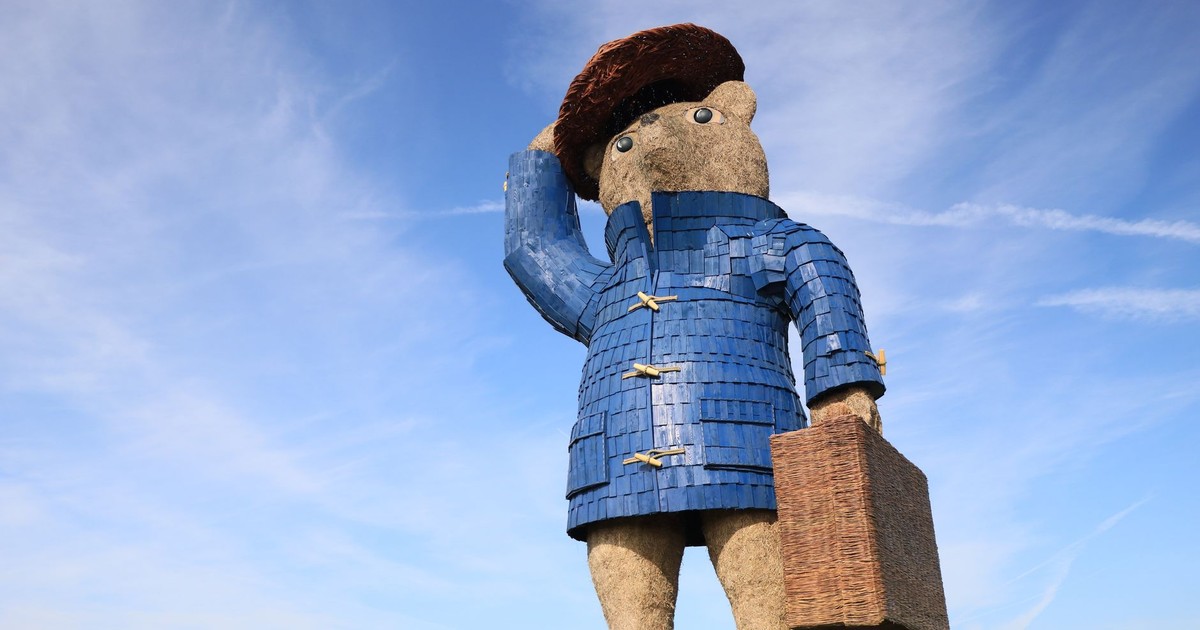
The idea of a Peruvian bear in a duffle coat arriving at Paddington Station looking for a family is executed with so much specificity and warmth that it works for nearly every age. The comedy is clever without being cruel, and the film’s underlying anxiety about what it means to belong somewhere feels meaningful rather than preachy.
The sequel, Paddington 2, is widely considered even better. They’re worth watching back to back.
24. The Parent Trap (1998)
Lindsay Lohan playing twins separated at birth who meet at summer camp and scheme to reunite their parents is a film that tweens tend to discover independently and then watch approximately forty-seven times. The summer camp sequences crackle with energy, Elaine Hendrix is a perfect villain, and Dennis Quaid and Natasha Richardson have genuine chemistry.
The emotion underneath it – two girls who have grown up with half a picture of their own family – is handled with surprising delicacy for a film marketed as a light comedy.
25. Princess Diaries (2001)
Mia Thermopolis discovering she’s heir to the throne of Genovia is, structurally, every middle school wish-fulfillment fantasy given a budget and Anne Hathaway in a frizzy wig. Julie Andrews as the Genovian queen is pitch-perfect, and the film’s core message – that being royal doesn’t mean pretending to be someone you’re not – is delivered without a single ounce of self-consciousness.
Princess Diaries 2 exists. Tweens will watch it immediately after.
26. Clueless (1995)
Amy Heckerling’s sharp adaptation of Jane Austen’s Emma, relocated to Beverly Hills and given a wardrobe budget that became its own cultural artifact, holds up in ways that surprise people who assume it hasn’t. Alicia Silverstone’s Cher is not the airhead the film’s surface would suggest – she’s a skilled social operator whose flaws are recognizable and whose growth is genuine.
Cher, named after “great singers of the past that now do infomercials,” is a pampered upper-class girl who also has an innate urge to help those less fortunate – and her journey from matchmaker to someone who understands what she actually feels is the arc the film is really about.
27. School of Rock (2003)
Jack Black playing a failed rock musician who lies his way into a substitute teaching job and turns a classroom of classical music-trained kids into a rock band is a film that works because Black’s enthusiasm is completely unfeigned. The kids in the ensemble are genuinely talented and given actual moments, which is rarer than it should be in films of this type.
The montage sequences are structured like a sports movie, which means the finale delivers the same satisfying release as a great comeback win.
28. Stand By Me (1986)
For a certain generation of parents, this was likely their first R-rated movie – and it still works as a good “starter R” pick today. There’s plenty of swearing and some gross-out moments, but ultimately it’s a realistic, nostalgic look at friendship and growing up. Four boys walk along a railroad track to find a dead body, and the film is entirely about what they find in each other along the way.
Best for older tweens, around 13 and up, whose parents are comfortable with language and some emotionally heavy material. The campfire scene where Chris Chambers breaks down is one of River Phoenix’s most devastating performances.
29. The Goonies (1985)
A group of kids in a coastal Oregon town facing the demolition of their neighborhood discover a pirate’s treasure map and set off to save their homes. The logic of the plot is entirely beside the point – The Goonies is about the energy of being twelve and running toward something with your friends at full speed.
Every tween who has been inside a group of misfit friends who function like a family will recognize something specific here.
30. E.T. the Extra-Terrestrial (1982)
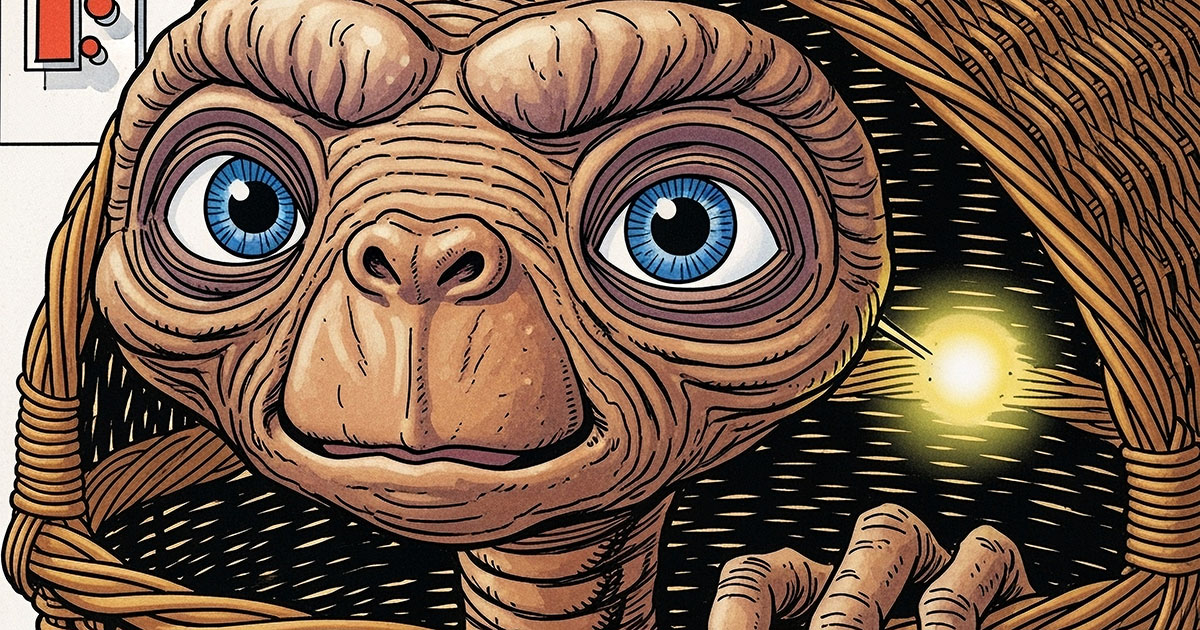
Elliot’s friendship with an alien stranded on Earth and his determination to help him get home is one of cinema’s most purely emotional relationships. Spielberg shoots the film from a child’s-eye perspective throughout – adults are barely seen above the waist for the first half – which gives the friendship between Elliot and E.T. an intimacy that still works four decades later.
The bicycle-against-the-moon silhouette is one of cinema’s most recognizable images for a reason.
31. Babe (1995)
A pig who wants to be a sheepdog is a premise that earns exactly the emotional response you hope for and slightly more. The film is funny, warm, and unexpectedly tense in its final act, and its treatment of belonging – Babe doesn’t stop being a pig, he just finds a way to do the thing he loves – is more sophisticated than the marketing ever suggested.
The Farmer Hoggett singing “If I Had Words” to a sick Babe remains one of the most effective scenes of its kind.
32. Harriet the Spy (1996)
Harriet M. Welsch, eleven-year-old dedicated note-taker and aspiring spy, keeps a journal of ruthlessly honest observations about everyone around her. When her notebook is discovered by classmates, the social fallout is swift and specific and, for a certain kind of tween who has always been the observer in the room, almost uncomfortably accurate. The film takes Harriet’s ambition seriously, which is what makes it last.
33. Wonder (2017)
Based on R.J. Palacio’s novel, Wonder follows Auggie Pullman, a fifth-grader with a facial difference attending school for the first time. The film gives chapters to multiple characters – Auggie’s sister, his best friend, the girl who is kind to him – which means it’s not only about disability or bullying but about how everyone is carrying something the people around them can’t see. For tweens who have ever been new, different, or on the outside of something, it tends to stick.
34. Eighth Grade (2018)
Bo Burnham’s feature debut follows Kayla, thirteen, through the last week of eighth grade. She makes YouTube videos about confidence she doesn’t have, exists on the fringe of her school’s social world, and has a dad who loves her in the way that dads do – earnestly, slightly clumsily, completely. The film is rated R for language and one uncomfortable scene, so it’s best for thirteen-and-up.
No film in recent memory has captured the particular loneliness of early adolescence with this precision. Both you and your tween will watch certain scenes through your fingers.
35. Harriet (2019)
Cynthia Erivo’s portrayal of Harriet Tubman, from her escape from slavery to her leadership of the Underground Railroad, is a biographical film that takes seriously both the heroism and the human cost. The film doesn’t sanitize the violence of slavery but frames it through Tubman’s extraordinary agency and courage. For tweens studying American history who are ready to understand it at a deeper level, this film opens the conversation effectively.
36. A Wrinkle in Time (2018)
Meg Murry, grieving her missing scientist father, travels across the universe with her brother and a classmate guided by three celestial beings. Ava DuVernay’s adaptation leans heavily into the visual spectacle and Meg’s emotional journey, and Storm Reid carries both with remarkable skill.
The film works best for tweens who are already readers of the source material or who are deeply invested in big-feeling, big-looking fantasy.
37. Harry Potter and the Sorcerer’s Stone (2001)
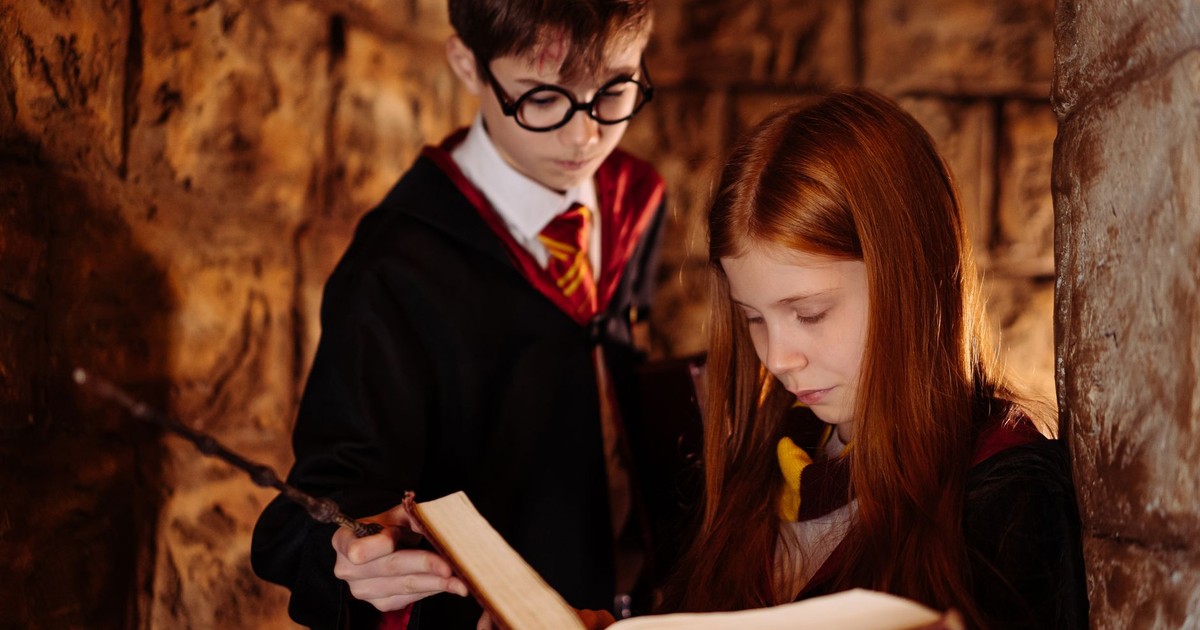
Lighter than other movies in the series but still exciting and full of magic, the first Harry Potter adventure is great for all ages. It’s also the one that most clearly captures the feeling of a world opening up – the Hogwarts arrival by boat across the lake, the first owl post, the discovery that you belong somewhere you’ve never been before.
The full series is one of the great home-marathon experiences of the tween years.
38. The Chronicles of Narnia: The Lion, the Witch and the Wardrobe (2005)
Four English siblings evacuated to a country house during World War II step through the back of a wardrobe into a snowy, witch-ruled land. The film handles the weight of the C.S. Lewis allegory lightly enough that it works for non-religious audiences while preserving the full emotional arc of the Aslan sacrifice sequence. For the right tween at the right moment, Narnia is as formative as Hogwarts.
39. The NeverEnding Story (1984)
Bastian, a bullied boy who hides in his school attic to read a magical book, finds himself drawn into the world of the story. The film is strange, melancholy, and genuinely unsure whether it’s a children’s film or something darker. Artax sinking into the Swamp of Sadness is the scene an entire generation cannot mention without visible distress. It has not aged uniformly, but the parts that work still work with unusual intensity.
40. Coraline (2009)
Henry Selick’s stop-motion adaptation of Neil Gaiman’s novella is the rare film that is definitively too scary for younger children and exactly right for tweens who want something with genuine menace. The Other Mother, the button eyes, and the hidden world Coraline finds behind a small door in her new house are constructed with patient, beautiful dread. For tweens who insist they “don’t get scared,” this is the reliable test case.
41. The Wizard of Oz (1939)
The 1939 MGM classic remains genuinely remarkable, not just as a historical artifact but as a working piece of cinema. The color transition from sepia Kansas to Technicolor Oz retains every bit of its original power. Judy Garland’s performance as Dorothy is not a child’s performance – it’s a full, emotionally intelligent piece of acting that most adults wouldn’t attempt. For tweens who’ve only ever seen references to it, actually watching it tends to produce surprise at how good it is.
42. Howl’s Moving Castle (2004)
Hayao Miyazaki’s adaptation of Diana Wynne Jones’s novel – in which an eighteen-year-old girl is transformed into a ninety-year-old woman by a witch and finds refuge in a walking castle belonging to the wizard Howl – moves at a pace that asks the viewer to settle in and pay attention. The animation is extraordinary, the romance is complex enough to feel earned, and the film’s anti-war theme is embedded rather than announced.
For tweens who are ready for something quieter and richer than most animated films, Studio Ghibli is the discovery that tends to stay with them.
43. Spirited Away (2001)
Chihiro, ten, stumbles into the spirit world with her parents, who are promptly transformed into pigs. She must earn her way back to the human world by working in a supernatural bathhouse. Miyazaki’s Oscar-winning masterpiece asks viewers to sit with uncertainty and ambiguity in a way that is surprisingly demanding for a film marketed to children. It belongs among the most beloved movies for tweens – the kind that older kids and grown-ups alike return to for years.
44. Labyrinth (1986)
Sixteen-year-old Sarah wishes her baby brother would be taken away by goblins, and then he is. What follows is a Jim Henson puppet fantasy with David Bowie as the Goblin King, one of the most iconic pieces of casting in any film aimed at a young audience. The film is genuinely strange and occasionally frightening, but the core of Sarah’s arc – learning to take responsibility for her words and choices – is solid under all the glitter. The Bowie soundtrack is, obviously, exceptional.
45. Bridge to Terabithia (2007)
Two children – Jesse and Leslie, outsiders at their respective school – create an imaginary kingdom in the woods near their homes. The film markets itself as a fantasy, and then, about two-thirds of the way through, it becomes something else entirely. It is not a comfortable film to watch with a tween, but it is one of the most honest films ever made about loss, imagination, and the way grief reshapes everything around it. Screen it before you watch it together if you want to be prepared. Or don’t, and let the experience hit the way it’s supposed to.
46. Interstellar (2014)
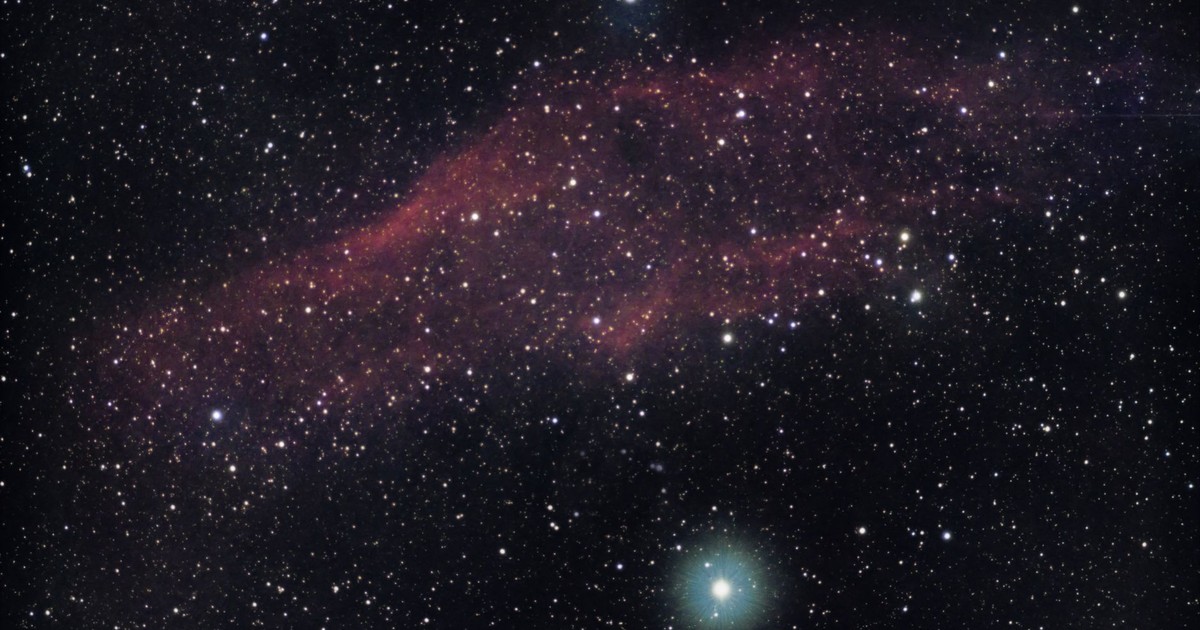
Christopher Nolan’s science fiction epic about a father traveling through a wormhole to find a new home for humanity is dense, long (nearly three hours), and emotionally exhausting in all the right ways. The fifth-dimensional bookshelf scene requires some post-movie conversation, but tweens who are drawn to physics, space, or big existential questions tend to find it absorbing in a way few films manage. The relationship between Cooper and his daughter Murph is the emotional core, and it earns its finale completely.
47. WALL-E (2008)
A small trash-compacting robot alone on an abandoned Earth, who falls in love with an advanced probe robot named EVE, is a film that works on pure visual and emotional storytelling for its first half without a single line of dialogue. It is also, obliquely, a film about consumerism, environmental collapse, and what it means to be human – none of which feels heavy while you’re watching it. The first twenty minutes are some of the most beautifully constructed filmmaking in the Pixar catalog.
48. Ender’s Game (2013)
The adaptation of Orson Scott Card’s novel follows Ender Wiggin, a young tactical genius recruited to a space military academy to train for war against an alien species. The film compresses a complex novel somewhat brutally, but for tweens who haven’t read the book, it works as a morally serious science fiction film that doesn’t pretend the protagonist’s choices are consequence-free. The ending – which recontextualizes everything that came before – tends to generate strong reactions and strong conversations.
49. Contact (1997)
Jodie Foster as Dr. Ellie Arroway, a SETI scientist who receives the first extraterrestrial communication, is the kind of film that asks big questions about faith, science, and what humanity would actually do if confronted with evidence of other life. It’s rated PG, which undersells how emotionally and intellectually demanding it is.
For tweens gravitating toward science, astronomy, or just asking bigger questions than most films bother with, Contact arrives at exactly the right moment in a young person’s viewing life.
50. Honey, I Shrunk the Kids (1989)
Rick Moranis as the distracted inventor dad who accidentally shrinks his children to a quarter of an inch and loses them in the backyard is a film whose premise is so elegantly simple it barely needs explaining. The backyard, scaled up to jungle proportions, is still impressive by any standard, and the children’s journey across the lawn is genuinely suspenseful. A relic of the late-80s family film golden age that still runs beautifully.
51. Zathura (2005)
Two brothers find a board game that launches their house into outer space – each roll of the dice triggering a new catastrophe. Director Jon Favreau made this as a spiritual companion to Jumanji, and it holds up well independently. The practical effects and actual sets (rather than green screen) give the film a physical weight that most adventure films of that era don’t have. For kids who loved Jumanji and want more of that energy with a space theme.
52. Hachi: A Dog’s Tale (2009)
Richard Gere as a professor who adopts a stray Akita puppy, and the dog who continues waiting for him at the train station every day for nearly ten years after his owner’s death, is a film that makes no pretense about where it’s going. It is sad. It will be very sad. It is based on a true story that happened in Japan in the 1920s and 30s. Watch this one knowing you’ve made an emotional commitment.
53. Hidden Figures (2016)
The true story of Katherine Johnson, Dorothy Vaughan, and Mary Jackson – three Black women mathematicians who played critical roles in NASA’s early space program – is the kind of history film that feels genuinely revelatory rather than like an assigned text. The sequences in the Mission Control room during John Glenn’s orbit are as tense as anything in a thriller. For tweens starting to understand that history has gaps and omissions, this is an excellent entry point.
54. October Sky (1999)
Homer Hickam, a coal miner’s son in 1950s West Virginia, becomes obsessed with building rockets after watching Sputnik cross the night sky. Based on a true story, the film is about the particular stubbornness required to want something your environment has decided you shouldn’t have.
Jake Gyllenhaal’s performance is one of his earliest and best, and the father-son dynamic – two people who love each other and can’t quite reach each other – is rendered without easy resolution.
55. The Pursuit of Happyness (2006)
Will Smith as Chris Gardner, a man navigating homelessness with his young son while completing an unpaid stockbroker internship, is one of the great father-child films. The film is hard to watch in places and deliberately so – Gardner’s situation is not softened, and the humiliations of poverty are rendered specifically enough to make them real. For tweens who have grown up with significant material comfort, it is a film worth discussing.
56. Soul (2020)
Pixar’s meditation on what makes life worth living – told through jazz musician Joe Gardner who accidentally gets separated from his body before the biggest night of his career – is the studio’s most philosophical film. The “Great Before” sequences, where unborn souls develop their personalities, are inventive in a way that rewards repeated viewing. It handles the question “what is your purpose?” with more gentleness than most films aimed at adults.
57. Inside Out (2015)
Riley’s emotions – Joy, Sadness, Fear, Disgust, Anger – are personified as characters navigating her internal world as she moves from Minnesota to San Francisco at eleven years old. The film’s central insight, that Sadness is not the opposite of Joy but her necessary companion, is stated plainly enough that a ten-year-old can hold it and sophisticated enough that a forty-year-old can sit with it.
Inside Out 2 (2024) extends the world effectively by introducing Anxiety as a character that older tweens will find immediately recognizable.
58. Peanut Butter Falcon (2019)
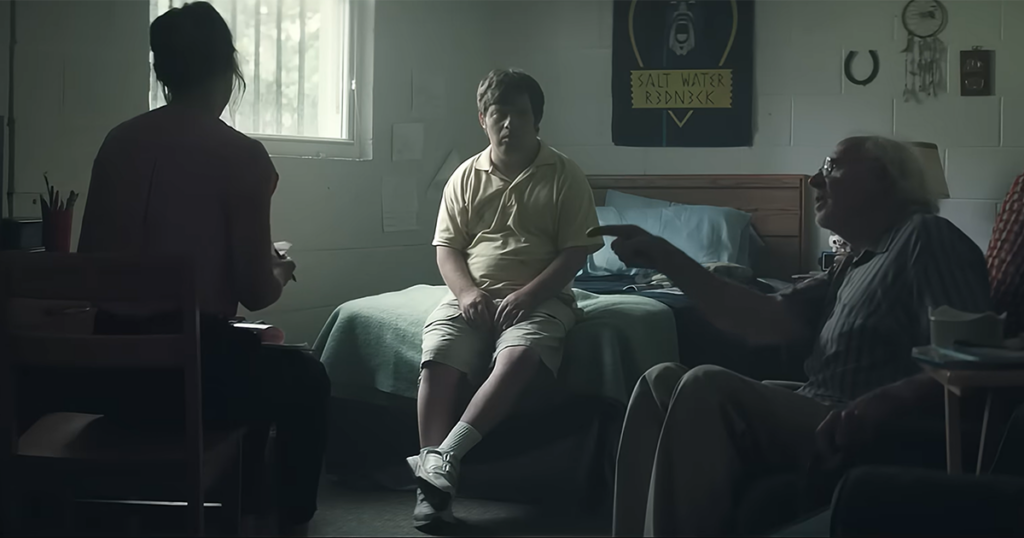
Zak, a young man with Down syndrome who has escaped from a care facility to pursue his dream of becoming a professional wrestler, teams up with Tyler (Shia LaBeouf), a small-time outlaw on the run. The film is set in the American South, shot on water, and has the warmth and looseness of a road movie made by people who genuinely cared about each character. It is rated R for language and is best for older tweens, around 13 and up. It is one of the kindest films made this decade.
59. Hoosiers (1986)
A small-town Indiana high school basketball team’s run to the state championship in 1952, coached by a newcomer with a troubled past. Gene Hackman’s performance is the spine of the film, but the team – specifically the reluctant star player Jimmy Chitwood – is its heart. The final game sequence remains one of the great sports movie climaxes.
60. Remember the Titans (2000)
The integration of a Virginia high school football team in 1971, based on true events, is handled here with enough nuance that the film avoids the traps the genre usually falls into. Denzel Washington as Coach Herman Boone and Will Patton as Coach Bill Yoast play their rivalry and eventual respect with specificity. For tweens studying civil rights history or playing team sports, the film offers a bridge between both.
61. Bend It Like Beckham (2002)
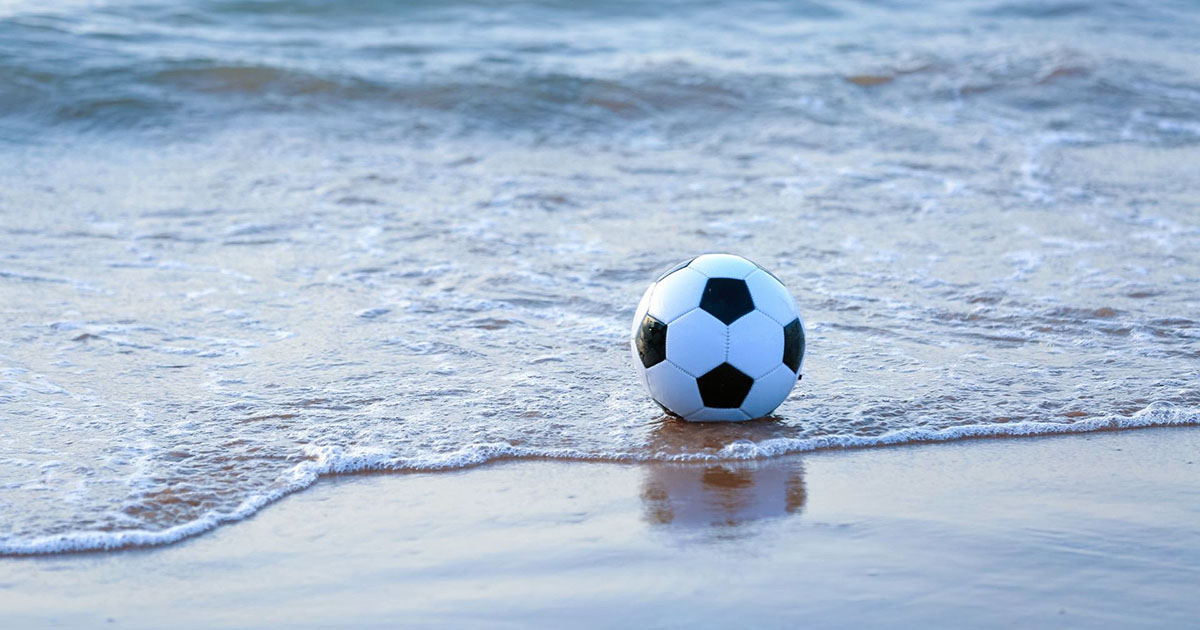
Jesminder “Jess” Bhamra, the daughter of a traditional British-Indian Sikh family, wants nothing more than to play football (soccer) at the highest level she can. The film balances the cultural negotiation of her home life with the exhilaration of what she can do on a pitch. Keira Knightley co-stars as Jules, whose own mother has different misconceptions about her daughter’s motivations. It is warm, funny, and unusually good on the specific texture of being caught between two worlds.
62. Cool Runnings (1993)
The very loosely true story of the Jamaican bobsled team’s first Olympic appearance in 1988 is a film that operates on pure feel-good energy without being dishonest about the obstacles the team faces. John Candy as their disgraced former Olympian coach is one of his warmest performances. For tweens who need to understand that “everyone told them it was impossible” is the beginning of the story, not the end.
63. Miracle (2004)
The 1980 US Olympic hockey team’s defeat of the Soviet Union – widely considered one of the greatest upsets in sports history – is re-created with enough procedural detail that the film works even for viewers who don’t care about hockey going in. Kurt Russell as coach Herb Brooks is quietly excellent. Pairs well with the actual archival footage of the game, which is worth watching after.
64. Clue (1985)
Based on the board game, with Tim Curry as the butler, multiple suspects, and three possible endings depending on which version of the film you see, Clue is one of the most purely fun films ever made about murder. It is not remotely scary, and its humor is dry enough that tweens who think they’re too old for silly things will still find themselves laughing involuntarily.
The boardroom scene with Tim Curry running through all the possible explanations at high speed is one of the great comedic performances in any film.
65. Holes (2003)
A boy named Stanley Yelnats IV – palindrome, no accident – is sent to a juvenile detention facility in the Texas desert where the warden makes the inmates dig holes in the dry lakebed. Based on Louis Sachar’s Newbery Medal-winning novel, the film builds its mystery slowly across multiple timelines and delivers an ending that genuinely rewards patience.
For tweens who read the book in school and have complicated feelings about it: the film is faithful in a way that makes it rarer than it appears.
66. A Series of Unfortunate Events (2004)
Jim Carrey as Count Olaf, the theatrical villain determined to steal the Baudelaire fortune from three orphaned children, is a film that commits fully to the gothic comedy of Daniel Handler’s novels. The world-building is exaggerated and stylized, and Carrey’s performance is precisely calibrated to be both funny and genuinely threatening.
The Netflix series (2017-2019) is also excellent and substantially more faithful to the books, but the 2004 film remains a satisfying standalone introduction to the world.
67. Sing Street (2016)
Set in 1985 Dublin during a period of economic recession, a teenage boy forms a band partly to impress a girl and partly to imagine his way out of a bleak situation. The music the band creates actually sounds like what a talented sixteen-year-old in 1985 would make – stylistically wide-ranging, technically imperfect, emotionally raw.
For tweens who are starting to understand that making something creative can be a form of survival, Sing Street is one of the most honest films about that experience.
68. Bohemian Rhapsody (2018)
The Freddie Mercury biopic is the rare music film that works for tweens who have never heard a Queen song before the opening credits, because Rami Malek’s performance pulls the audience in regardless. The film compresses and fictionalizes the chronology considerably, which is worth knowing, but the Live Aid sequence at the end is remarkable even knowing its inaccuracies. It is rated PG-13 for thematic material and substance use, and is best for tweens around 12 and up.
69. La La Land (2016)
A jazz musician and an aspiring actress fall in love in Los Angeles and are gradually pulled in opposite directions by their ambitions. Damien Chazelle’s film is visually stunning in a way that makes its emotional argument more effective – the gap between the film’s bright colors and its bittersweet ending is doing work.
The epilogue sequence, which imagines the life they didn’t live, tends to generate strong reactions from tweens who are beginning to understand that not all love stories end the way you want them to.
70. Billy Elliot (2000)
An eleven-year-old boy in a Northern English mining town during the 1984-85 miners’ strike discovers he wants to be a ballet dancer. The film holds both things at once: the political weight of the strike and the intensely personal story of a boy who doesn’t fit the mold his family and community have made for him.
Jamie Bell’s performance is extraordinary. The anger and the joy he brings to the dance sequences coexist in a way that feels entirely true.
71. Whale Rider (2002)
Paikea, a twelve-year-old Māori girl in New Zealand, believes she is destined to lead her tribe despite her grandfather’s conviction that the leader must be male. Keisha Castle-Hughes received an Oscar nomination for her performance at just thirteen, and it is entirely deserved. The film’s final sequence, involving a pod of beached whales, is one of the most visually and emotionally ambitious conclusions in any film aimed at this age group.
72. Moana 2 (2024)

The sequel expands Moana’s world significantly – new islands, a new crew, a new mythological threat – and while it doesn’t surpass the original, it gives Moana a story that’s genuinely hers rather than a retread. The animation is, if anything, more beautiful than the first film, particularly the water work. For tweens who grew up with the original and want to see what became of Moana, it delivers.
73. Transformers One (2024)
Unlike many of the live-action Transformers movies, this animated origin story is packed with personality and a solid plot – along with big bots and explosions – and Plugged In’s review notes that “by 2024 standards, the content concerns here should be pretty navigable for tweens on up.” It’s a fun, fast-paced, and lightly funny action film that families can enjoy.
The film works as a standalone even for tweens unfamiliar with the franchise, and its central friendship – between what will become Optimus Prime and Megatron – gives the franchise mythology a genuinely emotional foundation.
74. Inside Out 2 (2024)
The sequel introduces Anxiety alongside Riley’s original emotional crew as she approaches high school, and the film is remarkably precise about how anxiety operates: the compulsive planning, the catastrophizing, the way it can take over a personality without anyone’s conscious consent. For tweens in the middle of their own transition years, it validates an experience that is often hard to articulate.
It’s Pixar’s highest-grossing film of all time, which is the kind of data point that means something when it comes to a film’s cultural reach.
75. Elio (2025)
Pixar’s 2025 release follows eleven-year-old Elio, a space-obsessed loner who is accidentally beamed up to an intergalactic organization and mistaken for Earth’s ambassador. He has to hold that impossible position while trying to find his way home – a premise that is more literal than it first appears for any tween who has ever felt drastically out of place.
Early reception positioned it as a return to Pixar’s emotional specificity and visual ambition after a stretch of sequels. For a streaming alternative with similar energy, the Netflix originals actually worth your time list is worth a browse on the nights when no one can agree on what to watch.
The Films That Stay With Them
The movies for tweens on this list span more than eighty years of cinema, which is worth saying out loud: the tween years are one of the best windows to start building a real relationship with film history. A kid who watches Jurassic Park at eleven, Raiders of the Lost Ark at twelve, and Stand By Me at thirteen has a cultural vocabulary that will serve them in every room they walk into for the rest of their life. The good movies for tweens aren’t just the ones made for tweens – they’re the ones made for anyone who is willing to be moved.
Once kids have outgrown Disney princesses and Kung Fu Pandas, picking something for family movie night gets more challenging. If you want tweens to admit to genuinely liking your choices rather than just tolerating them with an eye roll, you need something cool and sophisticated – just not too cool and sophisticated. Some of these will miss, because every tween is different and every household has different thresholds. But the ones that connect will connect completely, and those are the films they’ll be recommending to their own kids twenty-five years from now. That’s a longer game than most people think about when they’re standing in the kitchen arguing about what to watch on a Friday night – and it’s worth playing.