

For nearly four years, New Zealanders wondered how a father and his three children could simply vanish into the bush. The disappearance of Marokopa resident Tom Phillips with Jayda, Maverick, and Ember turned into a national mystery. It also became a test of policing in particularly rugged country. That mystery reached its violent conclusion before dawn on the 8th of September 2025. Police say Phillips shot a constable at close range during a burglary response near Piopio in the King Country.
Officers returned fire, and Phillips died at the roadside. One child was with him, and information from that child helped police subsequently find the two siblings at a remote campsite. Officials said the children were “well and uninjured,” and asked for privacy as trauma-informed care began. But how did we get to this point? Why was the father able to evade detection for so many years? Why did he take them in the first place? In order to answer these questions, let’s start at the beginning.
A Battle for Custody
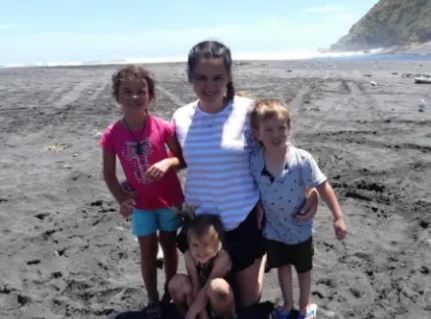
The story began with a family dispute and a custody battle that intensified through late 2021. It was a weekend in mid-September that the father and his children first disappeared. They were last seen at the family’s Marokopa farm on Saturday, the 11th of September. Two days later, on Monday the 13th, their Toyota Hilux was discovered down on the sand at nearby Kiritehere Beach with the keys placed underneath the driver’s mat. The police then launched a major land, sea, and air search from Marokopa Hall. Early assessments considered the possibility they’d been swept out to sea, but days of searching found no trace. Daily operations were eventually suspended on the 24th of September. They suddenly reappeared on the 30th of September, walking through the door of the family home, telling whānau they had been camping in the bush.
After a brief disappearance that September, Tom Phillips vanished again with his children around the 20th of December 2021. This was shortly after the parents separated and amid Family Court proceedings. At the time, the children were living on Phillips’ parents’ farm and being homeschooled. Through 2022 and 2023, leads were scarce, then the case sharpened. In September 2023, police announced charges over a Te Kūiti bank robbery, alleging Phillips took part in an aggravated robbery and wounding and unlawfully possessed a firearm. Acting Detective Inspector Andrew Saunders said at the time, as a warrant to arrest was issued and warnings about risk escalated. Credible sightings finally surfaced in October 2024, when pig hunters reported seeing Phillips with the three children on farmland near Marokopa.
The Final Hours in Piopio
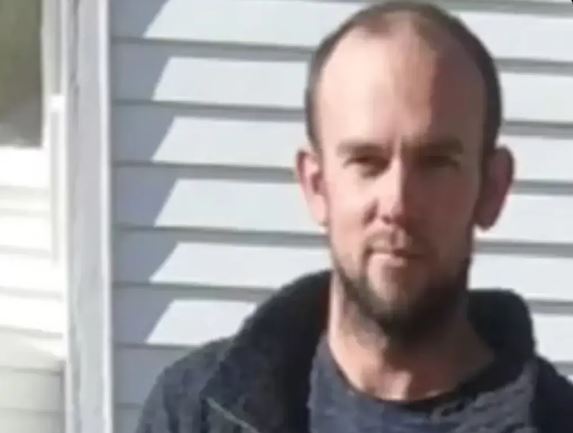
Police say a 2:30 a.m. call about a burglary at a farm-supplies store set everything in motion. A witness described two people on a quad bike in farm gear and headlamps. Officers who suspected Phillips deployed road spikes at the intersection of Te Anga and Waipuna Roads. Minutes later, the quad bike hit the spikes and coasted to a stop. As the first constable stepped from the patrol vehicle, Phillips allegedly opened fire with a high-powered rifle. He ended up striking the officer in the head and shoulder. A second unit arrived almost immediately and returned fire, fatally wounding Phillips. Police attempted first aid; the injured constable was airlifted to Waikato Hospital for emergency surgery.
In a formal statement, Acting Deputy Commissioner Jill Rogers said, “Police have fatally shot a man after a confrontation following a burglary. One officer was struck in the upper body, causing serious injuries.” Hours later, she added that formal identification was pending, “but the Police believe the man to be Tom Phillips.” One of the three children, present on the quad bike, was taken into care at the scene and provided support. Information from that child led police into dense bush. Late that afternoon, they found the siblings alone at a hidden campsite roughly two kilometres from the shooting.
“They are well and uninjured; they will be taken… for medical checks,” Rogers told reporters. However, she declined to discuss the children’s mental state. She added that “While they are safe, this is the start of a long journey of recovery and their welfare remains our top priority.” The children’s mother called the day a “wave of complex emotions. She added that “First and foremost, we are deeply relieved that for our tamariki this ordeal has come to an end. At the same time, we are saddened by how events unfolded today.” She asked for privacy to help the children reintegrate into a stable and loving environment.
How Did They Remain Hidden for So Long?
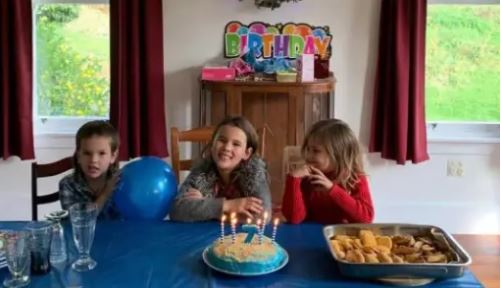
The case gripped the country because it seemed to defy the modern surveillance era. The Waikato west coast is laced with steep gullies and native bush that can defeat even coordinated searches. Police and reporters who later reached the campsite described a semi-fixed hideout with tarps and camouflage netting, a gas canister, and off-road machines tucked under cover. These are clear signs of mobility and planning rather than a single dug-in bunker. Photos released by police showed the improvisation of a long bush stay. Additionally, officials suggested Phillips likely had help at points along the way.
In the days after the shooting, Police Commissioner Richard Chambers noted that one child’s cooperation “helped to better understand where the other children may be located.” This reveals that even seasoned search teams needed localised insight in such unforgiving terrain. The picture that emerged from interviews and images was of a family moving between sites and resupplying opportunistically. This way, they slipped through the gaps of a landscape most New Zealanders only glimpse from the highway.
The Wounded Constable
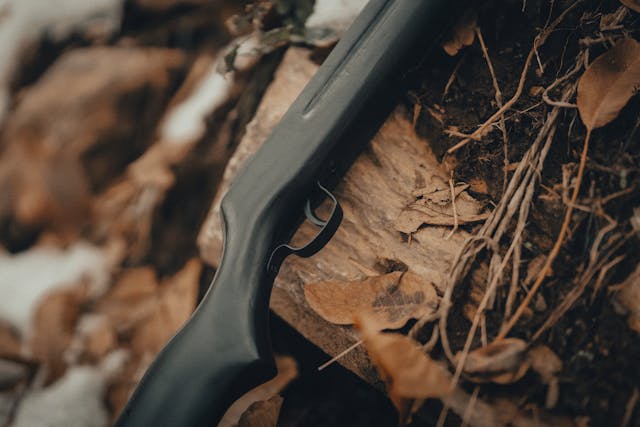
The injured officer’s condition was the focal point in the media in the first hours. Rogers told the media the constable had suffered “significant injuries,” underwent initial emergency surgery, and faced “many surgeries” to come. She later characterised the wounds as survivable but severe, stating, “he has been shot multiple times with a high-powered rifle.” Prime Minister Christopher Luxon called it a “sombre” day. He also praised the officer as a reminder that “police put themselves on the line every time, every day they put on that uniform.”
A critical-incident investigation began the same day, and the Independent Police Conduct Authority was notified. Separate inquiries will examine the use of force, tactical decisions on the roadside, and the four-year pursuit that preceded it. The Ministry for Children assumed responsibility for the children’s care, while detectives began tracing the firearms recovered around the bike. It did the same at the campsite to understand provenance and any offense connected to their possession. Officials cautioned that suppression orders will limit what can be said publicly until the legal processes are complete.
Relief of the Mother
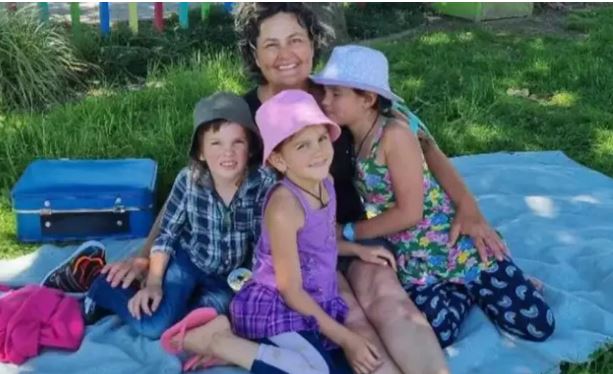
Beyond the operational detail lies the human reality of a family in pieces and a country searching for lessons. The mother’s statement centred the children’s welfare over any argument about blame: “We also extend our aroha to those in the community who have been affected, and our heartfelt gratitude to the many people who have supported us over these past four years.” She said the family would now “work in cooperation with the relevant government agencies to support the safe return and reconnection of our tamariki.” That language echoed Rogers’ careful phrasing about “wrap-around support.”
By this, she was referring to a coordinated approach to education catch-up and trauma care after years away. The wider debate now includes questions about where Phillips obtained firearms and whether anyone helped him. It has also raised questions about how search tactics should adapt for low-visibility offenders in remote terrain. The police have openly acknowledged the case’s difficulty and the likelihood of outside assistance. The reckoning will unfold slowly, but the immediate focus remains shielding the three young people involved as their lives restart.
What is Still Unknown
The investigative docket is long. Police say it is “clear” Phillips had help over the years, but identifying helpers, supply routes, and any criminal liability will require interviews, forensic work, and financial tracing. The firearms trail may illuminate who armed him and how often he re-armed while mobile in the bush. Officials will also map the children’s path, how frequently they moved, where they sheltered, and what they ate, though much of that may remain private to protect their recovery.
There will be scrutiny of operational choices on the night, including whether the roadside engagement could have unfolded differently in the seconds between the bike stopping and the first shots fired. Any broader inquiry into the multi-year search will assess resourcing, use of aerial and thermal assets, and coordination with rural communities that know every track and creek. Until those reports land, some gaps are inevitable. But in the words of Rogers, “today’s outcome is not the one we wanted,” and the priority now is ensuring that “the start of a long journey of recovery” for three children happens out of the spotlight.
Read More: Emmanuel Haro’s Father Admits to Murdering Baby Emmanuel Haro and Leaving Body in Trash
Similar Recent Events

The Tom Phillips saga is not unique, despite its striking New Zealand setting. In Britain, Constance Marten and Mark Gordon fled across England during winter 2023. They avoided digital trails by paying cash, switching taxis, and camping in fields. Their newborn daughter, Victoria, tragically died from hypothermia while they hid. A nationwide manhunt mobilized hundreds of officers during weeks of urgent searching. Courts later convicted the couple in 2025 for manslaughter by gross negligence. They also faced convictions for child cruelty, concealing a birth, and perverting justice. The sentencing judge condemned their severe neglect and deliberate evasion of authorities. Reporters noted their calculated movements and the intense public effort involved.
Across the Pacific, another case underscored similar operational difficulties and uncertainties. Washington state authorities hunted for Travis Decker through rugged forest and campground country. Investigators accused Decker of killing his three daughters before disappearing into the wilderness. Search teams used aircraft, federal support, and repeated alerts to canvass vast terrain. Leads arose from trailheads and backroads, then cooled as conditions and tips shifted. Officials announced later that year that they had determined Decker to be dead. Earlier sweeps had even flagged non-human bones, illustrating confusion within chaotic searches.
The investigation highlighted sparse cell coverage and the challenges of remote landscapes. Families and communities required careful, trauma-informed communication throughout the prolonged uncertainty. These cases hit home because everyday family trouble can escalate into risky off-grid flight. Once people step outside support systems, the danger and confusion rise very quickly. Police have to move fast while staying patient, precise, and closely connected with communities. Locals often know tracks and hideouts that maps and databases simply miss. Careful forensic work can stitch scattered sightings into a clearer operational picture. Harsh weather, rough terrain, and secrecy can overwhelm even advanced surveillance tools.
The Bottom Line
In the end, this story is about three kids finally stepping out of the bush and into a world that kept waiting for them. There’s relief, yes, but also grief and a lot of unanswered questions. The night in Piopio brought a sudden, violent finish to years of uncertainty, and it left an injured officer, a dead father, and a family trying to make sense of it all. What comes next isn’t a headline or a press conference; it’s slow, careful work. It’s doctors, social workers, teachers, and loved ones helping three young people rebuild routines, reconnect with the community, and feel safe again.
Officials will keep investigating how this happened, who might have helped, and whether anything could have unfolded differently. Those reviews matter, not just for accountability but for the practical lessons they can offer about searches in tough country and the quiet warning signs that can be missed. For now, the most important thing is simple: give the children space and time. As their mother put it, they have endured a long and difficult journey, and they deserve a chance to adjust and reintegrate into a stable, loving environment. If the country can meet that moment with patience and care, this long-running mystery can close with something like dignity.
Disclaimer: This article was created with AI assistance and edited by a human for accuracy and clarity.
Read More: Samantha Stites: Who Abducted Her and What Is Her Life Like Now?