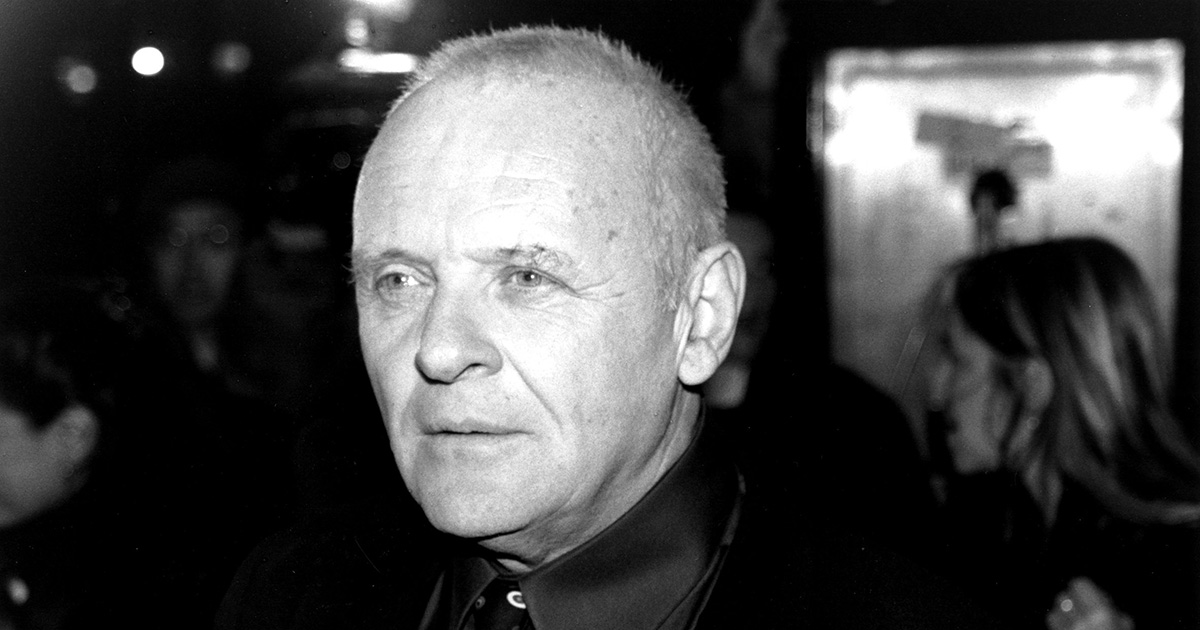

The conversation around Hollywood’s best is one that never really ends. Every awards season, a new name enters the debate. Every decade, the list reshuffles. But when you ask which male actors have genuinely earned the respect of their peers, the industry, and the audience all at once, the list gets shorter, and the names on it start to feel almost inevitable. Not because they’re the most famous, but because when you watch them work, there’s nothing to argue about.
Respect in this industry is earned in a specific way. It’s not box office grosses, though those matter. It’s not the number of awards, though those reflect something real. It’s the moment when a generation of filmmakers starts casting someone because they raise the level of every scene they’re in. It’s when other actors cite your name in their acceptance speeches. It’s the director who calls you first, not second. The most respected male actors are the ones who manage all of this across decades, not just one career-defining film.
What follows is a reckoning with fifteen men who have, by any measure, earned a permanent place in that conversation. Some are legends from eras past. Some are still actively adding to their legacy right now in 2026. All of them, without exception, changed what it means to perform on screen.
1. Tom Hanks
Tom Hanks received six Academy Award nominations, including two consecutive wins for Best Actor for Philadelphia and Forrest Gump in 1993 and 1994 respectively. That back-to-back achievement is almost impossible to overstate. He became only the second actor to win consecutive Best Actor Oscars, the other being Spencer Tracy. Think about that for a moment: a club of two, across the entire history of the Academy Awards.
What makes Hanks genuinely exceptional isn’t the trophies, it’s the range he refuses to limit himself to. In one decade alone, he delivered Captain Miller in Saving Private Ryan, Chuck Noland in Cast Away, and Woody in the Toy Story franchise. Dramatic weight, physical transformation, voice work. He did all of it at the highest level without any of it feeling like a stretch. His accolades include the AFI Life Achievement Award in 2002, the Kennedy Center Honor in 2014, the Presidential Medal of Freedom in 2016, and the Golden Globe Cecil B. DeMille Award in 2020.
He hasn’t slowed down, either. In early 2025, Hanks narrated the NBC documentary series The Americas, and in May 2025, he played a supporting role in Wes Anderson’s The Phoenician Scheme. The man critics once called “America’s Dad” keeps finding new corners of the craft to occupy. That is the hallmark of a great actor, not just a famous one.
2. Denzel Washington
Denzel Washington has won two Academy Awards: Best Supporting Actor for Glory (1989) and Best Actor for Training Day (2001). Washington is one of nine actors nominated for an acting Academy Award in five different decades. That span alone tells you something. Most actors peak once. Washington has circled back to the top of the conversation again and again across forty years.
Washington has influenced and mentored numerous actors including Chadwick Boseman, Mahershala Ali, Michael B. Jordan, Jamie Foxx, and Glen Powell. When Michael B. Jordan mentioned Washington by name in his 2026 Oscar speech, it wasn’t a surprise to anyone in that room. In 2020, The New York Times named Washington the greatest actor of the 21st century. He is the actor other actors hold up as the model for what a career should look like.
In 2024, Washington starred in Ridley Scott’s epic historical drama Gladiator II, alongside Paul Mescal and Pedro Pascal, earning a Golden Globe nomination for a performance described as the standout aspect of the film. He has appeared in six productions on Broadway, and his most recent role saw him portraying Othello in a 2025 production that also featured Jake Gyllenhaal as Iago, earning critical and commercial success. At 71, he is still the most interesting person in any room he walks into.
3. Daniel Day-Lewis
The 21st century completed Daniel Day-Lewis’s remarkable record of winning the Best Actor Oscar three times, a feat that isn’t likely to be replicated anytime soon. He won for My Left Foot (1989), There Will Be Blood (2007), and Lincoln (2012), then stepped away from acting entirely in 2017. No farewell tour. No announcement. Just an exit from the profession he had dominated for thirty years.
Day-Lewis is one of cinema’s greatest method actors, committing deeply to physical transformations, studied voice work, and the psychological complexities of characters undergoing extreme personal struggles. For My Left Foot, he spent the entire shoot in a wheelchair. For Lincoln, he refused to break character between takes for months. You can read those stories as obsessive. You can also read them as a man who understood that the audience deserves everything you have.
The three Oscars are the record, but the reputation goes beyond hardware. Among directors and fellow actors, Day-Lewis occupies a separate category. When Paul Thomas Anderson cast him in There Will Be Blood, he later described it as the most fortunate thing that happened to him as a filmmaker. When a director says that about an actor, you’re not really talking about acting anymore. You’re talking about something closer to a force of nature.
4. Anthony Hopkins
Hopkins became renowned with his Oscar-winning role as one of the greatest movie villains of all time, Hannibal Lecter, in The Silence of the Lambs. That performance is iconic, but his next nominated role reveals even more about his versatility. Barely 16 minutes of screen time in the entire film, yet so complete, so controlled, and so genuinely unsettling that it effectively redefined what a supporting performance could do.
He followed that chilling performance by playing the reserved butler in The Remains of the Day, making an astonishing transformation. While many peers have since retired or slowed down, Hopkins won his second Oscar in 2021 for The Father, becoming the oldest person to win an acting Oscar, at the age of 83. Winning an Oscar at 83 for a performance about cognitive decline, not with scenery-chewing grandeur but with barely perceptible confusion and fear, is about as impressive as acting gets.
Hopkins has been frank about his process: he reads scripts hundreds of times, often two hundred or more, until the character lives in his body rather than just his memory. That discipline, sustained over sixty years of professional work, is what separates great talent from great longevity.
5. Leonardo DiCaprio
According to Box Office Mojo and Rotten Tomatoes, DiCaprio’s most critically and commercially successful films include What’s Eating Gilbert Grape, Titanic, The Departed, Inception, The Wolf of Wall Street, The Revenant, Killers of the Flower Moon, and One Battle After Another (2025), with his films grossing $7.2 billion worldwide. That body of work covers almost every genre, every decade, and every type of director worth working with.
DiCaprio starred in Paul Thomas Anderson’s film One Battle After Another (2025), alongside Sean Penn and Regina Hall, playing a washed-up ex-revolutionary, earning his seventh Academy Award acting nomination. Seven nominations. One win, for The Revenant in 2016. The gap between nominations and wins is not a story of failure. It is consistent presence at the very top of the profession for over thirty years, which is arguably more impressive.
When you are still Scorsese’s first call at 51, the argument is settled. DiCaprio also confirmed a role in the planned sequel to the 1995 film Heat, and as of early 2026, he began shooting What Happens at Night, helmed by Martin Scorsese, starring alongside Jennifer Lawrence and Mads Mikkelsen.
6. Marlon Brando
No conversation about the most respected male actors is complete without accounting for the man who changed the rules everyone else plays by. Marlon Brando didn’t just act differently from his contemporaries. He acted from a different philosophical premise entirely. Among the most influential screen actors of all time, Brando hit Hollywood like a hammer in the early 1950s, fundamentally changing the definition of good acting, and with it films themselves. His deeply-felt naturalism was magnetic, and his power undeniable.
His most famous roles, Stanley Kowalski in A Streetcar Named Desire, Terry Malloy in On the Waterfront, and Vito Corleone in The Godfather, each became the touchstone performance in their respective films and, in most cases, their respective genres. On the Waterfront won him his first Oscar in 1954. The Godfather won him his second in 1973, which he famously declined. The refusal was a statement about Hollywood’s treatment of Native Americans, and it told you more about him than any acceptance speech could have.
Actors like Al Pacino, Robert De Niro, and Jack Nicholson all studied Brando. The Method acting tradition that runs through the best American screen performances of the last seventy years can be traced, in one way or another, back to him.
7. Jack Nicholson
Jack Nicholson holds the record as the male actor with the most Oscar nominations in his career, with twelve nods and three wins. The level of stardom he reached is even more impressive given that he began his career in low-budget B-movies, but that primed him to be part of the New Hollywood movement in the late 1960s, emerging as a new kind of leading man who wasn’t interested in being stoic or likable, but only focused on delivering memorable performances.
His range is almost deliberately difficult to categorize. Chinatown, One Flew Over the Cuckoo’s Nest, The Shining, Terms of Endearment, As Good as It Gets, About Schmidt. That list spans comedy, psychological horror, noir, and domestic drama. What ties it together is an actor who is incapable of being boring on screen. His breakthrough came in Easy Rider, where his irreverent performance added to the counter-culture reputation of the film, and he followed it with a commanding leading performance in Five Easy Pieces. He later excelled at playing complex and flawed protagonists in Chinatown and One Flew Over the Cuckoo’s Nest, while also having a lot of fun with villain performances in Batman and A Few Good Men.
Nicholson has been retired from acting for nearly two decades now, but the work he left behind shows no sign of aging. The performances are still very much present in the conversation.
8. Morgan Freeman
After getting his big break and his first Oscar nomination in the crime drama Street Smart, Freeman earned four other Oscar nominations for performances in The Shawshank Redemption, Driving Miss Daisy, Invictus, and Million Dollar Baby, the last of which won him his first Oscar. The first nomination came at 50 years old. The Oscar arrived at 67. His career arc is a reminder that some actors need time for the world to catch up to them.
Freeman’s specific gift is difficult to describe technically, which is perhaps the point. He doesn’t disappear into characters the way Day-Lewis does. He brings something consistent and irreducible to every role. When he speaks on screen, audiences shift their attention in a way that has nothing to do with volume or intensity and everything to do with presence. The joke about Morgan Freeman narrating things exists because the truth underneath it is real: when he speaks, people listen differently.
You can find performance breakdowns of actors who shaped modern cinema throughout film history. His performances in The Shawshank Redemption and Se7en alone would have secured a permanent place on any list of the most respected actors in Hollywood history. That he also delivered in Unforgiven, Driving Miss Daisy, and Million Dollar Baby is simply a bonus.
9. Al Pacino
When The Godfather came out in 1972, Al Pacino was almost cut from the film. The studio wanted someone more conventionally bankable in the role of Michael Corleone. Francis Ford Coppola insisted on Pacino, and what followed was one of the most absorbing performances in cinema history, a young man’s transformation from principled outsider to cold patriarch, played with almost unbearable restraint in Part I and devastating authority in Part II.
The Oscar didn’t arrive until 1993, for Scent of a Woman, which gave him his eighth nomination and first win. The eight nominations without a win became something of a running industry conversation, partly because the films he was nominated for, The Godfather, Serpico, Dog Day Afternoon, And Justice for All, Dick Tracy, and Glengarry Glen Ross, constitute one of the most remarkable runs of nominated work in Academy history. He was nominated eight times in twenty years. In any other era, he might have won four.
What endures about Pacino is the sheer commitment. His approach to character was total. Tony Montana, Michael Corleone, Frank Serpico, and Shylock on Broadway are not variations on a theme. They are entirely different people, each fully inhabited.
10. Robert De Niro
Robert De Niro’s collaboration with Martin Scorsese is the most celebrated actor-director partnership in American cinema. Mean Streets, Taxi Driver, Raging Bull, Goodfellas, Cape Fear, Casino, The Irishman. Seven films, and each one could anchor the career of a lesser actor. Together they are a sustained argument for what happens when a director and an actor find exactly what they are looking for in each other.
De Niro won his first Oscar for Best Supporting Actor playing the young Vito Corleone in The Godfather Part II (1974), effectively out-acting a role that Brando had won an Oscar for just two years earlier. His second Oscar came for Raging Bull (1980), where he gained 60 pounds to play an aging Jake LaMotta and delivered what many critics still consider the finest male performance ever committed to film. De Niro hasn’t won since Raging Bull in 1980, though he has produced remarkable work since then, including unnominated performances in The King of Comedy and The Irishman.
The most compelling argument for De Niro’s place on this list isn’t the Oscars. It’s that three generations of actors, from Sean Penn to Joaquin Phoenix to Timothée Chalamet, each went through a period of studying him the way a musician studies a master composer.
11. Cillian Murphy

Cillian Murphy won Best Actor at the 2024 Oscars for Oppenheimer, the first Irish actor to win in the lead category, after 25 years of exceptional work that the industry consistently respected and just as consistently under-rewarded. The win felt overdue in the way that only the right win can feel, because it wasn’t just rewarding a single performance. It was acknowledging a career.
Murphy’s particular skill is in extreme restraint. J. Robert Oppenheimer, the architect of the atomic bomb, is a character who could easily have been played as a tortured genius archetype. Murphy plays him as something more accurate and more unsettling: a man who is intellectually brilliant, morally compromised, and genuinely uncertain whether he made the right choices. The film runs three hours. He carries almost all of it on a face that gives almost nothing away until it gives everything away at once.
His earlier work in 28 Days Later, Batman Begins, Peaky Blinders, and Dunkirk showed range across genres. The Oscar finally matched the industry’s long-held private opinion. Directors like Christopher Nolan and Danny Boyle had been casting him in the most demanding roles of their films for decades before the Academy caught up.
12. Mahershala Ali
Mahershala Ali won back-to-back Best Supporting Actor Oscars, for Moonlight (2017) and Green Book (2019), becoming the first Muslim actor to win an acting Academy Award. Two Oscars in three years would be remarkable for anyone. For a man who spent most of his thirties in supporting roles in television, it was a stunning acceleration.
What the two wins don’t fully capture is the quality of the performances. In Moonlight, he plays Juan, a drug dealer who becomes an unlikely father figure to a young boy, with a warmth and complexity that is entirely at odds with the character’s occupation. The performance functions almost like a short story inside a larger film. In Green Book, he plays Dr. Don Shirley, a Black classical musician touring the Jim Crow South, and the dignity he brings to a man navigating constant dehumanization is one of the more quietly devastating things in recent American cinema.
Ali has continued to work in high-profile projects, including Swan Song (2021) and The Hunger Games: The Ballad of Songbirds & Snakes (2023). At 52, he is arguably still ascending. The industry certainly thinks so.
13. Christian Bale
Christian Bale’s reputation rests on something very specific: physical and psychological commitment at a level that consistently astonishes other professionals. The weight loss for The Machinist (63 pounds down to a reported 120), the rebuilding for Batman Begins (adding 100 pounds of muscle), the weight gain for American Hustle, and the transformation into Dick Cheney for Vice constitute a physiological record that is almost without parallel in contemporary film.
But the physicality is a vehicle, not the point. What Bale actually does inside those transformations is build characters from the inside out. Patrick Bateman in American Psycho is not a muscular psychopath. He is a specific kind of emptiness, a performance built entirely from what isn’t there rather than what is. Bruce Wayne in Christopher Nolan’s trilogy brought more psychological weight to a superhero role than the genre had any right to expect.
He won the Best Supporting Actor Oscar for The Fighter in 2011, playing the crack-addicted older brother of boxer Micky Ward, and received a Best Actor nomination for Vice (2019). The Academy has rewarded him. The more reliable signal of his standing in the industry is that directors like Nolan, Ridley Scott, David O. Russell, and Scott Cooper have all built films around him.
14. Brad Pitt
Brad Pitt spent most of the 1990s and 2000s being discussed primarily as a movie star rather than as an actor, which did some genuine disservice to a performer with considerably more range than the coverage suggested. Once Upon a Time in Hollywood gave him a deserved Oscar for Best Supporting Actor in 2020. Cliff Booth, the stuntman-driver-enigma at the center of Quentin Tarantino’s film, is one of the most effortlessly controlled performances in Pitt’s career. He does almost nothing in the conventional sense. He watches. He listens. He smiles at exactly the wrong moments. And somehow the character is completely alive.
The better argument for Pitt’s place on this list runs through his earlier work: Se7en, Fight Club, Snatch, The Tree of Life, Moneyball, and 12 Years a Slave. Each of those films required something different, and each delivered it. F1 (2025) proved he can still carry a blockbuster at 61 purely on charisma and screen presence, opposite a generation of actors half his age.
The respect Pitt commands in the industry now is the respect that accumulates from three decades of showing up prepared, taking risks, and consistently making the films he appears in better than they would have been without him.
15. Colman Domingo
Colman Domingo received two consecutive Best Actor Oscar nominations, for Rustin (2024 ceremony) and Sing Sing (2025 ceremony), making him the first actor to achieve back-to-back nominations in that category since Denzel Washington in 2017 and 2018. He did not win either award. He lost to, by any reasonable assessment, two of the best performances of their respective years. And rather than suggesting a runner-up story, the back-to-back nominations made an argument that simply doesn’t need the trophy to land.
Domingo came up through theater, spent years building a career in television and supporting film roles, and arrived at leading-man status in his early fifties. His performance in Sing Sing, playing a man finding meaning through theater while incarcerated, is the kind of work that shifts the conversation about what American film can do with a story about dignity and reinvention. It doesn’t ask for your sympathy. It just presents a fully human person and trusts the audience to respond.
He was named among Time’s 100 Most Influential People in 2024. His Emmy Award for Euphoria in 2022 confirmed what the theater world already knew: this is an actor who raises the material. At a moment when Hollywood is actively searching for who the next generation of commanding presences will be, Domingo is the clearest answer currently available.
What the List Is Really Saying
Put all fifteen names together and a pattern becomes clear. Respect in this industry isn’t awarded to the most likable, the most bankable, or even the most awarded. It goes to the actors who consistently refuse to coast. Tom Hanks doing Wes Anderson at 68. Denzel playing Othello on Broadway at 70. DiCaprio taking his seventh Oscar nomination for playing a washed-up revolutionary for Paul Thomas Anderson. These are not the choices of men managing legacies. They are the choices of people who are still genuinely interested in the work.
What’s worth holding onto is that this list exists in different forms in the minds of directors, casting agents, and fellow actors, and the names on it are remarkably consistent. Not because the industry agrees on everything, but because genuine craft eventually stops being a matter of opinion. You either make every scene better than it would have been without you, or you don’t. Every person on this list does. That’s the only standard that matters.
Disclaimer: This article was created with AI assistance and edited by a human for accuracy and clarity.