

The math has never actually been complicated. Take a standard 40-hour work week. Multiply by the federal minimum wage of $7.25 an hour. Then look up what a two-bedroom apartment costs anywhere in the country on Zillow. The number you’re earning doesn’t come close to the number you need. Not in rural Mississippi. Not in suburban Ohio. Not in any state, city, county, or metropolitan area in the United States. That’s not a rhetorical point. It’s the documented finding of the country’s most comprehensive annual housing wage report, and it’s been true every single year the data has been collected.
For anyone raising a family on a minimum wage paycheck, this isn’t a statistic. It’s a Tuesday. It’s the mental math happening in the parking lot of a grocery store, the calculation running in the background of every conversation about whether to renew the lease or move the kids to a different school district. The gap between what low-wage workers earn and what they need to pay rent has been widening for years, and the latest data makes the full scope of it impossible to look away from.
What the numbers reveal isn’t just that housing is expensive. It’s that minimum wage affordability in America has reached a point where the concept of a full-time worker affording a modest apartment, which was once the baseline promise of a job, has become functionally meaningless.
The Housing Wage: What It Actually Takes

Every year, the National Low Income Housing Coalition publishes its Out of Reach report, which calculates something called the Housing Wage – the hourly rate a full-time worker would need to earn to spend no more than 30 percent of their income on rent. Thirty percent is the widely accepted standard for what “affordable” means in housing policy. Spend more than that and you’re cost-burdened; spend more than 50 percent and you’re severely cost-burdened.
The national average Housing Wage in 2025 is $33.63 per hour for a modest two-bedroom rental home and $28.17 per hour for a modest one-bedroom rental home. Those aren’t luxury apartments. They’re HUD Fair Market Rent estimates for modestly priced rentals – the kind of place a family might reasonably hope to live in.
This year’s Housing Wage is more than four times the federal minimum wage of $7.25 per hour. And because Congress has not acted, the federal minimum has remained at $7.25 from July 24, 2009, to the present – a 17-year freeze that is the longest in FLSA history. Adjusted for inflation, the federal minimum wage has lost 30% of its value since 2009. The number on the paycheck has stayed the same while everything it can buy has quietly shrunk.
The Hours No One Can Work

There’s a figure buried in the Out of Reach data that puts the entire conversation into focus. Even after factoring in higher state and local minimum wages, the average minimum-wage worker in the U.S. must work 116 hours per week – 2.9 full-time jobs – to afford a two-bedroom rental home at Fair Market Rent, or 97 hours per week – 2.4 full-time jobs – to afford a one-bedroom rental home.
A week has 168 hours in it. Sleeping eight hours a night takes up 56 of them. Working 116 hours leaves a person with roughly four hours a day for everything else: cooking, childcare, commuting, eating, existing. The math is not a path to stability. It is a description of an impossibility dressed up as a solution.
In no state, metropolitan area, or county in the U.S. can a full-time worker earning the federal minimum wage, or the prevailing state or local minimum wage, afford a modest two-bedroom rental home at Fair Market Rent. This is the part that tends to get buried under conversations about state-by-state differences and local wage increases. Even the localities that have raised their wage floors have not come close to closing the gap.
The “Higher State Wage” Argument Doesn’t Hold
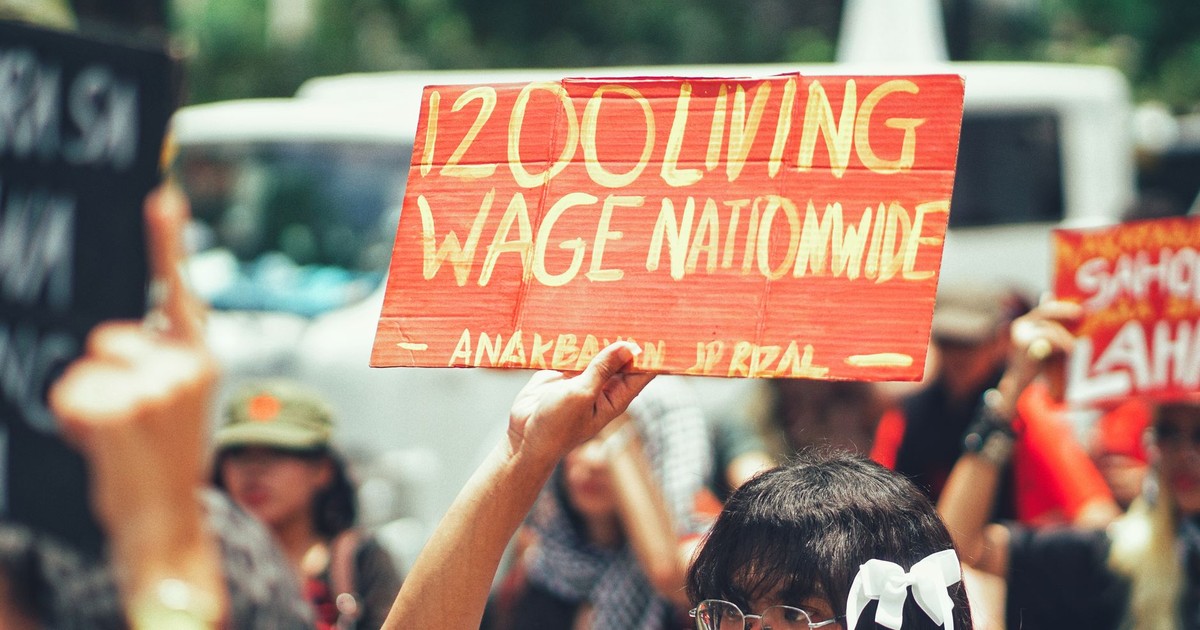
The most common pushback to this conversation goes roughly like this: “The federal minimum wage is irrelevant. Most states have raised theirs.” And it’s true that states have moved. With the federal minimum frozen, 30 states plus DC have set their own minimums above $7.25 as of 2026, and California, Connecticut, Delaware, DC, Hawaii, Maryland, Massachusetts, New Jersey, New York, and Washington have minimums at or above $15 an hour.
But the problem is that housing costs in those states have kept pace, and then some. In Massachusetts, the Housing Wage – the hourly rate a full-time worker must earn to afford a modest two-bedroom apartment – is $45.90. The average renter earns $28.66 per hour, leaving a gap of nearly $20 per hour. For minimum wage earners making $15 an hour, affording a two-bedroom apartment would require working 122 hours each week, or more than three full-time jobs.
64 localities have minimum wages that exceed the federal minimum wage or, where applicable, their state minimum wage. However, in each of these areas, the local minimum wage is still insufficient to cover the costs of a one-bedroom or two-bedroom home. Higher floors haven’t solved the problem. They’ve just moved the finish line.
Where the Gap Is Widest
Even in states with the least expensive rents, a renter working full time and earning less than $18 per hour is unable to afford a modest two-bedroom apartment. Housing wages are highest in traditionally high-cost states like California, Hawaii, New York, and Massachusetts, but areas with lower housing wages tend to have lower wages, so tenants in those areas still struggle to afford housing.
California and Hawaii are the only states where renters need more than $100,000 annually to afford a modest two-bedroom home. New York and Massachusetts are close behind at roughly $96,000, underscoring how quickly housing costs can outpace incomes in the nation’s most expensive markets. The housing wage in Santa Cruz County, California, for a two-bedroom apartment is $81.21 per hour – the highest in the country by a wide margin.
The trap in the “just move somewhere cheaper” argument is that cheaper housing markets also tend to offer lower wages. The ratio of what people earn to what they pay in rent is brutal almost everywhere, just differently brutal depending on where you are. The average hourly wage earned by renters nationally is $23.60 in 2025, which is $10.03 less than the national two-bedroom Housing Wage. And that’s the average renter, not the minimum wage worker.
Who This Actually Affects

Nearly half of U.S. renter households are cost-burdened. Approximately 22.4 million renter households experience housing-cost burdens, with 12 million classified as severely cost-burdened.
More than 60 percent of all workers earn an hourly wage that is less than the two-bedroom Housing Wage, and more than half of all workers earn an hourly wage that is less than the one-bedroom Housing Wage. This is not a problem confined to people working fast food or retail, though they are absolutely hit the hardest. Of the 25 most common jobs in the U.S., 17 pay median wages that fall below the Housing Wage for a one-bedroom rental and 18 pay below the two-bedroom Housing Wage. These 18 occupations employ approximately 74 million people – nearly half of the entire U.S. workforce.
The racial dimension of this crisis is documented and consistent. The median Black and Latino worker earn approximately $6.01 and $7.09 less per hour, respectively, compared to the median white worker. When the whole system is already underwater, those wage gaps translate directly into even fewer options and even less stability.
The Political Equation

The federal minimum wage, frozen at $7.25 since 2009, is now at its lowest real value in 77 years – a fact that has generated bipartisan acknowledgment, if not bipartisan action. In 2025, a bipartisan Senate bill introduced by Senator Peter Welch and Senator Josh Hawley proposed raising the federal minimum wage to $15 an hour, with automatic inflation adjustments going forward. Senior Democrats on the House and Senate’s labor committees have consistently introduced the Raise the Wage Act, which would raise the federal level most recently to $17 an hour in 2030, and index it to median wage growth. But Congress as a whole has failed to take action on the legislation.
In 2026, a total of 20 states will keep their minimum wages at the federal level of $7.25 per hour, and 8 other states with wage floors above the federal rate will not increase their minimum wages due to the absence of inflation indexing. Since 2020, overall prices have risen more than 23 percent, straining household budgets and pushing millions into economic insecurity.
Even a $15 federal minimum wage – the figure in the bipartisan proposal – would fall far short of the national Housing Wage of $33.63. It would help. It would not solve the problem. As NLIHC has noted, higher wages alone will not resolve minimum wage affordability at the current rate of rent growth. The supply of affordable housing is its own catastrophic failure layered on top of the wage problem. Extremely low-income renters in the U.S. face a shortage of 7.2 million affordable and available rental homes. Only 35 affordable and available homes exist for every 100 extremely low-income renter households.
If you want to understand more about what’s happening in the housing market more broadly, the supply-side picture is just as stark as the wage picture.
What This Means When It’s Your Life

The way this conversation usually goes, in policy circles and on think tank websites, is that it ends with a call to action or a list of proposed reforms. And those things matter. But the people who are living inside these numbers don’t have the luxury of waiting for reform. They’re making decisions about whether to put their kids in the car and drive two hours to a cheaper county, whether to take on a second job even knowing what 116 hours a week looks like in practice, whether to stay on a lease they can’t actually afford because the alternative – moving – costs money they don’t have either.
The data on minimum wage affordability describes a structural failure, not a personal one. The federal floor has not moved in 17 years. Rents have. Construction of affordable housing has lagged for decades. The 30 percent rule – the idea that housing should cost no more than 30 percent of your income – was designed in an era when that math was, at least sometimes, achievable on a minimum wage paycheck. It isn’t anymore, anywhere in the country.
87 percent of extremely low-income renters face some level of cost burden, and 75 percent experience severe cost burden – compared to 49 percent and 26 percent of all renters, respectively. Those numbers are not moving in the right direction. They are moving in the direction they’ve been moving for years, and the people at the bottom of the wage distribution are the ones absorbing every inch of that movement.
Some of these patterns go back further than any single piece of legislation or any single administration. Naming the gap between $7.25 and $33.63 isn’t a political act. It’s arithmetic. What to do about it is where the argument begins – but the argument can’t begin honestly until the arithmetic is on the table.
The Gap That Doesn’t Close Itself

The conversation about wages and rent almost always arrives at the same place: a list of proposals that stalled in committee, a set of numbers that have grown further apart every year, and a vague hope that the next election cycle will be different. The proposals are real. The stalling is also real. And the distance between $7.25 and $33.63 does not shrink on its own while the debate continues.
For the people living at the bottom of that gap right now, the policy timeline is not an abstraction. Every month that the federal minimum stays frozen is another month of choices that aren’t actually choices: which bill to defer, which trip to the doctor to skip, which conversation with a landlord to dread. The data on minimum wage affordability is stark enough that it doesn’t require embellishment, but the numbers can make it easy to forget that each one represents a household doing math that doesn’t work, every single day.
What’s worth sitting with – and naming plainly – is that this isn’t a new crisis waiting to be discovered. The Out of Reach report has documented the same fundamental impossibility for years. The housing wage has risen. The federal minimum wage has not. The people most affected have not run out of resourcefulness or resilience; they’ve run out of margin. That’s a different problem, and it calls for a different kind of honesty about what it would actually take to fix it.
AI Disclaimer: This article was created with the assistance of AI tools and reviewed by a human editor.