

Most people don’t lead with someone’s job title when they’re explaining why a relationship didn’t work. They talk about the missed dinners, the 2 a.m. work calls, the canceled plans that became a pattern, the way their partner’s professional identity seemed to crowd out everything else. But at the start, before all of that, many women admit they saw the job title on a dating profile and already had a feeling.
Women are, on the whole, more likely than men to identify various characteristics as a dating liability, and career is one that often goes undiscussed but drives more early exits than anyone likes to admit. Certain careers come pre-loaded with specific relationship pressures: irregular hours, financial instability, physical danger, emotional unavailability, or lifestyles that are fundamentally incompatible with building something stable with another person. The job title is a shortcut to a set of conditions, and women who have lived through those conditions once tend to know exactly what they’re signing up for if they do it again.
According to a 2025 Talker Research survey of 2,000 single Americans, 44% want a partner whose career ambition matches their own, and 39% want to be equal breadwinners, a preference far more common among women (45%) than men (33%). When jobs women consider dealbreakers come up in dating conversations, the conversation isn’t just about what someone does for money. It’s about what that job means for every shared Sunday, every future disagreement about where to live, every unspoken negotiation over whose career takes the backseat.
1. Military Service Member
Loving someone in the military asks a lot of you before the relationship has had a chance to ask anything of them. Deployments can last months or years. The location changes on someone else’s timeline. The career itself can relocate a couple across the country or the world on short notice, regardless of what either partner had planned professionally or personally.
Pentagon data show the military divorce rate has held steady at roughly 3% to 3.1% annually since 2014, with enlisted troops divorcing at a higher rate (3.5%) than officers (1.7%). The emotional weight of not knowing when your partner is coming home, or whether they are, combines with the strain of prolonged separations caused by deployments, which can lead to emotional disconnect and loneliness, compounded by frequent relocations that disrupt family stability.
For women who have already done a long-distance relationship, or who have watched a friend carry an entire household and a full-time job while a partner was deployed, the prospect of signing up for that again registers as more than just logistical inconvenience. Distance alone puts a relationship under pressure unlike almost anything else, and not knowing when they’ll come home, or whether they’re safe, creates chronic, low-level stress that doesn’t really go away.
2. Police Officer

Image Credit: Pexels
Law enforcement came up as the single most common answer when women were asked which careers would make them least likely to pursue a relationship. The reasons split into two categories that don’t overlap neatly: concern about values, and concern about lifestyle.
In an informal survey of women about undateable careers, law enforcement was the overwhelming top answer, with most citing the inherent danger of the work and noting the documented high rate of domestic violence in relationships where at least one partner is a police officer. Research consistently links high-stress, authority-based roles to elevated rates of relationship conflict, and the hypervigilance that can be an asset on duty doesn’t always switch off at home.
In the current climate, policing has become one of the biggest turnoffs cited by women for a potential partner, with some raising concerns about corruption and systemic issues in law enforcement. Whether or not that’s fair to individual officers, it reflects how politically charged the profession has become, and for women who hold strong views on policing, it can feel like a fundamental incompatibility before the first date.
3. Chef or Professional Cook
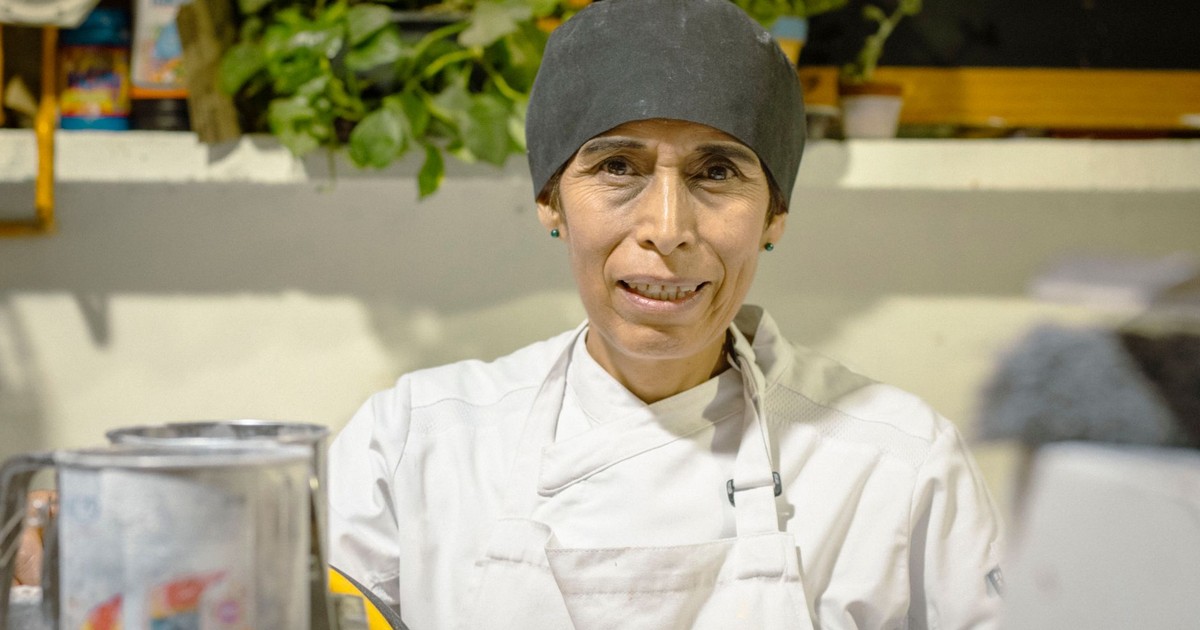
Image Credit: Pexels
The restaurant industry has a culture around it that takes some getting used to, and many women decide they’d rather not. Chefs and cooks work when everyone else isn’t: Friday nights, Christmas Eve, New Year’s, every summer holiday, every occasion that requires a reservation somewhere nice.
Working in a professional kitchen means missing most holidays and every weekend. The hours run late, the environment is high-pressure, and a culture of substance use as a coping tool runs through many kitchens. Irregular hours, late nights, high-pressure environments, and the substance use culture that shows up in many kitchens, is a package deal that’s difficult to separate. The industry also pays poorly relative to its demands for most people who aren’t at the very top.
If your partner is at work every Friday and Saturday night, your social life doesn’t sync. You stop going to the same things. You start having different circles. Over time, a lot of couples in this situation describe a growing distance that the occasional shared day off never closes.
4. Lawyer
Lawyers appear on the attractive list and the dealbreaker list simultaneously, which tells you something about the distance between what sounds appealing in theory and what it’s actually like. The same Talker Research survey cited lawyers as one of the most dateable careers at 24%, but women who have dated lawyers described them as people who argue like lawyers, caring more about being right than reaching a compromise, with long and sometimes unpredictable hours and a tendency to bring work home.
Legal work is cognitively exhausting in a specific way: it requires sustained focus, precision, and combative thinking that doesn’t decompress easily over dinner. Partners of lawyers often describe the experience of bringing something up and having it immediately litigated rather than heard.
The hours are also genuinely brutal at most competitive firms. Billing 60 to 80 hours a week is not unusual in BigLaw, and the culture at many firms treats personal time as an afterthought until partnership. For a woman who values presence, consistency, and a partner who can actually show up, the math doesn’t always work in the relationship’s favor.
5. Commercial Pilot

Pilots look good on paper, literally. The uniform, the travel, the idea of a partner who lands in different cities. In practice, the picture looks different. Commercial pilots are away from home for stretches of days at a time, on rotating schedules that are genuinely difficult to plan around. Long-haul pilots can be gone for three or four days consecutively, return for a day, and leave again.
Women who have dated pilots cite a concern that comes up repeatedly in conversations about this career: the combination of proximity to new people in unfamiliar cities, hotel stays with colleagues, and a schedule that’s hard to verify creates conditions that make some women deeply uncomfortable. As one woman recounted in interviews about undateable careers, being a pilot made it easier to have affairs, he could go to a completely different state for a few hours and be home for dinner. That specific concern, opportunity combined with an unverifiable schedule, comes up often.
Beyond the infidelity concern, the structural reality is that building a shared life with a pilot requires enormous flexibility from the partner who isn’t flying. Plans get canceled. Schedules shift. You become, by default, the person who handles logistics alone most of the time. For women who want genuine partnership in managing a household and family life, that arrangement often stops working before it starts.
6. Politician
Working in politics is, for many women, a dealbreaker that arrives wrapped in a values warning. A person’s political views are one of the strongest indicators of compatibility in a relationship, and women frequently name working in politics as an undateable career, citing not just potential value differences but several structural drawbacks that go with it.
The hours are unpredictable. The scrutiny is constant. A politician’s life is, to a significant degree, public property, and so, by extension, is the life of anyone partnered with them. For women who value privacy, who have children, or who have professional identities of their own that they don’t want defined by someone else’s campaign, this is a genuine sacrifice.
Politics rewards a certain relationship with truth, shading, triangulating, that doesn’t always translate well into a personal relationship. Women who have dated or been married to people in politics often describe feeling like they were permanently being managed rather than talked to honestly.
7. Finance (Hedge Funds, Trading, Investment Banking)

Image Credit: Pexels
The “man in finance” trope took on a life of its own in 2024 after a TikTok sound went viral, but the reality of the career tends to undercut the fantasy quickly. Investment banking and trading both demand the kind of schedule that leaves almost nothing left for a relationship, particularly in the early career years when the hours are the worst and the salary doesn’t yet justify them to a partner.
Women who have dated men in high-frequency trading or investment banking often describe a similar experience: a partner who is present in body but checked out mentally, who measures everything in terms of cost-benefit ratios, and whose identity is so fused with their professional status that it crowds out the ordinary parts of a shared life. Finance careers consistently rank below healthcare and other fields when women rate partner attractiveness by profession.
The income looks great from the outside, but the cost is often the partner carrying most of the emotional and domestic labor while their significant other is available in theory but somewhere else in practice. That imbalance doesn’t go unnoticed, and it tends to compound over time.
8. Actor or Professional Entertainer

Image Credit: Pexels
Women who considered entertainment an undateable field cited difficult hours and a lack of financial security as major concerns, particularly for people still trying to make it. Making a sustainable career in most areas of entertainment is genuinely difficult, and if one person in a relationship is financially supporting the other while waiting for a break, there’s potential for extreme strain and resentment, with no reliable timeline for when that dynamic might change.
That financial uncertainty is its own issue, but the identity dynamics that come with dating someone in entertainment are a separate layer of complexity. Acting in particular involves a constant rotation of new people, intimate professional environments, and a career that explicitly requires emotional openness and physical availability on screen or on stage. For a lot of women, those conditions are uncomfortable regardless of how much they trust their partner.
Someone genuinely pursuing an acting career will, by necessity, prioritize auditions, projects, and opportunities in ways that can make a partner feel like they’re always second in line. That isn’t necessarily a character flaw; it’s the structure of the career. But it creates conditions that are difficult to sustain in a long-term relationship without significant compromise from both sides.
9. Touring Musician

The touring musician dealbreaker is closely related to the entertainer one, but with its own specific texture. A touring musician’s career is literally built around being somewhere else. Festival season, support slots, headline runs, all of it means months on a bus or in a van with the same small group of people, traveling to a different city every two or three days, far from anyone back home.
The relationships that survive this tend to be ones where both people made an explicit, sustained decision that it was worth the distance. Most don’t. The combination of constant travel, close quarters with bandmates, late nights in unfamiliar cities, and an industry culture that has historically normalized a lot of behavior that would constitute dealbreakers in other contexts is a significant structural challenge. Women who have experienced relationship red flags with partners in this world describe the specific ways those relationships broke down, not dramatically, but through accumulated absences that eventually meant more than the good stretches.
10. Commission-Only Salesperson
The dealbreaker here is almost entirely financial, but the financial piece matters more than it’s polite to say out loud. Commission-only sales means that income is unpredictable month to month. A great quarter can be followed by one that barely covers rent. The psychological pressure of that instability tends to bleed into everything: moods, conflict frequency, willingness to make future plans, ability to contribute equally to shared expenses.
The Survey Center on American Life finds that women are more likely than men to identify financial instability in a partner as a dating liability. Commission-only work, particularly in the early years or in saturated industries, often doesn’t provide enough financial predictability for couples trying to build anything together. Women who have been in relationships where the variable income created recurring stress often describe it as one of the most corrosive forces a relationship can face, persistent, and hard to talk about without it feeling like an accusation.
11. Surgeon

Image Credit: Pexels
Surgeons are educated, high-earning, and by almost every obvious metric highly desirable on paper. The dealbreaker isn’t the prestige; it’s the schedule and the identity fusion that comes with it. Relationship coaches who work with medical professionals note that surgery is a stressful profession that regularly takes a toll on personal relationships, and surgeons or their spouses appear in counseling sessions with notable frequency.
The hours of a surgical career are notoriously extreme, particularly during residency and fellowship, which can span well over a decade of training. Even established surgeons are on call in ways that make consistent presence at home nearly impossible. Weekend surgeries happen. Emergency calls happen at midnight. A planned anniversary dinner becomes a waiting room. The partner absorbs all of this, and the expectation is usually that they do so graciously and without complaint, because the work is important.
The deference that comes with professional status in a hospital can create a dynamic at home where one person’s needs implicitly outrank the other’s, not out of malice, but out of conditioning. Women who have been in these relationships describe feeling like a supporting character in someone else’s career story.
12. Gig Economy Worker With No Stable Income

Image Credit: Pexels
The gig economy has grown substantially in the past decade, but from a relationship perspective, its structural instability tends to land in a similar place to commission-only sales: income that varies, no benefits, no predictable schedule, and a career identity that can be hard to communicate to a partner’s family, friends, or shared social world.
The specific difficulty with gig work, whether that’s rideshare driving, freelance odd jobs, or platform-based delivery, is that there often isn’t a ladder. There isn’t a promotion to wait for, a salary trajectory to plan around, or an organization providing any safety net. With 39% of women preferring to split financial contributions equally with a partner, the unpredictability of gig income makes equal contribution genuinely difficult to sustain. The result is often an accidental income imbalance that neither person intended, which can create tension about money, dependency, and future planning that’s hard to resolve without one or both people making significant career changes.
13. Street Performer or Seasonal Worker
Street performing and seasonal work, festival circuit work, seasonal hospitality, traveling fair or carnival employment, share the same core problem: the job is designed around movement. Street performers bring genuine creative energy to public spaces, but many women cite the nomadic nature of the work as a barrier, the move from location to location, combined with income that relies heavily on the unpredictable generosity of strangers.
Building a shared life requires, at some point, an agreement about where that life will be located. Seasonal work by definition involves periodic absence, and in many cases requires relocating for months at a time. For women who have their own careers, their own communities, or children, that pattern isn’t something they can restructure their lives around indefinitely.
Creative work done in public spaces is genuinely difficult and takes real skill. But the practical requirements of a long-term relationship, stability, presence, financial predictability, shared geography, are not easily met by work that moves.
Read More: 28 Fighting Words Husbands & Wives Use That Can Take Years To Undo
What’s Actually Behind the List

Every one of these jobs shows up as a dealbreaker for women for a reason that goes beyond the job title itself. Strip the labels away and the concerns cluster around the same handful of things: physical safety and what it does to anxiety over time, financial instability and the specific kind of strain that creates, chronic absence and how it erodes the ordinary fabric of shared life, and careers that consume identity so completely that there’s little left over for a partner.
The pattern isn’t really about judgment. It’s about information. A woman who has spent two years being the default household manager while her partner was on tour, or four years structuring her life around a surgeon’s on-call schedule, or three years riding out the income swings of commission-only work, has learned something concrete about what she can and can’t live with. Calling that a dealbreaker is just honesty about what the research and the lived experience both confirm: certain careers don’t just affect what someone does between 9 and 5. They shape the entire architecture of a shared life, right down to who makes dinner, who cancels plans, and whose professional identity gets treated as the one that actually counts.
None of this means any of these relationships are impossible. Plenty of them work. Military couples who have found rhythms that sustain them across deployments, surgeons whose partners built lives around the unpredictability, musicians who found someone who genuinely loves the lifestyle. But those relationships tend to succeed because both people walked in with clear eyes about what they were agreeing to, not because the structural challenges eventually sorted themselves out. The jobs on this list don’t usually soften over time. The question is whether both people can live well inside the conditions they create.
Disclaimer: This information is not intended to be a substitute for professional medical advice, diagnosis, or treatment and is for information only. Always seek the advice of your physician or another qualified health provider with any questions about your medical condition and/or current medication. Do not disregard professional medical advice or delay seeking advice or treatment because of something you have read here.
AI Disclaimer: This article was created with the assistance of AI tools and reviewed by a human editor.