

Most women who’ve dated men over 50 can tell you exactly when the pattern became clear to them. Not from cruelty. From coasting. From the man who, at some point in his early fifties, quietly concluded that he was finished – finished with growth, finished with effort, finished with the ongoing project of being someone a person would actually want to be around. He’s not mean. He just arrived at himself and bolted the door.
Women over 50 are often described as difficult to impress, and that framing gets it exactly backwards. They know what they want. They’ve spent decades being patient with men who weren’t ready and forgiving men who didn’t deserve it, and somewhere in the rearview is a long list of things they will not be repeating. The question isn’t whether her standards are high – it’s whether he has any idea what those standards actually look like.
What makes men over 50 unattractive to women in their peer group is rarely about gray hair or an honest waistline. Attraction at this stage of life is far more behavioral than visual. It’s the accumulated evidence of how a man carries himself, treats strangers, responds to being wrong, and comes through when something actually matters. Some of these patterns are fixable. Some have calcified into personality. Here is where they tend to cluster.
1. Hygiene and Grooming Neglect
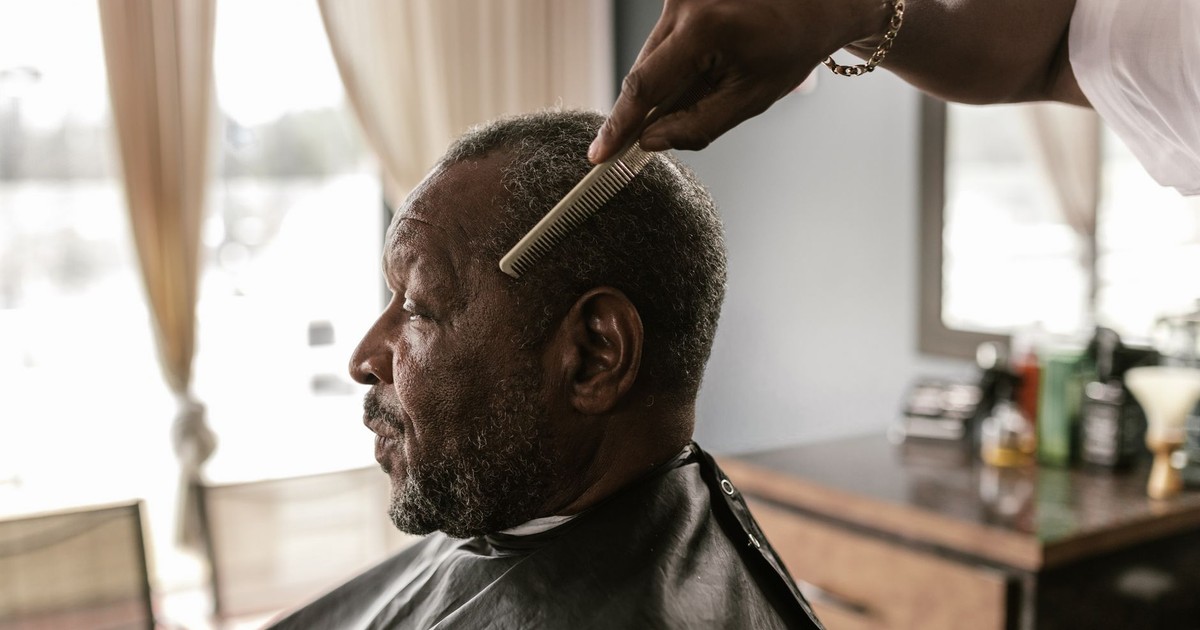
Some men in their fifties reclassify personal upkeep from basic self-respect into something optional, even somehow beneath them. The logic, if you can call it that, seems to be that effort with one’s appearance is for younger men still in the game. The problem is that the game did not end just because he decided he was done playing.
Messy hair, clothes that haven’t been updated since the second Obama term, persistent body odor, yellowing nails – none of these things are about vanity. They’re about giving the people around you the basic courtesy of your attention. A woman who takes care of herself, and most women in this age group do, notices when a man doesn’t. Not because she’s shallow, but because grooming is the most visible signal a person sends about how much they value themselves and the people in their company.
Dental hygiene is its own conversation. At 50, a man’s smile tells a story, and yellowing, neglected teeth are a chapter that reads as indifference – to health, to effort, to the other person across the table. None of this requires a spa regimen. It requires preparing like someone who considers the outing worth preparing for.
2. Emotional Unavailability

Women today aren’t asking for a man who cries at commercials. They’re asking for a man who can articulate something other than “I’m fine” when he is demonstrably not fine. Across long-term relationship research, kindness and emotional reliability consistently rank above physical attractiveness or financial status as traits women prioritize in a lasting partner – which means the old “strong and silent” archetype has genuinely lost the room.
The emotionally unavailable man over 50 tends to come in two flavors. There’s the one who genuinely cannot access his own interior and responds to intimacy with logistical deflection. And there’s the one who can access it perfectly well but has decided that sharing feelings is a vulnerability he won’t extend to his partner. Both experiences, from the outside, feel exactly the same: lonely.
A woman who has done her own emotional work – therapy, hard conversations, years of looking inward – finds nothing more exhausting than a partner who treats emotional honesty as optional. She’s not asking for a therapist-level excavation on a Tuesday night. She’s asking for a man who, when she says something matters to her, doesn’t immediately change the subject to the game.
3. Living in the Past

Every conversation returns, somehow, to when things were better. Better music. Better values. A better country. A better him, probably, though he’s the only one who remembers him that way. The nostalgia is constant, and after a while it’s less romantic than it is a warning sign. A man who lives primarily in his past isn’t fully available in the present.
Nostalgia about the good old days and an unwillingness to embrace the modern era can turn a man into a one-dimensional person. Women tend to be drawn to men who are inquisitive and receptive to change.
There’s a difference between a man who has genuine affection for his past – who can tell a story about 1987 with warmth and humor – and a man who has elected to live there permanently. The first kind is interesting. The second kind will, sooner or later, make her feel like she’s competing with a memory.
4. Arrogance and an Inability to Be Wrong

Confidence is attractive. The particular brand of arrogance that passes itself off as confidence – the kind that cannot admit error, cannot yield in an argument, cannot hear a differing opinion without re-routing the whole conversation back to why he was right all along – is something else entirely.
By 50, a man has had enough experience with being wrong to have gotten comfortable with it. The ones who haven’t developed that comfort tend to be exhausting company. They confuse certainty with intelligence. They lecture rather than converse. They treat every disagreement as a challenge to their fundamental authority, and they will relitigate a point from three hours ago rather than accept that they might have missed something.
A woman who knows her own mind – and most women in this age group do – has very little patience for a man who cannot tolerate hers. Arrogance at 50 doesn’t read as strength. It reads as a man who stopped updating his worldview somewhere around the time he stopped updating his wardrobe.
5. Chronic Negativity and Constant Complaining
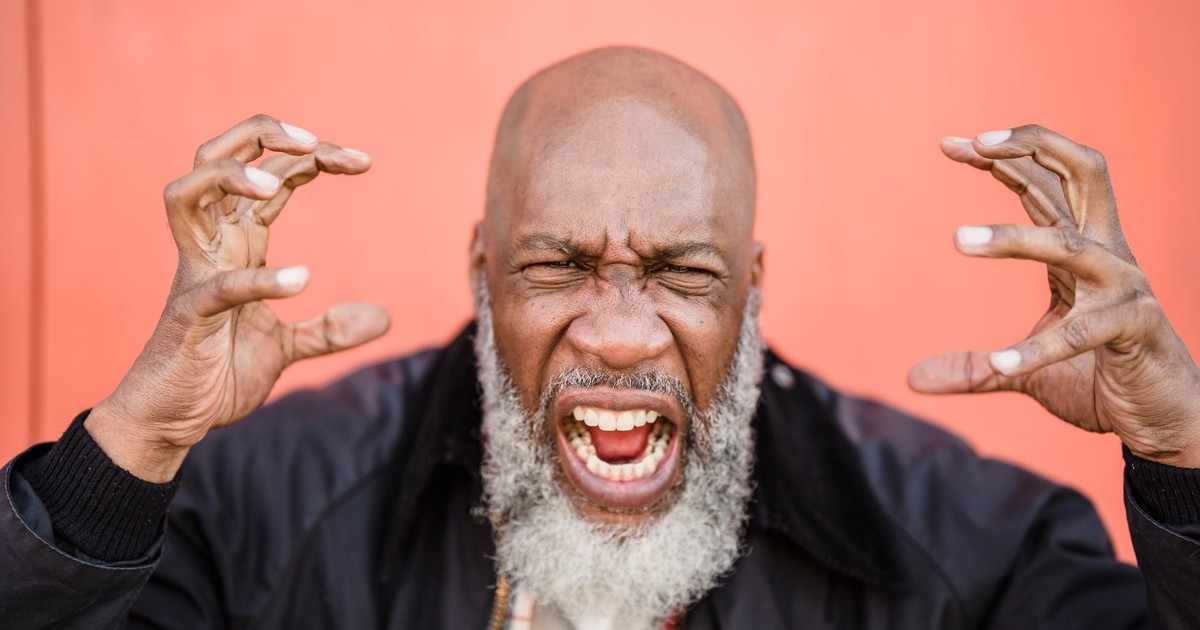
Everything is wrong. The restaurant was too loud. The service was slow. The movie was stupid. The neighbors are impossible. The world has gone to hell in an entirely specific and personal way that he alone has fully understood. He is not having a bad day – this is his posture.
Chronic negativity is one of the more energy-draining qualities a person can carry into a relationship. What makes it particularly grinding when paired with a man over 50 is the sense that it has fully calcified – that this is not a phase but a personality. He has had decades to practice. He has gotten very good at it. He has, in fact, built an entire identity around the idea that optimism is naïve and anyone who enjoys things hasn’t thought hard enough about them.
Women who have built happy, full lives – which many women in their fifties have actively worked to do – have very little interest in having that happiness systematically undermined by someone whose primary contribution to the room is grievance. Vitality is attractive. A running commentary on everything wrong with the world is not.
6. Misogynistic Attitudes

Some of these attitudes are bold and announced. He doesn’t think women belong in certain roles. He makes jokes that aren’t quite jokes. He talks over her at dinner, then looks confused when she’s quiet on the drive home. But plenty of them are subtler and, somehow, just as corrosive – the reflexive dismissal, the condescension that doesn’t even recognize itself as condescension, the assumption that her opinion on the subject probably doesn’t count the way his does.
Women over 50 have had a lifetime to recognize misogyny in all its iterations, including the ones that dress themselves up as protectiveness or tradition. They are not confused about what they’re seeing. And they are not going to pretend they’re not seeing it in exchange for the company.
A man who, at 50-plus, still holds onto the idea that women are somehow less equipped – intellectually, professionally, emotionally – has not learned a single thing from five decades of evidence to the contrary. That, more than the opinion itself, is what makes it unattractive.
7. Insecurity Dressed as Bravado

The man who needs constant reassurance is one kind of problem. The man who needs constant reassurance but expresses that need as dominance, volume, or a compulsive need to be the most impressive person in the room – that’s a more complicated one. Both are the same animal underneath.
Insecurity in men over 50 often comes out sideways. As competitive one-upmanship in conversations. As jealousy dressed up as concern. As a hair-trigger response to perceived slights that, on reflection, weren’t actually slights. It’s exhausting to be around, and women who have built their own self-regard find it particularly draining to be partnered with someone who has not done the same.
Confidence, actual confidence, doesn’t require an audience. It doesn’t need to announce itself. A woman over 50 has usually met enough of both kinds to tell the difference immediately.
8. Smoking and Heavy Drinking
This one isn’t purely aesthetic, though it is that too. Research published in Psychology Today notes that smoking and drinking may offer short-term attraction benefits in casual contexts, but actively lower a man’s long-term desirability – nonsmokers are viewed as more attractive overall when women are considering a lasting relationship.
At 50, the calculus moves even further in that direction because the health implications are no longer abstract. Heavy drinking belongs in the same category. A man who needs alcohol to relax at dinner, to get through a family event, to sleep – at 50, that’s not an endearing quirk. It’s a pattern, and women who’ve lived long enough to have watched a parent or a previous partner drink through a decade recognize the shape of it early. The timeline just varies.
None of this is a moral judgment on a glass of wine at dinner. It’s about the difference between someone who enjoys life and someone who requires a substance to access it.
9. Lack of Forward-Looking Ambition

Ambition doesn’t mean climbing a corporate ladder or chasing status symbols at 55. It means having something you’re moving toward – a project, a place, a person you’re trying to become. Ambition at this stage reflects a person’s perseverance and drive, a signal that there’s still something he’s engaged with, still something that pulls him forward. A man lacking that entirely can come across as directionless, which tends not to resonate with women who still have things they’re building.
The particular version of this that comes up over 50 is the man who has retired – from work, from effort, from caring about anything beyond his immediate comfort zone – and decided that the rest of life is just maintenance. No goals. No curiosity. No sense that there’s anything left he wants to do, learn, or be. He has arrived at the finish line of himself and planted a flag.
She, meanwhile, is probably still building things. Still learning. Still interested in what’s coming next. A man who has checked out entirely from forward motion makes a poor companion for someone who hasn’t.
10. Rudeness to Service Staff and Strangers

How a man treats a waiter, a cashier, or the person who messes up his order is a character test that runs under the surface of every early date. Women notice. They were trained by experience to notice. They have sat across from men who were charming and attentive toward them while being dismissive or contemptuous toward everyone in the service orbit around them, and they know exactly what that means.
Rudeness to strangers is not a quirk. It’s not stress. It’s not a bad day. At 50, it’s a pattern that has had decades to solidify, and the idea that she will be exempt from it indefinitely is a story he tells himself, not a guarantee she’s receiving.
The reverse is also true. A man who is genuinely kind to strangers – not performatively, just matter-of-factly – is quietly one of the most attractive things a woman can observe. It costs him nothing, and it tells her everything.
11. Refusing to Adapt or Learn Anything New

There is a difference between being set in your ways – comfortable, rooted, knowing what you like – and having actively closed the door on anything unfamiliar. The first is a personality. The second is a wall. A 2025 study published in Frontiers in Education found that the capacity for emotional repair – the ability to recover balance after difficult experiences – was highest in the over-50 age group, suggesting that adaptability and resilience are genuinely available at this life stage. The men who won’t access them are making a choice.
A man who refuses to try a new restaurant, learn new technology, consider a viewpoint he hasn’t held before, or update any opinion he formed before 2005 is not charmingly old-fashioned. He is describing a ceiling on what life with him can include. Women who are still curious about the world don’t typically find incuriosity romantic.
This one is worth separating from simple preference. A man who loves his routine isn’t the same as a man who is contemptuous of anything outside it. The second version has a habit of treating his partner’s interests as inconveniences.
12. Reckless or Performative Financial Behavior

Money thrown around conspicuously is not generosity – it’s a performance, and women who have been around long enough have seen that particular performance before. A man who spends recklessly to signal status, picks up every check with a flourish that makes everyone at the table slightly uncomfortable, or brags about what things cost is not demonstrating abundance. He’s demonstrating insecurity with a high tab.
The other end of the same problem is the man who is so financially rigid or secretive that any conversation about money becomes a standoff. Both extremes communicate the same thing: that money, for him, is not a practical resource but an emotional one – tied to his worth, his control, his identity in ways that will inevitably surface in the relationship.
A woman who has managed her own finances for decades, which is most women over 50, is not particularly dazzled by a man who flashes money. She’s looking for someone who treats resources reasonably, generously when the situation calls for it, without drama in either direction.
Read More: 10 Things That Men May Find Unattractive About Women Over 50
What This Is Really About

Most of these patterns share a common root, and it’s not aging. Men over 50 unattractive to women in their peer group are rarely unattractive because of the number. The number, in fact, should be working in their favor – it represents decades of experience, perspective, and the kind of hard-won knowledge about themselves and the world that genuine self-awareness tends to produce.
The problem is that self-awareness requires actually doing the looking. A man who has coasted through his fifties on assumptions formed in his thirties, who has decided that his current shape is his final shape, is not offering a woman a partner. He’s offering her a project. And women who know themselves well have excellent reasons for declining that particular assignment.
None of this is a verdict on any individual man. People change, patterns soften, and behavior at 50 is not destiny. But if a man keeps wondering why the women around him seem less interested than he thinks they should be – the answer is usually not that mysterious. It’s in the list.
Disclaimer: This information is not intended to be a substitute for professional medical advice, diagnosis, or treatment and is for information only. Always seek the advice of your physician or another qualified health provider with any questions about your medical condition and/or current medication. Do not disregard professional medical advice or delay seeking advice or treatment because of something you have read here.
AI Disclaimer: This article was created with the assistance of AI tools and reviewed by a human editor.