

Nobody sits you down before the wedding to tell you about the parts that don’t make it into the vows. Not the invisible architecture of a household that somehow assembles itself in your head and nowhere else. Not the way your career ambitions will quietly get reshuffled around everyone else’s schedule. Not the particular loneliness of being in a committed relationship and still feeling, on a Tuesday night, like the only adult in the room.
The married women challenges that accumulate over years are rarely the dramatic kind. They’re not the fights that end in tears or the crises that get named and addressed. They’re the slow, structural weight of expectations that never got written down but somehow became law anyway. They’re the compound interest on ten thousand small accommodations, each reasonable on its own, until one day you look up and realize the math stopped working in your favor a very long time ago.
That weight is real. It’s documented, it’s widespread, and for too long it has been treated as a personal failing rather than a systemic pattern. These twelve realities don’t tell you what to do about any of it. They just name what’s actually happening.
1. The Second Shift Nobody Agreed To

According to the Bureau of Labor Statistics, in 2024, at least one family member was employed in nearly 80 percent of married-couple families, and in about half of all married-couple families, both spouses were employed. That should mean shared domestic responsibility follows logically. It largely doesn’t. Domestic labor in the United States remains aggressively traditional. Cooking, cleaning, laundry, and the general maintenance of daily life still defaults to women in heterosexual relationships, even when both partners work full time.
The frustrating part is how durable the justifications for this arrangement have proven. It gets explained as preference, or efficiency, or the idea that someone is “just better at it,” which has proved remarkably durable for something so flimsy. The result is what sociologists call the “second shift” – a full day’s paid work followed by another round of unpaid domestic work that rarely gets acknowledged as labor at all, let alone labor that should be distributed.
The physical exhaustion is only part of it. What wears people down faster than the mopping and the meal prep is the knowledge that it will be there again tomorrow, in exactly the same configuration, because no conversation has happened to change it.
2. The Mental Load Nobody Can See

The cognitive labor of running a household is distinct from doing the physical tasks. It’s the anticipating, planning, scheduling, tracking, and remembering that precedes every task – and it falls almost entirely on women. A 2025 study in the Journal of Marriage and Family found that mothers report primary responsibility for the vast majority of household management survey items, with the highest levels observed in cleaning at 85 percent, scheduling at 83 percent, and childcare research at 80 percent.
Sociologist Allison Daminger, an assistant professor at the University of Wisconsin-Madison, calls this “cognitive labor”: anticipating issues, identifying options, and monitoring outcomes – the invisible planning layer underneath everything visible. Her research found that women are more likely to keep tabs on their children’s daycare and school schedules. The issue isn’t simply that women do more; it’s that they’re the ones who notice what needs doing in the first place, which means the cognitive overhead never stops running, even at 11pm on a Friday.
Many women, particularly those in heterosexual couples, report feeling “always on,” mentally preoccupied even during paid work or leisure time. There’s a specific kind of exhaustion that lives in that state – not from any single thing, but from the fact that the list never fully clears.
3. The Emotional Labor Expectation

There is an unspoken agreement in many marriages that one partner will manage the emotional temperature of the household. That partner is almost always the wife. She tracks how everyone is feeling, smooths tensions before they become arguments, notices when her partner is withdrawn and asks what’s wrong, and remembers that his mother’s birthday is in two weeks even though it’s not her mother.
Mental load runs the household. Emotional labor runs the emotional climate. In many relationships, the same person is expected to do both. This combination is what makes “I’m fine” such a loaded phrase – because the person saying it has often spent the entire day ensuring everyone around her actually is.
Research published in Frontiers in Sociology found that high levels of emotional mental load have been linked to emotional exhaustion, sleep disturbances, work-family conflict, and lower job performance for women. None of those consequences are surprising once you understand what emotional labor actually requires. The surprise is how rarely it gets named as work at all.
4. The Career Penalty for Having a Family

When a man has children, his earnings tend to go up. When a woman has children, hers tend to go down. This is not an accident of biology. It is the direct result of who absorbs the scheduling conflicts, who fields the school calls, who rearranges work commitments when childcare falls through, and whose career gets treated as the one with the flexible ceiling.
Research finds that mental load – both in its cognitive and emotional dimensions – is a gendered burden that extends into the workplace: employed women are more likely to report thinking about household management during work hours, which creates spillover effects from this invisible labor. That cognitive spillover has real professional consequences. It’s harder to appear fully present in a meeting when you’re also running four domestic logistics threads in the background.
Prior empirical work has shown that this invisible burden influences women’s economic behavior, contributing to risk aversion and a persistent gender earnings gap. The professional toll accrues steadily – fewer promotions accepted, fewer high-profile assignments taken, fewer risks made when the cost of a disrupted schedule falls entirely on you.
5. Financial Dependence and Its Costs
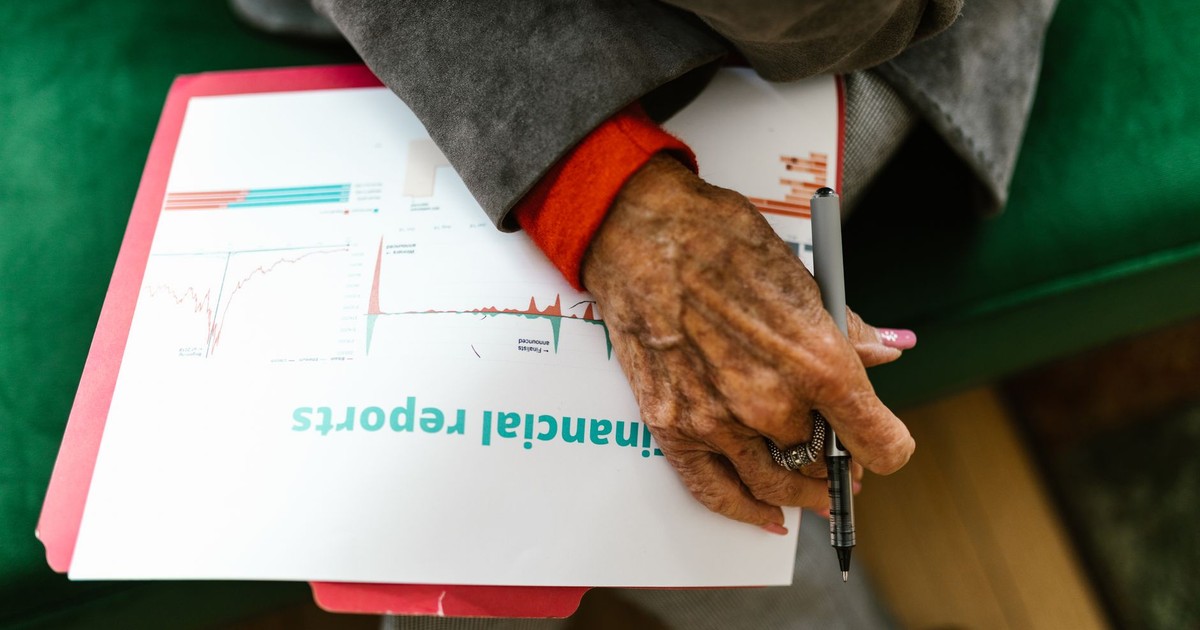
Even in marriages where the financial arrangement feels mutual, the structural reality often isn’t. Women who step back from careers to manage households or care for children are building a life on an asset that belongs legally to someone else. The gender wage gap disproportionately affects women, and a 2026 report from Concordia St. Paul found that 99 percent of domestic violence survivors reported experiencing economic abuse – with economic dependency being one of the primary reasons survivors remain in abusive relationships.
Financial dependence doesn’t only affect women in unhappy marriages. It affects women in perfectly decent marriages who quietly understand that their ability to leave – if they ever needed to – has been eroded by years of prioritizing family over career. The unpaid labor of caregiving generates no savings, no Social Security credits, and no professional resume. It generates love and a clean house, which are real but not fungible.
The part that goes unspoken is the woman who is perfectly content in her marriage but who understands, on some level, that she couldn’t survive it ending. That’s not a trap anyone designed deliberately. It’s just the shape the arrangement took.
6. The Invisible Bar for “Good Enough”
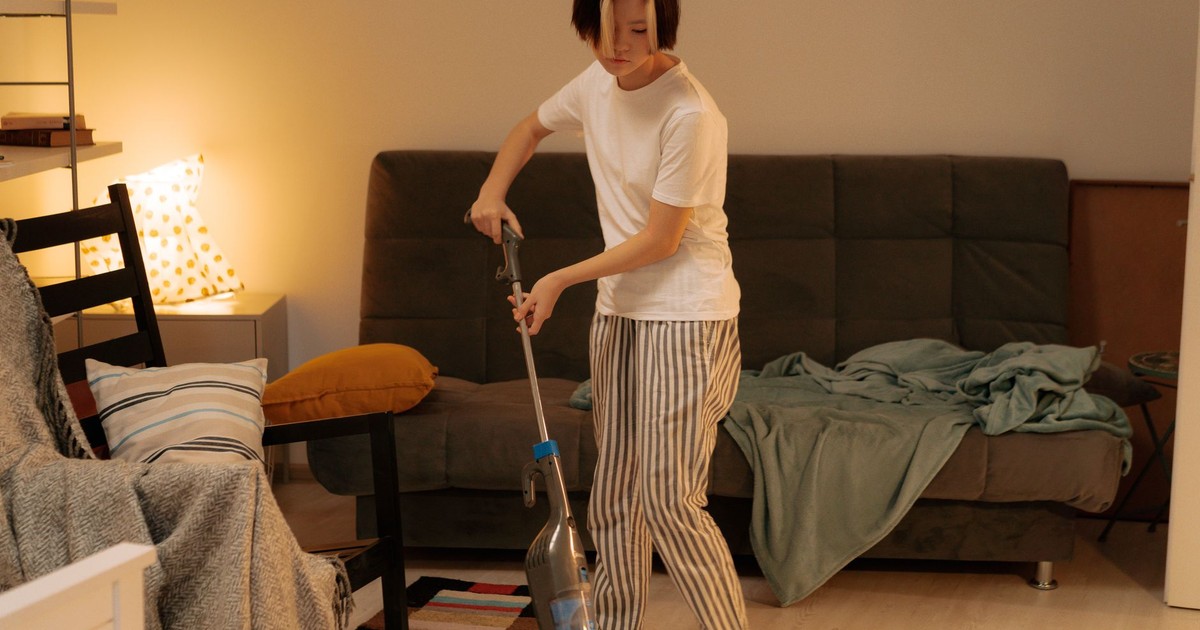
A man who cooks dinner once a week is a great husband. A woman who cooks dinner six nights a week is just keeping up. The bar for what constitutes genuine contribution in a marriage is set dramatically differently by gender, and this asymmetry rarely gets named because it has been so thoroughly normalized.
Research does not claim that doing more housework automatically makes women unhappy. It shows that default roles – not effort – erode satisfaction. It’s not the mopping that drains people. It’s mopping because it’s expected of you, while anything your partner does gets treated as exceptional. The inequity isn’t just in the work. It’s in the accounting.
This dynamic plays out in social contexts too – the father who takes his children to the park is praised for being an involved dad; the mother who does the same is not parenting, she’s just parenting. The bar for what counts as genuine contribution is calibrated by who is expected to disappear into the background by default.
7. The Pressure to Manage Everyone’s Relationships

Married women often become the social secretaries, the kin-keepers, the people who remember to send the birthday cards to their husband’s family, plan the holidays, maintain the relationships with his siblings, and coordinate the family group chat. This is rarely assigned. It simply defaults, and then becomes invisible once it does.
Contrary to common narratives suggesting that women derive fulfillment from organizing household activities, research suggests this responsibility is associated with dissatisfaction and fatigue. The assumption that women enjoy administrative care work – that it comes naturally, that they don’t mind – is one of the more persistent fictions in domestic life. Some women do find meaning in it. Many find it exhausting. The problem isn’t the task. It’s that opting out of it was never offered as a real option.
The social tax extends to emotional triage too. When there’s tension between extended families, it tends to be the wife who manages it. When someone needs to smooth something over, check in on an aging parent, or notice that a sibling seems distant at Christmas dinner, the person doing the noticing and the acting is usually the woman.
8. Losing Individual Identity Inside the Marriage

Marriage can slowly absorb a woman’s individual identity into a collective one, and it happens so gradually that it’s hard to pinpoint when it started. The hobbies that got dropped because there was no time. The friendships that faded because coordinating them required more energy than was left. The opinions that got quieter in proportion to how loud everything else got.
The mental load encompasses remembering, planning, monitoring, and bearing responsibility for others – tasks that are demanding not only because of their complexity but also due to their continuous, boundaryless nature. That boundarylessness is part of what makes personal identity hard to maintain. It’s difficult to hold onto who you are apart from your roles when the roles have no off switch.
This isn’t romantic martyrdom. It’s a structural reality for women who are carrying an asymmetric share of family logistics while also working, while also being expected to remain emotionally available, while also being someone’s wife in the fully dimensional sense. Something gives. It’s usually the self.
9. Domestic Violence Remains a Marriage Reality

It would be dishonest to write about married women challenges without naming this one directly. Intimate partner violence is not a fringe issue confined to visibly troubled households. According to the National Coalition Against Domestic Violence, 1 in 4 women experience severe intimate partner physical violence, and/or stalking with significant impacts including injury and PTSD. That number encompasses women with advanced degrees, high incomes, and relationships that look nothing like the stereotypes.
Post-pandemic, domestic violence rates remain elevated. During the first half of 2025, domestic violence was the only crime rate that rose compared to the previous year, with the number of incidents increasing by an average of 3 percent. That trend runs counter to nearly every other violent crime category, which makes it worth stating clearly: this is not a problem that is getting better on its own.
The economic dimension compounds the danger. Women who have spent years out of the workforce managing a household have fewer options for leaving. The architecture of financial dependence, described earlier, isn’t just uncomfortable in good marriages. In dangerous ones, it is genuinely life-limiting.
10. The Mental Health Toll That Goes Unnamed

The accumulation of structural disadvantages described in this list produces documented mental health consequences, and those consequences frequently go unlabeled because the cause isn’t a single identifiable event. It’s chronic. It’s diffuse. It looks, from the outside, like personality rather than circumstance.
High levels of emotional mental load have been linked specifically to emotional exhaustion, sleep disturbances, work-family conflict, and lower job performance for women – and those are only the outcomes researchers have found ways to measure. The harder-to-quantify effects – the low-grade resentment, the persistent sense of being undervalued, the erosion of the feeling that your time and capacity matter – are real even without a clinical label.
Mental load emerges as an unequally distributed burden, particularly among more educated women. This is counterintuitive until you consider that more educated women are more likely to also be employed full time, which means they’re managing the largest total load rather than the smallest. Higher education does not reduce the mental load. In many cases, it adds to it.
11. Physical Expectations and Autonomy

Image credit: Shutterstock
Marriage historically encoded a version of female physicality that treated it as a resource rather than a desire. While legal and cultural norms have shifted, the underlying dynamics have not fully followed. Married women are still more likely to experience their physical existence in terms of what they provide rather than what they want – a pattern reinforced by everything from cultural messaging to the exhaustion produced by the previous ten items on this list.
Gendered scripts traditionally value men’s pleasure over women’s pleasure – and those scripts don’t disappear because a couple is married, progressive, and in therapy. They run underneath the surface of even relationships where both partners genuinely believe they’re past them. The woman who hasn’t had a full night of uninterrupted sleep in three years is not experiencing desire the same way as someone who has. The compounding effect of domestic labor, mental load, and exhaustion on intimate life rarely gets treated as a structural issue.
12. The Expectation to Do It All Without Complaint

The final and perhaps most exhausting layer is the expectation that all of the above should be managed cheerfully, without bitterness, without acknowledgment that it costs anything. The married women challenges listed here don’t just exist – they exist inside a cultural framework that treats noticing them as ungrateful, complaining about them as unpleasant, and publicly naming them as an attack on marriage itself.
Same-gender couples are less likely to inherit default domestic roles. Heterosexual couples often reenact them faithfully while insisting they are modern. The insistence on modernity is doing a lot of work in many households where the actual distribution of labor is anything but. The cognitive dissonance between identity and practice is its own exhausting thing to carry.
This is where the social cost registers most acutely. The woman who names the imbalance is told she’s nagging. The one who accepts it is quietly burning out. Neither gets to skip the part where the structural problem is treated as a personal one.
What Naming It Actually Does

None of the twelve items above come with a clean resolution. Naming them doesn’t redistribute the household labor, eliminate the wage gap, or make the invisible work visible in any way that produces immediate relief. What it does is allow for the possibility of a more honest conversation – one that starts from reality rather than from the performance of how things are supposed to be.
The things described here are not character flaws, relationship failures, or evidence that anyone made the wrong choice. They are patterns large enough to appear in research across multiple countries, in data collected over decades, in surveys answered by women with vastly different lives who nonetheless describe the same structural architecture. That consistency matters. It means the problem is not located where it’s usually said to be.
Some of these patterns go back further than any individual marriage. Knowing that doesn’t make Tuesday night easier. But it does mean that the weight you’re carrying has a name and a history, and that a lot of other people are carrying the same thing – which is, if nothing else, a slightly less lonely place to stand.
AI Disclaimer: This article was created with the assistance of AI tools and reviewed by a human editor.