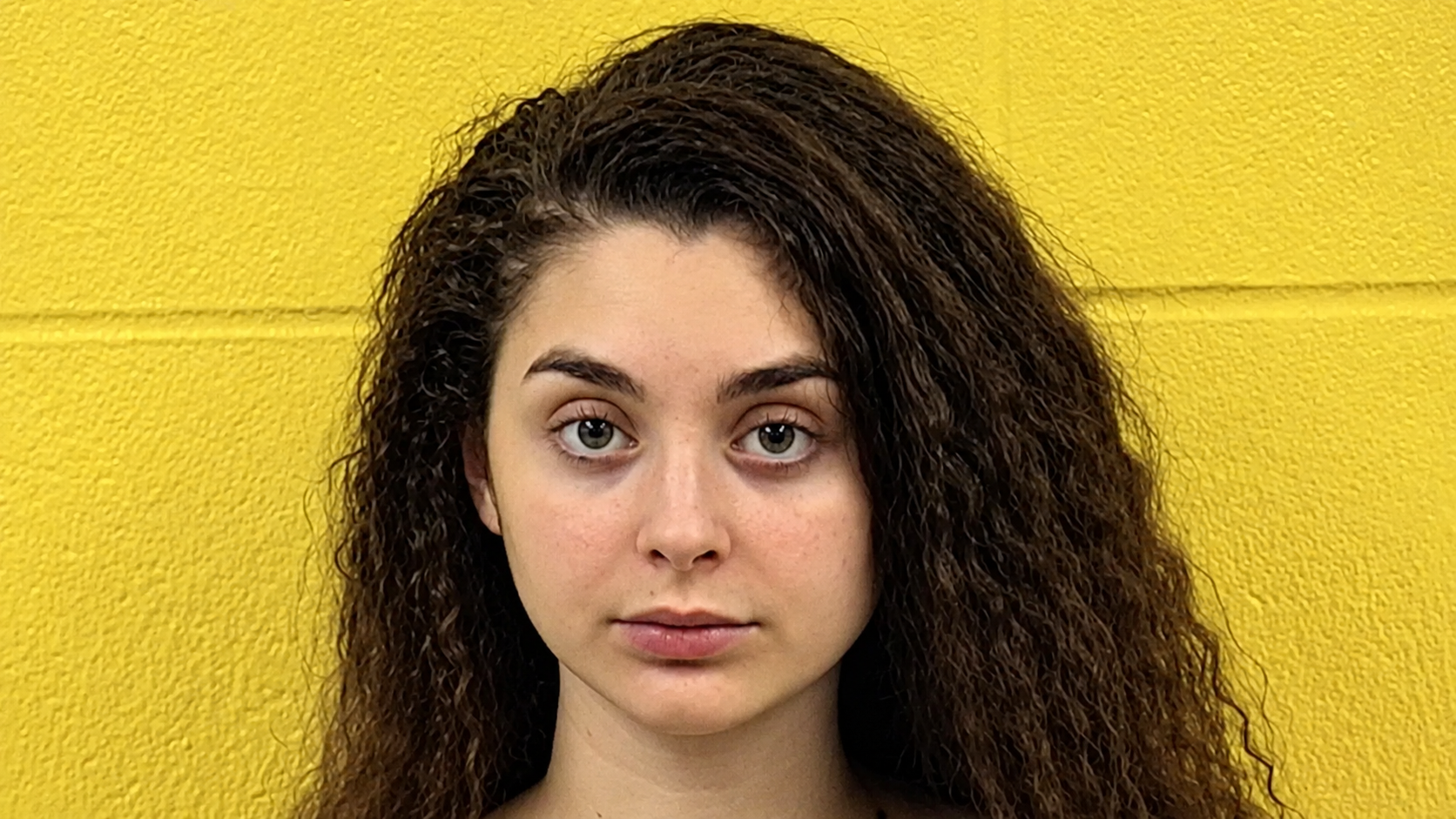

Gypsy Rose Blanchard has been out of prison since December 2023, has since completed her parole, welcomed a baby, and built a very public second chapter for herself – and she clearly has opinions about who’s going to get one next. When Netflix dropped The Crash on May 15, 2026, the documentary became an immediate cultural flashpoint, reigniting debate about a case that had already consumed true-crime communities for nearly four years. And now, one of the most famous women to walk out of prison in recent memory is weighing in on whether Mackenzie Shirilla will ever follow her out.
The two cases have almost nothing in common on the surface – a Missouri daughter who conspired to escape an abusive mother, and an Ohio teenager convicted of deliberately driving her car into a wall at 100 mph with her boyfriend and his friend inside. But in the strange economy of true-crime celebrity, both women occupy the same impossible position: famous because of something terrible, and watched constantly because of it. Gypsy, speaking on The TMZ Podcast with host Charlie Neff, didn’t pretend otherwise. She has navigated exactly the thing Mackenzie Shirilla is only beginning to face: the long, grinding stretch of incarceration that forces a reckoning with yourself whether you want one or not.
Her read on Mackenzie’s situation was blunt. Based on what she watched in the Netflix documentary, Gypsy said Shirilla is not remorseful. Not even close. And she said the only way that changes – the only way Mackenzie Shirilla remorse becomes something real rather than performed – is through years of hard work, reflection, and genuine growing up. When it does arrive, Gypsy suggested, it is going to arrive hard.
What the Netflix Documentary Actually Showed

The Crash began streaming on Netflix on May 15, 2026. It quickly became the number one movie on Netflix, capturing widespread attention nearly four years after the deadly Strongsville crash in which Shirilla was found guilty of murder – sentenced to 15 years to life behind bars, with the sentencing judge describing her as “literal hell on wheels” after she drove 100 mph into a building in the early morning hours of July 31, 2022.
Shirilla had never spoken to police. She had never testified at her trial. In the years since a judge found her guilty of murdering her boyfriend, Dominic “Dom” Russo, and friend Davion Flanagan in that 2022 car crash, she had never publicly addressed what happened that night – until the documentary. The Crash reconstructs the case through interviews with families, friends, and investigators, and in it, Shirilla sits down on camera for the first time, in an interview that director Gareth Johnson and producer Angharad Scott say took considerable effort to secure.
What viewers actually got from that interview was not the remorse many were expecting. In the Netflix documentary, Shirilla says she did not intend to kill her boyfriend and their friend when she smashed her car into a brick building at 100 mph. “I’m not a monster,” she says in her first public statement at length since the conviction. “I’m not saying I’m innocent. I was a driver of a tragedy, but I’m not a murderer.”
Her lawyer was present during filming, and she repeated her previous claim of not being able to remember the incident. “I have no recollection of that morning,” she said, “but I know nothing about it was intentional, because that’s not in my character.” It is the kind of statement that satisfies no one – too evasive to read as remorse, and too polished to read as raw grief.
The Case Against Her, By the Numbers
According to NBC News, Shirilla was 17 at the time of the crash in Strongsville, a Cleveland suburb – Russo was 20, and Flanagan was 19. She is serving two concurrent 15-year-to-life sentences for the 2022 crash that killed them both.
Prosecutors said the crash was intentional: she never hit the brakes, and they described her relationship with Russo as toxic. During the bench trial, they presented GPS data suggesting she had visited the industrial area before the crash, alongside evidence that there were no skid marks or signs of braking. The prosecution also pointed to messages and online behavior they argued reflected emotional instability and manipulation. Judge Nancy Russo ultimately convicted Shirilla of murder and aggravated vehicular homicide, later describing her as “literal hell on wheels.”
Shirilla won’t be eligible for parole until October 29, 2037. Her legal team filed an appeal in September 2023, but the Ohio Eighth District Court of Appeals upheld her conviction. In October 2024, her attorneys filed a post-conviction relief petition, which was also denied on the basis that it was filed after the statutory deadline. In March 2026, the Eighth District Court of Appeals affirmed the ruling denying that petition. In May 2025, the Supreme Court of Ohio declined to review the appeal.
She continues to maintain her innocence. Her parents have said the same publicly and repeatedly – that their daughter is innocent, that the justice system failed her, that she should have been charged with something far lesser than murder. The courts have not agreed, and neither, apparently, has Gypsy Rose Blanchard.
Gypsy Rose on Mackenzie Shirilla Remorse: “It’s Going to Hit Like a Freight Train”
This is where Gypsy’s perspective carries weight that most commentators can’t claim. She is not a journalist, not a legal analyst, and not a grieving family member. She is someone who spent years inside a cell working through the exact psychological territory she’s describing – the distance between what you’ve done and what you’re willing to admit you’ve done. She knows what that reckoning looks like from the inside, and she’s saying Mackenzie Shirilla hasn’t gotten there.
Gypsy told The TMZ Podcast that based on everything she saw in the documentary, Shirilla is not remorseful. She said remorse will come, but only after significant reflection, hard work, and maturation – all of which take years and can’t be performed for a camera. When it does arrive, she said, it is going to be devastating for Shirilla to sit with. The phrasing evoked something more like a collision than a gradual realization.
The more practical dimension of this, which Gypsy also addressed, is that Mackenzie Shirilla remorse isn’t just a moral question. It’s a parole question. Shirilla was sentenced in August 2023 to two concurrent sentences of 15 years to life in prison, with her first parole hearing scheduled for September 2037. Parole boards do not release people who can’t acknowledge what they did. They look at insight, accountability, and evidence of internal change – not innocence claims, and not tearful but carefully lawyered prison interviews where a defendant insists on “no intent.” Gypsy, who navigated the parole process herself, spelled that out directly: if Shirilla wants to get out, she has to actually get there first.
Gypsy was released on parole on December 28, 2023, after serving about eight and a half years of her ten-year sentence. She pleaded guilty to second-degree murder for her role in the 2015 death of her mother, Dee Dee Blanchard, in a case that drew national attention for its backdrop of abuse – Dee Dee had subjected Gypsy to years of fabricated illness and medical manipulation, a condition known as Munchausen syndrome by proxy. According to The Hill, Gypsy announced the completion of her parole in mid-2025, stating that she had “taken accountability” for her role in her mother’s death and was ready to begin a new chapter.
That context matters when she weighs in on Mackenzie Shirilla. Gypsy knows what it costs to get to actual remorse. She knows the difference between the words and the thing itself.
Christine Russo and the Fight Over Who Gets to Profit

The other question Gypsy addressed on the podcast was thornier – and it’s one that doesn’t have a clean answer. Dominic Russo’s sister Christine has been vocal about her belief that Mackenzie Shirilla is profiting from the Netflix documentary and from the notoriety of the case. Christine Russo launched a petition to change Ohio law so that convicted killers can’t profit from paid interviews, documentaries, donations, merchandise, or social media.
The effort has a name now: “Dom and Davion’s Law.” According to NewsNation, Christine’s petition calls for Ohio state lawmakers to modernize its Son of Sam laws for the digital age. The petition website states that “what hurts even more is seeing how modern social media culture allows violent offenders to gain attention, followers, donations, publicity, and influence from the crimes that destroyed families like mine.” Christine also points out that in Ohio, “Son of Sam laws don’t cover social media.”
Updating a Son of Sam law is not straightforward. Legal experts have long debated how to balance First Amendment protections with restrictions on profiting from criminal acts, and courts have struck down overly broad statutes in the past, forcing states to tailor such laws carefully. Gypsy acknowledged this on the podcast too. She did not dismiss Christine Russo’s push, but she explained why the issue isn’t simple – the same legal structures that would prevent Shirilla from profiting would potentially affect people like Gypsy herself, who has rebuilt a public life, released a memoir, and appeared on reality television since her release. The line between a victim telling her story and a perpetrator cashing in on notoriety is a line that courts have struggled to draw for decades. Christine Russo’s petition is, among other things, an argument that the internet has made that line harder to see, not easier.
For Christine, the frustration is also personal. In her own podcast, The Big Sister: Unhinged, she said: “It is hard, the thought of her getting out and you know that, Gypsy Rose, it’s going to happen. I got to figure out how to stop her from becoming the next Gypsy Rose… I’m on a mission.” That name-check is doing a lot of work. It’s not really about Gypsy Rose as an individual – it’s about what Gypsy represents: a convicted killer who walked out of prison and into a media career, a following, a baby, and a platform.
What Comes Next
Mackenzie Shirilla is 22 years old and has, at minimum, eleven more years before a parole board will even consider her case. That’s not nothing – that is almost half her life again, measured from today. Gypsy Rose Blanchard spent eight and a half years inside before anyone asked her what she had learned. She’s saying Shirilla is nowhere near that point yet. The remorse hasn’t arrived, and forcing it – performing it for a Netflix crew with a lawyer sitting off-camera – is not the same as finding it at 3 a.m. when there’s no audience.
The families of Dominic Russo and Davion Flanagan are living on a different timeline entirely. Both families have said the appeals process has been painful. “Another day, another hearing,” Scott Flanagan, Davion’s father, wrote on Facebook in January. “It seriously never ends. How many chances does she get when our son and Dominic didn’t get a single one? It’s like a scab being constantly ripped off when all we want to do is heal the loss of our son and forget all about the horrible person who ended his life.”
Two Clocks, One Verdict
Gypsy Rose Blanchard knows something about carrying a complicated past into a public life that never quite lets you put it down. Whether she’s right about the moment Shirilla’s remorse eventually arrives – and what it will do to her when it does – is something only time, and perhaps a parole board in 2037, will answer.
But that framing only covers one of the two clocks running in this story. Shirilla’s clock is counting toward a reckoning she hasn’t reached yet. The Russo and Flanagan families are running on a completely different one – the kind that doesn’t reset with parole hearings, documentary releases, or petitions to the Ohio legislature. Every appeal filing, every Netflix thumbnail, every podcast episode is another interruption in a grief that never gets to be private. Christine Russo’s push for Dom and Davion’s Law isn’t just about money or fame. It’s about the exhaustion of watching a tragedy become content, over and over, while the people who survived it have to keep watching.
Gypsy didn’t dismiss any of that when she spoke about this case. She held the weight of it alongside her assessment. That’s the thing about having actually been through it – you don’t get to pretend the consequences were simple, and you don’t get to pretend they’re finished.
AI Disclaimer: This article was created with the assistance of AI tools and reviewed by a human editor.