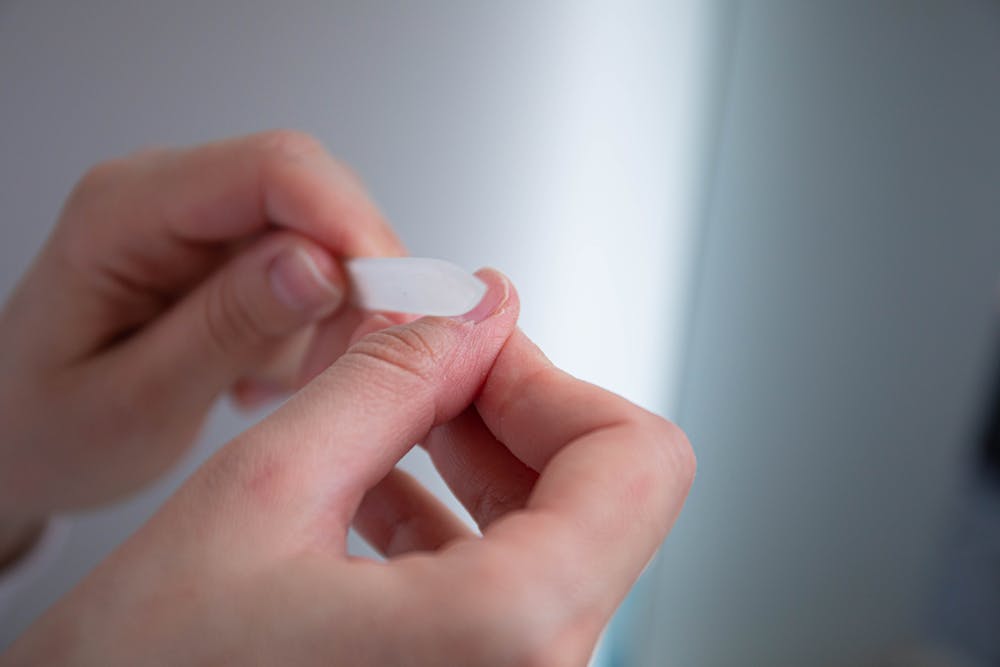

Your nails grow about three millimeters per month, and in all that slow, steady progress they’re quietly recording a running log of what’s happening inside your body. Tiny shifts in the nail matrix, the tissue at the base of the nail responsible for producing new growth, show up as changes in texture, color, and shape. Most people never pay much attention to their nails beyond clipping them and occasionally wondering why polish chips so fast. But dermatologists have long used nail appearance as one of the first places they look when something more systemic might be going on.
One of the most common changes people notice as they get older, and sometimes not just because of age, is the appearance of lines running vertically from the base of the nail to the tip. These are called vertical nail ridges, or in clinical language, longitudinal nail ridging. The medical term for the condition is onychorrhexis (say it: on-ih-ko-REX-is), which comes from Greek words meaning “nail” and “bursting.” The name sounds dramatic, but for most people the experience is much more mundane: nails that feel rougher than usual, catch on fabric, and look slightly grooved or corrugated instead of smooth.
The key question, reasonably, is whether those ridges are worth paying attention to. Most of the time, they’re nothing alarming. But sometimes they’re your body’s way of leaving you a note.
What Longitudinal Nail Ridging Actually Looks Like
Longitudinal nail ridging appears as vertical striations or lines that originate from the base of the fingernail and continue to the tip. The severity ranges from a few superficial ridges to deep furrows, with ridging affecting a small portion of the nail surface to up to 70 percent of the nail in severe cases.
Think of it like the grain on a piece of wood. A lightly grained nail might have one or two faint lines you’d only notice in certain light. A heavily ridged nail looks almost washboard-like across its entire surface. The defining physical characteristic is the presence of linear grooves running vertically, extending from the base of the nail near the cuticle to the free edge at the tip. These ridges are essentially alternating areas of longitudinal thickening and thinning across the nail plate, making the surface feel bumpy or rough to the touch.
According to a 2025 peer-reviewed article from Yale University School of Medicine dermatologists, disorders of the nail unit can provide important clues to underlying systemic diseases, with nail abnormalities including altered nail color, shape, or texture often related to local anatomic factors such as edema, vascular supply, and neurologic innervation. In plain terms: the nail is connected to everything, and what disrupts the body can show up in the nail.
What Causes Vertical Nail Ridges
Most of the time, the culprit is simply getting older. Aging is one of the most common causes of vertical nail ridges extending from the bottom of the nail to the tip. Most people have some faint vertical nail ridges when they’re younger, and the ridges may become more pronounced over time as the nails naturally get thinner and more brittle.
Dryness plays a role too. Nails that are regularly exposed to water, harsh soaps, cleaning products, or acetone-based nail polish removers lose moisture faster than they can replace it. Frequent or prolonged immersion in water, such as from occupations involving excessive hand washing, can impair the intercellular adhesion within the nail plate, causing fragility, while exposure to harsh cleaning products and chemical solvents degrades the nail’s protein structure and strips away natural moisture.
But it doesn’t stop at environmental wear and tear. Nutritional deficiencies play a significant role, as the body requires specific components for the production of healthy, strong nails, and inadequate intake or poor absorption of iron, protein, folic acid, or B vitamins can directly manifest as nail changes. A 2015 peer-reviewed study from the University of Delhi, published in the Indian Dermatology Online Journal, confirmed that central longitudinal nail ridges can specifically be caused by iron, folic acid, or protein deficiency, and that nail changes can sometimes appear before other signs of a systemic disease become clinically evident. That last point is worth sitting with. The nail can be an early warning, not a late one.
Skin conditions are another common driver. Various dermatological conditions, including lichen planus, psoriasis, and eczema, are known to involve the nail matrix and can present with onychorrhexis. Lichen planus, in particular, is an inflammatory condition that can target the nail matrix directly, producing pronounced ridging alongside thinning of the nail plate. If you’ve noticed nail ridging that showed up alongside changes to your skin or scalp, this connection is worth mentioning to a doctor.
The Nail Ridges Health Conditions Connection
This is where the picture gets more clinically significant. The same University of Delhi study established that systemic connotations have been found with systemic amyloidosis (a rare disease where abnormal protein deposits build up in organs), nail-patella syndrome (a genetic disorder affecting nails and kidneys), collagen vascular diseases (conditions affecting connective tissue, like lupus), graft versus host disease, and rheumatoid arthritis.
A 2024 hospital-based descriptive study of 272 systemic disease patients at Karnataka Institute of Medical Sciences, published in Clinical Dermatology Review, found that longitudinal ridging was the second most common nail change observed across patients, appearing in 33 percent of them. The most commonly involved organ systems in those patients were respiratory (26 percent), followed by blood disorders (21 percent) and gastrointestinal and liver disease (17 percent), with nail ridging recorded across all these disease categories. That’s a meaningful spread. It confirms that ridging isn’t specific to one disease, but is a consistent signal worth taking seriously when it appears in the context of other symptoms.
The 2025 Yale-published study reinforced that nail abnormalities, including altered nail texture and growth patterns, can reflect underlying systemic disease processes affecting circulation, nerve supply, and fluid balance throughout the body.
Thyroid dysfunction is another condition that frequently shows up in nails. Systemic diseases that affect overall metabolism or circulation can impact the nail matrix, and conditions like hypothyroidism can reduce the delivery of essential nutrients to the nail bed. Liver disease and chronic kidney disease have also been linked to nail ridging, according to the Cleveland Clinic.
For parents particularly, it’s also worth knowing that nail ridging can appear as a side effect of certain medications. A 2025 case report in PMC documented ibrutinib, a cancer therapy drug, causing pronounced onychorrhexis and nail splitting, with symptoms reversing after treatment was stopped. The takeaway isn’t to worry about every ridged nail, but to flag any new or worsening ridging to a prescribing doctor if you’ve recently started a new medication.
What the Color of Your Nails Can Tell You
Ridging is about texture, but color adds another layer of information to what dermatologists call nail health signs. According to the Yale dermatology team, nail abnormalities including altered nail color are among the key indicators that prompt systemic disease workup.
Yellow nails can suggest fungal infection, liver or gallbladder issues, or even chronic respiratory conditions like asthma or bronchitis. Pale, washed-out nails may point to anemia or vitamin B12 deficiency. Blue nails, especially in fingertips, can indicate that oxygen isn’t circulating efficiently, which flags potential heart or lung concerns. A dark brown or black streak running vertically, separate from ridging, is the one color change that warrants prompt medical attention, as it can indicate a form of skin cancer called subungual melanoma.

When to See a Dermatologist About Nail Ridges
Most ridging, especially gradual and symmetrical ridging across multiple nails, is benign and age-related. But there are specific scenarios where getting a professional set of eyes on your nails isn’t just sensible, it’s important.
See a doctor if the ridging appears suddenly rather than developing gradually. See one if it’s limited to a single nail, which is more likely to indicate trauma or a localized problem than normal aging. Conditions that interfere with blood flow to the nail, including peripheral vascular disease, diabetes, hypothyroidism, and Raynaud’s disease, are worth ruling out, and it’s important to determine if there’s a medical cause that requires treatment. Any nail change accompanied by pain, redness, or swelling in the surrounding skin also needs a proper evaluation.
The 2025 Yale study noted that associated pain or loss of function from nail disorders can affect patients’ daily activities, which reinforces why nail examination matters in any systematic health checkup, not just as a cosmetic concern.
What To Do Now
If you’ve noticed vertical nail ridges and want to know what they mean for your health, start by looking at the full picture. Are the ridges on all nails or just one? Did they appear gradually or suddenly? Do you have any other symptoms, such as fatigue, joint pain, or digestive changes? The answers help your doctor distinguish between normal aging, a nutritional gap, or something that needs further investigation.
On the practical side, nail health responds well to consistent care. Lifestyle adjustments focus on protecting the nail plate and restoring its moisture balance, with consistent moisturization using creams or oils applied directly to the nail and surrounding skin, and wearing protective gloves when performing household chores to limit exposure to harsh chemicals and excessive water. A diet that consistently covers iron, B vitamins, protein, and zinc gives the nail matrix the materials it needs to produce smoother growth.
Accurate diagnosis can help in the treatment of longitudinal ridging, and depending on the precision of treatment, the ridges may completely resolve in some cases. While affected nails will not change already, new nails may be free of ridging if the underlying problem is resolved, though this may not occur for six months up to several years. Nails are slow growers, so patience is part of the process.
Fingernails grow only a few millimeters per month and toenails grow even slower, which means any improvement from dietary changes or treatment is measured in months, not weeks. But the fact that nails grow out entirely also means that resolving the cause genuinely does allow you to start fresh. Your nails are keeping score. The good news is the score can change.
Medical Disclaimer: This information is not intended to be a substitute for professional medical advice, diagnosis, or treatment and is for information only. Always seek the advice of your physician or another qualified health provider with any questions about your medical condition and/or current medication. Do not disregard professional medical advice or delay seeking advice because of something you have read here.
A.I. Disclaimer: This article was created with AI assistance and edited by a human for accuracy and clarity.