

A large-scale European study published in April 2026 has found a clear link between loneliness and memory loss in older adults, with new research suggesting that people over 65 who report feeling lonely score significantly lower on memory tests than their less lonely peers. The study, published in the peer-reviewed journal Aging & Mental Health, analyzed data from 10,217 adults between the ages of 65 and 94 drawn from 12 European countries, making it one of the most comprehensive investigations into loneliness and cognitive health to date. The research team – based at institutions in Colombia, Spain, and Sweden – tracked participants across a seven-year window, from 2012 to 2019, measuring both their levels of loneliness and their ability to recall information.
To understand what this research found, it helps to know two things. First, when researchers talk about “memory” here, they specifically mean recall – the ability to hear or read a list of words and then repeat them back, both immediately and after a short delay. Second, “cognitive decline” refers to how fast memory and thinking skills get worse over time, as distinct from where they start. The study examined both – and what it found at the intersection of these two measures is where things get genuinely interesting.
The research used data from the Survey of Health, Ageing and Retirement in Europe (SHARE), a long-running longitudinal survey – meaning a study that follows the same group of people over many years – launched in 2002 that tracks the health, aging, and financial circumstances of Europeans aged 50 and older. Participants came from countries including Germany, Spain, Sweden, and Slovenia, grouped into four geographic regions: Central, South, North, and Eastern Europe.
What the Study Found
Participants with high loneliness at the start of the study showed significantly lower immediate and delayed recall scores than those with low or average loneliness. To put that plainly: when researchers gave participants a list of 10 words read aloud and asked them to repeat back as many as possible – both right away and after a delay – the lonelier participants consistently remembered fewer words. While those with the highest levels of loneliness performed worse in initial memory tests compared to those with low or average levels, everyone’s ability to remember information declined at a similar rate over the course of the seven years.
That last part is the twist. Lead author Dr. Luis Carlos Venegas-Sanabria of the School of Medicine and Health Sciences at the Universidad del Rosario described this as “a surprising outcome,” adding that “it suggests that loneliness may play a more prominent role in the initial state of memory than in its progressive decline.” In simpler terms: loneliness doesn’t appear to make your memory get worse faster. Instead, it appears to drag the starting point down. Lonely older adults begin with lower scores – and then track alongside everyone else from there.
The researchers also noted that “the association between loneliness and baseline memory is lower than the effects of age, depression, perceived health status, physical activity, or engagement in social activities.” This is an important detail. Loneliness does show up as a factor, but age itself remains the strongest predictor of where someone’s memory sits and how it changes. Loneliness is one piece of a larger picture – not the whole story.
How Loneliness Was Actually Measured
One of the smarter design choices in this study was how the researchers defined and measured loneliness. Rather than asking participants a single yes/no question, researchers asked participants three specific questions to measure their loneliness and categorize them as low, average, or high: “How much of the time do you feel you lack companionship?”, “How much of the time do you feel left out?”, and “How much of the time do you feel isolated from others?”
The majority of participants – 92% – reported either average or low loneliness at the start of the research. The group reporting high loneliness, just 8%, tended to be older, mostly female, and more likely to report worse health. They also had a higher prevalence of depression, high blood pressure, and diabetes. This profile is worth noting. The loneliest participants were not simply “lonely” in isolation – they were dealing with a cluster of health challenges at once. Researchers accounted for these factors in their analysis, but it’s a useful reminder that loneliness rarely shows up alone.
Geographic patterns also emerged: Southern Europe reported the highest loneliness levels at 12%, followed by Eastern and Northern regions at 9%, and Central Europe at 6%. Whether that reflects cultural differences in how people interpret or report loneliness, or genuine differences in social connection, is a question the study doesn’t answer definitively.
Can Loneliness Cause Memory Loss in Older Adults?
This is a question a lot of people are typing into search engines right now, and the honest answer is: research strongly suggests a connection, but it’s complicated.
Data on the link between loneliness and cognitive function are inconsistent. Some studies suggest loneliness accelerates cognitive decline over time, while others have found no significant link. This new study adds a nuanced finding to that pile: loneliness seems to affect where memory starts, not how fast it falls. But researchers outside the study caution against reading that as reassurance.
A key insight offered by researchers is that lonely people may start with lower “cognitive reserve” – meaning if their memory scores are already lower due to loneliness, they may reach the threshold for a dementia diagnosis sooner, even if their brain isn’t actually aging faster than anyone else’s. Cognitive reserve, in plain terms, is like a buffer. The more of it you have, the longer your brain can absorb damage or decline before symptoms appear. A lower starting point means less buffer.
Separate research published in the journal Alzheimer’s & Dementia found that a longer duration of loneliness was associated with both lower memory scores and a faster rate of decline – and the effect was stronger among adults aged 65 and over and stronger among women than men. That study, from researchers at the University of Michigan School of Public Health, followed 9,032 adults over 20 years. So the picture from the full body of research is one where short-term loneliness may be less damaging, but chronic or sustained loneliness may carry steeper consequences.
There’s also a reasonable chain of cause and effect that psychotherapist Amy Morin describes well. It’s possible that the side effects of loneliness – depression, reduced activity, and poorer health – may cause memory issues. In other words, loneliness may not directly rewire the brain. Instead, it may create conditions that gradually undermine it.
How Does Social Isolation Affect Brain Health After 65?

This is where the research gets genuinely useful for anyone with an older parent, or for adults thinking about their own aging. The brain is not a closed system. It responds to how we live.
Psychotherapist Amy Morin explains that “when you’re interacting with others, your brain gets a bit of a workout as it processes information, remembers key details, reads social cues, and formulates responses.” Social interaction, in other words, is a form of low-intensity cognitive exercise. It demands attention, memory, language, and emotional processing all at once. When that stimulus disappears, the brain simply does less of that work on a daily basis.
Therapist Mitchell Hale of Sawtelle Psychotherapy Group put it bluntly: “Humans are a social species. Ignoring the need for socialization is like ignoring our need for food, water, shelter, and rest.” Hale also noted that socialization is important at any age, but older adults face higher risk of social isolation due to lifestyle factors such as mobility challenges, chronic illness, deaths of friends and partners, or living alone.
Loneliness has also been linked to impaired sleep across multiple studies, and to associated risks including obesity, increased blood pressure, and alcohol use – all of which carry their own implications for brain health. None of these operate in isolation, which is part of why untangling loneliness from its consequences is so difficult to do cleanly. The connection between aging, social isolation, and cognitive health is one that researchers across multiple disciplines are continuing to examine closely.
What Are the Cognitive Effects of Loneliness in Seniors?
The cognitive effects of loneliness in older adults aren’t limited to word recall. In a large cross-sectional study – a study looking at one point in time rather than tracking people over years – adults over age 65 who were lonely scored at the 30th percentile on immediate recall, semantic fluency (the ability to name objects or words in a category), and processing speed. That’s a meaningful gap from average performance.
Roughly one third of older adults in the US report feeling lonely or socially isolated. Research links loneliness to a greater risk for anxiety, depression, stroke, dementia, and premature death. A broader 2024 meta-analysis published in Nature Mental Health by researchers at Florida State University College of Medicine – combining data from more than 600,000 individuals across multiple ongoing aging studies – found that there is a significant increase in the likelihood of dementia among people experiencing loneliness.
The Frontiers in Human Neuroscience review published in 2024 also noted that an overview of 40 systematic reviews of loneliness and social isolation found they were associated with all-cause mortality, cardiovascular disease, and worse mental health outcomes across all ages. The cognitive angle is serious, but it sits inside a wider story about what loneliness does to the body as a whole.
One important caveat: a key limitation of the new research is that loneliness was modeled as a fixed variable, which may not accurately capture real-world changes in perceived loneliness over time. A person’s experience of loneliness can shift dramatically – after retirement, after losing a partner, after moving to a new city. Studies that treat loneliness as a single, unchanging data point may miss some of the story.
Why This Finding Doesn’t Mean Loneliness Is Harmless

It would be easy to read the headline – “loneliness linked to lower scores but not faster decline” – and come away thinking the problem is less serious than feared. Several researchers are pushing back on that reading, and they’re right to do so.
Jordan Weiss, PhD, an assistant professor in the Division of Precision Medicine and the Optimal Aging Institute at NYU Grossman School of Medicine and an expert in aging and dementia forecasting, has pointed out that the study’s result is actually more alarming than it appears. His argument: if lonely people begin at a lower cognitive baseline, then they reach the threshold for a clinical dementia diagnosis much sooner, even while declining at the same rate as everyone else. Starting lower isn’t a comfort. It’s a head start on the wrong side of the line.
The researchers themselves suggest that routine checks for loneliness could become a standard part of cognitive health assessments for older adults. That’s a practical recommendation with real teeth. Right now, doctor’s appointments for older adults routinely screen for blood pressure, cholesterol, and blood sugar. The study’s authors suggest that loneliness screening should be a standard part of geriatric check-ups to identify individuals who may already be struggling with lower cognitive baseline scores. Adding three simple questions about companionship and belonging to that list is a low-cost, high-value change.
Dr. Richard Oakley, associate director of research and innovation at Alzheimer’s Society, has also pointed to a 2024 Lancet Commission finding that 45% of dementia cases globally could potentially be reduced by addressing 14 modifiable risk factors. Loneliness and social isolation are on that list. They’re not certainties or death sentences – they’re risk factors. And risk factors, by definition, are things you can act on.
What the Research Means If You’re Caring for a Parent
If you’re reading this as someone who has an aging parent living alone, or if you’re watching a parent gradually withdraw from social life, this research gives you a sharper frame for what’s at stake. Loneliness isn’t just about feelings. It appears to affect where cognitive health begins, and the earlier that starting point is dragged down, the sooner other problems can follow.
The study’s demographic picture is worth holding onto: those reporting high loneliness were more likely to be older, female, and dealing with existing health challenges like depression, diabetes, and high blood pressure. That’s a profile that describes a lot of older mothers and grandmothers living alone after losing a partner. Checking in regularly – not just for safety, but for connection – is something this research supports directly.
Research has found that people over 55 who regularly participated in social events like dinner parties had a lower risk of memory decline – and the benefit came not from what they ate, but from the effect of repeated social connection. Small, consistent interactions build up over time. A weekly phone call, a standing coffee date, a community class, a church group – these aren’t extras. They’re protective.
Read More: 10 Interesting Facts About People Who Enjoy Being Alone
What to Do Now
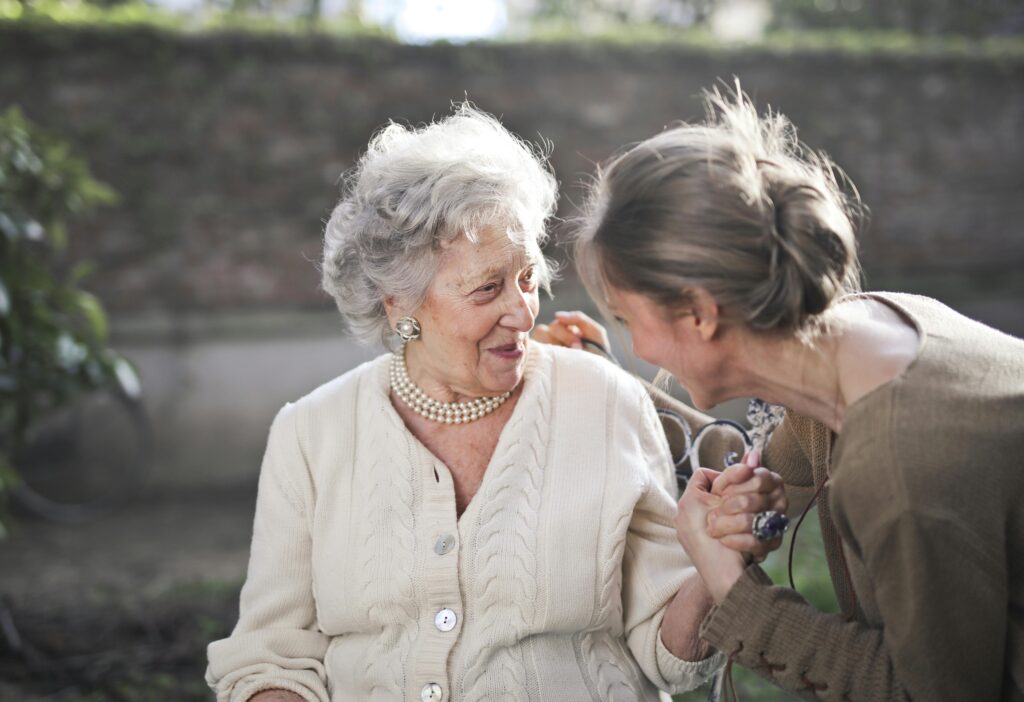
Loneliness and memory loss in older adults are genuinely linked, and the research from the Aging & Mental Health journal makes that connection harder to dismiss. The finding that loneliness sets a lower cognitive starting point – rather than accelerating the speed of decline – is useful information. It means the time to act isn’t after a diagnosis. It’s long before one is on the table.
A few things are worth acting on directly. First, if you have an older parent or loved one who lives alone, ask their doctor about including a simple loneliness check as part of their regular health review – three questions, a few minutes, and potentially meaningful early identification. Second, prioritize regular social contact for your own aging parents the same way you’d prioritize their medication or their mobility. Physical visits, video calls, and group activities all count. Third, for anyone over 65 reading this themselves: the evidence suggests that staying socially active isn’t just good for mood. It may be one of the most concrete things you can do to protect your brain. Social activities don’t just ward off loneliness – they also boost happiness and may even increase longevity. That’s not a small return on a walk with a friend or a Tuesday-night book club. It’s arguably one of the best investments in long-term health that doesn’t come with a copay.
Disclaimer: This article was created with AI assistance and edited by a human for accuracy and clarity.