

On any given day, a history archive’s official gift shop stocks reproductions of old maps, prints of famous battle scenes, and perhaps a decorative box modeled on something from the Meiji era. Japan’s National Archives sells all of those things. It also sells a clear file featuring an illustration of a young foreign woman emerging from a disc-shaped vessel that washed ashore in 1803, because that vessel and that woman appear in at least 11 verified historical documents, and the archive has apparently decided that makes the story worth commemorating in stationery.
The story centers on an incident recorded in Hitachi Province, in what is now Ibaraki Prefecture. A round craft, roughly the size of a small room, came ashore in early 1803. Its hull combined forged metal with lacquered rosewood, with glass panels fitted into the upper half. Inside was a foreign woman with pale skin and red hair who could not communicate with anyone on the beach, carried a box she refused to release under any circumstances, and was eventually sent back out to sea in the same vessel by the local fishermen who found her. Then, over the following decades, the account appeared in writing again and again, compiled by different people in different places, each describing the same disc-shaped craft with a consistency that does not look like coincidence.
Two centuries later, the Japan UFO legend that grew from that morning is still being studied, argued over, and, as of 2026, commemorated on merchandise sold by Japan’s National Archives. Neither folklorists nor historians nor ufologists have arrived at a clean explanation. The documents exist, the location has since been identified, and the whole thing remains genuinely, stubbornly open.
What the Ship Actually Looked Like
The vessel that washed ashore was an iron-clad watercraft carrying a young woman with pale features and shoulder-length red hair who spoke an incomprehensible language. Three 19th-century accounts agreed that the circular boat was approximately 3.5 meters tall and 5.5 meters in diameter, painted red and inscribed with unknown symbols. Its hull, fitted with clear glass windows, contained a living area with food, water, and furnishings inside.
The bottom of the craft appeared to be forged from heavy metal, while the top was rosewood, lacquered and inset with latticed glass. The overall shape struck witnesses as something between a rice pot and a cauldron. Fishermen who spotted it drifting offshore pulled it to shore, where they found a disc-shaped craft resembling a kōgō, an incense container with a lid. That comparison is one of the details that lodged itself in the popular imagination: the thing looked, to everyone who saw it, like something made rather than grown, designed rather than natural.
The woman herself had red hair and eyebrows, a pink complexion, and what appeared to be white artificial hair hanging down her back. She clutched a box roughly 60 centimeters square that she refused to release under any circumstances. Unable to communicate, she simply smiled at those who approached her. A village elder speculated she was “the daughter of a foreign king, exiled for the crime of adultery, and the box surely contains the severed head of her lover.” That particular theory says a great deal about what a 19th-century Japanese village elder considered a reasonable explanation for something genuinely inexplicable.
The Documents That Kept It Alive
Most unusual events from 1803 do not survive into 2026. This one did because it kept appearing in writing, long after the morning it supposedly happened.
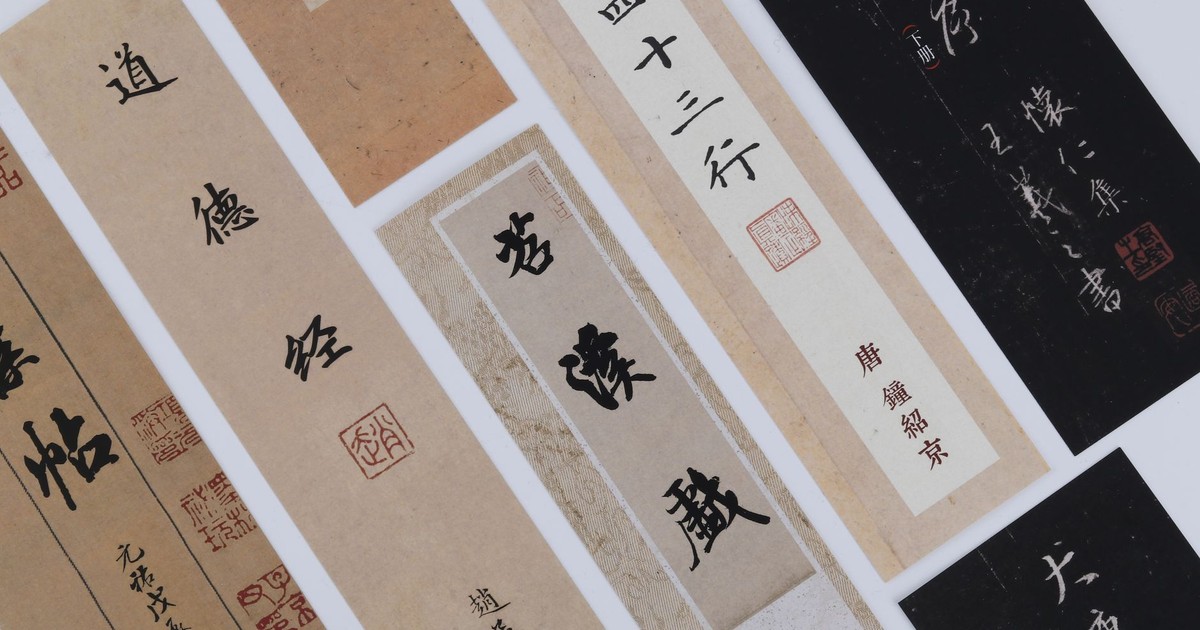
Among the most detailed early records are the 1815 Ōshuku zakki, the 1825 manuscript Toen Shōsetsu, a collection of unusual tales, and Ume-no-chiri, or “Dust of the Plum,” from 1844 by Nagahashi Matajirō. All offer similar depictions of a rounded vessel with metallic materials and glass-like sections, suggesting either a shared point of reference or that the story had already become widely circulated across the country.
The Toen Shōsetsu entry is the most frequently cited. It was compiled by Kyokutei Bakin, one of the most prominent writers of the Edo period, as part of a literary circle called the Toenkai, whose members gathered to swap strange and unusual eyewitness accounts. The incident was classified as a michi tono sogu, meaning an eyewitness account of something encountered in the unknown. Kyokutei edited and compiled it into the Toen Shōsetsu collection alongside several of Japan’s other famous unusual tales. The fact that it passed through a literary editor’s hands rather than simply spreading as oral rumor is part of what gives the textual tradition its particular weight.
Confirmed references to the incident appear in 11 types and 14 editions of historical documents, including Toen Shōsetsu by Kyokutei Bakin, Ume no Chiri, and Hyōryūki-shū.
Japan’s Sakoku Policy and Why Nobody Filed a Report
One thing that genuinely complicates the rational explanations for the incident is what was happening in Japan politically at the time. In an era when Japan maintained strict isolation under the sakoku policy, news of an unidentified foreign craft would likely have stirred curiosity and concern in equal measure. Sakoku, the official “closed country” policy of the Edo shogunate, restricted nearly all contact with foreign nations. Only a tiny number of Dutch and Chinese traders were permitted into Japan, at a single port in Nagasaki, under heavily controlled conditions.
Under those rules, finding a foreign person on your beach was not an ordinary problem. It was a potential diplomatic incident, possibly a criminal one. The fishermen who encountered the hollow ship would have known that reporting a foreign woman to authorities could trigger an official investigation that might implicate the entire village. Sending her back out to sea, which is what the accounts say they did, was not callousness. It was self-preservation in a country where contact with foreigners was treated as a matter of state security.
That same political climate makes the absence of any official record either deeply suspicious or completely understandable, depending on how you look at it. If something genuinely landed on that beach in 1803, the people most likely to document it would have had strong reasons not to.
The Researcher Who Spent Decades on One Morning in 1803

The story of the incident in the province of Hitachi, now Ibaraki Prefecture, is found in many records of the Edo period, and Tanaka Kazuo, professor emeritus at Gifu University, has studied the topic for many years. He did not come to it through any particular interest in the supernatural. Tanaka says he started looking into the ship after the Aum Shinrikyo cult’s horrific subway sarin bombings in 1995. The cult’s founder Asahara Shoko’s prophecies and claims to levitate had received significant public attention at the time. Tanaka, who specializes in optical information engineering, set out to understand how intelligent people could fall for paranormal claims and found himself building a university lecture series on pseudoscience. The hollow ship crossed his desk during that research and he could not put it down.
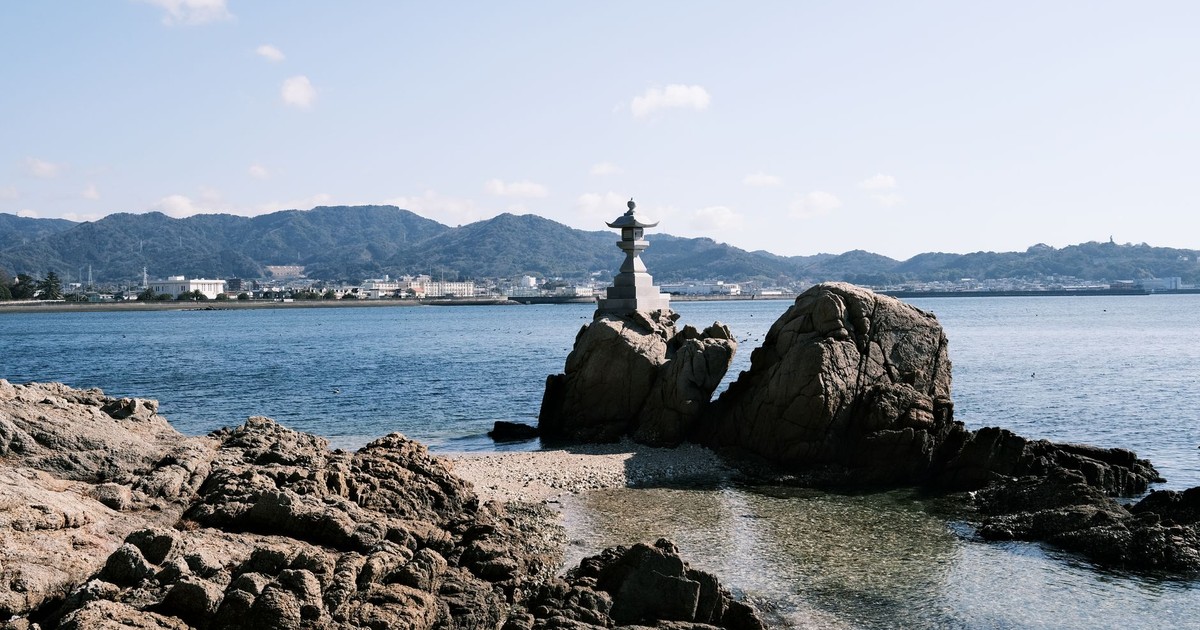
Tanaka published his findings in 2009 as Edo utsurobune misuterī, under a pen name; the book was later translated and published in English in 2019 as The Mystery of Utsuro-bune. What distinguished his work from the many writers who had treated the story as either folklore or fringe entertainment was his insistence on tracing every document back to its original source. In 2010 and 2012, Tanaka studied documents found in private residences in Mito and Hitachi in Ibaraki Prefecture. A document discovered in 2014 suggested the ship washed up specifically on the Sharihama coast in the Hasaki district of Kamisu.
Professor Emeritus Tanaka has dedicated over 20 years to researching this legend, identifying the actual location “Hitachi Harashari-hama,” now Sharihama in Kamisu City, from multiple historical documents.
His argument for why the 1803 Hitachi incident deserves to be treated differently from other versions of the hollow ship legend comes down to specificity. The other accounts are vaguer, more symbolic, easier to read as metaphor. The Hitachi account has a place, an unusually consistent set of physical descriptions, and enough witnesses to generate over a dozen separate written records. As Tanaka put it, most UFO stories “were mysteries without any substantial evidence. The utsurobune legend, however, has a number of documents to examine as leads, so in this sense, for researchers it’s a mystery with substance.”
What the Skeptics Said and Why It Didn’t End There
Not everyone has found the document trail persuasive. Yanagita Kunio, one of the most influential figures in Japanese ethnology and the scholar widely credited with establishing folklore studies as an academic field in Japan, dismissed the tales as pure invention. His argument was not that the documents were fabricated, but that the tradition of hollow-ship stories was already embedded in Japanese mythology long before 1803, and that the Hitachi incident was almost certainly a retelling of existing folklore in a more contemporary, believable package.
Yanagita also pointed to something genuinely interesting: the oldest versions of the legends describe simple, open log-boats without any dome or metallic structure. The sophisticated engineering details, the glass windows, the reinforced metal hull, appear only in later retellings, each one slightly more elaborate than the last. He read this as the legend doing what legends do: becoming more convincing as it is repeated, accreting detail, upgrading its own plausibility.
Across the known documents and editions, the 1803 accounts share consistent physical descriptions of the vessel.
In 2023, the Jōyō Historical Museum in Mito, Ibaraki Prefecture, hosted an exhibition called “Mysterious World: Utsuro-bune,” featuring historical texts and illustrations alongside works by local artists. The exhibit contextualized the hollow ship within Japanese folklore without endorsing extraterrestrial interpretations, and according to the museum’s own folklore expert, left the question of whether the vessel was a UFO entirely up to visitors to decide.
Japan’s Own Roswell and What That Comparison Gets Right
UFO researchers and mystery enthusiasts have taken to calling the incident Japan’s Roswell. It’s an imperfect comparison in some obvious ways. Roswell produced physical evidence claims, crash debris theories, and decades of government declassification battles that this legend never generated. But the structural similarities are real. Both involve an alleged encounter that left no official documentation. Both involve eyewitnesses with plausible reasons not to report what they saw. Both inspire interpretations ranging from genuine unknown craft to misidentified natural phenomena to deliberate political cover-up.
The story has an additional layer that Roswell does not: it predates the entire modern UFO concept by nearly 150 years. The term “flying saucer” did not exist until 1947, when businessman Kenneth Arnold described his sighting to the press and the phrase entered the cultural vocabulary. The round, disc-shaped craft described in Edo-period Japanese manuscripts was being drawn in ink illustrations decades before anyone had a word for what it looked like. That either means the story genuinely describes something with that shape, or it means the human instinct to report unusual things in the sky runs deeper and older than the American pop culture moment that gave it its current name.
In 1803, during Japan’s Edo period, a UFO-like disc-shaped vessel allegedly washed ashore on the coast of Ibaraki with a foreign woman inside. This incident, recorded in official Edo-period documents, has since been turned into official merchandise by Japan’s National Archives, which also houses Japan’s original Constitution and foundational government documents going back to the Meiji era. The Archives sell a clear file featuring “The Barbarian Woman of Utsuro-bune” in their official gift shop. A serious historical institution endorsing the story as a piece of Japan’s verifiable cultural record is, at the very least, a more concrete form of recognition than most ancient mysteries ever receive.
Read More: 25 of The Scariest Places in The United States
What to Do With a 200-Year-Old Mystery That Has No Answer
The most honest thing anyone can tell you about the Japan UFO legend is that you do not need to land on a conclusion to find it valuable. Tanaka Kazuo spent more than 20 years on this story and still describes it as an open question, not a solved case. That is not a failure of research. It is the shape of the evidence.
If the legend interests you, Tanaka’s book The Mystery of Utsuro-bune, published in English in 2019, is the most rigorous starting point available. It traces every document, argues the location, and lays out exactly where the evidence runs out. Reading primary sources, even in translation, even filtered through centuries of copying and interpretation, does something a summary cannot: it puts you in the room with the people who were genuinely trying to make sense of something they had never seen before.
The woman stepped out of an object no one recognized, refused to let go of a box no one was allowed to open, and disappeared back into the Pacific without explanation. Whatever she was carrying, and wherever she came from, the fact that her story is still being examined, argued over, and turned into official merchandise by a national archive two centuries later suggests she chose her container well.
AI Disclaimer: This article was created with the assistance of AI tools and reviewed by a human editor.