

Nobody hands you a map to being the person who’d rather think before talking, recharge alone, and treat a Saturday at home as a genuine gift rather than a consolation prize. For most of the last century, the person built this way was the one the room tried to fix. Speak up more. Put yourself out there. Act as though the energy you spend on people is infinite, because it is for everyone else, right?
Wrong, as it turns out. The research that has accumulated over the past decade is quietly (yes, fine, quietly) making the case that introversion carries a specific set of advantages that extroversion simply cannot replicate. Not better, not worse – but different in ways that matter enormously depending on what you’re actually trying to do with your life. The introvert advantages that used to get filed under “well, you’re good at being alone” turn out to be far more interesting than that.
What follows are 13 of those advantages, grounded in current research, and taken seriously rather than reduced to a listicle of personality-test affirmations. Some will feel obvious if you’re an introvert. Others might be genuinely new. All of them are real.
1. Resistance to Social Pressure

Most people, when a room full of peers pushes them toward a particular conclusion, will eventually drift in that direction. It’s not weakness – it’s a deeply wired human instinct toward group cohesion. But it has a cost: decisions get made not because they’re right, but because arguing feels socially expensive.
A 2013 study on social conformity found that extroverts are more willing to go along with the opinion of the majority, even if it’s wrong. According to CNBC’s reporting, the researchers concluded that “the higher the pressure, a larger number of conforming responses are given by extroverts,” while introverts showed no difference in their responses regardless of pressure level. Extroverts capitulate; introverts hold their ground.
In a board meeting, in a family argument, in a workplace where groupthink is the ambient temperature – the person who can hold their own assessment under pressure is not an irritant. They’re the one who catches the mistake everyone else was nodding through. That’s not stubbornness. That’s a feature.
2. Deeper Focus Under Distraction

The ability to sit with a problem long enough to actually solve it – not just generate a first pass at it – is becoming one of the most valued cognitive skills in almost every field. Open offices, constant notifications, and the general ambient noise of modern professional life all conspire against it. Introverts tend to lose less to all of that.
Because introverts draw energy from internal rather than external sources, they’re wired to sustain concentration in ways that external-stimulus-seekers find genuinely difficult. Introverts excel at concentrating for extended periods, and their ability to immerse themselves in a task can lead to innovative ideas and thorough work. They may excel in artistic fields, research, and innovation. The kind of work that actually moves things forward – the research, the writing, the code, the analysis that requires holding forty variables in your head simultaneously – tends to get done by the person who can close the door and stay there.
The proficiency introverts have in maintaining deep focus, thinking analytically, and working independently with precision commands increasing value in today’s economy. The people who can do this aren’t unusual; they’re just usually not the ones talking about it.
3. More Careful Decision-Making

There’s a certain social reward for being the first person in the room to name a solution. It reads as confidence. It can be momentum-creating. It can also be spectacularly wrong, and everyone who got swept up in the energy of the moment spends the next six months managing the fallout.
Introverts characteristically think before committing – not because they’re indecisive, but because their default is to process internally before externalizing. Introverts often think before they speak, leading to more profound and meaningful conversations. They concentrate on understanding the topic rather than simply responding. The decision that comes out of that process isn’t faster, but it is almost always better considered. In situations where the cost of a wrong call is high, slower is not a liability. Slower is the whole point.
This trait also makes introverts better at noticing what they don’t yet know. Extroverts’ bias toward action can mean proceeding on incomplete information with cheerful confidence; introverts are more likely to pause at the gap and ask the question nobody else bothered to ask.
4. Stronger One-on-One Connections

The common assumption is that extroverts, because they thrive in social environments and collect contacts the way some people collect houseplants, have richer social lives. But there’s a meaningful difference between a broad network and a deep one, and those two things don’t always coincide.
Introverts prioritize meaningful connections over quantity, leading to deeper, more trusting interpersonal relationships. The extrovert who can work a room of a hundred people may have a hundred acquaintances who are happy to see them. The introvert who has invested months in five or six people tends to have five or six people who would genuinely be there in a crisis. The archive of those relationships, built through actual attention paid across actual time, doesn’t get smaller.
This plays out professionally too. While extroverts excel at networking and meeting new people, introverts possess a different but equally valuable relationship skill: building deep, meaningful connections. Introverted CEOs are very effective at handling people rather than groups, cultivating enduring and pleasant relationships with significant shareholders, employees, and clients.
5. Better Leadership of High-Performing Teams

Leadership is one of those categories where extroverts have historically been handed the microphone, hired for the role, and promoted past the introverts who were actually producing the results. The research, increasingly, tells a different story about who does it best.
Research by Wharton’s Adam Grant, Francesca Gino, and David Hofmann found that proactive teams under extroverted leadership folded 28% fewer t-shirts in their experiment – meaning introverted leaders drove meaningfully higher output from motivated, self-directed teams. The reason is counterintuitive but makes sense once you see it: extroverted leaders, when given a team of motivated, self-directed people, tend to take over. They talk more, redirect more, and inadvertently suppress the contributions of people who already knew what they were doing. Introverted leaders step back. They listen to what the team has already figured out and implement it.
Introverts often exhibit humble leadership by encouraging collaboration and fostering an inclusive environment that values diverse perspectives. The room doesn’t need a loudest voice. It needs the person willing to let the best idea win, regardless of who said it.
6. Self-Awareness as a Built-In Habit
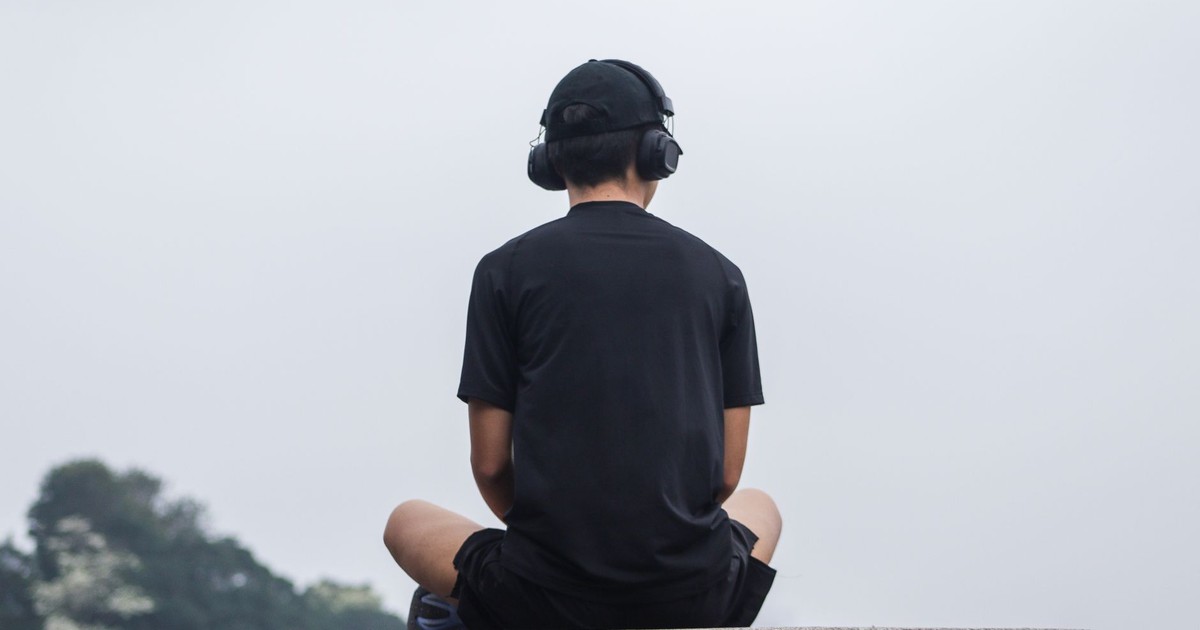
Self-awareness is one of those qualities that everyone believes they have more of than they actually do. It requires sitting with yourself long enough to notice how you actually behave, not just how you intend to behave – a distinction that, respectfully, a lot of people have not yet been willing to make.
Introverts spend more time in internal reflection than their extroverted counterparts by definition. That time isn’t wasted. Self-awareness is a rare skill that’s only developed through deep introspection. Research suggests that self-aware people are more self-confident, are better decision-makers, and have better relationships. The introvert who has spent years paying attention to their own reactions, their own patterns, their own recurring mistakes, has a head start on all three of those outcomes.
This also makes introverts useful to the people around them. Someone who has spent real time examining their own behavior is less likely to project, less likely to assume their read of a situation is the only valid one, and more likely to ask a useful question rather than deliver an unhelpful verdict.
7. Genuine Creativity and Original Thinking

The brainstorm – that ritual of people in a conference room shouting ideas at a whiteboard – tends to produce a very specific kind of output: ideas that sound good in the first thirty seconds, that nobody is embarrassed to say aloud, that are close enough to existing ideas that the room can respond immediately. Original thinking almost never works that way.
Psychologist Hans Jürgen Eysenck has said that creativity and introversion often go hand in hand. The underlying process is the same one that produces deep focus: introverts, left alone with a problem, will turn it over, come at it from a different angle, consider what the obvious solution misses, and arrive somewhere the group session wouldn’t have gone. Research indicates that many successful entrepreneurs, scientists, writers, and artists are introverts, with their tendency for deep focus and solitary work fueling innovation and creativity. The contemplation characteristic of introverted thinking often leads to breakthrough insights that wouldn’t emerge in more stimulating environments.
This is why so many of the ideas that actually changed things came from someone working alone – not from a productive offsite where everyone wore lanyards.
8. Communication That Actually Connects

There’s a difference between someone who talks a lot and someone who communicates well. These two things frequently get mistaken for each other, especially in workplaces and family systems that reward verbal presence over verbal precision.
Introverts, because they process before speaking, tend to choose their words with more care. They’re not filling space; they’re saying something. The email an introvert writes is usually better than the one dashed off in two minutes between meetings. The observation they finally voice, after staying out of three rounds of discussion, tends to be the one that cuts to the actual question everyone was dancing around. This is worth something – especially when the people around them have been talking for an hour without getting there.
The people who know introverts well also know when they’re being directly communicated to rather than just spoken at. There’s a particular quality of attention in a conversation with someone who actually prepared what they wanted to say.
9. Lower Risk of Impulsive Decisions

Impulsive decisions aren’t always bad. Sometimes speed is genuinely the right call. But the subset of genuinely terrible choices – the text sent in anger, the business commitment made in an energized room, the conversation that escalated because someone needed to win it immediately – tends to cluster among people who act on external stimulus before the internal processing has caught up.
The introvert’s instinct to pause, to not immediately fill the silence, to take a beat before committing, provides a natural friction against impulsive action. This isn’t about being slow. It’s about the gap between stimulus and response, which introverts experience as broader by default. That gap is where reconsideration lives, where “actually, wait” happens before the damage is done.
The same quality that makes introverts seem hesitant in a fast-moving group dynamic is the quality that keeps them from being the person who owes three apologies by Thursday.
10. Comfort With Solitude as a Skill, Not a Deficit

The pandemic made this one visible in a way nothing else had. When the world contracted to the size of a home, and the social infrastructure that extroverts had built their lives around disappeared overnight, the difference between people who found solitude genuinely restful and people who found it unbearable became immediate and practical.
Researchers studying pandemic adaptation hypothesized that introverts were better able to adapt to reduced social interaction, being more willing to limit social activities and avoid large gatherings of people. They may have also been better equipped to cope with reduced social interaction while still maintaining healthy behaviors without resorting to risk-taking behavior. Comfort with one’s own company is not a personality quirk to be managed. It’s a genuine resource – one that becomes most apparent when the external world stops delivering.
This also plays out in long-term mental health. Having a rich internal life, a capacity for reflection, a tolerance for unscheduled hours – these don’t generate the same kind of noise as constant social engagement, but they provide a different kind of stability that extroversion-as-default simply doesn’t build in the same way.
11. Keen Observation of What Others Miss

You don’t pick up much when you’re doing most of the talking. What introverts frequently bring to any room, professional or personal, is a detailed read of what’s actually happening in it – the hesitation in someone’s answer, the thing someone started to say and pulled back from, the body language that doesn’t match the words.
This connects to the habits of highly intelligent people that often overlap with introversion: a preference for observation over performance, for understanding the system before attempting to change it. Introverts spend less time projecting energy outward and more time taking in signal. With each passing week in a given environment, they build a more accurate map of it.
In practice, this means introverts are often the ones who know, months before the rest of the team does, which project is going sideways, which relationship has an unspoken problem at its center, which stated reason is not the actual reason. They picked up the signal; they just hadn’t announced it yet.
12. Greater Preparation and Follow-Through
Extroverts are often energized by the spontaneous, the immediate, the off-the-cuff. That energy is genuinely useful and often contagious. It’s also, frequently, not backed up by what comes after the energy dissipates.
Introverts arrive having done the reading. The preparation is how they manage environments they find draining – they compensate by knowing more, having thought through more scenarios, having a response ready before they’re put on the spot. The job interview answer that actually addressed the question. The presentation where the speaker had clearly thought about the audience. The meeting where one person in the room had actually read the document everyone was supposed to have read.
As CNBC reported in 2025, introverts can be more independent and usually possess highly sought-after soft skills like deep focus and creative problem-solving. They don’t just bring ideas – they bring the work behind the ideas. That follow-through is less visible than the person who was loudest in the meeting, and it tends to be the thing that actually made the meeting matter.
13. A Natural Aptitude for Deep Listening

Not the performance of listening – the nodding, the strategic “mm-hmm” that signals engagement while the mind works through something else entirely – but actual listening, where the other person’s words are processed for content, not just used as a pause before your next point.
This doesn’t mean extroverts can’t listen deeply; many of them do. But the introvert who is at ease in silence, who doesn’t feel the social pressure to fill every pause, who isn’t energized by the sound of their own voice, is structurally positioned to hear more. The silence at the end of someone’s sentence is where people often add the thing they actually came to say. The person who waits for it, who doesn’t rush to fill it with something clever, is the one who ends up knowing what’s really going on.
Introverts possess valuable traits such as thoughtful communication, deep focus, and empathetic listening that enrich teams and communities. Empathetic listening isn’t just warmth – it’s information. The introvert who heard everything, who tracked the subtext, who caught the thing being carefully not said, leaves the conversation knowing something the other person has maybe never told anyone before.
What This Is Really About

None of this is a case for introversion’s supremacy, and you should be suspicious of any piece that makes that argument. Extroversion comes with real advantages – social ease, resilience in networking contexts, a contagious energy that moves groups. The point isn’t that one wiring is better. The point is that the culture we’ve built around professional and social success has spent decades telling introverts that their wiring is a problem to be corrected, and the evidence suggests that’s simply wrong.
The introvert advantages in focus, observation, resistance to pressure, and depth of connection aren’t consolation prizes for people who find parties exhausting. They’re specific, documented, practical capacities that produce real outcomes – in work, in relationships, in the quality of the decisions you make when something actually matters. If you’ve spent years treating your introversion as a management problem, the more honest question might be: what would you get done if you stopped apologizing for it and just used it?
AI Disclaimer: This article was created with the assistance of AI tools and reviewed by a human editor.