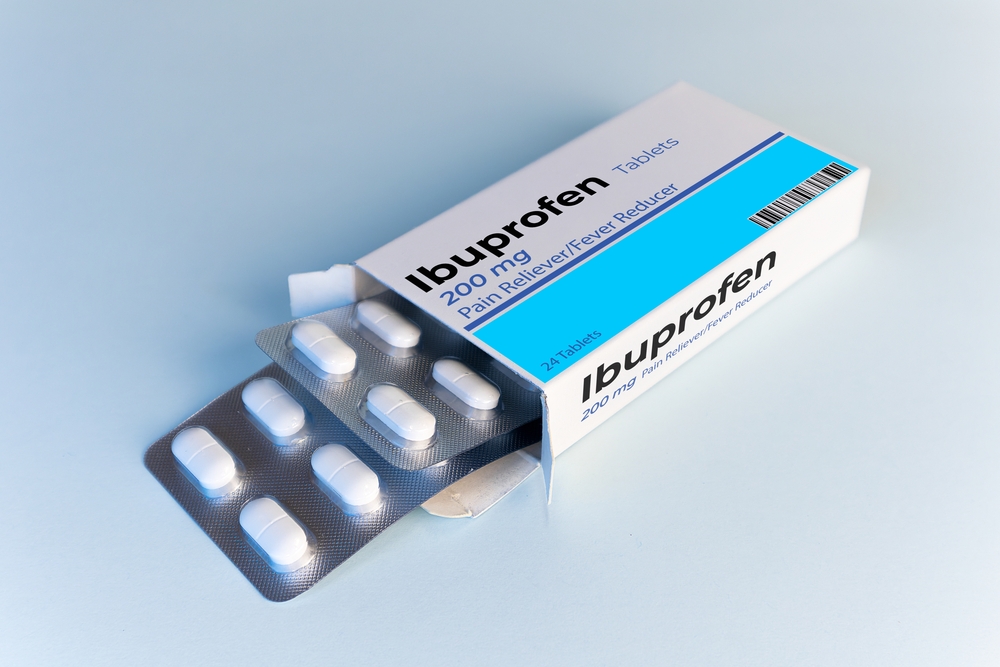

Most medicine cabinets have a bottle of ibuprofen in them. Not a bottle anyone bought with intention so much as a bottle that simply appeared, lives on the middle shelf, and gets reached for in the same reflexive way you reach for your keys – not because you thought about it, but because it’s just what you do. Back hurts? Ibuprofen. Period cramps? Ibuprofen. Headache from not drinking enough water, or from drinking too much wine, or from the specific kind of tension that comes from sitting on a school-night argument with a twelve-year-old? Ibuprofen.
For most people, that relationship with the little orange pills is fine. Short-term, at the recommended dose, ibuprofen does what it says on the packet. The trouble starts when “short-term” quietly becomes a month. Or two. When the bottle gets replaced before it runs out. When ibuprofen stops being a solution to a specific problem and starts being a background condition of daily life, taken pre-emptively the way other people take a multivitamin.
If you’ve ever wondered – in that half-serious, 11pm way – what exactly is happening inside your body when you do that, the answer is more interesting than you might expect. Not catastrophic, not a reason to panic, but definitely not nothing. Ibuprofen is a drug that works by interrupting a fundamental process in human physiology. Sustained interruption of fundamental processes tends to have consequences. Here is what the research actually says about ibuprofen long term effects.
What Ibuprofen Is Actually Doing in There
Ibuprofen belongs to a class of drugs called NSAIDs – nonsteroidal anti-inflammatory drugs – and it works by blocking enzymes called COX-1 and COX-2 (cyclooxygenase-1 and cyclooxygenase-2). These enzymes produce prostaglandins, which are the chemical messengers your body uses to trigger pain, fever, and inflammation. Block the messengers, reduce the symptoms. Clean mechanism, genuinely effective.
The catch is that prostaglandins don’t only make you feel pain. They also protect the lining of your stomach, regulate blood flow to your kidneys, and help maintain the balance of chemicals that keep your cardiovascular system running at the right pressure. When you take ibuprofen occasionally, your body compensates. When you take it every day for 30 days, those compensatory systems start to show the strain.
This is the part that gets lost in the convenience of over-the-counter access. A drug being available without a prescription does not mean a drug is without consequence. It means the risk profile is considered manageable for short-term use. The word “short-term” is carrying a lot of weight in that sentence.
What Happens to Your Gut
The first system to feel the pressure is your gastrointestinal tract, and it starts faster than most people realize. Ibuprofen works by blocking the production of prostaglandins, which help create pain and inflammation – but they also help protect the lining of the stomach and intestines. Remove that protection consistently, and the lining becomes vulnerable in ways that range from annoying to serious.
Stomach ulcers, bleeding, and tears happen to around 1 percent of people regularly taking NSAIDs for three to six months, and 2 to 4 percent of those using them for one year. A 2025 systematic review and meta-analysis published in Clinical Pharmacology & Therapeutics – the most comprehensive analysis of individual NSAIDs to date – found that among non-selective NSAIDs, ibuprofen was associated with roughly double the risk of gastrointestinal bleeding compared to non-use. That is the lowest risk among non-selective NSAIDs, which is not exactly a comfort when the comparison point is “no ibuprofen at all.”
The FDA-required black box warning for NSAIDs states that they cause an increased risk of serious gastrointestinal adverse events, including bleeding, ulceration, and perforation of the stomach or intestines, which can be fatal – and that these events can occur at any time during use and without warning symptoms. The part that deserves close attention is the “without warning” clause. You can develop an ulcer without feeling it build. The first sign is sometimes a symptom that sends you to an emergency room.
NSAIDs are the second leading cause of stomach ulcers after bacterial infections, and while one-third of users develop digestive symptoms, up to 70 percent of long-term users show stomach damage without warning signs. Seventy percent. Most of them had no idea.
What Happens to Your Kidneys
Your kidneys are another casualty of the prostaglandin interference. Ibuprofen blocks the COX pathway, decreasing prostaglandin production and narrowing kidney blood vessels, which reduces oxygen delivery and risks acute kidney injury even in those with normal baseline kidney function. Think of it like a pipe that’s been crimped – the fluid still moves, but with more effort and under more stress.
NSAIDs like ibuprofen reduce pain and inflammation, but they can harm the kidneys in high doses or with long-term use. The National Kidney Foundation specifically flags this risk, noting that people with low kidney function, heart disease, or high blood pressure should avoid NSAIDs unless a doctor advises otherwise. But even people with perfectly healthy kidneys are not immune to the effect. The physiology doesn’t check your medical history before it responds to the drug.
Long-term administration of NSAIDs has resulted in kidney damage such as renal papillary necrosis and other kidney injury. Patients at greatest risk of renal toxicity include those with impaired kidney function, heart failure, liver disease, those taking certain blood pressure medications such as diuretics or ACE inhibitors, and the elderly. The dose matters, the duration matters, and the combination with other medications matters enormously. Many people who are on blood pressure medication are also the people most likely to reach for ibuprofen regularly – for the kind of chronic pain that comes with middle age and a body that has been doing a lot for a long time.
What Happens to Your Heart
This is the part of the ibuprofen conversation that tends to catch people off guard. The FDA issued a warning in 2005 stating that NSAIDs like ibuprofen may increase the risk of heart attack or stroke, and in July 2015, the FDA further strengthened that warning. The 2015 revision was not routine housekeeping. It came after a review of new safety data and was applied to all non-aspirin NSAIDs.
Small increases in the risks of heart attacks and strokes in patients taking high doses of ibuprofen above 2,400 mg per day have been established by the European Medicines Agency as well. The mechanism is not mysterious once you understand the prostaglandin system. The cardiovascular risk from nonselective NSAIDs is considered to be caused by inhibition of PGI2 (prostacyclin), which increases platelet reactivity. More reactive platelets means blood that is more prone to clotting. More prone to clotting means higher risk of the events that depend on a clot forming in exactly the wrong place.
A 2025 analysis published in Pharmaceuticals drawing on data from the EudraVigilance database – the European Union’s pharmacovigilance reporting system – found 58,760 cases associated with ibuprofen, with cardiovascular events among the most significant categories of concern. These side effects manifest especially in association with high doses and long-term treatments, and NSAIDs also interfere with blood pressure and demonstrate interference with antihypertensive drugs, particularly ACE inhibitors and angiotensin receptor blockers.
If you are managing high blood pressure with medication and treating the resulting headaches or tension with ibuprofen, those two things are working against each other in a way your doctor may not know about if you haven’t mentioned it.
The Rebound Headache Problem Nobody Warns You About

Here is perhaps the most ironic ibuprofen consequence: using it repeatedly for headaches can cause more headaches. The Mayo Clinic describes this as medication-overuse headache, sometimes called rebound headache, which develops when pain relief medication is taken too frequently over a sustained period.
If you use a prescription or over-the-counter pain reliever more than two or three times a week, or for more than 10 days a month, you’re setting yourself up for more pain. When the medication wears off, the pain comes back, and you have to take more to stop it – which can cause a dull, constant headache that is often worse in the morning.
The specific cruelty of this cycle is that it feels like a headache disorder getting worse, not like a medication problem. People respond by taking more ibuprofen, which deepens the cycle rather than breaking it. Headache specialists advise patients to avoid taking over-the-counter medications more than two to three times per week, because frequent use may cause side effects or even lead to medication-overuse headaches. If you’ve been waking up with headaches that weren’t there six months ago and ibuprofen is part of your daily routine, that timeline is worth examining.
Who Is Most at Risk
The research is consistent on which people carry the highest risk when taking ibuprofen long-term. Elderly patients and patients with a prior history of peptic ulcer disease and/or GI bleeding are at greater risk for serious GI events. But the cardiovascular and kidney risks extend much further. People at higher-than-average cardiac risk – including those who have had a heart attack, have high blood pressure, or have diabetes – face compounded risk, and older people carry more GI and cardiovascular risk from NSAIDs generally.
Women in their forties and fifties who are managing chronic pain from conditions like endometriosis, fibromyalgia, or arthritis – often alongside blood pressure medication, changing hormone levels, and general biological changes that accumulate in middle age – represent a group for whom “it’s just ibuprofen” is the most misleading framing possible. The drug’s risks stack with other risk factors rather than sitting neatly beside them.
The Actual Numbers, Without the Drama
None of this means ibuprofen is dangerous for a weekend. The risk of having a heart attack or stroke is extremely small over a short course of therapy of less than one month, such as would be the case in treating acute pain from a musculoskeletal injury like tendonitis. The drug is not misnamed or misclassified. At the doses and durations for which it was designed – occasional use, for specific acute pain – it does the job well.
Although heart issues have been described after short uses of NSAIDs, most of the time the problems come with prolonged use. “Prolonged” is the operative word, and it’s one that each person has to define honestly for themselves. A week is not prolonged. A month probably is. Three months definitely is.
The body does not flag the transition. There’s no notification when short-term use becomes long-term use, no system alert when the kidney blood flow restrictions that are temporary under a four-day course of treatment start becoming a sustained reduction. The calendar changes; the consequences accumulate; the bottle gets replaced.
What This Is Really About
Ibuprofen is so culturally embedded in the management of everyday pain that questioning it can feel like questioning the existence of headaches. The drug is not the enemy. Pain is real, inflammation is real, and the relief ibuprofen provides is not imaginary. The question is whether the relief is being asked to do more than it was built to do – to cover chronic pain that deserves investigation, to substitute for a conversation with a doctor, to make a body that is asking for help easier to ignore.
Thirty days of daily ibuprofen use is a data point. It’s the body saying: something is hurting reliably enough that you’ve medicated it every day for a month. The ibuprofen long term effects on your stomach, kidneys, and cardiovascular system are one part of that picture. The other part is what’s underneath – the pain that started this, still there, asking to be taken seriously. You don’t need to have it figured out. But you might want to tell someone.
Disclaimer: This information is not intended to be a substitute for professional medical advice, diagnosis, or treatment and is for information only. Always seek the advice of your physician or another qualified health provider with any questions about your medical condition and/or current medication. Do not disregard professional medical advice or delay seeking advice or treatment because of something you have read here.
AI Disclaimer: This article was created with the assistance of AI tools and reviewed by a human editor.