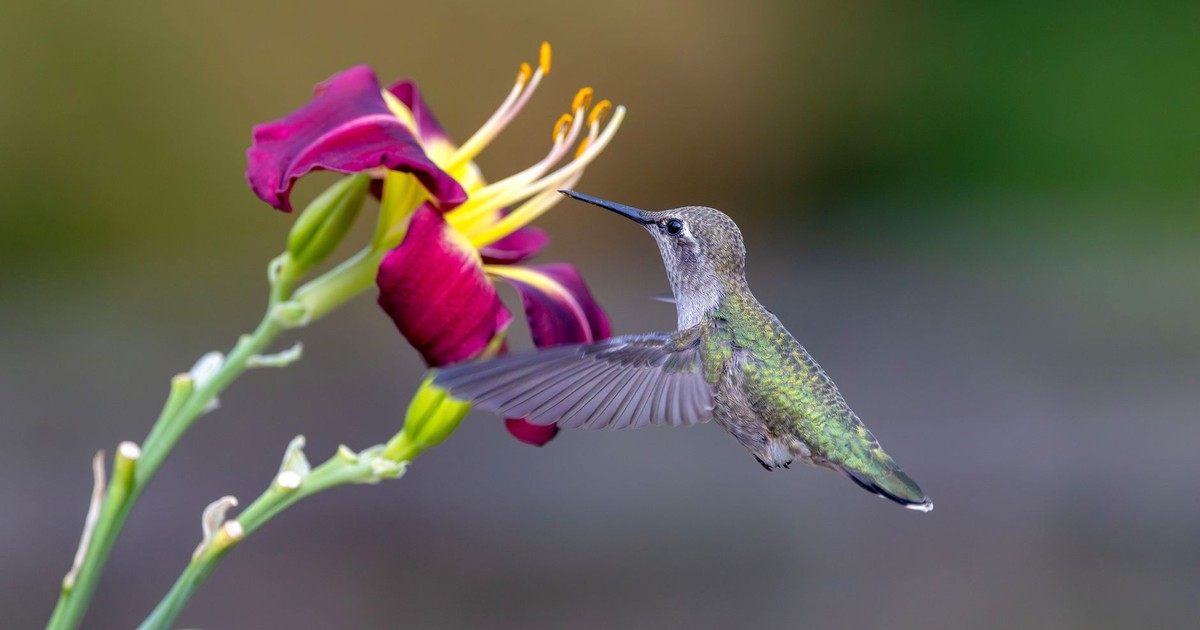

Hummingbirds operate almost entirely by sight. Earlier research assumed they had no functional sense of smell, but a 2021 study published in Behavioral Ecology and Sociobiology by UC Riverside researchers demonstrated that hummingbirds use scent to detect insect threats while foraging — the first clear evidence of the birds using smell alone to make foraging decisions. Smell plays no role in locating nectar-bearing flowers, which means every flower-selection decision still comes down to what catches their eye from a distance while flying at up to 30 miles per hour. Color is less of a preference and more of a hardwired foraging signal, a visual shortcut their brain has refined across millions of years of evolution to answer one urgent question: is there nectar in there, and is it worth the energy to stop?
The conventional wisdom is that hummingbirds love red, and that is not wrong. But it is incomplete. The relationship between hummingbirds and flower colors is more layered than a simple color preference, and ornithologists have spent years unpacking exactly why certain blooms turn a garden into a reliable landing strip while others get ignored entirely.
Color is a learned cue as much as an instinctive one, and hummingbirds are faster learners than most gardeners give them credit for. What follows is a color-by-color breakdown, ranked roughly by the strength of their track record, along with the specific plants that do the job best and the science behind why each one works.
1. Red: The Original Hummingbird Signal
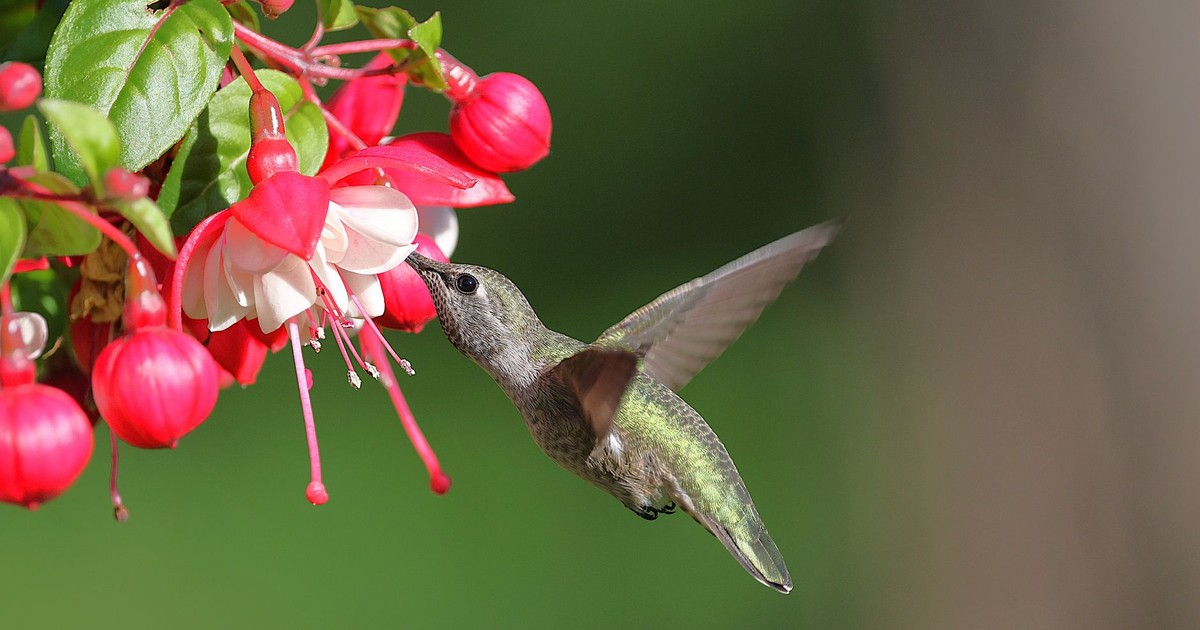
According to the Smithsonian’s National Zoo, hummingbirds are attracted to certain colors, most often red, but also orange and yellow. The reason comes down to ecology as much as biology. Red flowers stand out against the green foliage that makes up most of a hummingbird’s visual environment, and hummingbirds have learned through repeated foraging that many nectar-rich flowers happen to be red. That learned association is self-reinforcing: a bird that keeps finding nectar in red flowers keeps returning to red flowers.
A competitive advantage is built into the color. Many insects, especially bees, struggle to detect red as easily, leaving more nectar available for hummingbirds. A red flower is effectively a private dining room: the bees walk past it, and the hummingbird gets the full table to itself. An animal that needs to consume well over its body weight in nectar every single day cannot afford to share a table with every bee in the garden.
Ornithologist Bob Mulvihill at the National Aviary identifies the cardinal flower (Lobelia cardinalis) as the number one hummingbird plant, a perennial that will also self-seed where conditions are right. Other top performers in red include scarlet bee balm (Monarda didyma), scarlet sage (Salvia splendens), and trumpet vine. These plants share two qualities that amplify the color’s appeal: tubular blooms that physically fit a hummingbird’s bill, and high sucrose content in their nectar. Hummingbirds have a strong preference for nectar composed of sucrose rather than fructose or glucose. Color gets them to the flower; the right kind of sugar keeps them coming back.
2. Orange: Red’s Closest Neighbor
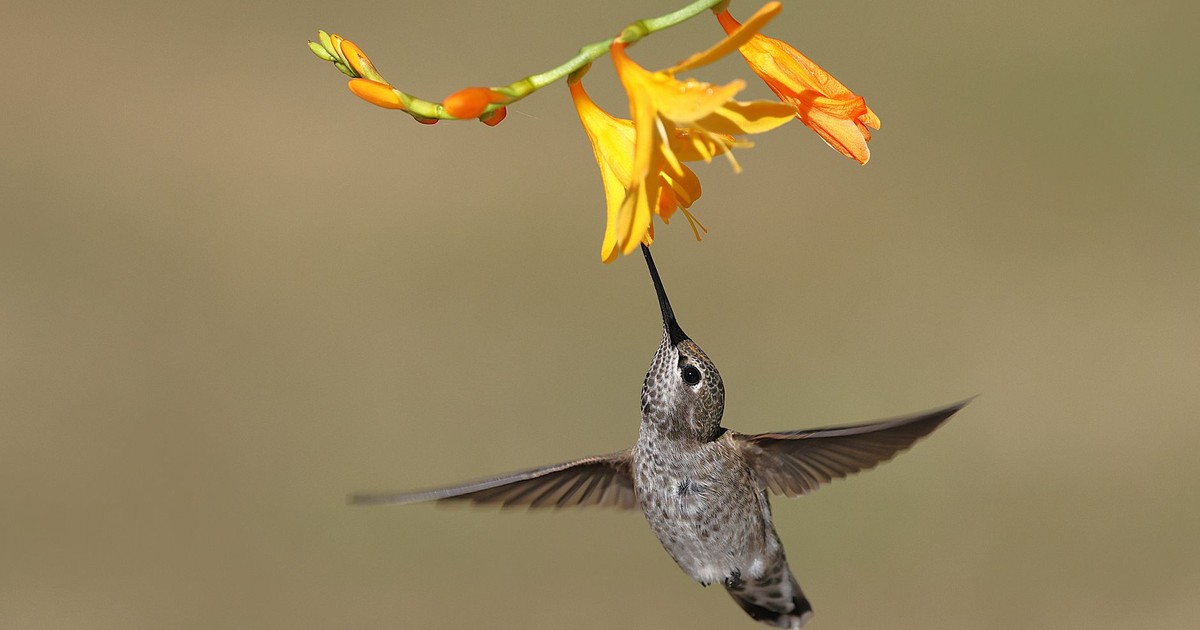
Orange is often treated as a runner-up to red, which undersells it. Hummingbirds respond to orange almost as reliably because of where it sits on the visible spectrum. Orange is the closest to red on the color spectrum. To a bird that has spent its foraging life associating warm-toned blooms with high-sugar reward, orange reads as a near-identical invitation.
Flowers like lantana and zinnias, which bloom in orange hues, are popular with hummingbirds. Orange is a warm tone that stands out well in a green garden setting and suggests the possibility of nectar. Trumpet vine, which often blooms in an orange-red range, sits at the intersection of both colors and is one of the most reliably visited vines in a hummingbird garden. Jewelweed (Impatiens capensis), a native wildflower with spotted orange blooms, is another consistent draw, particularly for ruby-throated hummingbirds in the eastern United States.
If you are building a hummingbird-friendly planting scheme and want something that pairs well with red, orange is the obvious companion. The two colors together create a visual cluster that reads, from 30 feet in the air mid-flight, as an extremely promising food source. Staggering bloom times between red and orange plants extends that signal across more of the season.
3. Pink: Underestimated and Consistent
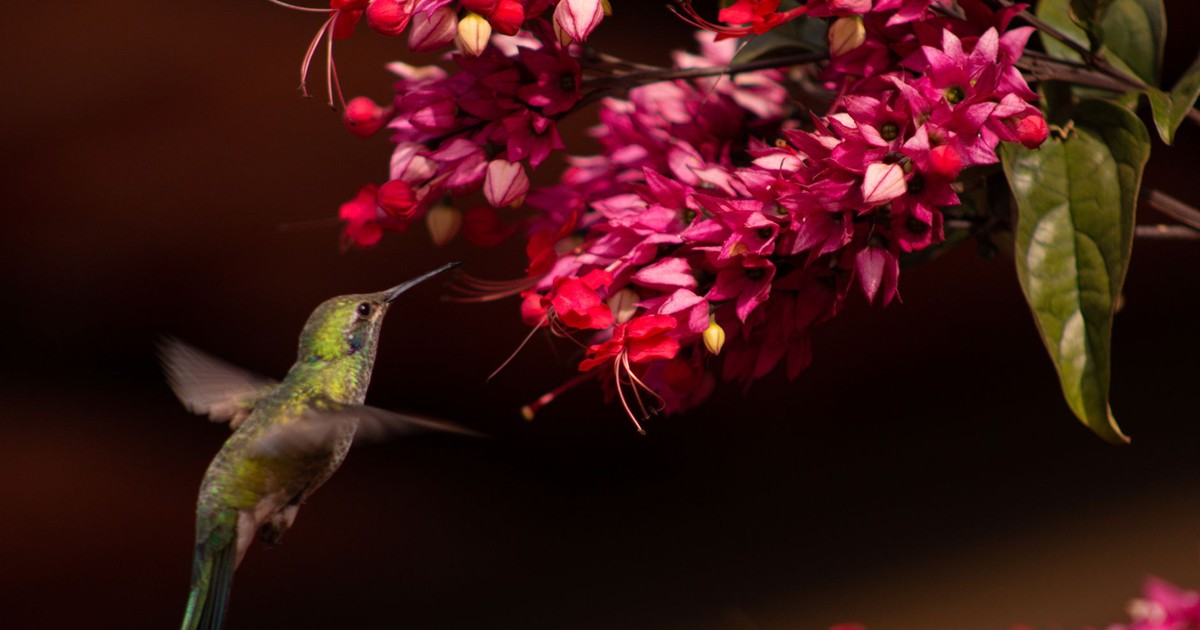
Pink does not get the credit it deserves in most discussions of hummingbird flower colors, possibly because it lacks the dramatic contrast of red or orange. In practice, pink blooms produce reliable hummingbird visits because they remain clearly visible against green foliage while also signaling warmth, the same general category of color that hummingbirds associate with nectar reward.
Hummingbirds feed from a wide variety of plants, but they are especially drawn to tubular flowers that fit slender hummingbird beaks perfectly. Red and orange-bloomed plants are more likely to catch their eyes, but hummingbirds are also attracted to pink. Fuchsia is the standout pink performer, with pendant tubular flowers in deep pink and purple-red that seem engineered for the job. Penstemon, salvia in pink cultivars, and bleeding heart (Dicentra spectabilis) all draw hummingbirds in reliably.
Knockout roses and other single-petaled rose varieties can also attract visiting hummingbirds, though they tend to be lower in nectar than purpose-built hummingbird plants. The tubular shape matters here as much as the color: a pink flower with open, shallow petals offers far less reward than a pink tubular one, and hummingbirds figure that out quickly. They are not visiting for aesthetics.
4. Purple and Violet: Better Than Their Reputation Suggests
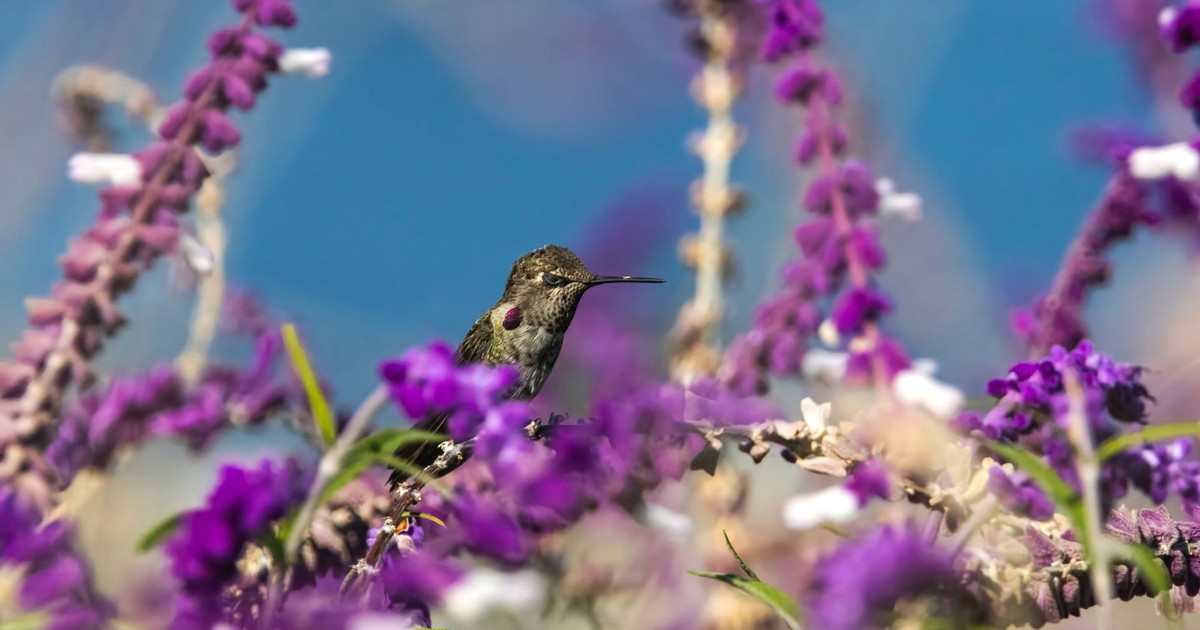
Purple is where the conversation about hummingbird flower colors gets genuinely interesting, because the received wisdom and the field observations do not quite match. A purple flower with fructose-based nectar that smells wonderful is probably not expecting a hummingbird to pollinate it, but that describes a specific subset of purple flowers, not the entire color. Salvia, for instance, is available in deep purple and violet cultivars and is one of the most hummingbird-visited plants in North American gardens.
A 2020 study published in PNAS confirmed the ability of hummingbirds to see a range of nonspectral colors, including nonspectral combinations involving visible and ultraviolet light. Researchers documented this UV-color vision across hundreds of bird species. In addition to the three color cones possessed by humans (red, green, and blue), hummingbirds have a fourth cone sensitive to UV light. A purple salvia that looks one-dimensional to human eyes may appear to a hummingbird as a UV-plus-purple combination that has no equivalent in human visual experience.
Purple and violet flowers with UV-reflective properties can be as visually arresting to a hummingbird as a bright red bloom is to us. Black-and-blue salvia (Salvia guaranitica), anise hyssop (Agastache foeniculum), and lavender all draw hummingbirds in with some regularity, and the UV dimension of what the bird actually sees may explain why gardeners are often surprised by how much attention these plants get.
5. Yellow: Specific Plants Only
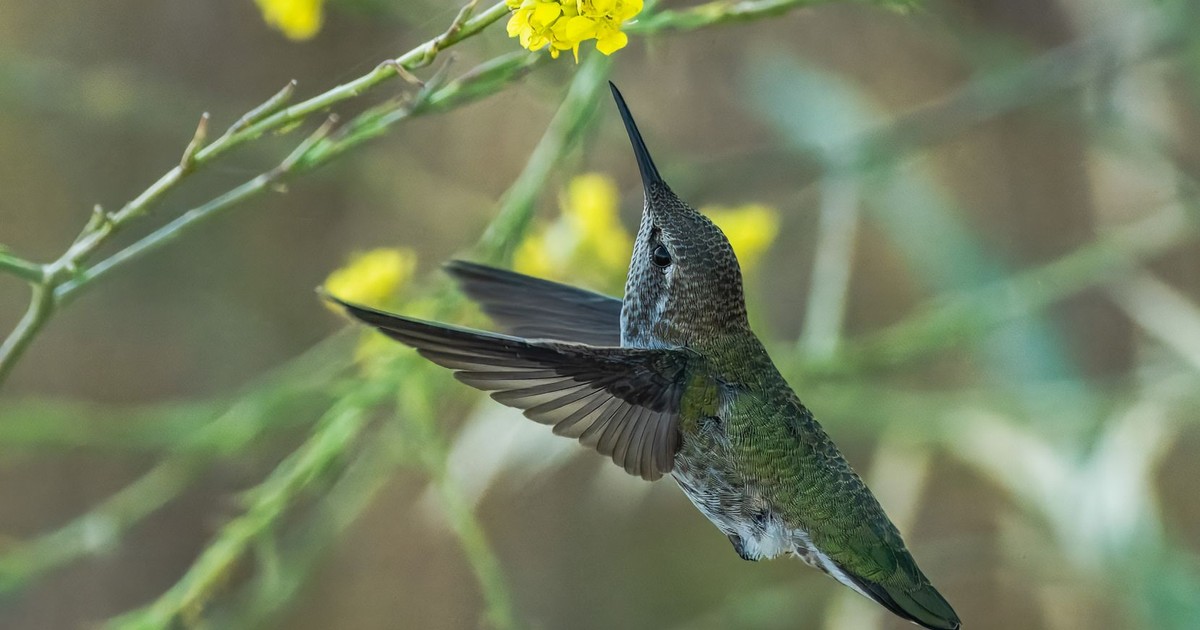
Yellow is the color where hummingbirds are pickiest, and the reason reveals something important about how their preferences actually work. Competition for nectar between bees and other pollinating insects is why hummingbirds prefer looking for nectar from red flowers over yellow ones. Yellow is a bee color. It attracts every competing pollinator in the garden, which means by the time a hummingbird arrives at a yellow flower, the nectar may already be depleted. The birds have learned to associate yellow with competition and disappointment.
That said, certain yellow plants reliably beat the odds. Yellow flowers that attract hummingbirds include seep monkeyflowers and canary creeper vines. Yellow bells (Tecoma stans), a large native shrub in the southern United States and Central and South America, produces tubular yellow flowers in high volume and gets consistent hummingbird traffic. The lesson with yellow is to focus on tubular native species with high nectar production rather than bee-magnet open-faced blooms like black-eyed Susans or sunflowers.
Paired with red or orange plantings, yellow can extend a hummingbird’s time in your garden by providing an additional nectar source once the primary blooms are tapped out. It works best as part of a larger planting scheme rather than standing alone as the main attraction.
6. White: The Surprise Performer
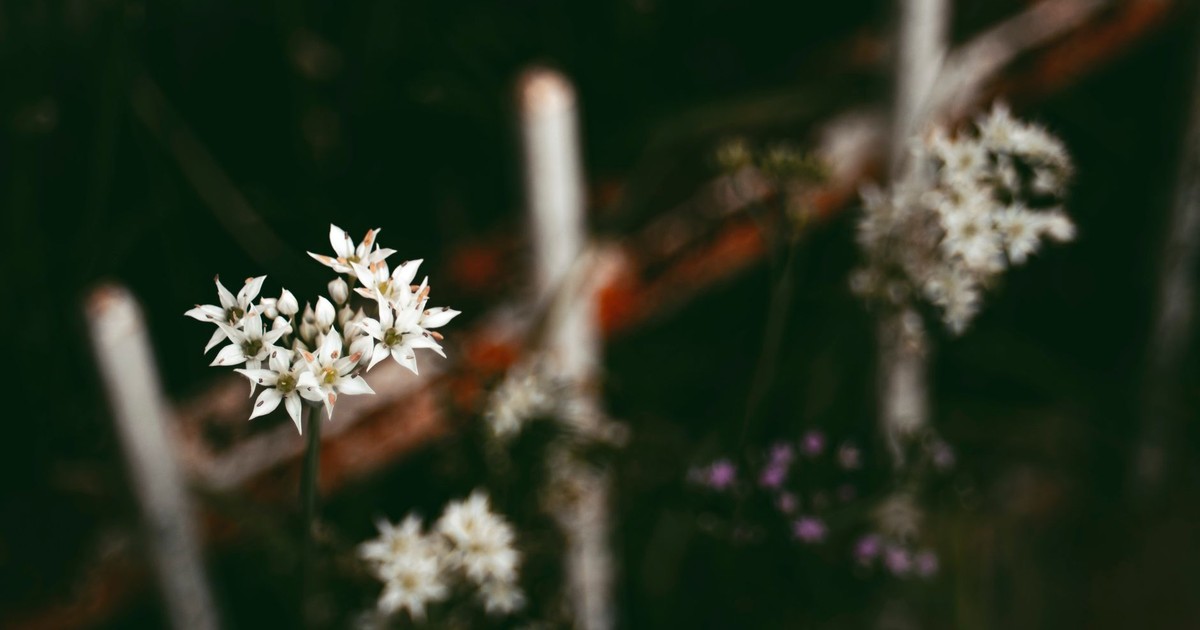
White flowers rarely appear on anyone’s list of hummingbird magnets, and it is true that white is not instinctively associated with hummingbirds the way red is. Hummingbirds are primarily attracted to long tubular flowers that are red, but are frequently seen visiting other flowers with bright colors that are orange, yellow, purple, or even blue. White is not even on that list, yet it still produces visits when the flowers are tubular and the nectar is there.
According to the Audubon Society, by varying the nectar content of flowers, researchers were quickly able to switch hummingbirds from a preference for red to a preference for the most nectar-rich flowers, regardless of color. Once a hummingbird has learned that a specific white plant in your garden holds good nectar, color becomes secondary. The bird will return to that plant on its regular foraging route whether or not it matches any instinctive color preference.
Cardinal flowers in white cultivars, white penstemon, and white salvia coccinea are all worth including in a mixed planting. They are rarely sufficient on their own to attract a first-time visitor, but once a bird has learned the garden, white plants earn their place in the rotation.
Read More: Should Every School Have a Year-Round Gardening Program?
The Color That Actually Runs the Show
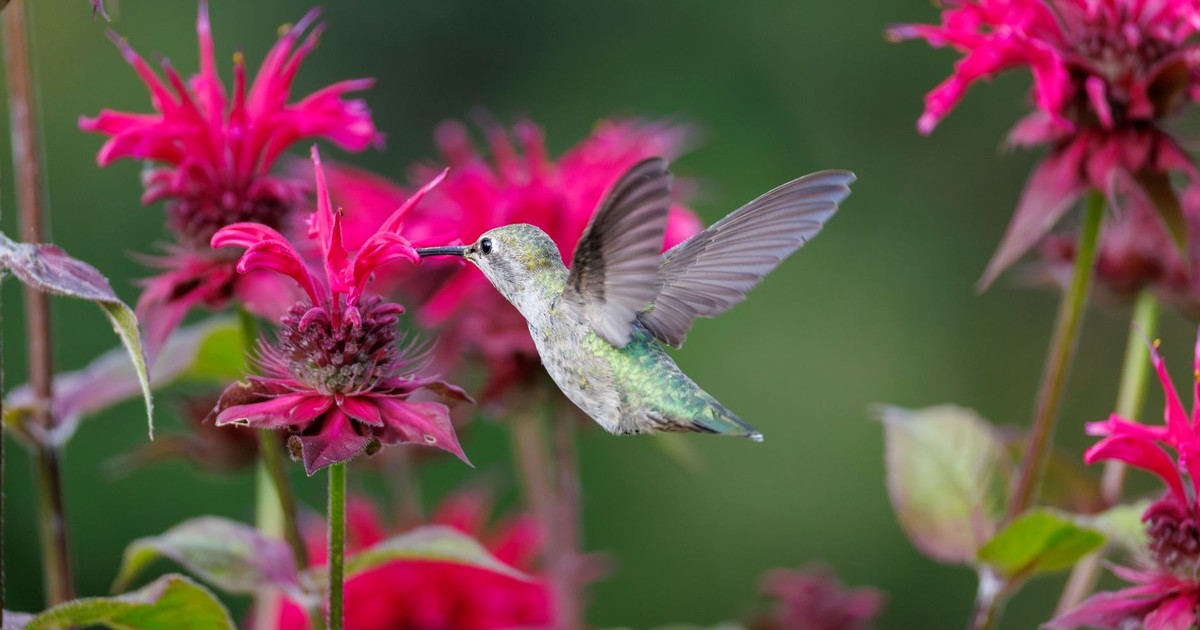
Even though hummingbirds’ eyes have a heightened sensitivity to colors in the red-to-yellow range, the birds are fast learners and will go to where the nourishment is. Color is the initial recruiting tool, the thing that gets a hummingbird to investigate a flower it has never visited before. But what brings it back, and what makes it include your garden on its daily foraging circuit, is whether the nectar was there when it arrived.
Plant red and orange first to make a strong visual argument. Add pink, purple, and yellow to extend the bloom season across spring and summer, keeping nectar available across more of the calendar. Plant natives where possible: ornithologist Noah Perlut, professor at the University of New England, recommends planning your garden so that different species of flowers open asynchronously across the growing season, because a hummingbird’s daily schedule is consumed by the constant hunt for food. And when you are choosing between two plants of similar color, go with the one that is tubular, native, and high in sucrose. A hummingbird is not sentimental. It remembers which flowers delivered and which ones did not, and it routes accordingly.
The color does not need to be perfect. The nectar does. Get both right, and a hummingbird will find you.
Disclaimer: This information is not intended to be a substitute for professional medical advice, diagnosis, or treatment and is for information only. Always seek the advice of your physician or another qualified health provider with any questions about your medical condition and/or current medication. Do not disregard professional medical advice or delay seeking advice or treatment because of something you have read here.
AI Disclaimer: This article was created with the assistance of AI tools and reviewed by a human editor.