

A completely empty Saturday used to feel like a gift. Somewhere between the group chats and the grocery runs and the invisible logistics of keeping a life running, it stopped feeling that way. Now an unstructured weekend can produce a specific low-grade dread – the vague sense that you should be doing something, resting better, enjoying yourself more successfully. The people who genuinely look forward to those wide-open hours have something in common, and it isn’t a superior attitude about downtime. They have something to go back to.
The difference is almost never about personality type. It’s not that some people are wired for solitude and others aren’t. Certain people have built small, private worlds inside their leisure time – worlds that exist entirely for their own satisfaction, that nobody else schedules or measures or grades. Those worlds have a specific gravity. They pull you toward the weekend instead of making you anxious about filling it.
Research consistently links hobbies to better health, more happiness, fewer depression symptoms, and higher life satisfaction – and the specific activities matter less than the fact of having them. But some hobbies come up again and again in the research as reliably, demonstrably good at producing the kind of contentment that makes a free Saturday feel like a reward instead of a riddle. Here are eight of them.
1. Gardening
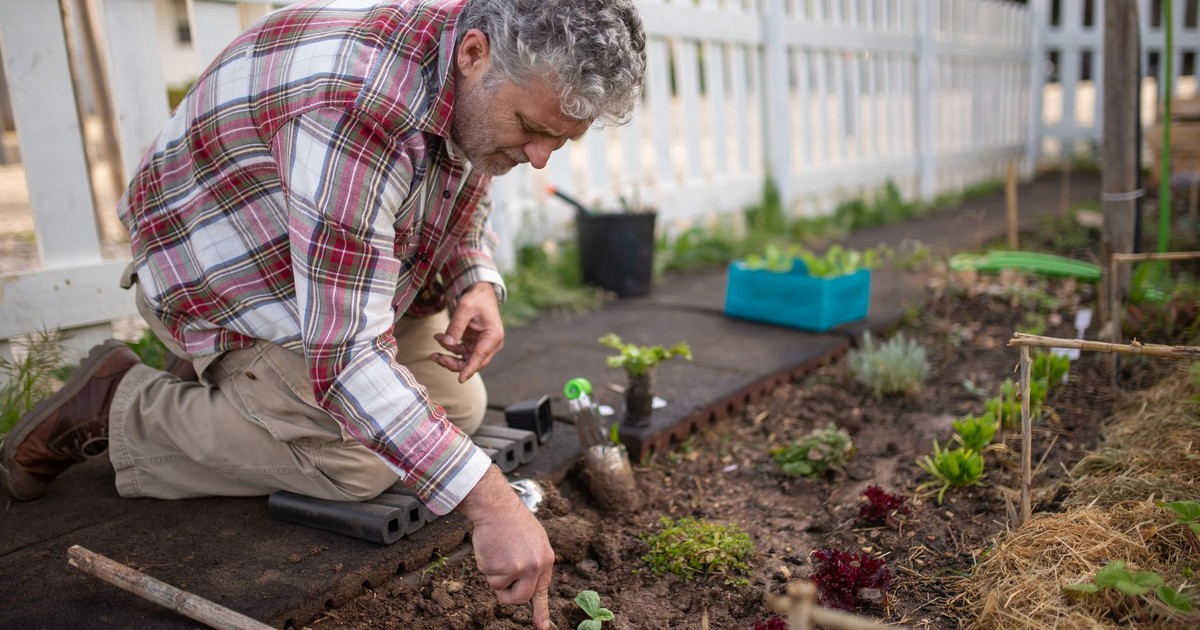
Research from the Harvard T.H. Chan School of Public Health shows that gardening reduces stress and anxiety, and tending to plants fosters mindfulness while creating a sense of accomplishment – especially once you start watching things you planted actually grow. The process has a satisfying circularity that very few activities can match: you put something in, something comes back.
The biological piece is worth knowing about too. Dopamine, the feel-good chemical released by the brain’s reward system, fires when you harvest vegetables from your garden – which researchers have cheerfully dubbed a “harvesting high.” Even people who grow nothing more ambitious than a window box of herbs report the same loop: tending, waiting, noticing, satisfaction. The scale doesn’t seem to matter as much as the consistency.
Gardening resists the clock. You can spend twenty minutes deadheading roses or four hours reorganizing beds, and neither one feels wrong. It expands to fit the time you have, which is a rare quality in a hobby. It also gets you outside, which is doing a lot of work on its own.
2. Creative Writing or Journaling

According to a 2024 study in Frontiers in Public Health, people who engage in creative hobbies report higher life satisfaction, greater happiness, and – most notably – a greater sense that life is worthwhile. Journaling and creative writing were among the specific activities the researchers highlighted. Not just enjoyment. Not just reduced stress. A felt sense of meaning.
Writing by hand creates a different relationship with your own thoughts than typing does. There’s a slowness to it that interrupts the usual mental traffic. You can journal your way through a complicated feeling and come out the other side not because you solved anything, but because you organized it enough to see it clearly. That’s a different kind of relief than distraction, and it tends to last longer.
The entry barrier here is impressively low. You don’t need a course, equipment, a partner, or a specific location. A notebook and forty minutes is enough. The people who stick with it usually describe it less as a hobby and more as a habit that becomes non-negotiable – the thing they miss immediately when they skip it.
3. Cooking and Baking
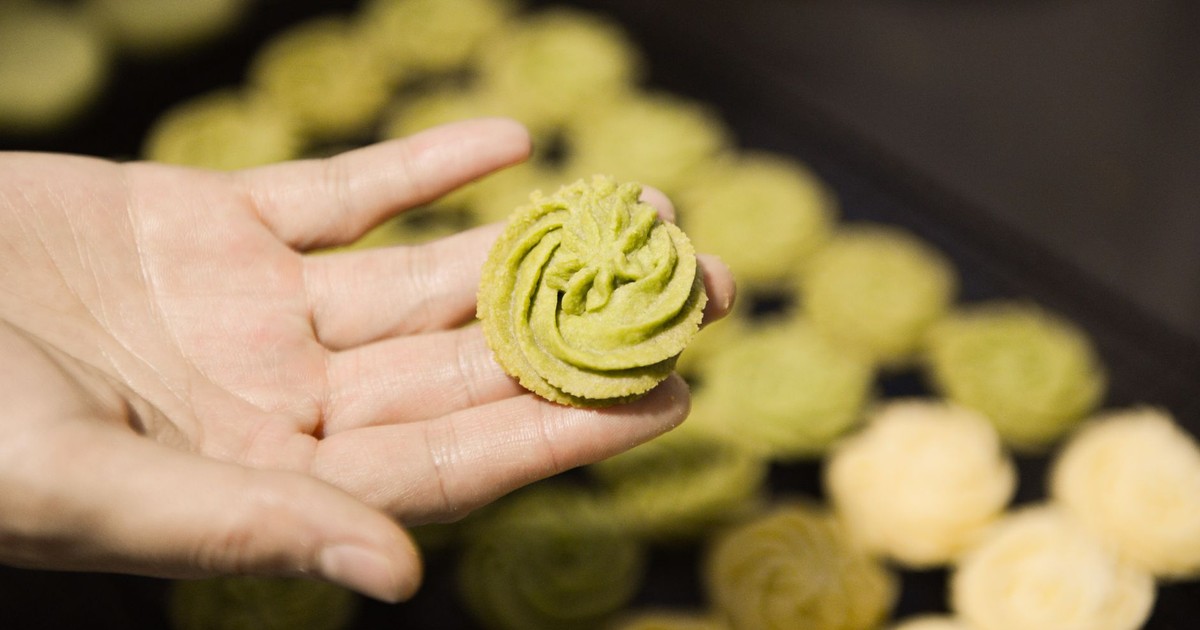
Cooking is one of the hobbies that make you happy in a way that’s unusually hard to separate from the outcome, because the outcome is dinner. There is no wasted product. You practiced something enjoyable, you fed people, and you probably also ate well. The return on the hour is almost comically high compared to most leisure activities.
The psychological case goes deeper than efficiency. Cooking is a creative act with a built-in feedback loop – you try something, it works or it doesn’t, you try again next weekend. Figuring out what to do with a half-empty pantry on a Saturday afternoon is a genuinely satisfying problem to solve.
Baking has an almost meditative quality. The measuring, the waiting, the sensory specificity of working with dough – it demands just enough concentration to crowd out whatever you were anxious about before you started. The fact that something comes out of the oven at the end is almost secondary. Almost.
4. Reading
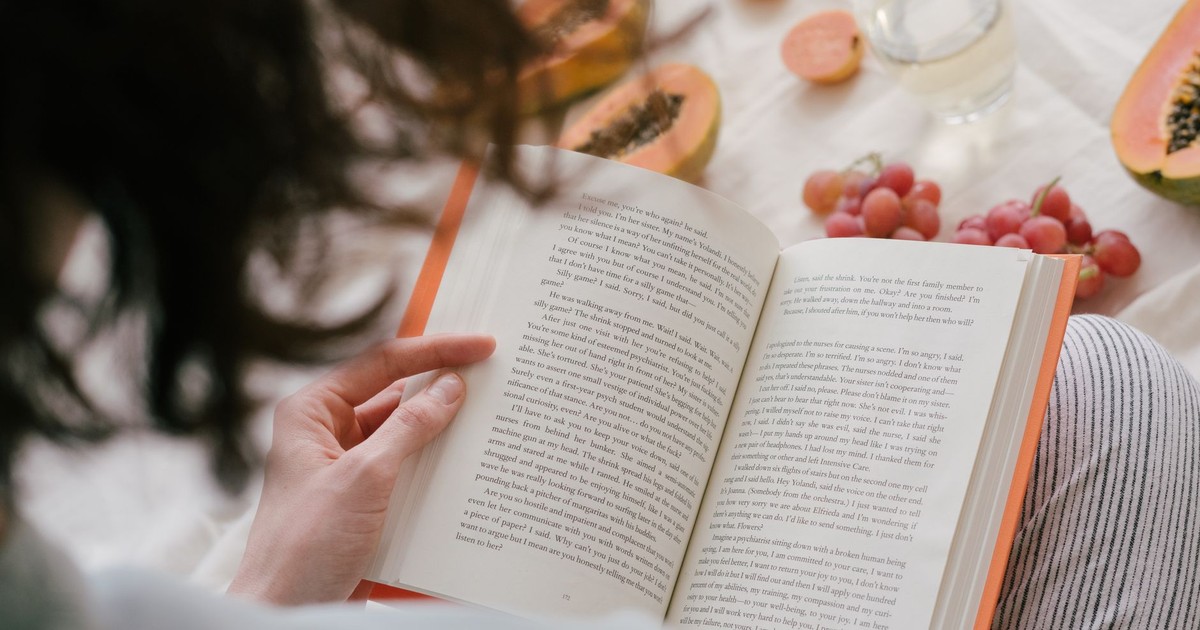
Reading is perhaps the only hobby where the full benefit arrives while you appear to be doing nothing. To anyone watching, you are lying on a couch. Inside, you are living someone else’s life, working through a new idea, or following an argument across two hundred pages. The cognitive mileage is enormous. The visible effort is approximately zero.
A 2025 scoping review found that engaging in hobbies consistently contributes to reduced depression, anxiety, and stress, and promotes overall life satisfaction. Fiction adds an empathy dimension that nonfiction often doesn’t: inhabiting a character’s perspective, even a fictional one, changes the way you read the people around you in real life.
Reading works as a weekend anchor because of its portability and its range. A novel pulls you through an entire afternoon without your noticing. An essay collection gives you something to think about over lunch. A dense nonfiction book rewards re-reading the same chapter twice. The form is flexible in a way that matches whatever kind of Saturday you’re actually having, which is helpful when your energy level is unpredictable.
5. Physical Movement You Actually Enjoy

This is emphatically not a prescription for the gym. The operative word is “enjoy,” which rules out a significant percentage of fitness options for a significant percentage of people. The research is clear that regular movement improves mood and reduces anxiety, but the research is also clear that you won’t sustain an activity you dread. The hobby has to be the thing you look forward to, not the thing you white-knuckle through twice a week until you quit.
Engaging in hobbies can contribute to personal growth, reduce stress, and foster social connections – and for people who have built movement into their weekends, that activity tends to take a form attached to something they already love: hiking because they like being outdoors, dancing because they like music, swimming because the water is its own reward. The exercise is incidental to the experience.
The kind of movement that becomes a hobby rather than a chore tends to have a social or exploratory dimension. A running group. A weekly yoga class with someone you actually want to see. A neighborhood walk where you pay attention to what’s changing. The movement is the structure; the rest of it is the point.
6. Making Music

You don’t have to be good at this one. That bears repeating, because most people who played an instrument as children and gave it up in their twenties assume that returning to it requires an intermediate skill level they no longer have. It doesn’t. The research on music and mood is entirely unconcerned with how well you play.
Playing an instrument – even badly, even alone in a room – requires the kind of focused attention that psychologists describe as a flow state: full absorption in a task that’s challenging enough to hold your attention but not so difficult that it produces frustration. Your brain cannot simultaneously run its usual loop of worry and figure out a chord transition.
Hobbies help connect people, build relationships, and promote a sense of community. Joining a community choir, a band, or even an informal jam session puts you in a room with people who are focused on the same thing you are, which creates a sense of connection that is almost structurally different from ordinary socializing. The collaboration is built into the activity itself.
7. Learning a Craft
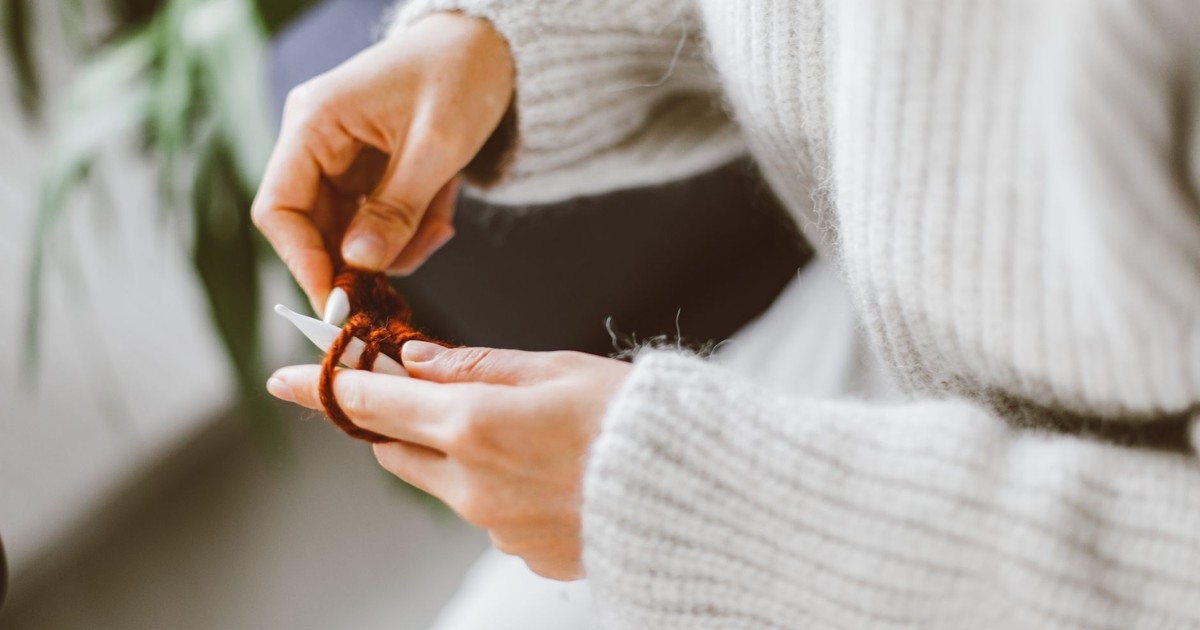
Knitting, pottery, woodworking, embroidery, leatherwork, bookbinding – the specific craft matters less than the fact of making something by hand, slowly, with a level of attention that can’t be faked or rushed. There’s a reason these activities have been surging in popularity since the early 2020s. The world offers very few experiences of genuine competence accumulation. A craft gives you one.
The tactile quality is significant: working with physical materials grounds you in your body in a way that screen-based leisure doesn’t. An hour of embroidery leaves you with something to show for it, a felt sense of progress, and hands that were busy doing something other than scrolling.
Hobbies involving creativity, sensory engagement, self-expression, and relaxation are consistently linked to better mental health outcomes. Knitting circles, pottery classes, and woodworking clubs attract people who are serious about what they’re making and generous about sharing what they know. The learning curve is social. You get better partly through practice and partly through other people showing you things they figured out the hard way.
8. Volunteering or Community Involvement

This one gets underestimated as a personal happiness strategy because it’s framed as being about other people. It is, in part. But the research on volunteering as a source of well-being is substantial enough that describing it purely as altruism misses what’s actually happening psychologically. Community-oriented activities rank consistently among the most protective against depression, anxiety, and stress.
Volunteering also solves a problem that many other hobbies don’t: the problem of consequence. Reading a novel matters to you. Coaching a kids’ soccer team on Saturday mornings matters to twelve other people who are counting on you to be there. That external structure, the expectation of someone else, converts an intention into an obligation in the best possible sense. You go because they’re waiting. You feel better because you went.
The form it takes is less important than the consistency. A weekly commitment to something local – a food bank, a literacy program, a community garden – creates a rhythm that anchors the weekend in a way that purely solitary hobbies sometimes don’t. You come home from it with the particular satisfaction of having been useful, which is a different feeling from having been entertained, and one that tends to last through Monday.
Read More: 9 Habits of Couples Who Keep the Spark Alive, No Matter How Many Years They’ve Been Together
What You’re Actually Building

The through-line in all eight of these hobbies isn’t the activity itself – it’s the relationship you develop with your own time. A weekend without plans stops feeling like a gap when you have something you genuinely want to go back to.
According to Harvard Health, a study of more than 93,000 people found that those with hobbies reported better health, more happiness, fewer symptoms of depression, and higher life satisfaction compared with those who didn’t have hobbies. The person who spends Saturday mornings in the garden or an hour a week at a pottery wheel is doing something that accumulates. Not into productivity. Into self. The hobbies that make you happy are the ones that give you a private life inside your own life – a place that belongs only to you, that nobody else schedules, and that asks nothing of you except your full attention.
None of these require you to be talented, or committed in any grand way, or even consistent from week to week. They just require that you take them seriously enough to come back. The weekend opens differently when something is already waiting there.
Disclaimer: This information is not intended to be a substitute for professional medical advice, diagnosis, or treatment and is for information only. Always seek the advice of your physician or another qualified health provider with any questions about your medical condition and/or current medication. Do not disregard professional medical advice or delay seeking advice or treatment because of something you have read here.
AI Disclaimer: This article was created with the assistance of AI tools and reviewed by a human editor.