
When the Festus City Council approved a $6 billion AI data center on March 30, 2026, it probably expected a degree of community frustration. What happened next exceeded any reasonable expectation. Eight days later, every one of the four incumbent council members up for reelection had been thrown out of office by voters running specifically on opposition to the project. A lawsuit followed. A mayoral recall petition followed that. And the developer – one of the nation’s most powerful construction firms – held a press conference insisting that none of it would stop him. What unfolded in this small Missouri town is a window into a national collision between the unstoppable momentum of AI infrastructure investment and the increasingly organized resistance of the communities expected to host it.
A Deal Made in the Dark
The major council shakeup came after months of growing fervor against its members and Mayor Sam Richards over CRG Clayco’s plan to build a likely hyperscale data center on 360 acres just north of Highway 67. The project was not a surprise in the way that a sudden announcement can be – by the time the final vote arrived, residents had been mobilizing for months. What fueled their anger was not just the project itself, but the way it had been handled from the very beginning.
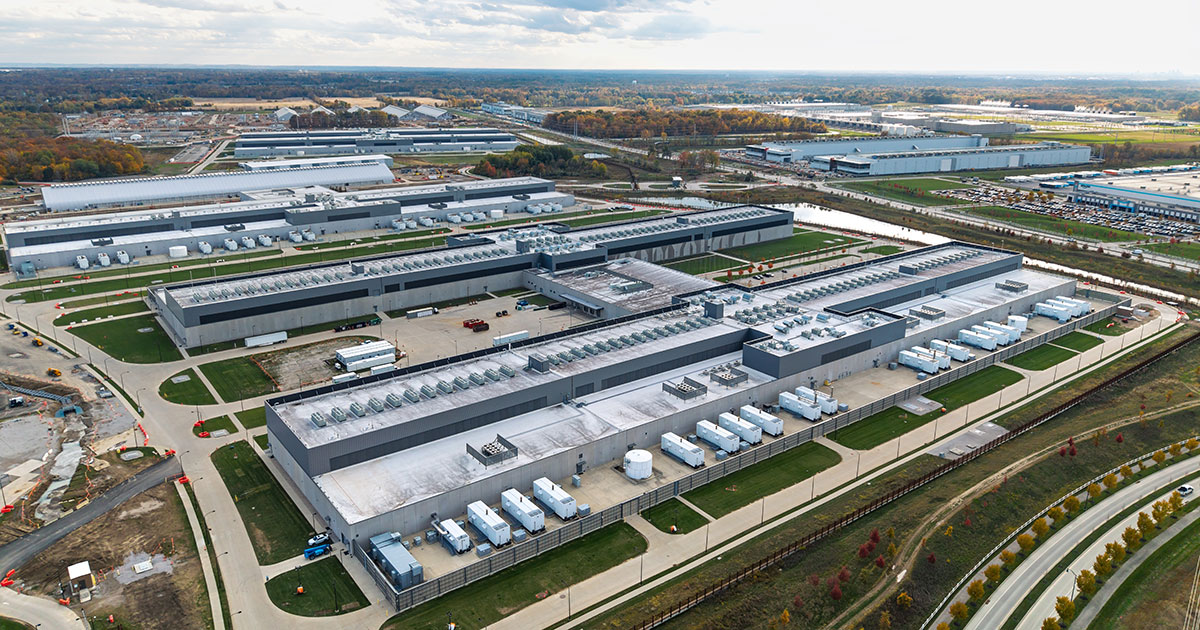
CRG, a data center development firm owned by Clayco, had already proposed a new hyperscale site in Festus after expressing interest in an over-200-acre site that was annexed by the Festus City Council in October 2025. The project had an important backstory: CRG Clayco’s Festus project was just one of nearly a dozen in the region and was the company’s second proposal to meet headwinds from public opposition – its previous proposal in St. Charles had ended with a yearlong moratorium passed by that city.
Residents alleged from the outset that the process had been conducted deliberately out of public view. The lawsuit alleged that city officials and CRG representatives held briefings with council members in groups of three in a deliberate attempt to stay below the quorum threshold that triggers Missouri’s open meetings requirements. The text message evidence entered as court exhibits was damning in its candor. In correspondence posted publicly on the City of Festus’ website, officials acknowledged efforts to keep conversations about the project under wraps, with some officials’ names redacted before the documents were released. In one October 1 text, an official said of the required annexation notice: “Because driving highway speed doesn’t give a person a lot of time to read the sign, they may think it’s a construction sign.”
A Sunshine records request by members of the data center opposition group surfaced a message in which city officials referred to the group as “uneducated.” That single detail – the word “uneducated” – became the flashpoint for much of what followed.
The Vote That Lit the Fuse
Following two hours of public comments, during which Festus residents pleaded with their council to either reject or table the hyperscale data plan from developer CRG, the Festus City Council approved the plan by a 6-2 vote during a special meeting at Festus High School. The setting mattered. On March 30, hundreds packed the high school gym to demand the council reject the data center. Instead, the council approved it 6-2.
Council members Staci Templeton and Brian Wehner voted against the ordinance in what many audience members called a “surprise move,” and after the vote, members of the council and representatives of Clayco CRG left through the back doors of the gymnasium as angered residents lined up against a wall of Festus police officers.
The economic case offered by the city administration was substantial, at least on paper. According to CRG, the approved agreement represented a $6 billion investment – one of the largest private investments in the history of Jefferson County – generating an estimated $1.3 billion in property taxes, utility taxes, and community benefit payments over 25 years, equating to an average of $53 million annually. Additionally, as part of the agreement, CRG would pay the city $3 million each year on “community development” for five years and then $5 million a year for another five years.
Supporters of the deal pointed to job creation and generational economic impact. While city leaders touted the benefits of the project, Festus resident Alyssa Harris said she did not move to the community to be next to a hyperscale data center. “Most of us who choose to reside here in Jefferson County do so because we love our small towns, our streams, our rivers, our farmlands, and our peace,” she said.
Critically, the company that would ultimately occupy the site had not been revealed, causing some residents to call on their council members to reject the plan until the end user was identified. That unresolved question – who exactly was moving into their community, and for what purpose – amplified the sense that residents were being asked to approve something they fundamentally could not fully evaluate.
Election Night: A Political Reckoning
The promise of a political reckoning made by residents opposed to the $6 billion data center proposal in Festus came true on election night, as four city council members lost their reelection bids. The results were not close. All four Festus council members seeking reelection lost their races to challengers by wide margins.
The unofficial Festus council winners were Karl Weekley in Ward 1, Allen Joseph McCarthy in Ward 2, Dan Moore in Ward 3, and Rick Belleville in Ward 4. Each had run explicitly on a platform opposing the data center and demanding greater government transparency.
The turnout told its own story. Festus had more than double the typical turnout for its municipal election. Resident Carter, quoted by St. Louis Public Radio, summarized the outcome with characteristic bluntness: “They made their bed, and they had to lay in it.”
The winning candidates were not career politicians. Rick Belleville, who defeated eight-year council veteran Jim Tinnin, had never previously run for office. Belleville said he hoped to improve transparency during his time on the council and that the transparency issue was a major reason he chose to run. “We’re going to approach those challenges as a community and not as a group of people who don’t listen to us,” he said.
The political damage did not stop at the council level. At polling places throughout the city, petitioners also collected signatures for a recall of Mayor Richards. And one week after the election, the losses continued to compound: Festus City Council member Staci Templeton resigned after five years in office, becoming the latest member to leave office during the data center backlash.
Meanwhile, elsewhere in the region, other politicians who had supported data centers also faced headwinds. In Pacific, Missouri, where residents had also rallied against a proposed data center, Mayor Heather Filley lost her reelection campaign to Ward 3 Alderwoman Debbie Kelley, who ran on a pro-transparency ticket.
The Legal Front: 12 Counts and a Landmark Suit
The ballot box was one front. The courts were another. The petition filed April 8 in St. Louis County Circuit Court charged the city of Festus and CRG with 12 counts, including unlawful spot zoning, violations of Missouri’s Sunshine Law, civil conspiracy, and due process violations. Plaintiffs included Wake Up Jeffco LLC and four individual Festus residents whose properties are located on Glenkee Court, in the subdivision adjacent to the proposed data center site.
The lawsuit claimed the city violated its own city code and the Missouri Open Records Law by keeping discussions, meetings, and other forms of communication between city officials and CRG between August 4, 2025 and March 30, 2026 behind closed doors. The suit argued the city failed to give proper public notice of the November 24, 2025 council meeting that approved rezoning, and the March 30 special meeting when the council approved the development agreement – and that the general public did not have enough time to review the development agreement ahead of that special meeting.
The legal stakes are significant under Missouri law. Under Missouri’s Sunshine Law, purposeful violations carry fines of $5,000 per violation and may allow a judge to void the underlying government actions. In this case, both the November 2025 rezoning and the March 2026 Infrastructure Development Agreement could potentially be overturned.
Attorney Stephen Jeffery, representing the residents, told reporters: “Based on my experience with these data center projects, there appears to be a common playbook that is followed in every single case. Initially, a data center developer approaches the local government, says, ‘Hey, we’ve got a great deal for you, but we can’t tell you any more unless you keep things secret.'”
More than 300 Festus residents had filed formal complaints under the Festus city code requesting independent environmental studies, including hydrogeological assessments of the aquifer. The city had not responded to any of the complaints, according to the lawsuit.
The Developer’s Response: “Our Rights Are Vested”
CRG founder Bob Clark did not retreat. One week after the election, he held a press conference at Clayco’s headquarters in north St. Louis County. Clark held the event one week after Festus voters elected four data center opponents to the city council and five days after neighbors filed suit seeking to void the project’s approvals. “I don’t think that they can cancel the project,” he said. “I think our rights are vested.” Clark said CRG would “aggressively defend” its development rights in court.
Mayor Sam Richards, too, stated that the new council members could not stop the project. “That contract has already been signed with CRG. I signed it three or four days ago and CRG signed it,” Richards said.
Clark framed the project in terms of national security and the global AI race, saying: “This question of national security is real and I think that people, who are really in the know, are very concerned that we cannot lose the AI race in America.” He described CRG as currently operating 57 projects across 50 United States markets, with approximately 65 percent of its projects centered on data center development.
On the question of water – the concern that most directly alarmed adjacent homeowners – Clark’s answers were less assured. When asked what would happen to neighbors’ wells if the data center’s water supply ran dry or became contaminated, Clark said: “That is a question I cannot answer. That is an engineering question, but I will get you an answer.”
The new council members pushed back on the premise that the deal was irreversible. Belleville said the council could vote to suspend the agreement, with any money given to the city then returned to the developer.
Environmental and Infrastructure Concerns
Beyond transparency, residents raised concrete concerns about what a hyperscale facility of this scale would mean for their water, their land, and their utility bills. The Infrastructure Development Agreement signed by CRG and the city gave CRG the right to drill private wells if the Festus municipal water supply could not meet the facility’s demand. Any new wells drilled for the development site would draw from the same aquifer that sits beneath the homes in the nearby subdivision.
The water demands of hyperscale data centers are not theoretical. The 2024 United States Data Center Energy Usage Report from Lawrence Berkeley National Laboratory estimates that hyperscale facilities will consume between 60 and 124 billion liters of water by 2028. A 2026 study by researchers at the University of California Riverside in collaboration with Caltech estimates that AI data centers could cost between $10 billion and $58 billion in public water infrastructure nationwide as AI demand grows.
The power picture is equally daunting. Estimates suggest that within a couple of years, electricity needed for data centers will account for around 10 to 15 percent of total nationwide electricity demand, putting severe strain on efforts to move the country toward renewable energy sources, often by prolonging the use of fossil fuel plants that had been slated for closure.
Concerns about job creation – often the central promise used to win over local governments – were also disputed. Ben Green, assistant professor in the University of Michigan School of Information and Public Policy and a faculty associate at the Berkman Klein Center, described job promises as “a significant false promise,” arguing that developers use the language of job creation to attract tax breaks, reduced regulations, and special zoning permissions while promoting an “aura of the tech economy” to local policymakers. Some Festus residents echoed that analysis directly, pointing out that the deal contained no guarantees of local union jobs.
A National Bellwether
The election was widely seen as a potential bellwether for elections in areas where data centers are planned, as officials balance the potential for massive tax revenues from often multibillion-dollar projects with public pushback.
The numbers support that framing. A new analysis by Heatmap News found that 20 proposed data center projects were canceled in response to opposition from local officials in the first three months of 2026 – doubling the previous quarterly record of data center cancellations. The pipeline feeding that resistance is enormous: the American Edge Project found that there are 2,788 data centers somewhere in the development pipeline, representing a projected 67 percent increase in data centers across the country.
The opposition is bipartisan and geographically widespread. In 2025, data centers moved from planning boards into state legislatures, utility regulation, and the ballot box, influencing elections in Virginia, New Jersey, and Georgia. Grassroots opposition reached a national scale, with hundreds of local opposition groups active across 42 U.S. states by year’s end.
Public opinion has moved sharply in opposition to the industry. A newly released Gallup survey found that public opposition to data centers is hardening, with overwhelming majorities of Americans opposing construction of facilities in their communities – and that opposition is so intense that more Americans would rather live near a nuclear power plant than a data center.
The political pattern in Festus also played out in neighboring Pacific, Missouri, where the anti-data-center candidate won the mayor’s race. And in Maine, the governor was recently forced to veto a law that would have banned new data center construction by hyperscalers – the legislature came close to overriding that veto. Legislative battles over data center regulation are now underway in multiple states, with Missouri among the most active.
Read More: If You Want Smarter Kids Teach Them Music, Not Coding, According To MIT
What Festus Means
What happened in Festus is not simply the story of one small town rejecting one large development. It is a case study in what happens when the pace of investment in AI infrastructure collides with the democratic infrastructure of the communities expected to absorb it. The Festus council approved a deal involving $6 billion in private capital, potential nine-figure annual tax revenues, and a 360-acre industrial footprint on a wooded site adjacent to residential subdivisions – and did so through a process that a court may ultimately find violated the state’s foundational transparency laws. The residents responded not with petitions that faded away, but with an electoral sweep so complete that it reshaped half a city council in a single night.
The case also illustrates a systemic gap. The attorney representing Festus residents described what he called “a common playbook that is followed in every single case” – developer approaches local government with a lucrative offer, conditions confidentiality, and builds momentum before the public has a real opportunity to weigh in. Whether the courts will find that Festus and CRG ran that playbook in violation of Missouri law remains to be determined, but the political verdict from the community has already been delivered.
The project may still be built. The developer says his rights are vested, and the signed contract predates the newly elected council. But the legal battle is real, the opposition is organized, and the national trajectory of community resistance to AI data center development is not reversing. What Festus demonstrated is that the ballot box remains one of the most durable tools a community possesses – and that when local officials mistake silence for consent, voters have a long memory and a reliable remedy. The question for every other city council currently weighing a similar offer, in a gymnasium or a boardroom or a city hall with a parking lot full of protesters, is whether they are watching Festus closely enough to understand what that means.
AI Disclaimer: This article was created with the assistance of AI tools and reviewed by a human editor.