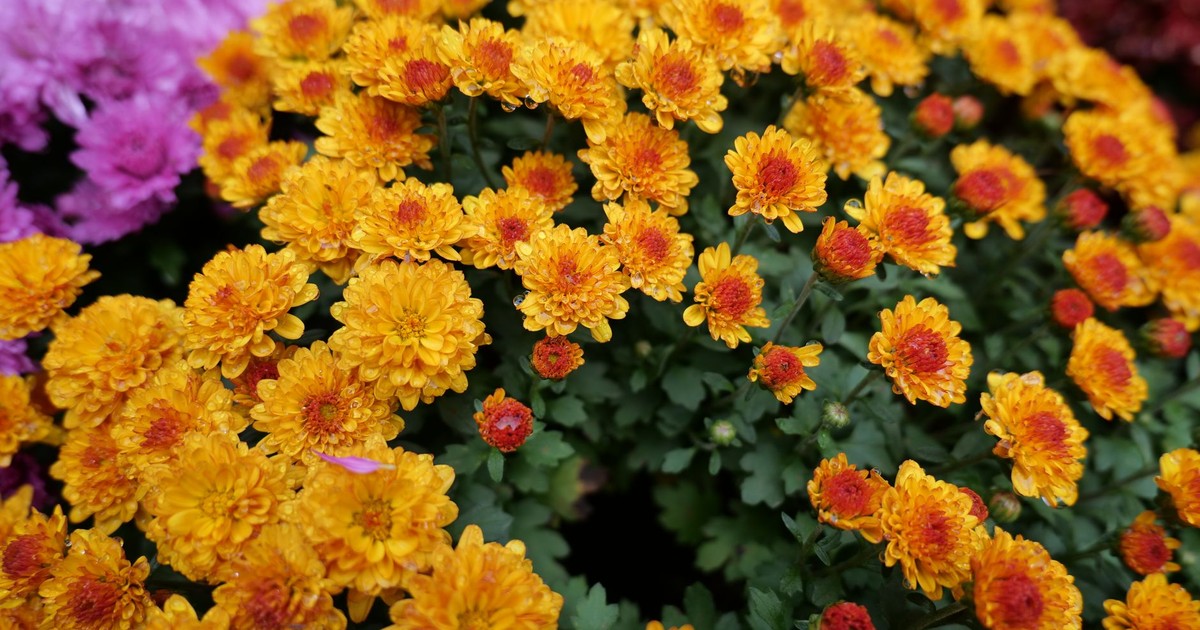

Summer gets all the credit, but autumn is when a garden earns its character. The color story of a fall garden moves away from the bright, almost aggressive cheer of July blooms toward something richer – burnt orange, deep purple, rust, and gold that hold their own against the backdrop of changing leaves. Most gardeners treat the first cool snap as their cue to pack it in. The ones with the best yards treat it as a starting gun.
The secret to a garden that stays alive through October and into November isn’t complicated, but it does require knowing which plants actually belong in that shoulder season rather than which ones you’re trying to keep alive past their natural expiration date. Fall flowers for gardens aren’t just summer plants you’re hoping will hang on – many of them do their absolute best work when the nights get cold and the light turns that particular amber that only exists in autumn. They were built for exactly this moment.
This list covers 37 of the best fall flowers for gardens – perennials and annuals, low-maintenance and spectacular, native workhorses and a few surprises that will make you wonder why you weren’t planting them years ago. Some bloom from late summer right through the first frost. Others need cool temperatures to even find their stride. All of them are worth a place in your beds, borders, or containers this season.
1. Chrysanthemums (Mums)
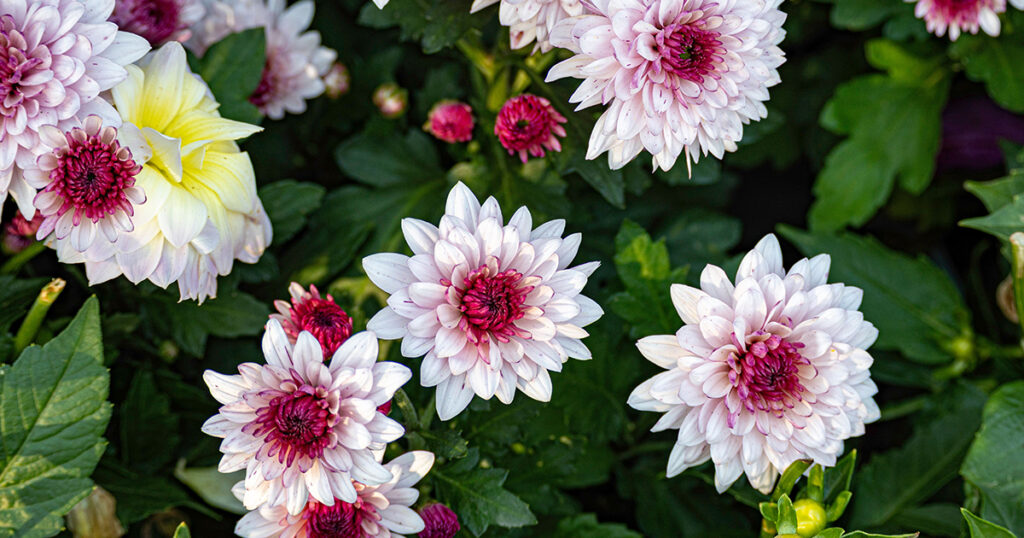
No other flower owns fall the way the chrysanthemum does, and honestly, that reputation is earned. Depending on the variety, mums bloom from August to November. That bloom window alone makes them worth the real estate.
Hardy chrysanthemums are perennial in zones 5 to 9, handling cold down to -30 degrees Fahrenheit. What most people don’t realize is that the grocery-store mum you grab on a whim will likely die after one season, while a garden-center hardy variety, planted in the ground with decent drainage and full sun, will come back year after year and spread into an increasingly impressive clump. Planting several different varieties extends the period of bloom across the entire season.
If you’re buying them now, plant immediately and water well. If you want them to return reliably next year, plant in spring rather than fall – that gives the roots time to establish before winter. Either way, pinch the stems back in early summer for fuller, bushier plants and more blooms per stem.
2. Asters
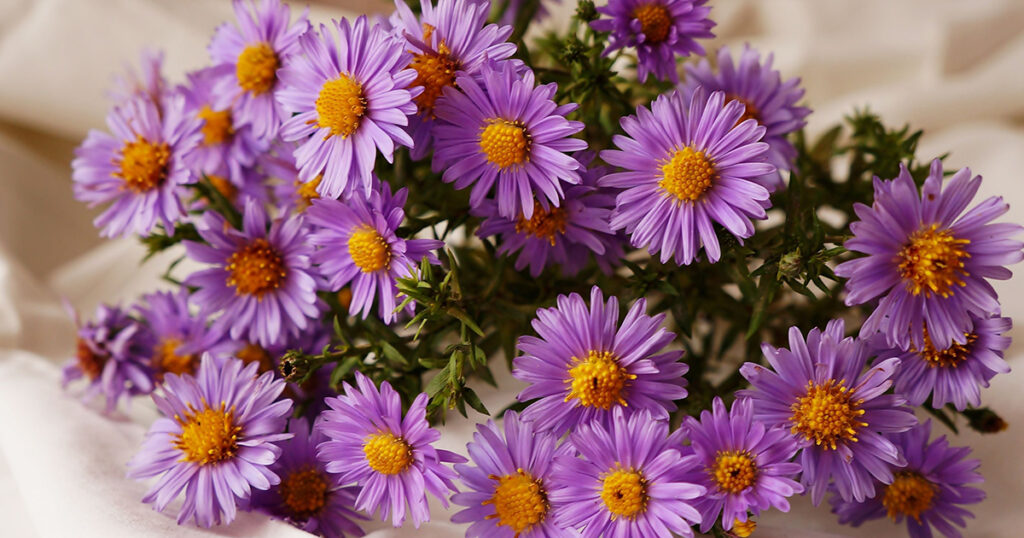
Asters are the flower that saves the garden just when you think it’s done. Just when flowers in the garden begin to fade at the tail end of summer, perennial asters perform into autumn, bringing a grand finale of light purple, white, pink, and blue color. They’re one of the few plants that seem to look at the dying season as a personal challenge.
Asters please pollinators, and their daisy-like blooms thrive in full sun – most varieties are hardy in zones 4 to 8. They pair beautifully with goldenrod: the purple-blue of asters against the sharp yellow of goldenrod is one of those combinations that looks like someone put actual thought into it, even if you just happened to plant them near each other. Cut them back in early summer to keep them bushy rather than leggy.
3. Goldenrod (Solidago)
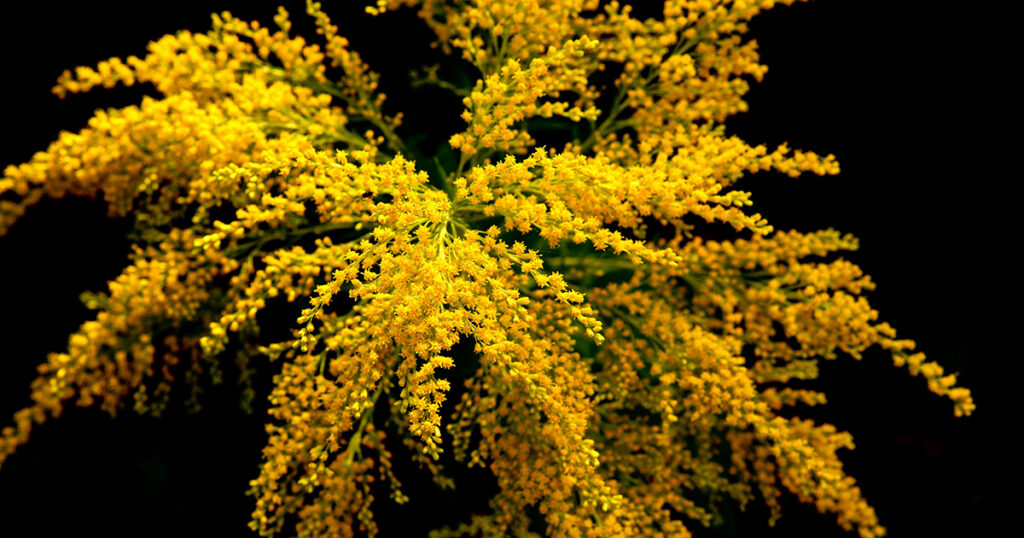
Goldenrod has spent decades being wrongly blamed for hay fever (that’s actually ragweed, which blooms at the same time), and as a result a genuinely spectacular plant gets overlooked. Goldenrod is a native workhorse with vivid yellow spires that can reach five feet tall in optimal conditions and feed an enormous variety of pollinators – bees especially treat it as a late-season lifeline.
Plant goldenrod in summer and it will blaze gold in September. It tolerates poor soil, tolerates drought once established, spreads steadily to fill gaps, and asks almost nothing in return except for a spot with decent sun. The native species Solidago rugosa ‘Fireworks’ is particularly dramatic, with arching stems that fan out like – yes – fireworks in gold. It plays especially well with purple asters and ornamental grasses.
4. Black-Eyed Susan (Rudbeckia)
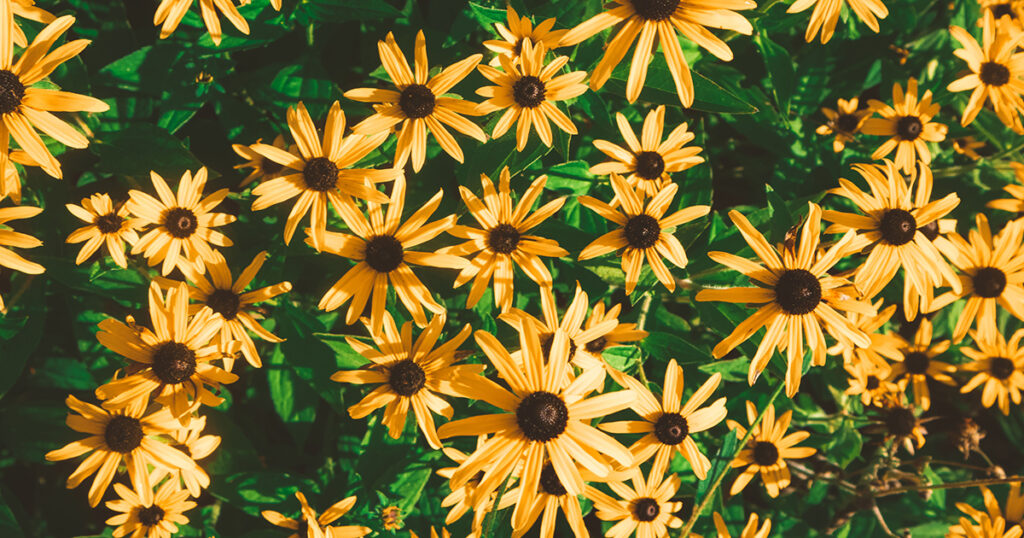
Black-eyed Susans are smiling, daisy-like flowers popular with bees and other pollinators, also known as rudbeckia. They start blooming in midsummer and, if you deadhead regularly, will keep going well into fall, creating that warm golden presence that reads as quintessentially autumnal even though they’ve technically been blooming for months.
Their warm, golden color partners beautifully with blues and purples. Plant them beside asters or salvia and the contrast does the decorating for you. Deadhead for extended bloom, but leave some seed heads for birds – goldfinches in particular will pick those seed heads clean through winter, which is its own kind of garden spectacle.
5. Sedum (Stonecrop)
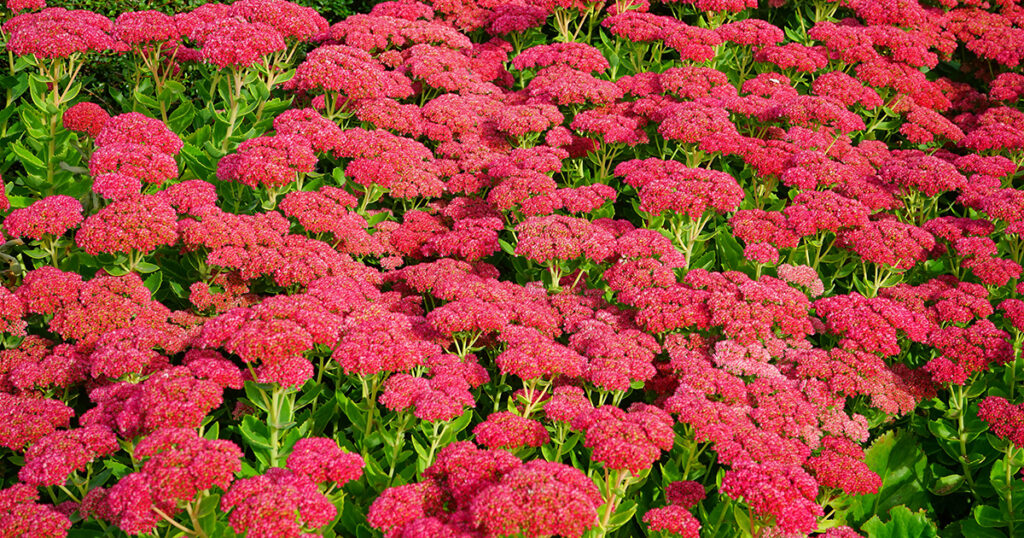
Sedum is the plant for people who want to look like they have their garden together without putting in the hours it would normally take. It does best in full sun and well-draining soil and is drought-resistant, meaning it hardly needs water once established. The variety most worth knowing is ‘Autumn Joy,’ which starts the season with flat, broccoli-like green flower heads that slowly turn dusty pink, then rosy red, then bronze as autumn deepens.
Sedum ‘Autumn Joy’ is dependable and drought-tolerant, with flowers that age from pink to russet bronze – gorgeous with grasses. Leave the seed heads for winter structure and pollinator interest. Even in December, the skeletal seed heads catching frost or snow have a certain elegance. Few plants work as hard across as many months.
6. Japanese Anemone
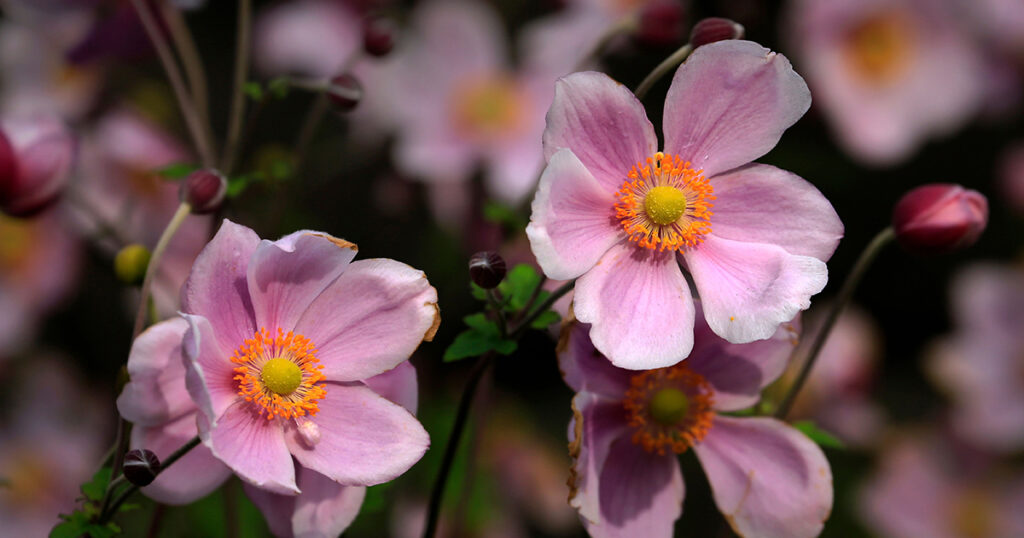
Japanese anemone is the elegant one at the party – tall, willowy, with cup-shaped blooms in white or soft pink that nod in the wind above a garden that has otherwise started its wind-down. Japanese anemone delivers elegant white or pink blooms on tall stems from late August through October. It’s a plant that photographs well in the kind of late-afternoon light that only exists in September.
Give it partial shade and consistent moisture and it will reward you by spreading into a reliable clump over the years. It does not love to be moved once established, so think about placement carefully. Pair it with ferns or hostas at its feet to cover the bare ankles of its tall stems. The variety ‘Honorine Jobert’ – pure white, single petals – is one of those plants that looks like it belongs in a European country garden no matter what else is growing around it.
7. Pansies and Violas
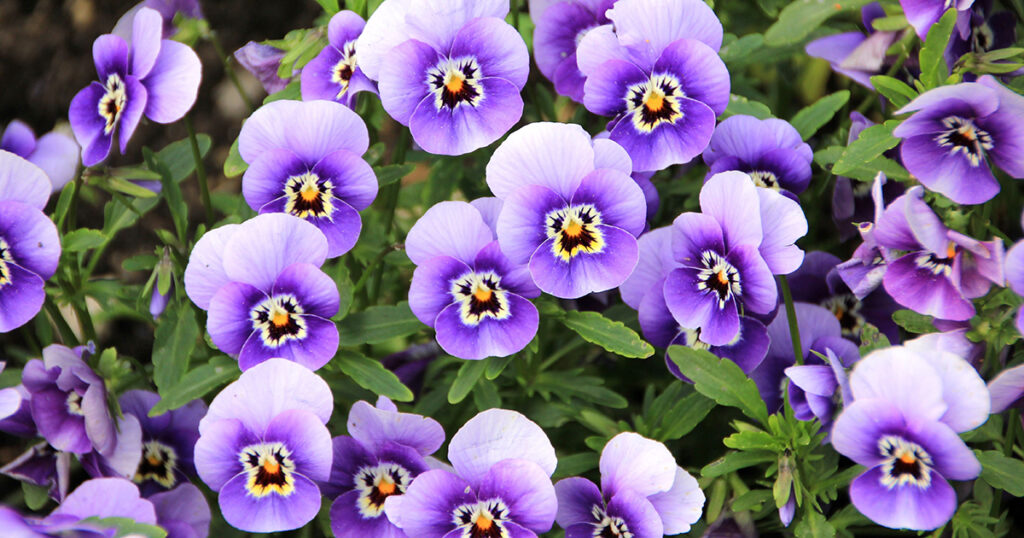
Pansies and violas are underestimated almost universally. People associate them with spring, plant them too late in the season, and then wonder why they’re wilting by June. The actual move is to plant them in fall. When pansies and violas are planted in mid or late summer, they flower through fall and often into winter. They are built for cold – in many climates they’ll take a hard frost, go dormant overnight, and bounce back by morning looking entirely unbothered.
Pansies and violas are typically affordable and are a reliable source of color for a fall garden. Mix them with ornamental kale in containers and the color combination – deep purples, bright yellows, creamy whites against frilly blue-green leaves – looks considerably more expensive than it is. Deadhead regularly to keep them blooming rather than going to seed.
8. Ornamental Kale and Cabbage
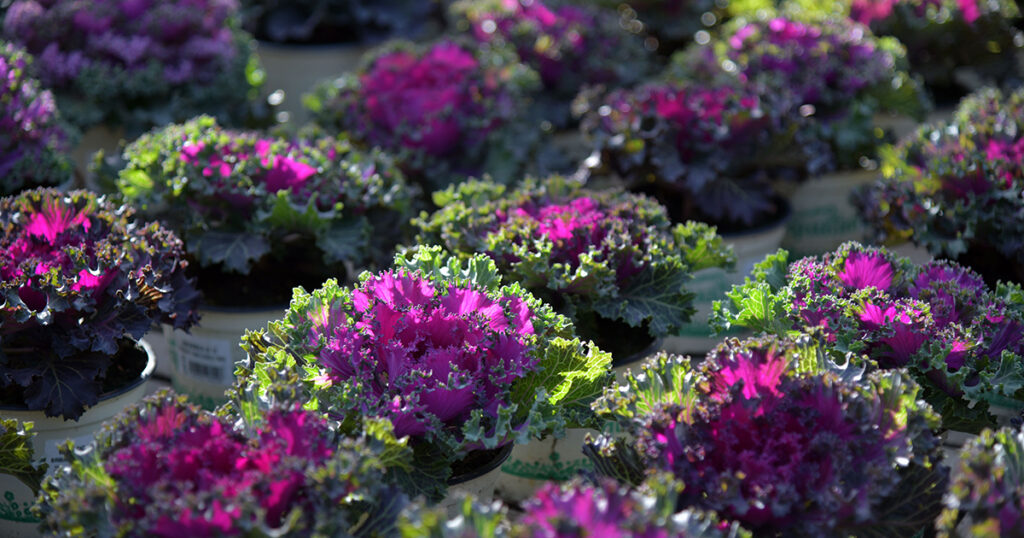
Despite the name, ornamental kale is grown primarily for its frilly foliage. When temperatures drop in fall, the center leaves turn lovely shades of white, pink, and purple, giving the illusion of a flower in bloom.
Plant ornamental kale or ornamental cabbage in late summer and the color actually improves as temperatures drop – which is a rare and welcome quality in any garden plant. Most things are trying to survive the cold; this one is actively improved by it. Use it as a centerpiece in fall container arrangements with trailing pansies and a spike of purple salvia, and you have something that will carry a front porch all the way through Thanksgiving.
9. Marigolds (Tagetes)
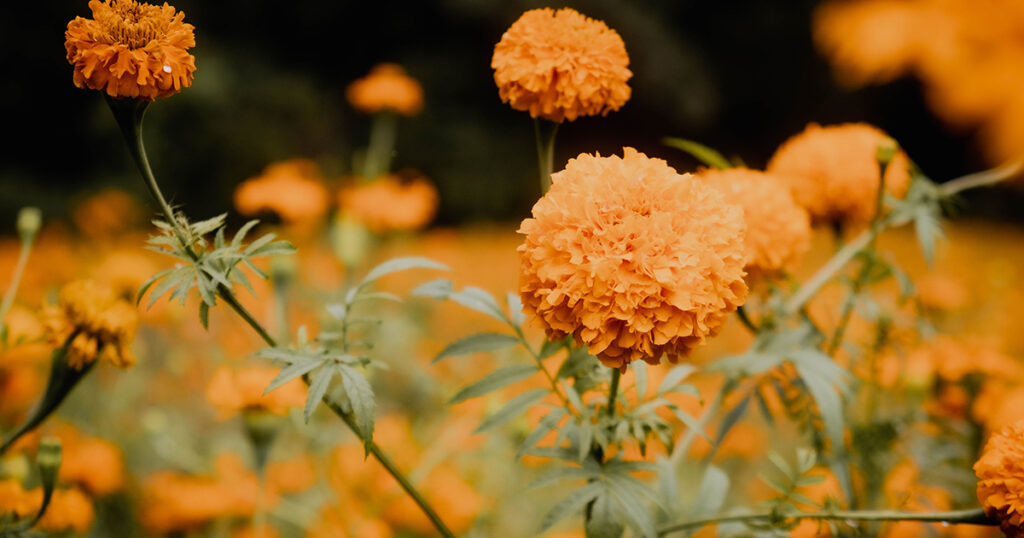
Marigolds are the fall flowers for gardens that do double duty: color and function. Their strong fragrance deters a variety of garden pests, and they keep attracting pollinators right through the season. Marigolds are among the annuals that can take cooler temps and will still be producing blossoms into fall.
The key with marigolds is deadheading – remove spent blooms consistently and the plant responds by producing more. Stop deadheading and it puts its energy into seed production and stops flowering. African marigolds (the taller ones) make excellent mid-border plants with their orange and yellow heads; French marigolds (smaller and more compact) work beautifully in containers or as edging. Either way, plant them in full sun and let them earn their keep.
10. Zinnias
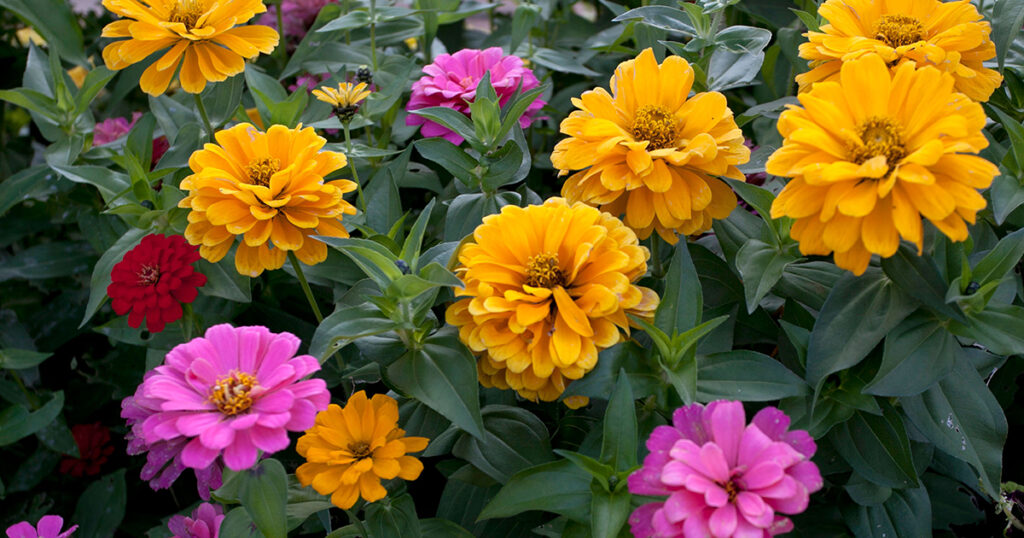
Zinnias are among the annuals that continue blooming into fall as temperatures cool, which makes them one of the best bang-for-your-buck flowers available. Direct-sow them in late spring or early summer and they’ll be in full, extravagant bloom by midsummer – and with regular deadheading, they’ll keep going until frost cuts them down.
Zinnias come in practically every color except true blue, with flower forms ranging from the simple single-petaled ‘Profusion’ series to dense, dahlia-like double flowers in deep burgundy or bright coral. They’re also cut-flower favorites: the more you cut them, the more they produce, so a patch of zinnias in full swing can supply a season’s worth of kitchen table bouquets. Give them full sun, skip overhead watering to avoid powdery mildew, and they’ll take care of themselves.
11. Cosmos
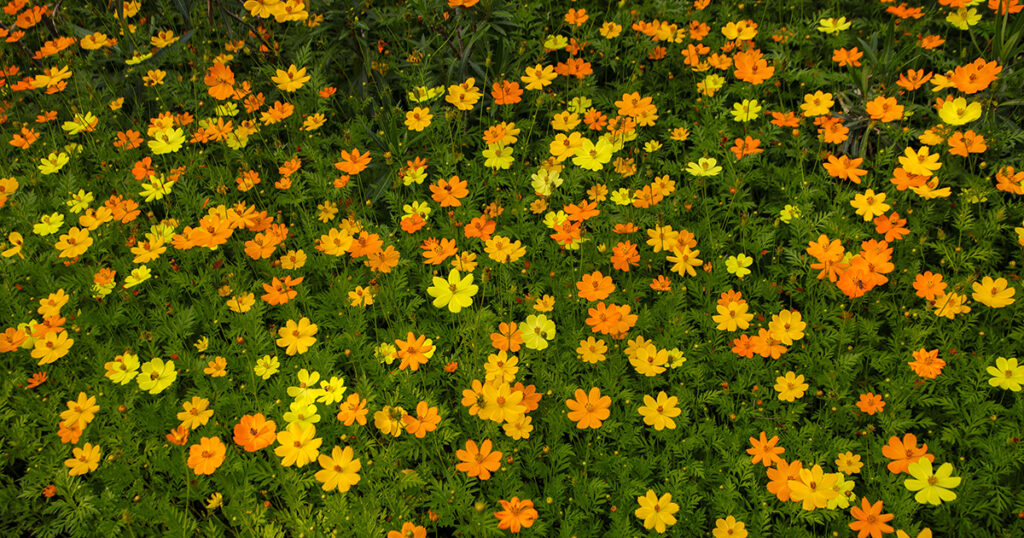
Cosmos are the airy, romantic ones – tall, feathery-foliaged plants with bowl-shaped flowers in pinks, whites, and deep burgundy that bob in the slightest breeze. They seed themselves readily, meaning a single season of planting often turns into a self-sustaining patch that comes back on its own for years. They’re one of the easiest flowers to grow from seed, tolerating poor soil and minimal water once established.
The variety ‘Chocolate’ cosmos (Cosmos atrosanguineus) is worth seeking out for fall specifically – its deep maroon, almost-black flowers have a faint chocolate scent and the color works beautifully against the golds and oranges of autumn. Regular species cosmos keep blooming well into fall, and cutting them frequently encourages more branching and more flowers. They’re one of those plants that rewards neglect more than fussing.
12. Dahlias
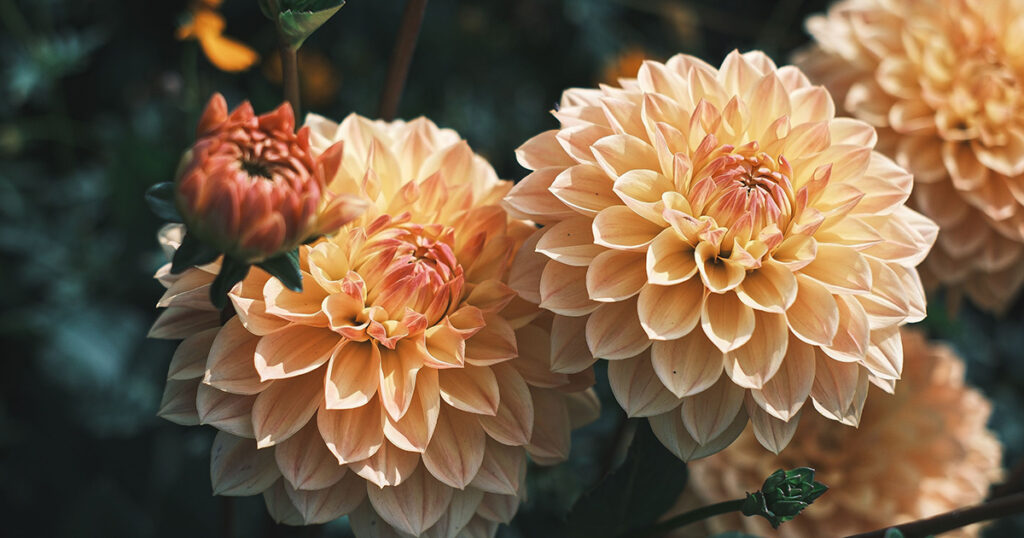
Dahlias are probably the most purely spectacular thing you can grow for late summer into fall color. A well-grown dinner-plate dahlia with blooms eight to twelve inches across in deep burgundy or coral is a genuine conversation-stopping presence in any garden. They’re not technically difficult – they need full sun, well-drained soil, and consistent moisture – but they do need staking, and in most climates the tubers need to be dug and stored before hard frost.
The payoff is worth the extra work. Dahlias bloom from midsummer and keep going right up until frost, producing more flowers the more you cut them. Plant the tubers in late spring after the soil has warmed, stake early before the plants need it rather than after they’ve flopped, and you’ll be rewarded with continuous color from July through October. The variety ‘Café au Lait’ – its blooms a creamy peach-beige – has become ubiquitous in wedding arrangements and for good reason.
13. Rudbeckia (Perennial Varieties)
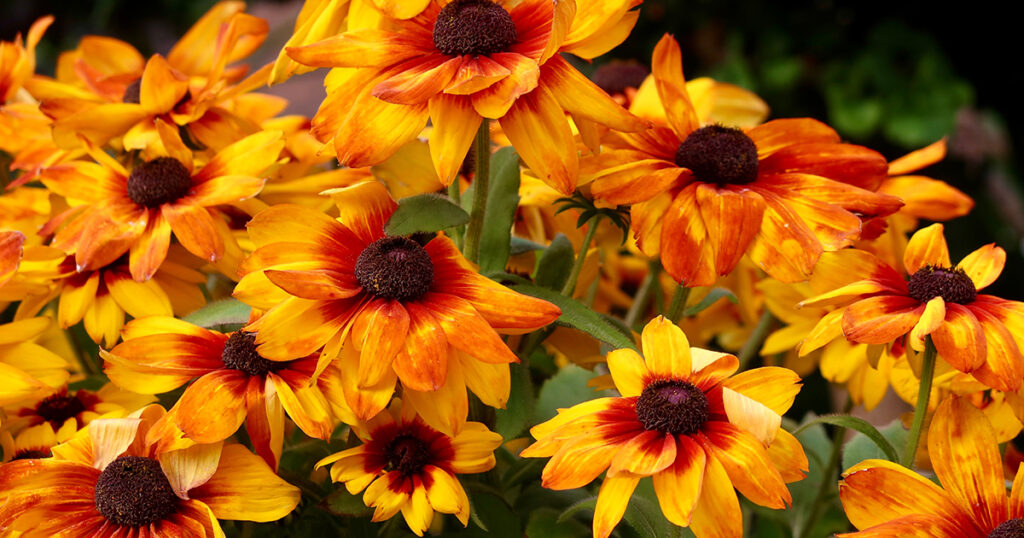
While regular black-eyed Susans (covered above) are often short-lived perennials or biennials, the genus includes several longer-lived perennial species worth knowing. Rudbeckia subtomentosa ‘Henry Eilers’ produces unusual quill-petaled flowers with reflexed yellow rays that are more architectural than the standard daisy form. Rudbeckia maxima, the giant coneflower, can reach six feet with large blue-green leaves and drooping yellow petals around a dramatically tall cone.
These perennial rudbeckias anchor a fall border in a way that annuals cannot. They establish for the first year, then return larger and more floriferous each subsequent season, spreading slowly by seed and rhizome into generous, self-sustaining clumps. Birds, particularly American goldfinches, descend on the seed heads from October onwards and turn a late-season garden into something actively alive even as the blooms fade.
14. Salvia (Sage)
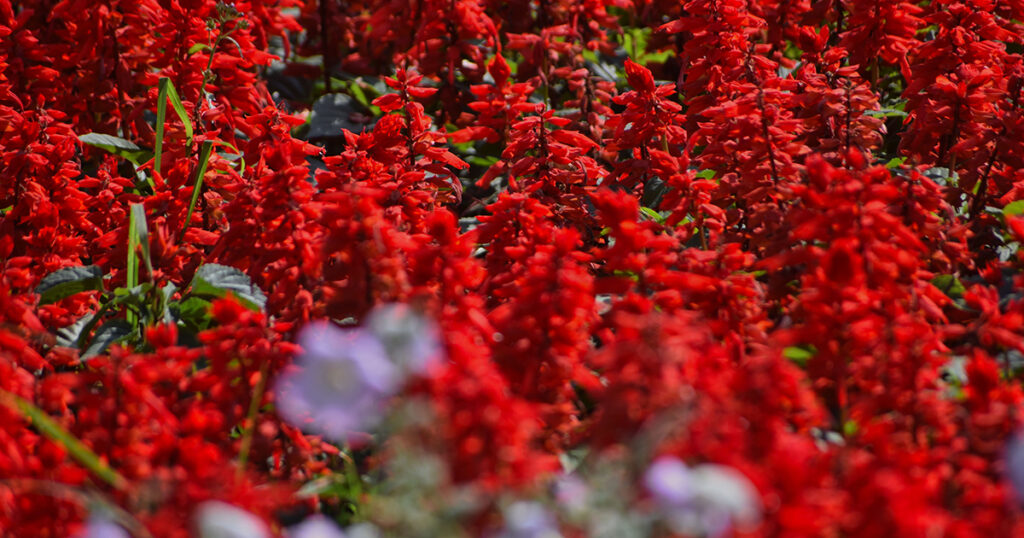
Salvia is one of the most useful genera in the garden and one of the most underpurchased, probably because the common name – sage – makes people think herb garden rather than flower border. The ornamental salvias are a different matter entirely. Salvia guaranitica ‘Black and Blue’ produces deep cobalt-blue flowers in midnight-black calyxes and blooms from midsummer through hard frost. Salvia leucantha, the Mexican bush sage, sends up long fuzzy purple and white wands in fall that are spectacular in the evening light.
Most ornamental salvias are in their prime in fall, when the summer-blooming competition has faded and left them room to be properly appreciated. They’re hummingbird magnets throughout the season, and in warmer climates many will overwinter and return. In colder zones, treat them as annuals or take cuttings in fall to overwinter indoors.
15. Coneflower (Echinacea)
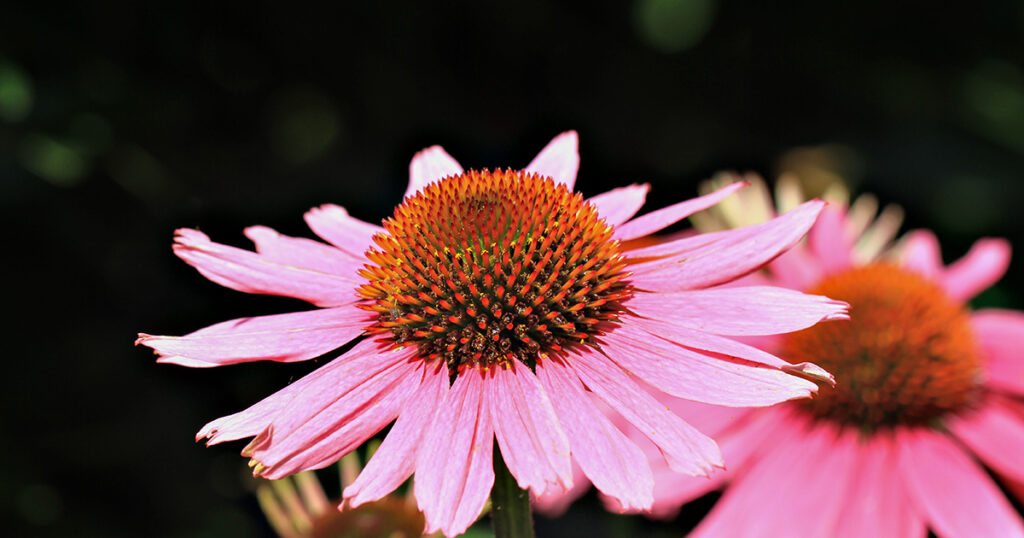
Echinacea – the native coneflower – is one of those plants that earns its place in every season. It blooms heavily in midsummer, the blooms age gracefully into autumn, and the prominent seed cones that remain after the petals drop feed birds through winter while providing structural interest in an otherwise dormant bed. The plant is also remarkably drought-tolerant once established.
The breeding work done on echinacea over the past decade has produced some extraordinary colors well beyond the original pink-purple species: ‘Cheyenne Spirit’ comes in red, orange, yellow, and white. ‘Magnus’ remains one of the best performers, with large reflexed petals in deep rose pink. Hardy options like asters, goldenrod, chrysanthemum, sedum, and Japanese anemones attract beneficial insects like bees and butterflies. Plant coneflowers in full sun in well-drained soil and divide every three to four years to keep them vigorous.
16. Blanket Flower (Gaillardia)
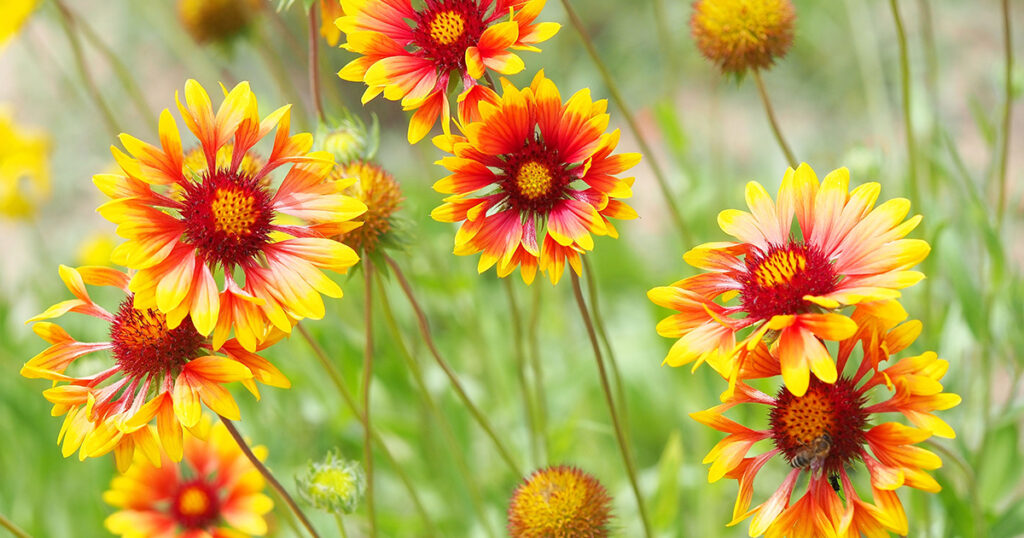
Blanket flower produces some of the most intensely colored blooms of any perennial – circular flowers with petals banded in red, orange, and yellow that look like a sunset rendered in botanical form. They’re native to North American prairies, which means they’re heat-tolerant, drought-tolerant, and enthusiastic about poor soil. Well-amended, rich soil actually makes them lax and floppy.
Gaillardia blooms from early summer through fall, producing flowers almost continuously if deadheaded. The plants are short-lived perennials that may not survive in wet or heavy soil, but they seed themselves freely enough that gaps fill in on their own. ‘Arizona Sun’ and ‘Burgundy’ are two of the most reliably long-blooming varieties. Plant in full sun, avoid overwatering, and let them do what prairie plants do: thrive on neglect.
17. Helenium (Sneezeweed)
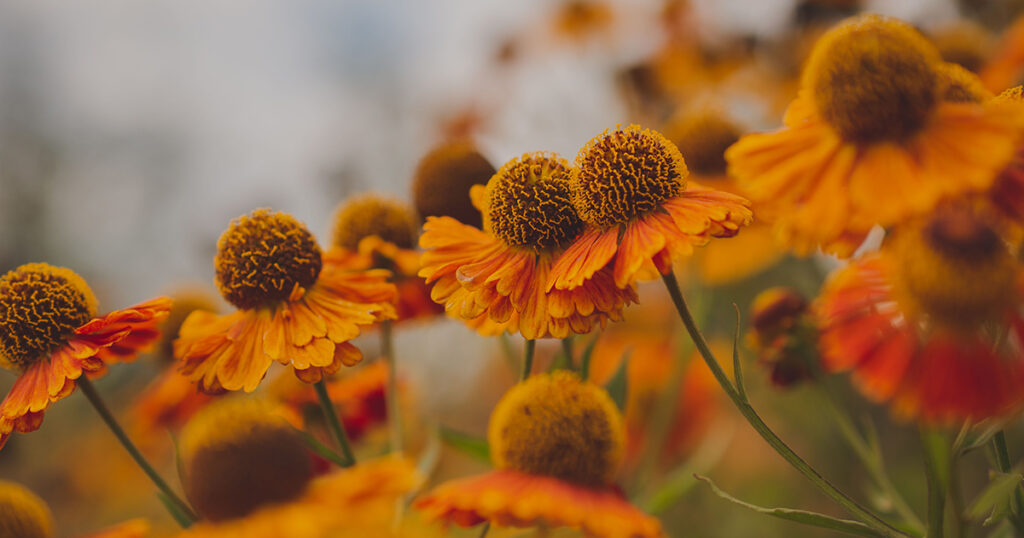
The name is unfortunate – helenium doesn’t actually cause sneezing; it was used historically as a snuff, which is a different problem entirely. The flowers are wonderful: daisy-like but with reflexed petals that angle sharply backward from a prominent central dome, in colors ranging from golden yellow to deep mahogany and everything in between.
Helenium is a late-summer-to-fall specialist that peaks in September and October. Varieties like ‘Moerheim Beauty’ (rich rust-orange), ‘Sahin’s Early Flowerer’ (yellow banded with red), and ‘Rubinzwerg’ (deep red) give you several months of bloom across different plants if you choose varieties carefully. Deadhead as blooms fade and the plants will continue producing through frost. Native species are valuable to local pollinators.
18. Toad Lily (Tricyrtis)
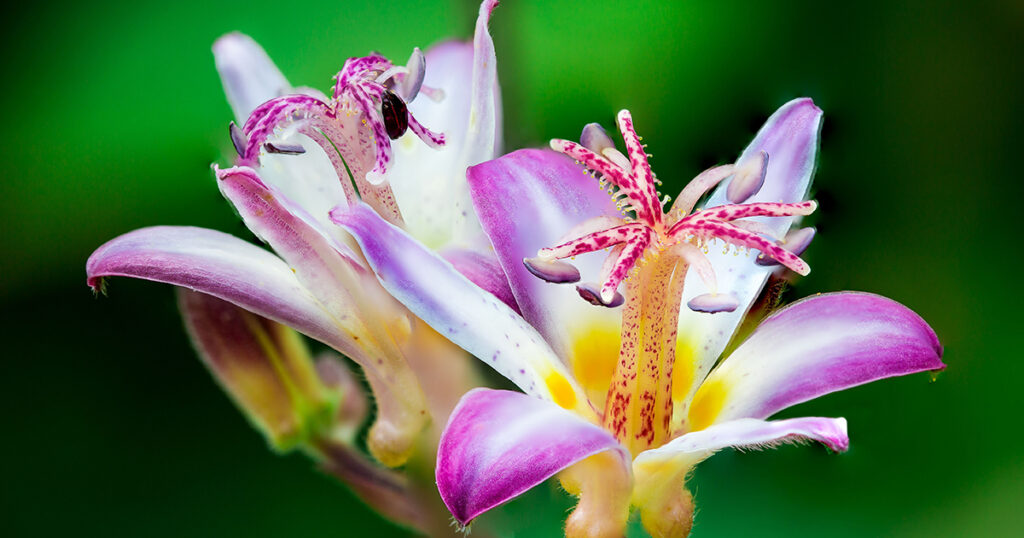
Toad lily is the flower for shaded fall gardens, which is a limited but important category. Most fall bloomers want full sun; toad lily asks for shade or dappled light and rewards you with extraordinary orchid-like flowers – white or pale lilac, heavily spotted in purple, blooming on arching stems from September into October. Up close, each individual flower is complex and strange and beautiful in the way things that evolved without human input tend to be.
It’s a plant that garden visitors will ask about, because it looks expensive and exotic but is actually quite hardy (zones 4 through 9 for most varieties). Pair it with ferns, hostas, and hellebores in a woodland garden or a shaded border. Give it consistent moisture and rich, organic soil and it will spread slowly into a small colony over the years, the stems arching gracefully outward.
19. Witch Hazel (Hamamelis)
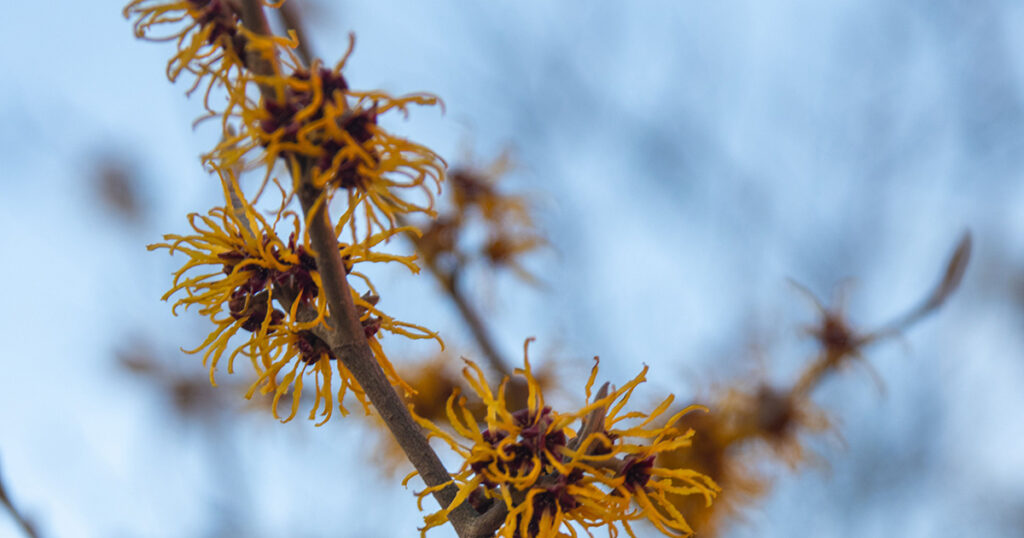
Witch hazel plays by its own rules: it blooms from late fall into winter, which puts it in a category of essentially no competition at all. Witch hazel (Hamamelis virginiana) is a large native flowering shrub or small tree with dazzling clear yellow flowers that bloom in late fall or winter, adding color and fragrance during a time when much of the landscape is dormant. The fragrance carries on cold air with unusual clarity.
It’s a large shrub or small tree (depending on the variety) rather than a perennial or annual, which means it’s a longer-term investment. Hamamelis x intermedia ‘Arnold Promise’ and ‘Jelena’ are two of the most garden-worthy cultivars. Plant it where you can see it from a window in winter – which is exactly when it earns its place – in full sun to part shade with moist, well-drained, slightly acidic soil.
20. Camellia
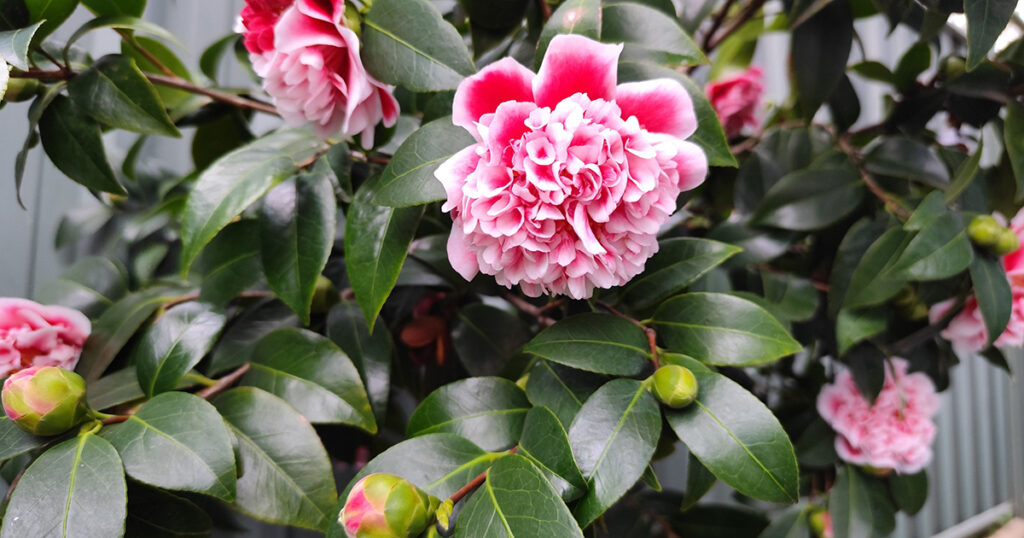
In milder climates (zones 7 through 11), camellias provide the fall and winter flower show that gardeners in colder regions can only look at longingly in magazines. The fall-blooming species – Camellia sasanqua in particular – produces flowers from October through December in white, pink, and deep red, often with a light fragrance. The glossy evergreen foliage is attractive year-round even when the plant isn’t blooming.
Sasanqua camellias are more sun-tolerant and a bit more cold-hardy than their spring-blooming relatives (Camellia japonica). They work beautifully as specimen shrubs, trained against a wall or fence, or as a hedge. Give them well-drained, acidic soil amended with plenty of organic matter, and they will reward you for decades. ‘Setsugekka’ and ‘Yuletide’ are two particularly reliable fall-blooming selections.
21. Hydrangea (Panicle Varieties)
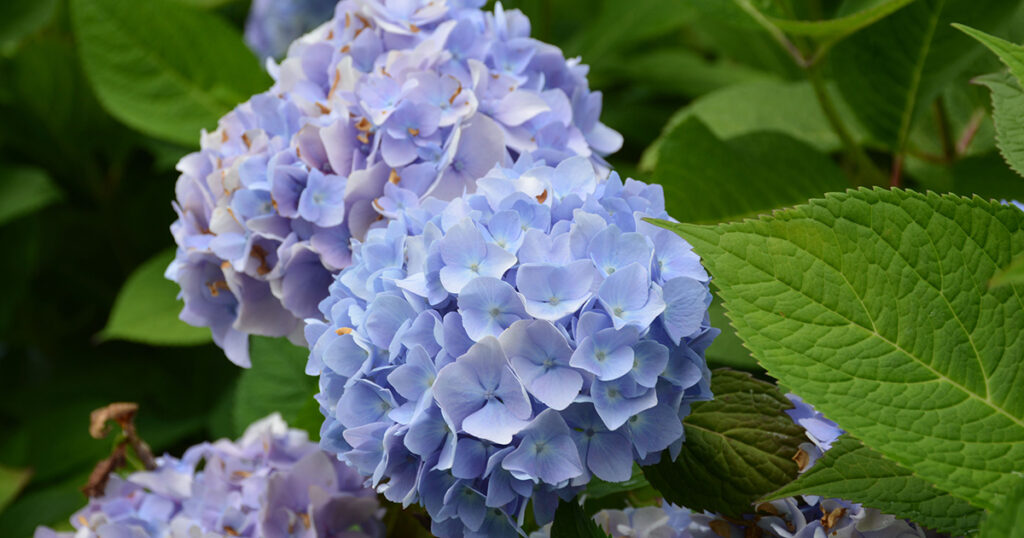
Most people associate hydrangeas with midsummer, but panicle hydrangeas (Hydrangea paniculata) bloom from late summer into fall, and the flowers age beautifully – starting white or cream, then turning progressively pink, then antique rose as temperatures cool. By October, the faded blooms have that dried, papery quality that works perfectly in autumn arrangements.
‘Limelight’ and ‘Pinky Winky’ are two of the most popular varieties. Both bloom heavily, tolerate full sun better than other hydrangea types, and are hardy in zones 3 through 8, making them among the most cold-tolerant of any showy flowering shrub. Leave the dried flower heads on the plant through winter for structure and visual interest in an otherwise bare garden.
22. Penstemon (Beardtongue)
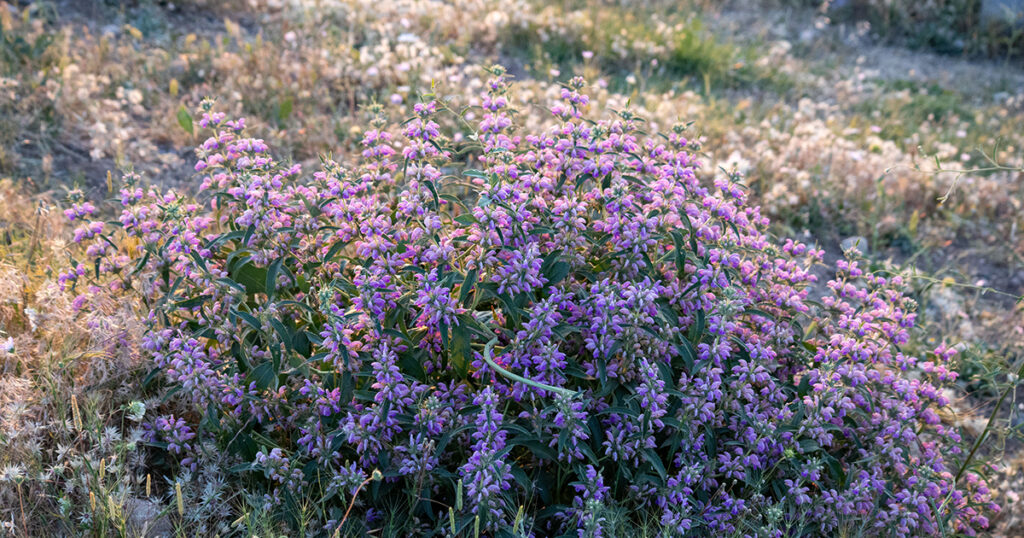
Penstemon is a North American native genus that produces tubular flowers attractive to hummingbirds and bees, in colors ranging from white through pink, red, purple, and near-blue. Most species bloom in summer, but in cooler climates they extend into fall, and planting a mix of varieties gives you a staggered bloom season. They’re drought-tolerant once established and genuinely well-suited to the dry, warm spells that can persist into early autumn.
The variety ‘Husker Red’ is one of the most widely grown, with bronzy-red foliage and white tubular flowers, while Penstemon digitalis provides taller wands of white blooms in shadier spots. Cut back after the first flush of bloom to encourage a second round. Leave some seed heads for overwintering birds and for self-seeding, which penstemon does modestly and helpfully.
23. Russian Sage (Perovskia)
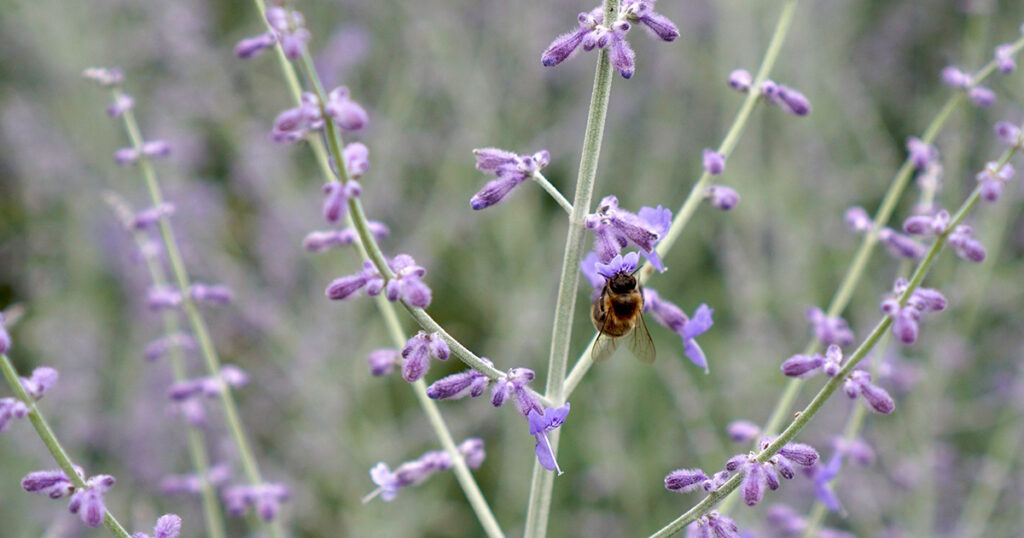
Russian sage is more valuable than most gardeners give it credit for, primarily because it looks like a structural element – a haze of silver-blue – rather than a conventional flower. The long stems of tiny lavender-blue flowers persist from midsummer well into fall, and even after the flowers fade, the silvery-white stems hold their shape through winter, catching light in a way that keeps the garden interesting long after the color is gone.
It pairs with almost everything. Next to warm-colored flowers like helenium or rudbeckia, the blue provides contrast. Next to ornamental grasses, the colors and textures harmonize. It’s drought-tolerant, deer-resistant, and thrives in the hot, dry conditions that stress other plants. Plant in full sun with excellent drainage – it despises wet soil – and cut it hard to within a few inches of the ground each spring to keep it from becoming woody.
24. Catmint (Nepeta)
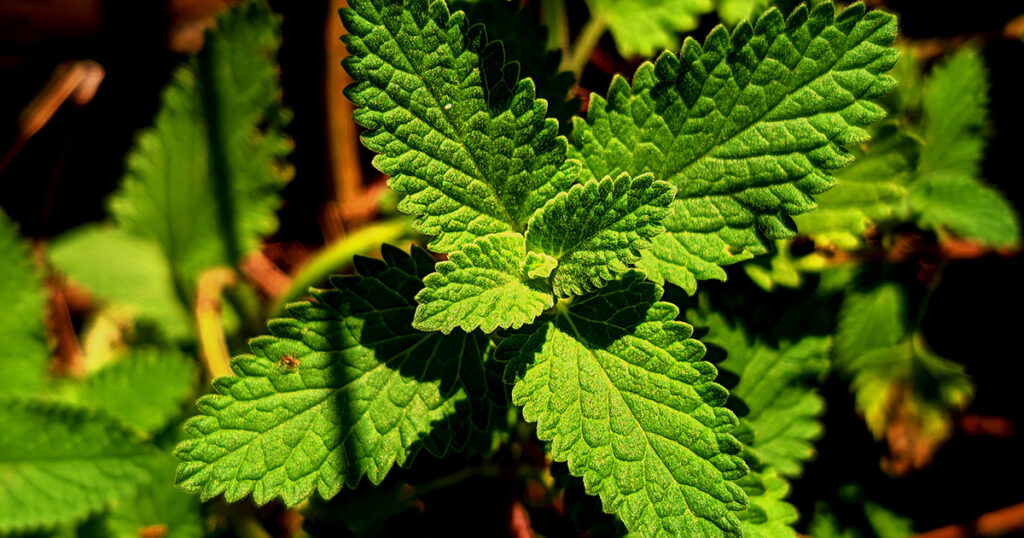
Catmint earns its place on this list because it blooms hard in spring, can be cut back hard in midsummer, and then rebounds for a second flush in fall – which means you’re getting two full rounds of those misty lavender-blue flower spikes from one plant. It’s one of the most hardworking perennials available, and it looks good even between blooms, with soft gray-green aromatic foliage that smells pleasantly of herbs.
Use catmint as a border edging in front of taller plants like rudbeckia or salvia, or along walkways where passersby will brush against it and release the fragrance. It’s exceptionally drought-tolerant, deer-resistant, and comes back reliably every year in zones 3 through 8. The variety ‘Walker’s Low’ – despite its name it reaches about 18 inches – is the most widely grown and most reliably reblooming.
25. Caryopteris (Bluebeard)
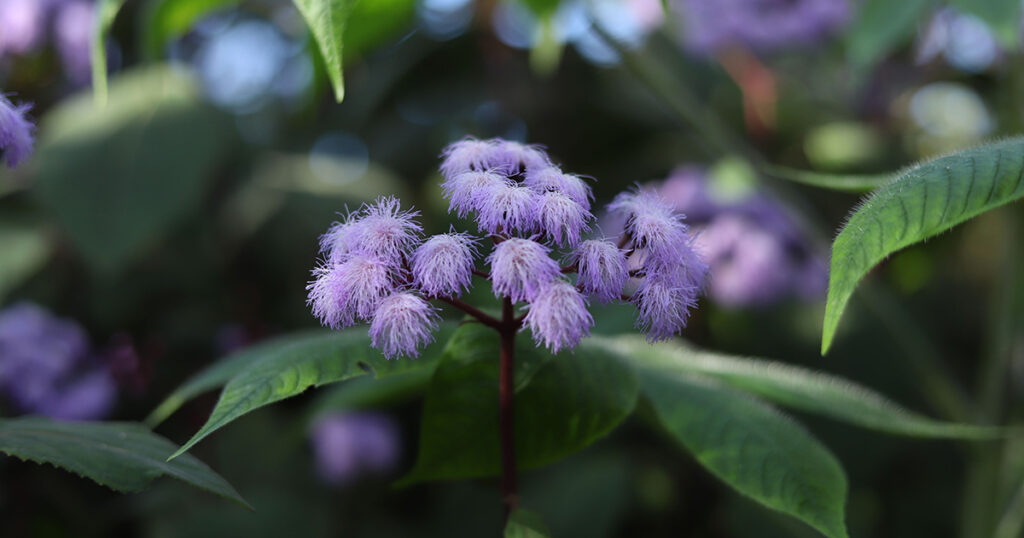
Caryopteris is a small, tidy shrub that produces brilliant blue flowers in August and September when blue-flowering plants are at a premium. The color is not purple-blue or lavender-blue but actually blue – clear, saturated, eye-catching – clustered along arching stems above silver-green aromatic foliage. Bees work it intensively from first bloom.
It’s hardy in zones 5 through 9, grows to about two to three feet tall and wide, and likes full sun with well-drained soil. Cut it back hard each spring – to within a few inches of the ground – and it regrows quickly and blooms on new wood. ‘Dark Knight’ has particularly deep blue flowers and darker foliage, while ‘Sunshine Blue’ pairs bright gold leaves with standard blue flowers for a combination that catches the eye from a distance.
26. Kniphofia (Red Hot Poker)
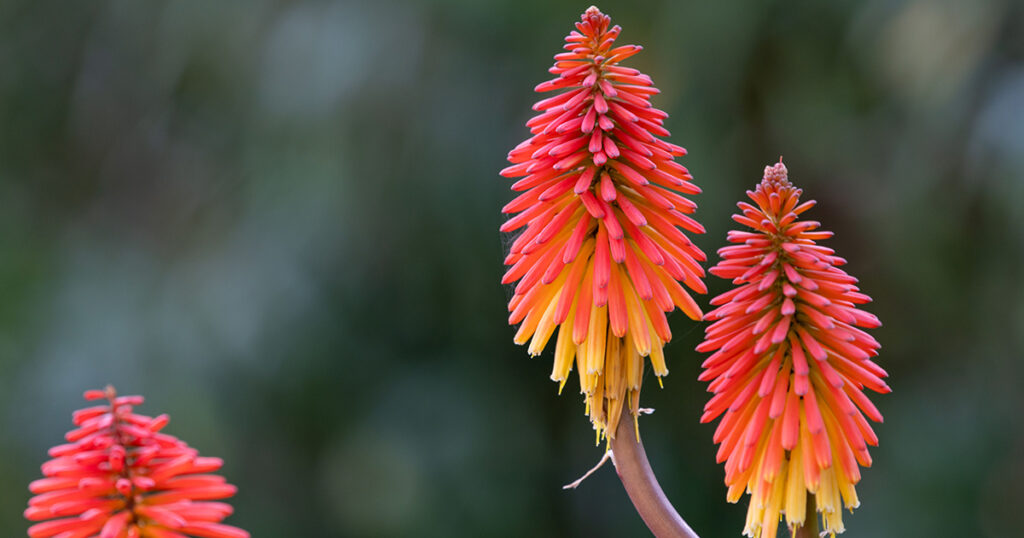
Red hot poker is exactly what the name suggests: a poker-shaped flower spike in red, orange, and yellow that stands three to four feet tall and looks like it was designed to get attention. The bold, architectural quality of the flower is unusual in fall gardens, which tend toward the daisy-forms and fluffy textures that dominate the season. Against ornamental grasses or the broad leaves of late-season plants, kniphofia provides a useful vertical accent.
Some varieties bloom in summer; the ones to seek for fall are the later-blooming selections like ‘Flamenco’ and the various ‘Percy’s Pride’ types that flower from September into October. In colder zones (below zone 6), mulch heavily in fall to protect the crowns. In warmer zones, they’re reliable perennials that grow into ever-larger, more spectacular clumps each year.
27. Gomphrena (Globe Amaranth)
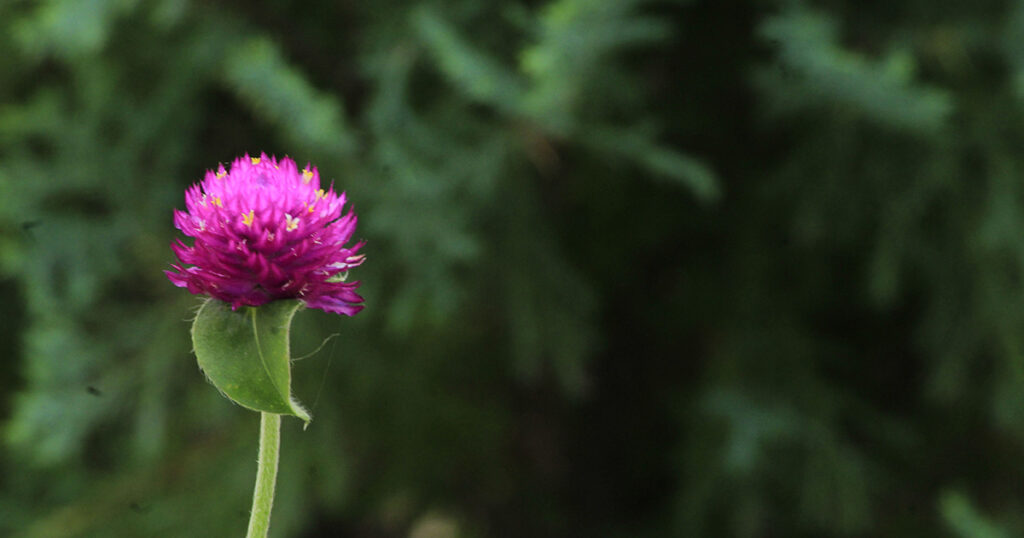
Gomphrena produces small, perfectly round flower heads in magenta, pink, white, purple, and orange that look like they were made by someone who wanted a flower with architectural presence in a container-scale package. They’re annuals that bloom from midsummer through frost, tolerating heat and humidity that would collapse most other flowers, then continuing into the cooling days of fall without missing a beat.
They’re also excellent cut flowers and exceptional dried flowers – the globe heads hold their color and shape when dried, making them useful for autumn arrangements. Direct-sow after last frost or transplant seedlings into full sun. They ask for almost nothing beyond a sunny spot and occasional water. The variety ‘Fireworks’ breaks from the globe form with elongated, fountain-like flower heads that add a different texture to mixed plantings.
28. Celosia
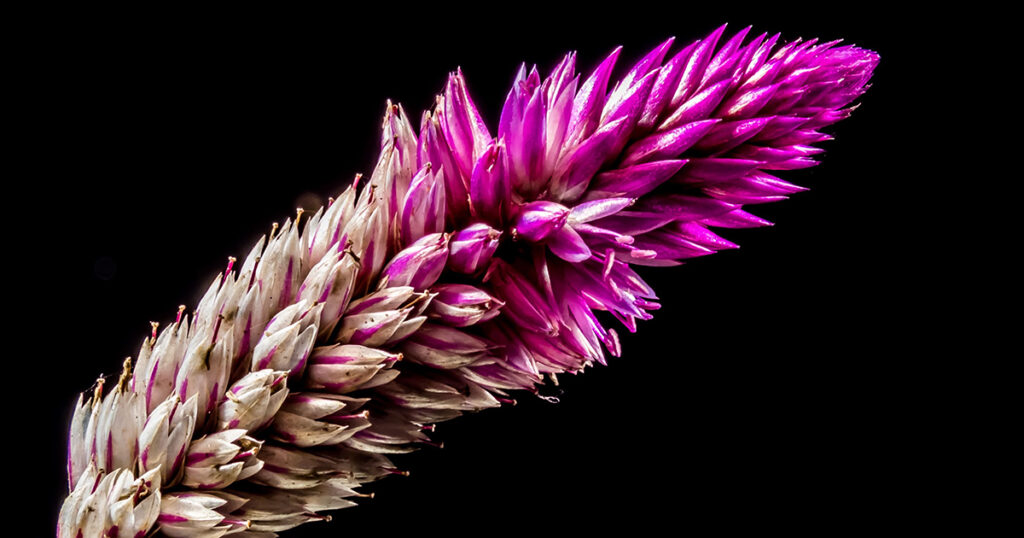
Celosia comes in two main forms: the crested cockscomb, with its velvety, brain-like flower heads in electric shades of red, orange, pink, and gold; and the plume types, with softer, feathery flower spikes. Both are annuals that peak in late summer and carry their color into fall, and both are virtually indestructible in hot, dry weather. Celosia is known for its heat tolerance and also does well in the cool temperatures of early autumn.
Use crested celosia as a textural statement plant in containers – one large, deep-burgundy cockscomb head surrounded by trailing violas and ornamental grass makes a fall container that looks entirely intentional and takes about three minutes to assemble. Plume-type celosia works well in cutting gardens. Both types air-dry beautifully for wreaths and autumn arrangements.
29. Snapdragons (Antirrhinum)
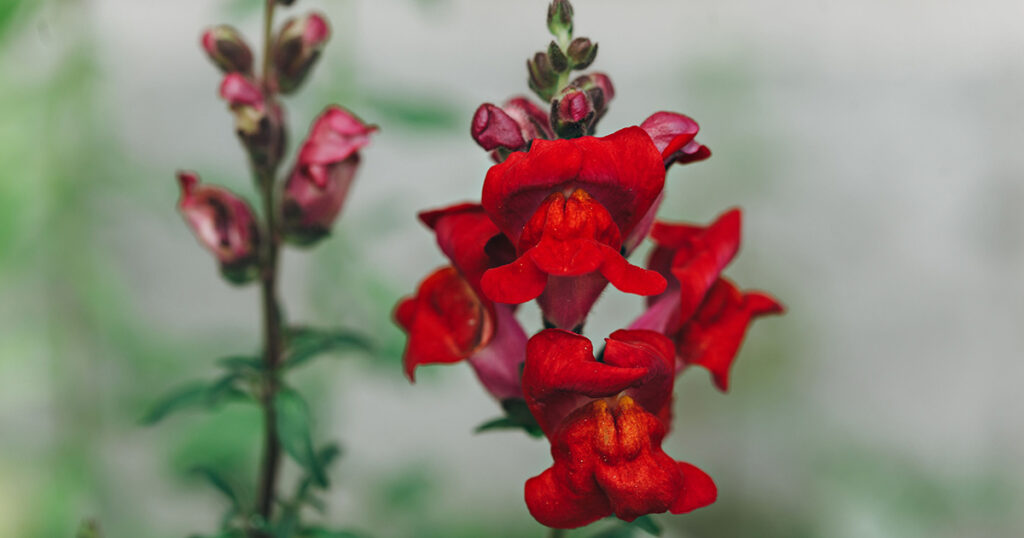
Snapdragons are cool-season annuals that most gardeners plant in spring and watch die in summer heat. The correct play for fall is to plant them at the end of summer, when the heat is breaking, and let them do what they were actually built to do. Calendula, snapdragon, and verbena pop with color in fall conditions – frost-tolerant annuals that bloom well past the first frosts when planted from mid-August through mid-September.
Snapdragons produce tall spikes of densely packed flowers in every color except true black, and they perform best when temperatures are between 40 and 65 degrees Fahrenheit. In mild climates they’ll bloom right through a light frost; in colder areas they’ll give you several excellent weeks before they’re done. In zones 9 through 11, they’re effectively fall-through-spring flowers. Deadhead the spent spikes to encourage branching and more blooms on each plant.
30. Calendula
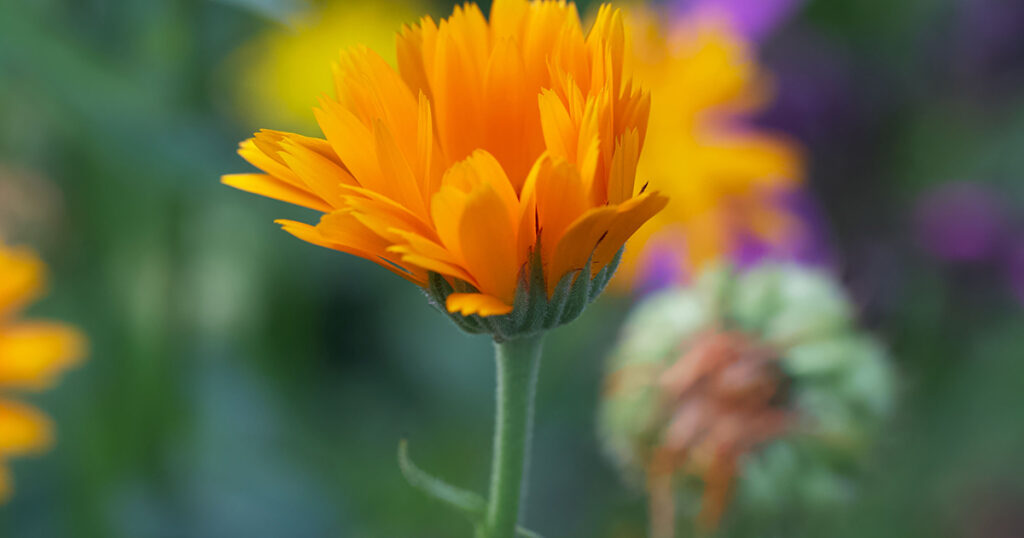
Calendula – sometimes called pot marigold, though it’s not related to Tagetes – produces cheerful daisy-like flowers in orange and yellow that tolerate cold better than almost any other annual. Calendula pops with color in fall conditions and will bloom well past the first light frosts that end most other annuals’ seasons.
Direct-sow calendula in late summer for a fall crop, or transplant started seedlings into garden beds or containers in early fall. It prefers cool weather so strongly that it goes dormant or declines in summer heat, making fall its genuine prime season. The flowers are also edible – dried petals have historically been used as a saffron substitute in rice dishes – and the orange pigment is remarkably intense even in dried form.
31. Cyclamen (Hardy Varieties)
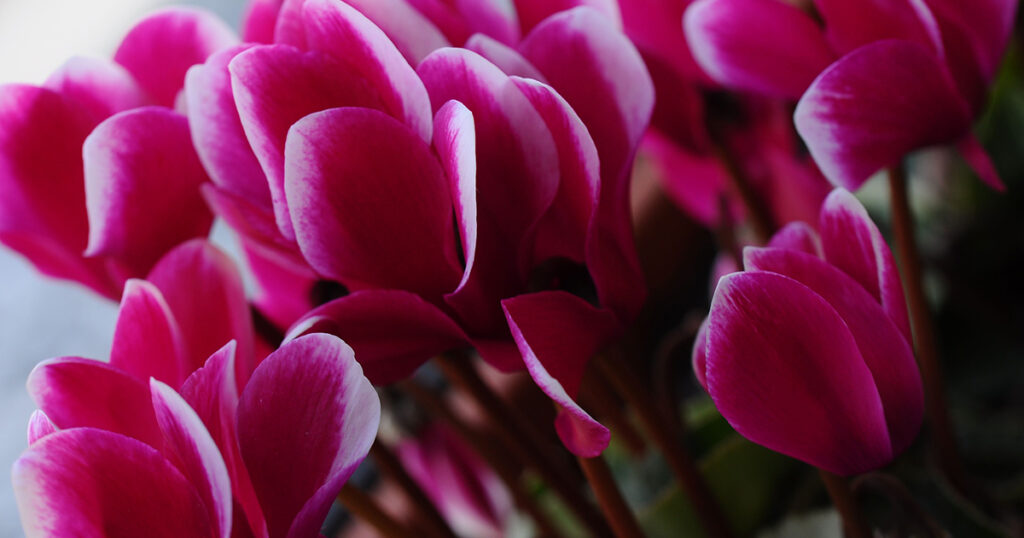
Most people know cyclamen as a houseplant – those forced pot plants that appear in garden centers in November with their swept-back petals in pink, white, and magenta. Hardy cyclamen (Cyclamen hederifolium) is an entirely different proposition: a miniature, exquisite, frost-hardy perennial that blooms in September and October directly from the ground, often before any leaves appear.
The flowers are about an inch tall with delicate reflexed petals, and after they finish, the plants produce beautifully marbled leaves that persist through winter. Plant the small, flat corms in late summer in well-drained soil under trees or in a woodland garden with dappled light. They naturalize slowly, spreading through self-seeding into a colony of considerable charm. Hardy in zones 5 through 9.
32. Colchicum (Autumn Crocus)
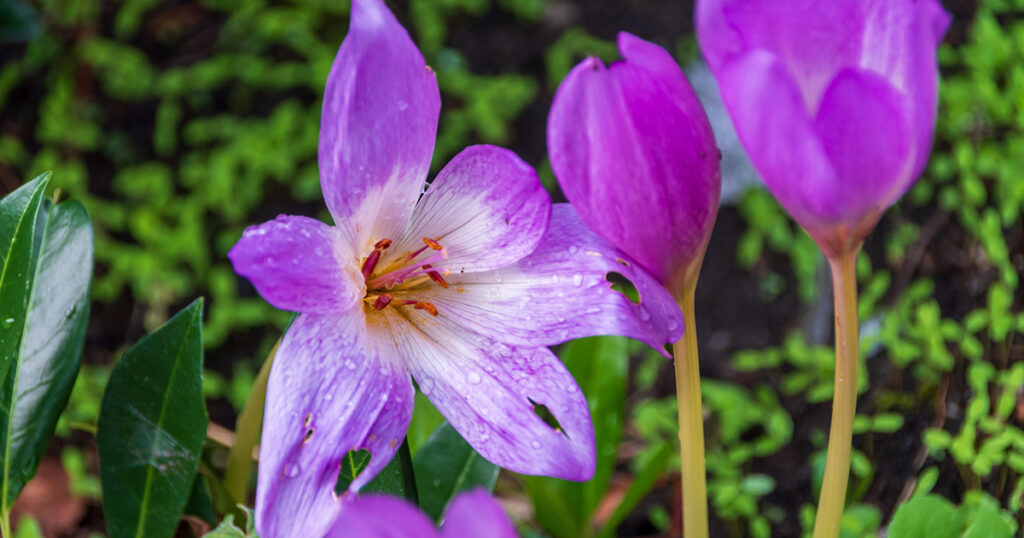
Colchicum is the magic trick of the fall garden. You plant the corms in August, do nothing else, and then watch large, crocus-like flowers emerge directly from bare ground in September – no leaves, no stems, just the flower appearing as if from nowhere. The pink-lilac flowers (white in some varieties) are quite large for such an apparently leafless plant and look striking planted in drifts beneath deciduous trees.
What makes colchicum unusual is the timing: the large, strap-like leaves emerge and die back in spring, and then the plant is dormant all summer before flowering in fall. Plant the corms as soon as you can find them in late summer (they will actually begin to sprout in the bag if left too long). They naturalize beautifully and require essentially zero maintenance once established.
33. Spider Lily (Lycoris)
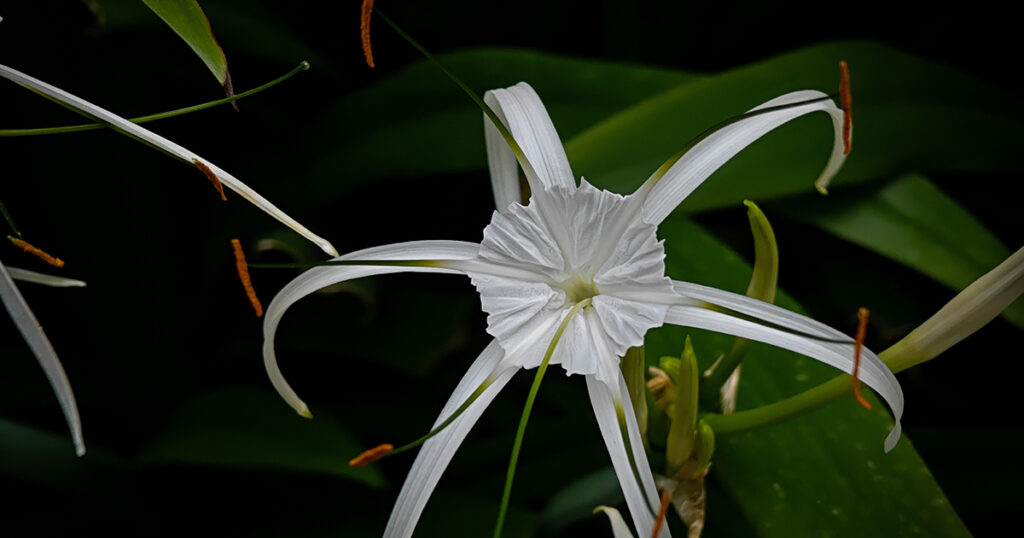
Spider lily performs the same bare-earth trick as colchicum but in a more dramatic register. The species Lycoris radiata sends up clusters of red flowers with dramatically long, curving stamens on bare stalks in September, the flowers emerging from soil with no leaves visible at all. The Japanese common name – higanbana – refers to the equinox, because that’s almost exactly when it blooms.
Lycoris squamigera, the magic lily or resurrection lily, produces soft pink flowers on bare stalks in August and is more cold-hardy (zones 5 through 9). Both species produce leaves in spring that then die back in summer, leaving the plants apparently absent until they flower. Plant the bulbs in a spot where you’ll remember they’re there, because the bare patch in summer gives no indication of the performance coming in fall.
34. Cosmos atrosanguineus (Chocolate Cosmos)
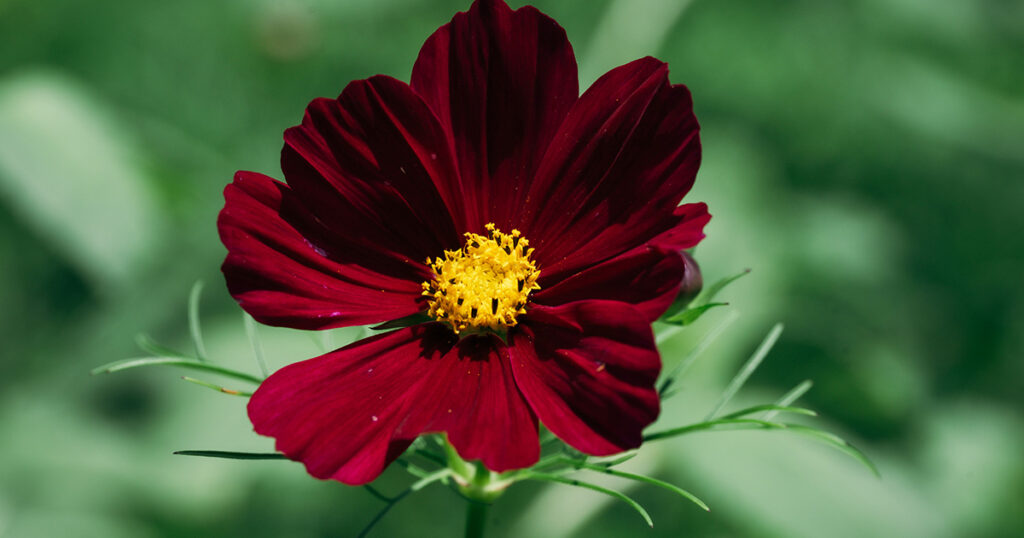
Chocolate cosmos deserves its own entry separate from the standard cosmos genus. This species – native to Mexico and now extinct in the wild – produces deep maroon, almost-black flowers with a genuine faint scent of vanilla or chocolate, most noticeable on warm afternoons. The flowers are smaller than regular cosmos, about two inches across, on slender stems, and they bloom from midsummer into fall.
It’s grown from tubers (similar to dahlias) that should be lifted and stored in cold climates before frost. In zones 9 and above, it can be left in the ground year-round. The color is extraordinary in fall contexts – deep burgundy against russet and gold reads as intentional and sophisticated in a way that bright primary colors in autumn sometimes don’t. Worth the slight extra effort.
35. Heuchera (Coral Bells)
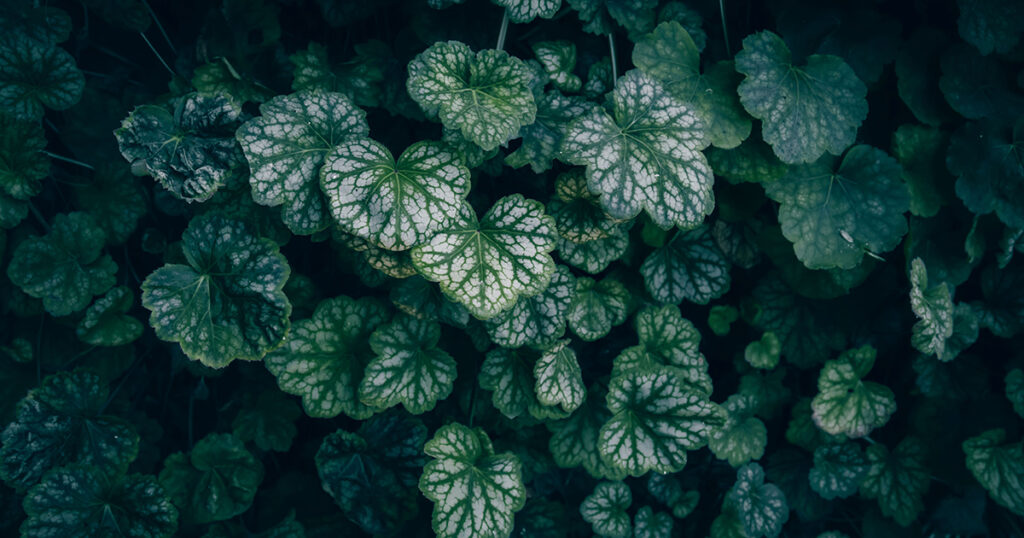
Heuchera (coral bells) offers year-round foliage interest with autumn flower spikes that attract hummingbirds during fall migration. The foliage – which comes in colors from lime green to deep purple-black to copper to silver-overlaid – is the main event for most of the year, but the delicate flower spikes that rise in fall bring an additional dimension of movement and wildlife value.
Modern heuchera breeding has produced an almost bewildering array of foliage colors. For fall specifically, the deeper colors – ‘Palace Purple,’ ‘Obsidian,’ and the ‘Caramel’ types – work especially well against the season’s palette, providing rich contrast without competing with the bolder flowers around them. They prefer partial shade and consistent moisture and are hardy in zones 4 through 9.
36. Lobularia (Sweet Alyssum)
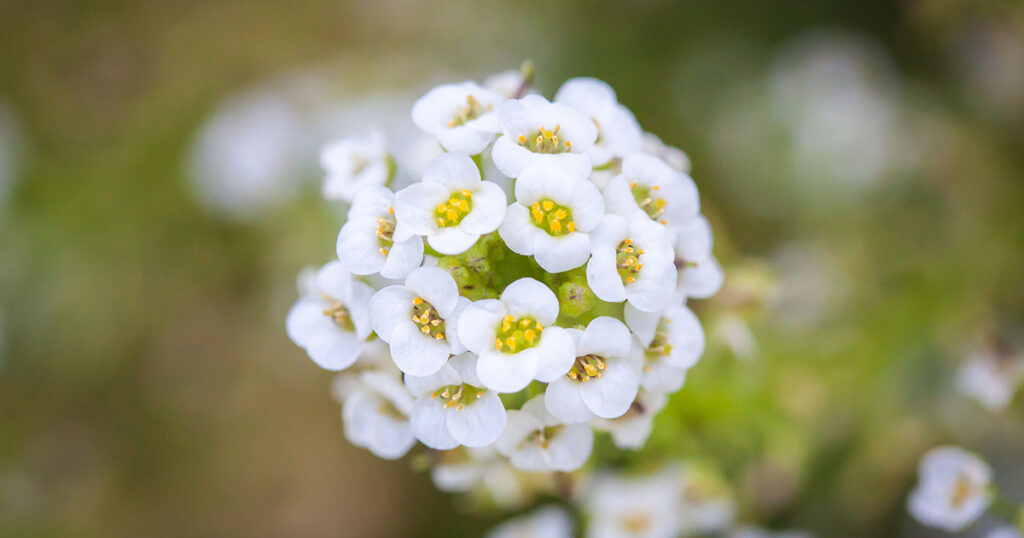
Sweet alyssum is the reliable supporting player of the fall garden – not the star, but the thing that makes everything else look better. The low-growing mounds of tiny, honey-scented white or purple flowers fill containers, edge borders, and spill over retaining walls from early summer through the first hard frost. They tolerate cool weather remarkably well and often self-seed prolifically enough to reappear the following year without any intervention.
Use sweet alyssum at the feet of taller fall bloomers: at the base of ornamental kale in a container, as an edging in front of asters, or filling gaps between plants in a fall border. The honey fragrance – most intense in the evening – is a genuine bonus, the kind of thing that makes a garden worth sitting in rather than just looking at. Cut back if the plants get leggy mid-season and they will rebound quickly.
37. Ornamental Grasses (Miscanthus and Panicum)
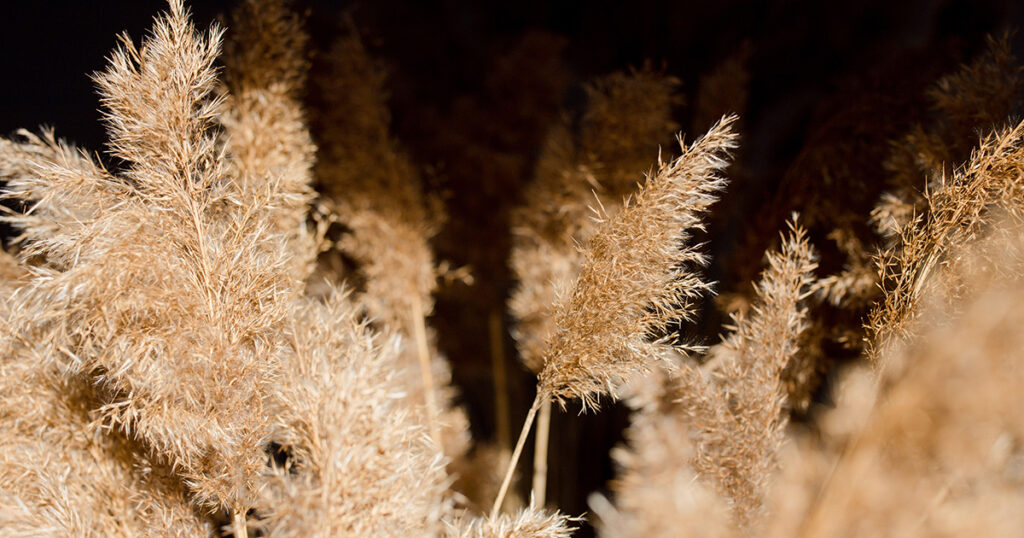
Ornamental grasses aren’t flowers in the traditional sense, but no list of the best fall flowers for gardens is complete without them – they are the structural backbone that makes everything else look better. Ornamental grasses add texture, form, and contrast to fall containers or garden beds. Miscanthus sinensis varieties like ‘Morning Light’ and ‘Gracillimus’ produce feathery silver plumes in September and October that catch the light in a way nothing else in the garden does.
Panicum virgatum – switchgrass – is the native option, with airy seed heads in burgundy-red and gold above tightly upright clumps that turn orange and amber in fall. Both genera provide movement in the garden that static flowering plants can’t: they bend and sway and catch light from different angles throughout the day, and they hold their structure through winter when everything else has collapsed. Cut them back to within a few inches of the ground in late winter, just before new growth begins, and they return reliably every year.
Start with One, Then Build
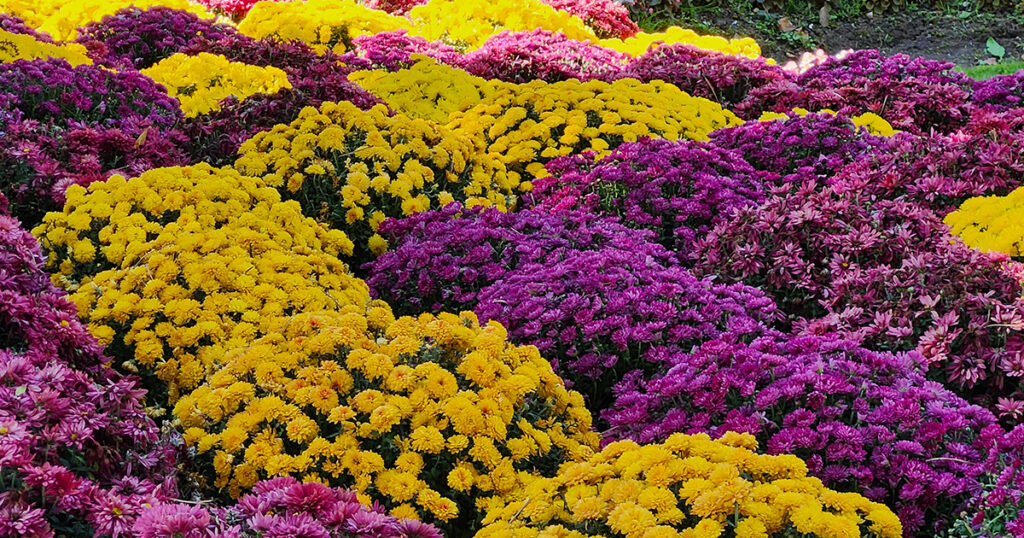
The mistake most gardeners make with fall is treating it as a one-note season – grab a flat of mums from the grocery store, put them by the door, call it done. And mums are fine. Mums have their place. But a garden built for fall, with layers of bloom time from August through November, perennials that come back larger each year, seed heads that feed birds through December, and a structural backbone of ornamental grasses that catches frost in January – that’s something else entirely.
Fall flowers are usually planted between late August and early October, depending on your climate. If you’re working backward from there, the decisions you make now in late summer are what determine whether your garden fades in September or peaks in October. You don’t need all 37 of these. You need five or six that suit your conditions and your aesthetic, planted in groups rather than ones and twos, with enough overlap in bloom time to carry the season. Start there, and add a few more each year. A fall garden worth having is one that got built one autumn at a time.
AI Disclaimer: This article was created with the assistance of AI tools and reviewed by a human editor.