

Eye puzzles have fascinated people for generations because they push us to look beyond the obvious. At first glance, they may seem simple, but once you try them, you realize how tricky they can be. Your eyes send information to your brain, yet it is the brain that interprets what you see. That’s why the same picture can appear completely different depending on how you focus. These puzzles force you to slow down and really notice the small details hidden in plain sight. They are entertaining, but they also reveal how much of what we “see” is shaped by how our brains process information.
How Perception Differs for Everyone
Scientists have studied perception for years, and research proves that the brain often fills in missing details automatically. This helps us move quickly through the world, but it also means we sometimes overlook important differences. Optical illusions and eye puzzles take advantage of this by tricking the brain into seeing patterns that may not actually exist. Because each person’s brain processes visual input a little differently, two people can look at the same puzzle and notice different things. This is why some individuals immediately spot hidden elements while others take much longer. Perception isn’t about weak eyesight, it’s about how efficiently the brain sorts and interprets information. These puzzles highlight just how unique and personal the act of seeing truly is.
The Magic Eye Craze of the Past
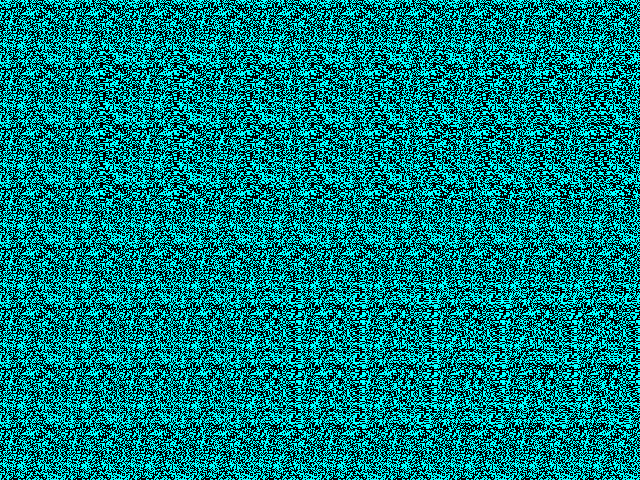
In the 1990s, Magic Eye books and posters became one of the most recognizable visual puzzles of the decade. At first glance, these prints looked like messy patterns or colorful swirls that seemed meaningless. However, hidden within them were Autostereograms, a type of single-image 3D illusion. Unlike traditional stereograms, which required two separate images, Autostereograms use repeating patterns to trick the eyes into perceiving depth. By slightly diverging or relaxing your focus, your brain fuses the repeating sections into one, revealing a hidden 3D picture. Suddenly, dolphins, castles, or geometric shapes would pop out from what seemed like chaos. Entire groups of kids and adults would gather at malls or flip through Magic Eye books, trying to unlock the secret images. The craze not only entertained but also highlighted how perception depends on how the brain processes visual input.
Today’s Challenge: The Hidden Ms
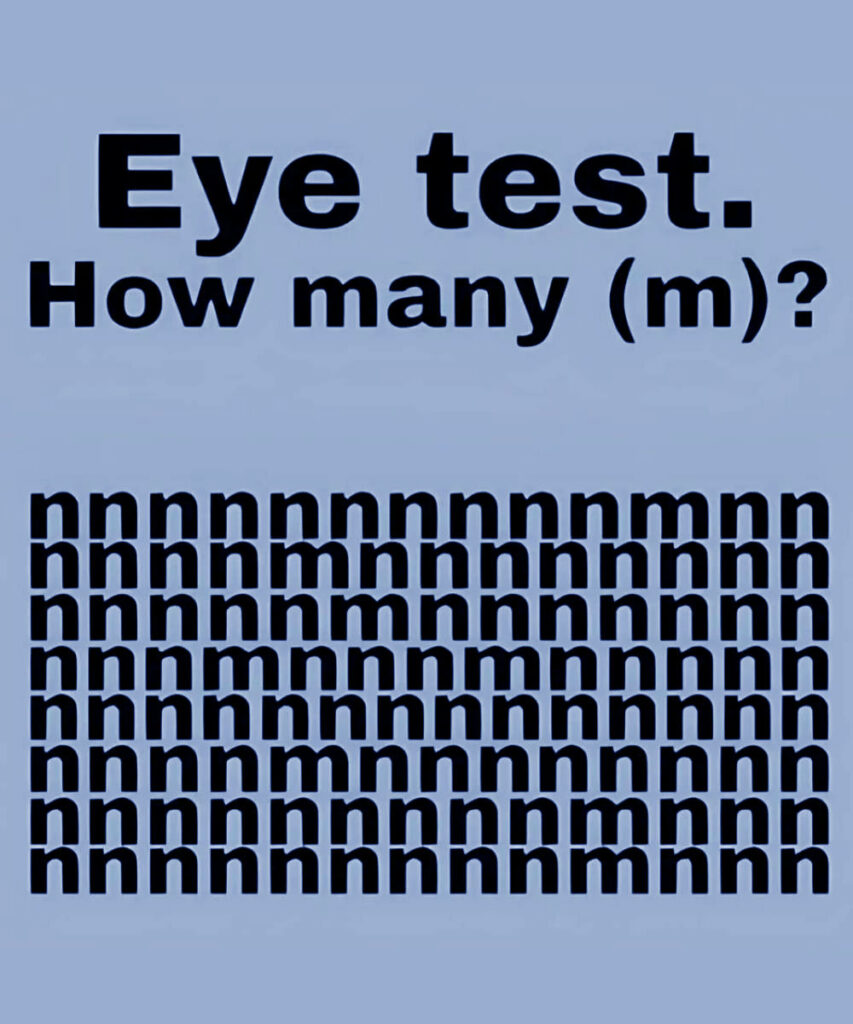
Fast forward to today, and visual puzzles continue to test our ability to notice hidden details. Instead of complex 3D illusions, this challenge is about spotting the letter M hidden in a wall of N’s. At first glance, the picture looks like nothing more than endless rows of repeating letters, uniform and ordinary. But hidden within the grid are subtle differences waiting to be found. The puzzle challenges your brain to tune out distractions and focus on tiny variations in shape. Recognizing the difference between an N and an M may sound easy, but the sheer number of letters makes it surprisingly tricky. It’s a simple test, yet it quickly pulls you in, keeping you searching until you find them all. That is what makes this puzzle so addictive.
Can You Spot Them All?
Now, take a closer look at the picture and give yourself time to really focus. The letters are crammed together, and the resemblance between N and M makes it easy for the eyes to skip past. Most people at first only see endless rows of N’s, because the brain tends to process groups of similar patterns as a whole. That’s where the challenge comes in – it forces you to slow down and carefully scan each section. The moment you spot your first M, the puzzle starts to feel less overwhelming, and your brain adapts. Each new discovery brings a sense of satisfaction, encouraging you to keep searching. Before you know it, you’ll be fully locked in, determined to uncover every hidden letter, one careful scan at a time.
Are you ready to see if you found them all?

The Answer and What It Means
After examining the image closely, there are 8 M’s hidden among the N’s. Their locations are:
- Row 1, far right
- Row 2, center-left
- Row 3, one in the middle
- Row 5, one middle-left, and one middle
- Row 6, middle-left
- Row 7, mid-right
- Row 8, mid-right exactly below row 7
What It Means If You Found Only 4
If you spotted only 4 M’s, your eyes likely skimmed across the letters too quickly. This happens when the brain prioritizes speed over detail. Many people naturally group similar shapes together, so differences go unnoticed. In this puzzle, the N’s dominate, making it easy to miss half of the M’s. Finding 4 means your focus was strong enough to catch some variations, but distractions took over. With a slower, more methodical approach, you would likely uncover more. The good news is that this shows how much your brain can improve with practice.
What It Means If You Found 5
Spotting 5 M’s suggests you slowed down enough to pick out more than the obvious ones. However, subtle differences still managed to slip by. Your brain worked hard to sort through the crowded letters, but it missed a few hidden gems. This shows that you notice patterns, yet details can still blend together under pressure. Finding 5 means you have decent focus, but more patience could sharpen your results. It’s proof that persistence often leads to stronger accuracy. With another careful look, you’d likely find the rest.
What It Means If You Found 6
Finding 6 M’s shows a higher level of attention to detail. You clearly scanned carefully and recognized the differences in most rows. Missing only two means your focus is above average, but your eyes may have slipped past some trickier placements. This outcome shows that your perception is sharp, yet a little extra patience would push you closer to perfect. Six M’s also reveal that your brain is good at blocking out distractions, just not flawlessly. It’s a sign of strong observation skills that can be strengthened even further. With practice, you’ll likely catch them all next time.
What It Means If You Found 7
Spotting 7 M’s means you were very close to perfection. You have excellent focus and sharp pattern recognition skills. Missing only one suggests your eyes might have skipped a row or blended letters together for a split second. This is a strong result that shows you can easily concentrate and filter through distractions. Many people would be proud to stop here, but the hidden last M is proof that perfection often requires extra patience. Seven is a result that highlights both skill and determination. It places you just one step shy of a flawless score.
What It Means If You Found All 8
If you found all 8 M’s, congratulations, your perception is outstanding. You have strong attention to detail and excellent focus under pressure. Your ability to recognize subtle differences shows impressive pattern recognition skills. This result reflects both patience and persistence, two key traits in problem-solving. It also demonstrates that you can block out distractions and maintain sharp observation. Finding every hidden letter is no small task, and it sets you apart from most people. This score suggests your brain loves challenges and thrives on detail-oriented work.

Wrapping It Up
Eye puzzles like this hidden M challenge remind us that seeing is not always as straightforward as we think. Our brains take shortcuts when processing visual information, which means we often overlook details right in front of us. That is why puzzles, from Magic Eye posters to letter hunts, can feel so rewarding. They force us to slow down, sharpen our focus, and rely on patience instead of rushing. Every time we pause to solve one, we practice valuable skills like concentration and observation. Even when the puzzle feels simple, the process shows just how complex and fascinating our perception really is.
More importantly, these puzzles give us a fun way to step outside of daily routines and challenge our minds in a lighthearted way. Whether you found only four M’s or managed to uncover all eight, the real benefit is in the effort itself. Training your brain with puzzles like this can improve attention and help you notice details in everyday life. It is less about being perfect and more about enjoying the process of discovery. So next time you come across an eye puzzle, take your time – you might be surprised at how much sharper your vision becomes.
Read More: Do You Have a High IQ? Spot the Five Differences
Disclaimer: This article was created with AI assistance and edited by a human for accuracy and clarity.