

Someone actively trying to start an argument already has the ending written in their head. They want the flash of temper, the raised voice, the regrettable sentence. What they almost never expect is the person across from them refusing to play the part.
That refusal is not passivity. It is not suppression, swallowing everything down until it resurfaces three weeks later as something unrecognizable. It is a particular kind of skill, developed over years of watching yourself in difficult moments and deciding, slowly and imperfectly, to respond differently. Emotionally intelligent argument handling is less about having the right things to say and more about noticing what’s actually happening before you open your mouth.
The eleven things below are not tricks. They don’t come naturally to most people and they don’t work every time. But they are consistent patterns in how people with high emotional intelligence handle the moment someone else is trying to drag them into a fight.
1. They Recognize Their Own Triggers Before the Conversation Escalates

There is a specific sensation most people know but rarely name: the moment a conversation stops being a conversation and becomes something else. The body usually registers it first. The jaw tightens. The shoulders come up. The voice drops a register or climbs one. Emotionally intelligent people have learned to read those signals as data rather than as instructions to proceed.
Deescalation-training.com research indicates that when people practice self-awareness, they are less likely to get caught off guard by their reactions. They can recognize when their tone changes, when defensiveness creeps in, or when a personal bias is influencing how they hear the other person. That recognition doesn’t require deep introspection in the moment. It requires the habit of noticing, built up through enough past experiences of not noticing until it was too late.
The practical move is naming the internal state before it takes over. If you can catch the feeling and identify it accurately — “I’m not angry, I’m embarrassed” or “I’m not confused, I’m afraid” — the emotional charge becomes easier to manage. UCLA neuroimaging research found that naming an emotion lowers activity in the amygdala (the brain’s threat-detection center), which makes reactivity drop. That reduction in activation is where the choice lives.
2. They Don’t React to the Content; They Respond to the Emotion Underneath It

When someone is escalating, the specific words they’re using are almost never the real issue. The accusation about the dishes isn’t about the dishes. The explosion over a parking spot isn’t really about the parking spot. It is about something older, heavier, and far less sayable that found the nearest available exit.
The words coming out of an angry person’s mouth are almost never the real issue. They’re a vehicle for emotional discharge. The content is often repetitive, exaggerated, or factually inaccurate because the person is accessing five-year-old coping patterns, repeating what they learned in childhood.
Emotionally intelligent people resist the urge to correct the record. Not because accuracy doesn’t matter, but because a correction disappears into the noise when the other person is in full emotional activation. What actually reaches them is acknowledgment of the feeling beneath the words. “You sound really frustrated” gets further than “actually, that’s not what happened,” not because it’s nicer, but because it addresses what’s actually present in the room.
3. They Pause Before Responding

The pause has a bad reputation. It feels like weakness or avoidance when you’re in the middle of something heated. But the pause is where emotionally intelligent argument handling actually happens — the only place where conscious choice is possible.
Psychology Today on conflict de-escalation notes that techniques like deep breathing, pausing before speaking, or mentally reframing the situation all help de-escalate faster. The physiological reason is straightforward: the amygdala activates faster than the prefrontal cortex (the part that makes considered decisions). Any deliberate pause, even a slow breath, gives the reasoning part of the brain time to catch up with the reactive part.
This is easier said than done, especially when the other person reads the pause as an invitation to fill the silence with more noise. The trick is pausing internally without disappearing externally. Maintaining eye contact and keeping your posture open signals that you are still present, still engaged, and choosing your words rather than running from the confrontation.
4. They Keep Their Voice Low and Slow

Vocal tone is one of the most underestimated tools in conflict. People tend to unconsciously mirror the energy across from them. Volume rises to match volume, pace speeds up to match urgency, and this mirroring can accelerate an argument faster than anything either person actually says. Emotionally intelligent people deliberately interrupt this cycle.
Emotionally intelligent individuals express their thoughts and feelings clearly while actively listening to others, fostering an environment of trust that can diffuse escalating tensions. Keeping the voice low and measured is a form of that communication. It signals composure without announcing it, and composure, as it turns out, is contagious in the same way agitation is.
The instinct to match the other person’s energy is hard to override. But a deliberately unhurried response does something the other person often isn’t prepared for: it slows the whole room down. The person who was escalating has no heat to bounce off. This is not manipulation. It is simply refusing to feed the fire.
5. They Ask Questions Instead of Making Declarations

One of the most reliable ways to turn a tense exchange into a full argument is to respond to declarations with declarations. “You always do this” met with “No I don’t, you do this” is a loop that doesn’t have an exit. Emotionally intelligent people break the loop early, usually with a question.
By encouraging the person to express more about their thoughts and feelings, open questions allow for a better understanding of their perspective and reduce misunderstandings. Questions also change the dynamic in the room. The person who asked a genuine question is no longer in the same adversarial position as the person who issued a challenge. It signals curiosity rather than combat, which is often enough to change the temperature of the exchange by a few degrees.
The questions don’t have to be elaborate. “What do you mean when you say that?” and “Can you help me understand what you’re trying to tell me?” are not sophisticated interventions. They are simple moves that buy time, gather information, and communicate that you are willing to hear the other person out, which is, depressingly often, the only thing the other person actually wanted.
6. They Validate Without Agreeing

This one is where a lot of people stall out, because validation gets confused with capitulation. Telling someone “that sounds really hard” or “I can hear that you’re upset about this” is not the same as telling them they’re right. It is simply acknowledging that their emotional experience is real, which is a different category entirely from agreeing with their interpretation of events.
Recognizing and acknowledging a person’s feelings can help to reduce anxiety and prevent situations from escalating. The person who feels genuinely heard tends to stop pushing for acknowledgment. When acknowledgment isn’t coming, the escalation often isn’t really about the subject at hand. It’s about the desperation of feeling invisible. Validation short-circuits that dynamic without requiring anyone to abandon their actual position.
Learning to separate “your feelings make sense” from “your version of what happened is accurate” takes practice, but it is one of the most useful skills in emotionally intelligent argument handling. You can hold both things at once. The feeling is real. The conclusion drawn from it may be worth revisiting, but that conversation happens only after the person feels heard, not before.
7. They Watch Nonverbal Signals as Closely as Words

What’s said in a tense conversation is usually the least interesting part of it. The posture, the eye contact, the way someone holds their hands communicate volume even when the voice stays controlled. Emotionally intelligent people read the room in this fuller sense, tracking the whole person rather than just the argument being constructed in words.
During a conflict, emotions can run high, making it challenging to assess a situation accurately. Emotionally intelligent individuals can recognize nonverbal cues, such as body language, facial expressions, and tone of voice, that indicate heightened emotions. Reading those cues accurately helps calibrate the response. Someone whose jaw is set and whose arms are crossed might be saying “I’m fine” while communicating something entirely different. Responding to the actual state rather than the stated one is more useful to everyone in the room.
Their own nonverbal signals matter too. Crossed arms, eye rolls, and turned-away posture broadcast contempt or disengagement far more loudly than the words accompanying them. Keeping the body open and the gaze level is part of how emotionally intelligent people communicate something the other person badly needs: you are safe, I am listening, we are not enemies.
8. They Separate the Person From the Problem

Arguments that escalate fastest are usually the ones where the problem becomes the person. Once the subject has moved from “this situation is difficult” to “you are defective for creating it,” there’s almost no road back to resolution. Emotionally intelligent people work hard to keep these two things apart.
A high level of emotional intelligence enables individuals to understand and regulate their own emotions while also empathizing with others, and this is essential for de-escalating tensions and finding mutually beneficial solutions. That empathy is not abstract. It is the specific act of remembering, in the middle of a heated exchange, that the person across from you is a full human being who is probably reacting out of pain or fear rather than out of a calculated desire to make your life difficult.
This doesn’t mean excusing poor behavior or pretending a pattern doesn’t exist. It means keeping the conversation focused on what happened and what might change, rather than on character assassination. “When you do X, I feel Y” holds a very different kind of weight than “you are the kind of person who always does X.” One is a conversation. The other is a verdict.
9. They Know When to Remove Themselves Temporarily

There is a difference between walking away from a conversation and abandoning it. Emotionally intelligent people know when they are too activated to be useful, when their heart rate has crossed the threshold at which productive conversation becomes physiologically impossible, and they create a pause rather than a rupture.
Identifying personal emotional triggers can prevent escalation and foster better self-management. Part of that self-management is recognizing the specific signs that you have passed your window of productive engagement. Once the body is in full fight-or-flight activation, the cognitive functions needed for careful listening and measured speech are genuinely impaired. Continuing the conversation past that point rarely produces anything useful.
The key is naming the exit rather than just taking it. “I need fifteen minutes and then I want to come back to this” is a completely different message than slamming a door. It communicates that the conversation matters, that the relationship matters, and that the pause is in service of the discussion rather than an escape from it. The other person may still be frustrated. But the door stays open.
10. They Refuse to Match Contempt With Contempt
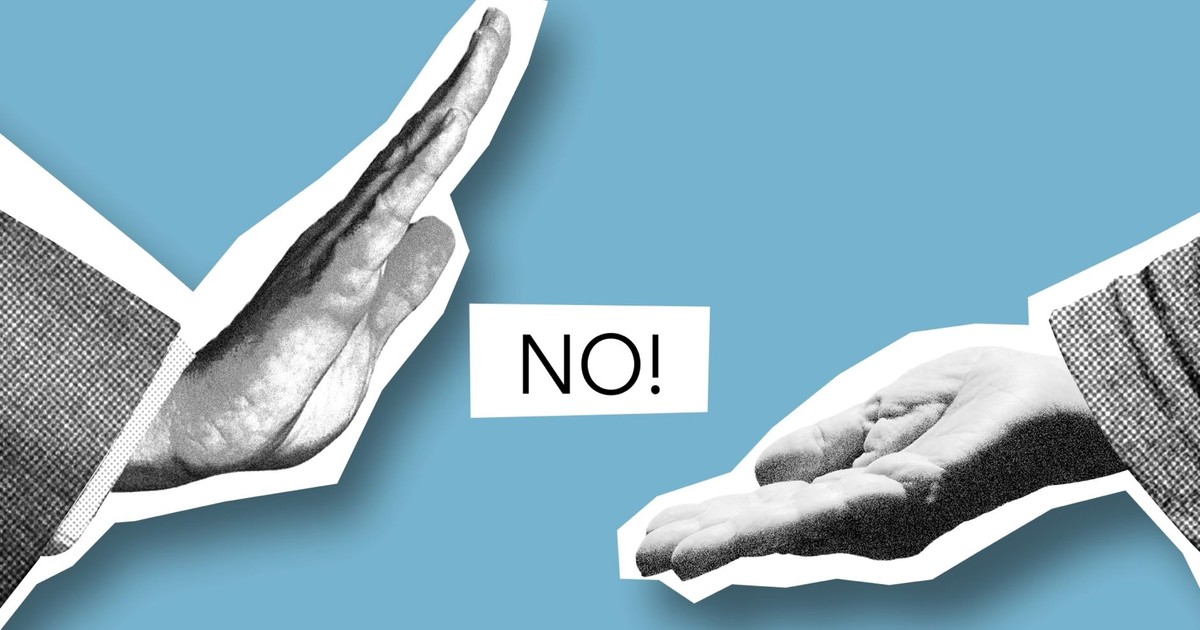
Contempt is the most corrosive thing that can enter a conflict, and it is one of the easiest moves to mirror. Sarcasm invites sharper sarcasm. Dismissiveness breeds defensiveness. Research on emotional intelligence and conflict resolution consistently finds that the people who resolve conflicts most constructively are those who refuse to reciprocate contempt, even when it would be entirely understandable.
This is not about being a saint. It is about understanding what contempt actually does to a conversation: it closes every door simultaneously. The moment one person communicates “you are beneath my consideration,” the other person stops trying to be understood and starts trying to survive. Nothing gets resolved in that state.
Emotionally intelligent people do not absorb contempt as though it doesn’t sting. They simply choose not to return it, because they understand that returning it guarantees a specific outcome: nothing changes except that both people feel worse. The move is to hold your position without dropping to the register the other person is inviting you to.
11. They Revisit the Conversation When Things Are Calmer

Emotionally intelligent argument handling doesn’t end when the immediate moment de-escalates. The de-escalation is the beginning, not the conclusion. What distinguishes people with high emotional intelligence from people who are simply conflict-avoidant is what they do after the temperature drops: they come back.
Emotional intelligence plays a role in empathy, communication, and collaboration, all of which are essential for constructive conflict resolution. That collaboration doesn’t happen in the middle of the heat. It happens in the aftermath, when both people have had a chance to regulate and can actually hear each other. Coming back to the conversation, without the rehearsed speech, without the accumulated grievances of the earlier exchange, is where things actually get addressed.
This requires a kind of trust in the relationship’s ability to hold a difficult conversation at a calmer temperature. Not every relationship has that capacity, and not every argument deserves a second round. But for the ones that matter, the recurring disagreements with people you’re genuinely trying to stay close to, the willingness to return is often the most emotionally intelligent move in the whole sequence.
What This Is Really About

None of these behaviors are natural. The framing around “emotionally intelligent people” tends to obscure this part. It makes the skills sound like personality traits that some people simply have, when what they actually are is hard-won habits developed by people who made enough costly mistakes in the middle of arguments to decide they wanted a different outcome.
The person who pauses before speaking has almost certainly said things without pausing and regretted it. The person who validates without agreeing learned that skill somewhere, probably in a conversation where they didn’t do it and watched the whole thing collapse. The behaviors in this list are not a personality type. They are a practice.
And the reason they’re worth practicing has nothing to do with being the bigger person or winning the moral high ground. It’s simpler than that: emotionally intelligent argument handling gives you back authorship over your own reactions. The person trying to start the argument with you doesn’t get to write your response. You do.
Disclaimer: This information is not intended to be a substitute for professional medical advice, diagnosis, or treatment and is for information only. Always seek the advice of your physician or another qualified health provider with any questions about your medical condition and/or current medication. Do not disregard professional medical advice or delay seeking advice or treatment because of something you have read here.
AI Disclaimer: This article was created with the assistance of AI tools and reviewed by a human editor.