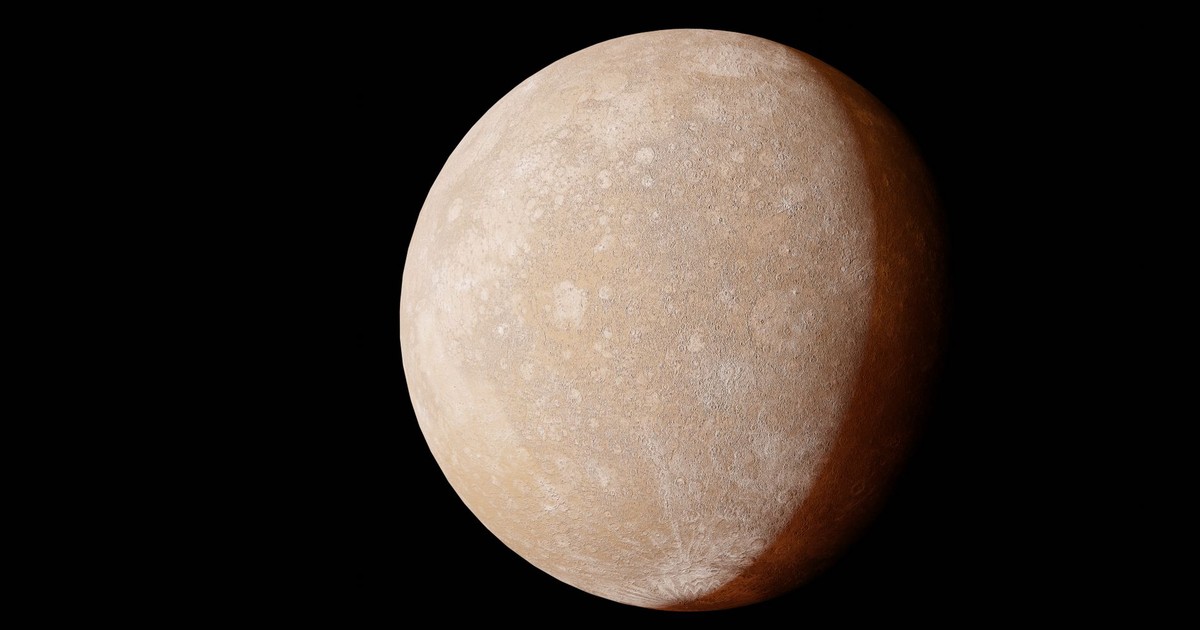

Somewhere in the constellation Hydra, at a distance that would take our fastest spacecraft tens of thousands of years to cross, there is a planet sitting in the precise zone where water can stay liquid on a world’s surface. It is six times more massive than Earth, orbits a small, cool star every 55 days, and it might – emphasis on might – have what it takes to be habitable. The planet is called GJ 357 d, and it sits just 31 light-years from us, which in the context of a galaxy spanning 100,000 light-years makes it, cosmically speaking, practically next door.
The discovery made headlines when it was announced in 2019, but the questions it raised have only grown louder since. Scientists have spent years scrutinizing what would actually make an Earth-like planet habitable, and the picture they keep arriving at is equal parts thrilling and humbling. It is not as simple as a planet being the right distance from its star. The atmosphere has to cooperate. The star has to behave. The geology has to do its part. GJ 357 d checks one of those boxes with confidence. The others remain stubbornly open.
That open-endedness is not a reason to dismiss the discovery. It is, if anything, the reason it stays interesting.
The Planet That Surprised Everyone

An international team of astronomers led by Cornell’s Lisa Kaltenegger characterized the first potentially habitable world outside our solar system to emerge from NASA’s Transiting Exoplanet Survey Satellite program – a super-Earth named GJ 357 d, located about 31 light-years away, announced in 2019. According to the Cornell Chronicle, Kaltenegger called it “TESS’s first discovery of a nearby super-Earth that could harbor life.”
What TESS actually caught first was something else entirely. In February 2019, the TESS satellite observed that the dwarf star GJ 357 dimmed very slightly every 3.9 days, evidence of a transiting planet moving across the star’s face – a world called GJ 357 b, a so-called “hot Earth” about 22 percent larger than Earth. Follow-up observations from the ground then led to the discovery of two more exoplanetary siblings: GJ 357 c and GJ 357 d, with the international team collecting Earth-based telescopic data going back two decades to reveal the newly found exoplanets’ tiny gravitational tugs on their host star.
GJ 357 d lies 31 light-years away from our solar system, about six times more massive than our planet, and orbits in its host star’s habitable zone, where water could potentially exist in liquid form on the surface. That is the single most compelling fact about it. Everything else is conditional.
What “Habitable Zone” Actually Means
The phrase “habitable zone” does a lot of heavy lifting in astronomy coverage, and it deserves to be unpacked. The habitable zone refers to the distance between an exoplanet and its host star that is crucial for determining whether liquid water can exist on the planet’s surface – not too close, where it would evaporate, and not too far, where it would freeze. Scientists sometimes call this the “Goldilocks zone,” a name that undersells how narrow the margin actually is.
GJ 357 d is located within the outer edge of its star’s habitable zone, where it receives about the same amount of stellar energy from its star as Mars does from the Sun, according to Diana Kossakowski from the Max Planck Institute for Astronomy in Heidelberg, who co-authored the discovery paper. That solar-energy comparison to Mars should give you pause, because Mars, of course, is not exactly a vacation destination. Its surface temperature averages around -60 degrees Celsius, it has almost no atmosphere to speak of, and liquid water on its surface is long gone. The crucial difference is what happens when a planet has a robust atmosphere.
According to Kossakowski, “If the planet has a dense atmosphere, which will take future studies to determine, it could trap enough heat to warm the planet and allow liquid water on its surface.” This is the central tension at the heart of GJ 357 d’s story: the planet is positioned correctly, but whether it has the atmospheric infrastructure to take advantage of that position is entirely unknown.
The Star It Orbits – and What That Means for Life
The three planets in the GJ 357 system orbit GJ 357, a red dwarf – a small, cooling star – 31 light-years away. According to NASA’s exoplanet catalog, the star is about one-third the Sun’s mass and size, and about 40 percent cooler than our star. Red dwarf stars are the most common type of star in the Milky Way, which makes planets orbiting them enormously important to the broader search for life. If rocky, potentially habitable planets around red dwarfs can support life, the odds that life exists somewhere in the galaxy improve dramatically.
But red dwarfs come with a serious catch. Red dwarfs spit out harmful torrents of radiation in fierce gusts of stellar winds, which can strip away a planet’s atmosphere. This is not a minor inconvenience – it is potentially a civilization-ending problem before any civilization ever gets started. A planet can be perfectly positioned in the habitable zone and still end up as a stripped, airless rock if its star decides to be aggressive about unloading radiation. Whether GJ 357 d has managed to hold onto an atmosphere against the temperamental behavior of its host star is the single biggest outstanding question about the planet.
The concern is real, and it is playing out in real time on other worlds nearby. Research published in 2026 found that a habitable-zone rocky planet called LHS 1140 b – which orbits a red dwarf about 48 light-years from Earth – has retained an atmosphere for more than three billion years despite the intense radiation environment typical of its host star. LHS 1140 b held onto this atmosphere despite red dwarfs’ violent reputations, receiving about 42 percent of the energy from its star that Earth receives from the Sun, and – even though it experienced higher levels of X-ray and UV radiation throughout its history – it retained some helium likely accumulated during formation. That finding is significant for GJ 357 d because it proves atmospheric survival around red dwarf stars is at least possible, not just theoretically conceivable.
The Broader Picture: A Neighborhood Getting Crowded
GJ 357 d is not the only candidate in the cosmic neighborhood drawing serious attention. The broader field of nearby potentially Earth-like habitable planet research has become genuinely crowded with contenders.
In early 2025, an Oxford University team confirmed a super-Earth called HD 20794 d orbiting a Sun-like star just 20 light-years away. The planet has a mass six times that of Earth and orbits a star similar to our Sun, originally detected two years prior by Oxford scientist Dr. Michael Cretignier, with the result drawing on over two decades of observations and opening a window to future studies of Earth-like exoplanets that may have conditions suitable for life. Its significance is partly that it orbits a Sun-like star rather than a red dwarf, which sidesteps the radiation problem entirely – though it introduces its own complications around distance from its star and surface temperature.
Then, in 2026, astronomers announced the discovery of Gliese 3378b, a rocky world about 25 light-years away. Gliese 3378b has a mass about 2.3 times that of Earth and an orbital period of 21.45 days, sitting inside its host star’s habitable zone – the region around a star where a planet receives just the right amount of solar radiation for water to exist in a liquid state on a planet’s surface. The planet gets about 90 percent of the radiation from its host star that Earth gets from the Sun, placing it squarely in the sweet spot, according to lead researcher Paul Robertson of the University of California, Irvine, whose team made the discovery using the Habitable-zone Planet Finder on the Hobby-Eberly Telescope at McDonald Observatory in Texas.
What all of these discoveries have in common is that they are being found because the instruments have finally caught up to the questions. The TESS satellite casts a wide net. The James Webb Space Telescope, fully operational since mid-2022, can then examine what that net catches. Thanks to JWST’s observing capabilities, the first real constraints on atmospheres for rocky exoplanets are now possible, with rocky planets predicted to exist in the tens of billions across the galaxy alone.
What Comes Next for GJ 357 d

With a thick atmosphere, GJ 357 d could maintain liquid water on its surface like Earth, and scientists could pick out signs of life with telescopes now coming online, according to Kaltenegger. That was the promise in 2019. The follow-through depends on telescopes powerful enough to collect the light passing through GJ 357 d’s atmosphere – assuming it has one – and analyze it for chemical fingerprints that suggest biological activity.
The instruments being built to do exactly this work include the Extremely Large Telescope, the Habitable Worlds Observatory, and the Large Interferometer For Exoplanets, all designed to observe the atmospheres of nearby Earth-like planets in the habitable zone for “biosignatures” indicative of life. These are not science fiction projects. The Extremely Large Telescope in Chile is under construction now. The Habitable Worlds Observatory is NASA’s planned flagship mission for later this century. Progress is being made, instrument by instrument, confirmation by confirmation.
In the near term, JWST will continue leading this effort through photometric and spectroscopic observations of transits and eclipses, primarily targeting rocky exoplanets orbiting red dwarf stars. By the early 2030s, Giant Segmented-Mirror Telescopes will provide the high contrast and spectral resolution needed to characterize rocky exoplanets around nearby stars via direct imaging. GJ 357 d is a strong candidate for this scrutiny precisely because of what made it exciting in the first place: it is close, it orbits a relatively bright star, and it sits in exactly the right orbital real estate for the question to be worth asking.
What We’re Really Asking
The conversation about GJ 357 d is, at its core, a conversation about scale. Thirty-one light-years sounds impossibly far when you put it in the context of human travel – a jet would take roughly 40 million years to get there. But in galactic terms, that distance is nothing. If the Milky Way were the size of the continental United States, 31 light-years would be the distance from your kitchen to your front door.
That proximity is what makes the question so persistent. This is not a planet discovered at the far edge of the observable universe, detectable only as a statistical artifact. It is a neighbor. The kind of neighbor whose lights you can see from the driveway, even if you cannot yet make out what is happening inside.
What astronomers are really asking – what every habitability study ultimately comes down to – is whether the conditions that produced life on Earth are common or extraordinary. The existence of multiple Earth-like planet habitable candidates within 31 light-years of our solar system nudges the answer, gently but unmistakably, toward common. Whether GJ 357 d has liquid water on its surface, whether it has an atmosphere capable of sustaining any version of chemistry we might recognize as alive, remains genuinely unknown. It may be decades before we know.
But the telescopes are running. The data is accumulating. And the planet, for its part, has been sitting there in the outer edge of its quiet red dwarf’s habitable zone, completely indifferent to the question, for far longer than humans have existed to ask it.
Disclaimer: This information is not intended to be a substitute for professional medical advice, diagnosis, or treatment and is for information only. Always seek the advice of your physician or another qualified health provider with any questions about your medical condition and/or current medication. Do not disregard professional medical advice or delay seeking advice or treatment because of something you have read here.
AI Disclaimer: This article was created with the assistance of AI tools and reviewed by a human editor.