
Your backyard probably isn’t what your dog actually needs. Not the size of it, not the fence around it, not even the patch of grass you laid down last spring. For decades, the conventional wisdom about dog welfare centered on physical space – a big yard meant a good life, a small apartment meant guilt. That assumption is being dismantled by a growing body of behavioral research, and what’s replacing it is something far more specific: dogs don’t need more room. They need more to smell.
The scale of canine anxiety is larger than most owners realize, and larger than the veterinary profession has historically communicated. When questions addressing nail trims and baths were excluded from the analysis, 84 percent of dogs in the study population were anxious or fearful on at least one behavioral measure. That figure comes from a 2026 study in Veterinary Research Communications drawing on data from over 43,000 dogs across the United States, led by researchers at Texas A&M University. It is, at this point, the most comprehensive owner-reported dataset on canine fear and anxiety ever assembled in the US.
What makes the number significant isn’t just the size – it’s the breadth. According to the data, 22.3 percent of dogs show at least mild to moderate anxiety toward unfamiliar people. Noise, strangers, being left alone, encountering unfamiliar dogs – each of these categories generates its own anxiety profile, and most dogs flag on more than one. The picture that emerges is not of a pet population with occasional stress. It’s of a species that is, in large numbers, chronically on edge.
The Scale of the Problem
The Texas A&M study drew on data covering 43,517 dogs of various breeds, ages, sexes, sizes, and locations within the United States. Owners completed a shortened version of the Canine Behavioral Assessment and Research Questionnaire, known as the C-BARQ, a validated instrument developed to provide standardized evaluations of canine temperament and behavior in companion dogs. The scale of the dataset gives the findings unusual statistical weight – this is not a sample of 200 dogs at a single veterinary clinic.
The findings did not exist in a vacuum. A 2020 large-scale study published in Scientific Reports, examining 13,700 Finnish pet dogs, found that anxiety-related traits were widespread across breeds and ages. Noise sensitivity was the most common anxiety-related trait, with a prevalence of 32 percent across the cohort. Fear of strangers, fear of novel situations, and separation-related distress each appeared at significant rates across the population. That study, now six years old, was among the first to treat canine anxiety as a population-level welfare concern rather than an individual training problem.
The clinical picture is complicated by the difference between owner perception and measurable behavior. Behavior problems are common across the dog-owning population, as Dr. Bonnie Beaver‘s study confirms — yet owners frequently fail to recognize or act on them. In other words, the 84 percent figure is almost certainly an undercount of the full picture – owners tend to normalize fear responses that have become routine, such as a dog who always trembles at the vet, or one who never fully settles during thunderstorms.
What Anxiety Actually Looks Like
Canine anxiety does not always announce itself with obvious distress. It presents across a spectrum that includes behaviors owners frequently misread as personality quirks: excessive panting when guests arrive, persistent pacing before mealtimes, the dog who trails every person from room to room, the one who destroys the doorframe every time you leave. Tucked tail, hypervigilance, excessive licking, and a refusal to engage with food in new environments are all documented anxiety indicators. The fact that these behaviors are common does not make them healthy – it makes them a signal about something systemic in how dogs are being housed and managed.
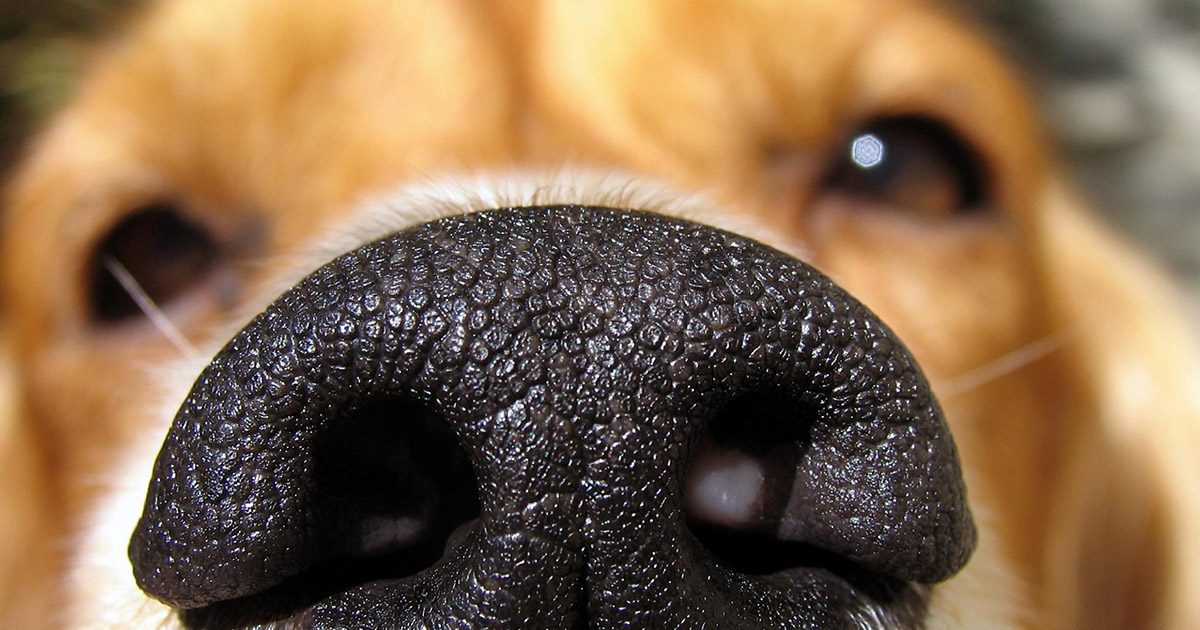
One of the consistently underappreciated systemic factors is olfactory deprivation. Dogs experience the world through scent in a way that has no human equivalent. A dog’s nose contains up to 300 million olfactory receptors, compared to approximately six million in a human. The part of their brain devoted to analyzing smells is proportionally 40 times larger than in humans. When a dog is confined to a yard, a room, or a routine that offers little olfactory variety – the same patch of grass, the same route, the same unchanging surfaces – they are being deprived of the primary sensory channel through which they process their environment. That deprivation has measurable behavioral and physiological consequences.
What the Sniffing Research Actually Shows
The science connecting olfactory engagement to reduced anxiety in dogs has developed considerably over the past decade, and the most recent synthesis of that evidence is detailed. Stress responses are complex, involving changes across the hypothalamic-pituitary-adrenal (HPA) and sympathetic-adrenal-medullary (SAM) pathways, resulting in multiple physiological responses that can be difficult to interpret. The HPA axis is the body’s central stress-response system – the chain that runs from the brain’s hypothalamus down through the pituitary gland to the adrenal glands, releasing cortisol (the primary stress hormone) when a threat is perceived. The SAM pathway triggers the faster, more immediate fight-or-flight response. Both pathways are activated by chronic anxiety, and both are implicated in the long-term welfare costs of sustained stress.
A comprehensive scoping review of scent activities for canines, published in Applied Animal Behaviour Science in 2025 by Fountain and colleagues, compiled findings from 27 studies examining how scent-based engagement affects dog behavior and physiology. Eight of those 27 studies used combinations of both physiological and behavioral measures to assess changes in dogs undertaking scent detection activities, with multiple physiological measures reducing the likelihood of misinterpretation of findings when examining short-term stress responses. The review identified consistent patterns: dogs offered structured sniffing opportunities, whether through formal nosework, scatter feeding, or exploratory sniff walks, showed behavioral indicators associated with lower stress, including reduced high-posture body positions, decreased vocalization, and increased time spent resting.
The Optimism Effect
One of the more striking findings in this area comes from a 2019 study by researchers Charlotte Duranton and Alexandra Horowitz, published in Applied Animal Behaviour Science. The Duranton and Horowitz research used a cognitive bias test – a validated method of assessing emotional state in animals – to compare dogs who participated in two weeks of daily nosework tasks against a control group that practiced heelwork instead. The study found that dogs given the opportunity to search for treats by smell exhibited a positive judgment bias, meaning they were more relaxed, less stressed, and tended to evaluate ambiguous situations more positively – a behavior researchers identify as a strong indicator of emotional well-being.
The cognitive bias paradigm works by training animals to associate one location with a reward and another with nothing, then testing how they respond to an ambiguous middle location. Animals in a negative emotional state – the equivalent of a pessimistic outlook – approach the ambiguous location slowly or not at all. Animals in a positive emotional state approach it quickly. The nosework group in the Duranton and Horowitz study moved toward ambiguity with more confidence. Two weeks of sniffing had changed how they assessed their world.
This finding carries practical implications that go well beyond nosework classes. If allowing dogs to use their noses in a structured way improves their baseline emotional state, then environments that systematically deny olfactory engagement – concrete yards, short-leash-only walks, indoor confinement with no foraging opportunities – may be contributing to the chronic low-level anxiety that the Texas A&M data found in 84 percent of the surveyed population.
Why the Yard’s Size Is the Wrong Measurement
The real estate logic of dog ownership – bigger yard equals better life – fails to account for what dogs actually do with outdoor space. A large, empty lawn offers a dog physical room to move but very little olfactory information. Mowed grass, concrete borders, and uniform fencing create a sensory environment that is, by the standards of what a dog’s nose needs, profoundly boring. Conversely, a smaller yard with textural variety, plant diversity, decomposing organic material, and varied ground surfaces offers a dog hundreds of distinct scent signatures to work through in a single session.
Among trainers surveyed in the scoping review, the most commonly used scent enrichment activities were sniff-based walks (used by 85 percent of respondents), providing sensory garden spaces (46 percent), and offering food via scatter feeding (92 percent) or snuffle mats (87 percent). What that data reflects is a professional community that has already shifted its understanding of what enrichment means in practice. The yard, in this framework, is not a place to burn energy. It is a sensory resource – and its value is determined by what it offers to a dog’s nose, not by how many square feet it covers.
Trainers have a consistent belief that trained scent work tasks are good for dogs and that scent enrichment activities can be effective in reducing general fearfulness, anxiety, and addressing overexcitement. While the researchers noted that controlled evidence in this specific area is still accumulating, that professional consensus reflects years of applied behavioral observation – the kind of evidence that often precedes the formal studies by a decade.
Building a Yard That Works for a Dog’s Brain
Translating this research into practical yard design does not require a landscape architect. It requires a different set of priorities than the ones most dog owners start with. The goal is not cleanliness, not uniformity, and not the aesthetics of a well-maintained lawn. The goal is sensory richness – a yard that provides changing, layered olfactory information that gives a dog something to do cognitively every time they go outside.
Several design principles follow from the evidence:
Ground-Level Texture Variation
A single surface type – lawn, pavers, gravel – gives a dog one scent environment. Mixing these creates distinct olfactory zones. Areas of mulch, bare soil, and dense plantings each hold scent differently and attract different insects and small animals, which continuously refresh the scent profile available to a dog. Raised beds with aromatic herbs such as rosemary, sage, and lavender add a dense, layered olfactory element. Lavender in particular has been examined in shelter-dog studies for its calming properties. In one such study, dogs exposed to lavender scent spent more time resting and sitting and less time moving and vocalizing compared to control conditions.
Scatter Feeding and Foraging Zones
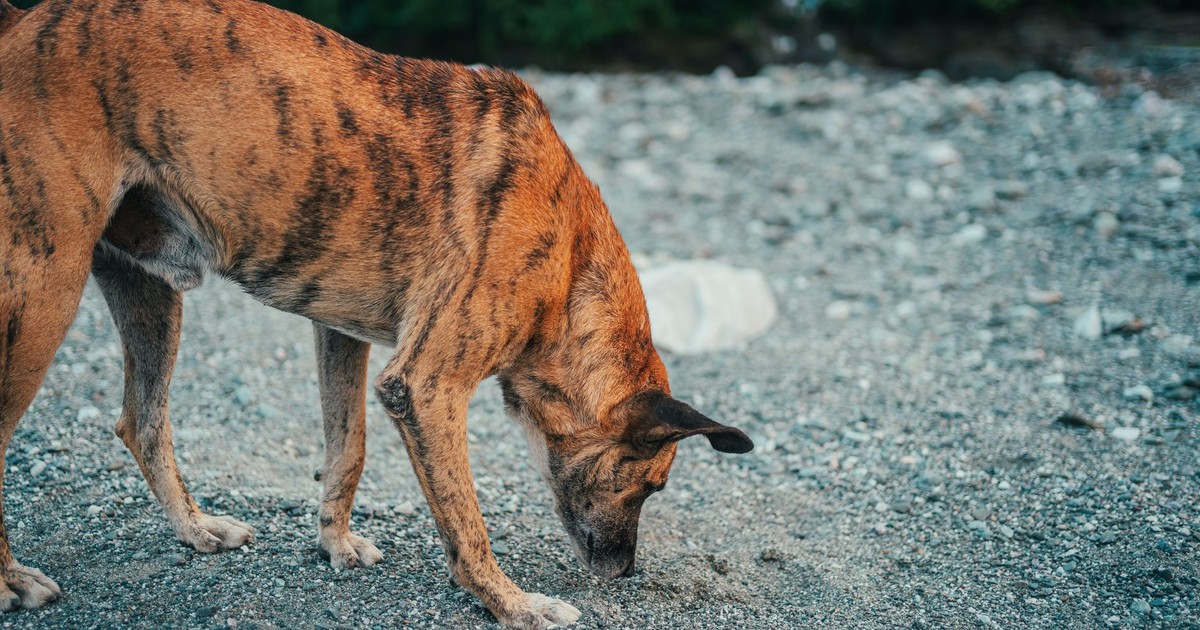
Hiding food in a yard – scattered through grass, buried lightly in soil, tucked into plant beds – converts a routine feeding into a foraging session. This is one of the highest-value, lowest-cost interventions for a dog anxiety yard sniffing environment. The dog moves slowly, nose down, searching the space. The foraging behavior itself activates the seeking circuit in the brain: a neurological pathway associated with motivation, anticipation, and positive emotional arousal that is distinct from the fear circuitry. Even five minutes of scatter feeding produces measurably different body language than five minutes of free roaming in the same space.
Controlled Complexity, Not Chaos
For anxious dogs, enrichment works best when it lowers stress, supports predictability, and gives the dog some control over what happens next. That means the design of an enriched yard should not overwhelm. Dogs who are highly anxious may find a sudden abundance of novel stimuli distressing rather than calming. The practical approach is to introduce complexity incrementally – one new element at a time, over days or weeks – so the dog can build confidence with each new zone before encountering the next.
Raised platforms, tunnel-like plantings, and partially enclosed areas give anxious dogs options for retreat. A dog who can choose to be in a sheltered space rather than exposed to open sightlines will use that space to decompress, and the ability to make that choice actively reduces the physiological stress response.
Social Scent Without Social Pressure
One of the most underused tools in residential yard design for dog anxiety is controlled exposure to social scent without the actual social demand of meeting another dog. Allowing a dog to sniff along a shared fence line – where other dogs have marked, walked, and rested – gives them rich olfactory social information at their own pace, with no requirement to engage. This is fundamentally different from a forced dog park encounter, which combines social pressure with novelty and an inability to leave. The scent-only exposure activates social cognition without triggering defensive responses.
You can also read about the behavioral signs of a happy dog to understand the baseline you’re working toward – and to recognize when environmental changes are actually making a measurable difference.
The Limits of the Current Evidence
Accuracy requires acknowledging where the research ends. The 84 percent figure from the Texas A&M study represents owner-reported observations, not veterinary clinical assessments. When the same dataset is analyzed using more conservative methodologies, the calculated percentage of dogs displaying anxiety or fear at a moderate to severe level ranges from 14.1 percent to 28.2 percent – and researchers have cautioned that the process of categorizing any behavior as problematic is inherently subjective, since it depends on the unique perceptions of individual animal owners. That does not invalidate the 84 percent finding; it places it in context. Some proportion of that figure reflects dogs whose owners are accurately reporting genuine anxiety, and some reflects normal behavioral variation that owners are interpreting as a problem. Both realities can be true simultaneously.
Similarly, the sniffing research, while consistent in direction, is not yet at the level of large-scale randomized controlled trials in domestic yard settings. Most studies have examined nosework in structured training contexts, shelter environments, or controlled research settings. The inference that the same physiological and emotional benefits translate to backyard enrichment design is scientifically reasonable and supported by practitioner evidence, but it is an inference. Owners should pair environmental enrichment with veterinary consultation when anxiety is severe, and should not treat a redesigned yard as a substitute for clinical assessment of dogs who are significantly distressed.
What This Means for Your Dog
The convergence of the 2026 Texas A&M prevalence data, the Fountain et al. 2025 scoping review, and the foundational Duranton and Horowitz nosework research tells a coherent story: canine anxiety is pervasive, olfactory engagement is one of the most powerful tools available for reducing it, and the physical design of a dog’s outdoor environment has direct consequences for their emotional welfare.
The core shift required of dog owners is conceptual. A yard is not a holding pen for physical energy. It is, or should be, a sensory environment – one that offers a dog meaningful cognitive work through the primary sense through which they experience the world. That means prioritizing ground-level complexity, foraging opportunities, textural variation, and aromatic planting over square footage, perfect lawns, and aesthetic uniformity. A dog who spends twenty minutes nose-down working through a patch of mulch, rosemary, and scattered kibble is doing something neurologically specific and beneficial. A dog who runs laps around a clean lawn is not.
The evidence also points toward a broader rethinking of what “enough” means for a dog in a domestic setting. Physical exercise matters. Veterinary care matters. Training and social connection matter. But olfactory enrichment – the daily, unhurried opportunity to use the nose – has been systematically undervalued in how most dogs are housed. The dogs in the data are telling us something. Most of them are anxious, many of their owners haven’t fully recognized it, and the environment we’ve built for them is part of the reason why. A patch of bare lawn and a full food bowl is not the same thing as a life that makes sense to a dog’s brain. It just looks like one from where we’re standing.
AI Disclaimer: This article was created with the assistance of AI tools and reviewed by a human editor.