
Grocery store aisles in the 1990s operated under a different set of rules. The shelves were louder, the packaging was more aggressive, and the products seemed to compete not just on flavor but on personality: drinks with cartoon faces on the bottle, chips that tasted like an entire pizza, cookies engineered for dunking. Discontinued 90s snacks didn’t just feed you – they had a whole thing going on, a gimmick, a mascot, a texture that somehow nobody before them had thought to try. And then, one by one, most of them disappeared.
The same market forces that launched them could kill them just as fast, and with just as little warning. A corporate restructuring here, a dip in sales there, a machine that kept breaking down and nobody wanted to fix. The decade was genuinely experimental in ways that haven’t quite been replicated since, partly because food companies were less cautious, partly because consumers were less focused on ingredient lists, and partly because the pop culture machine was running so hot that even a chip shaped like pizza dough could become a moment.
Most of them vanished without a press release. One week they were in the checkout aisle end cap; the next, you were squinting at a shelf where they used to be, wondering if you’d imagined them. Some are now memorialized in Reddit threads that read like support groups. Others have Facebook pages dedicated entirely to demanding their return. At least one item on this list will do something to your chest that you won’t be able to fully explain.
1. Planters PB Crisps
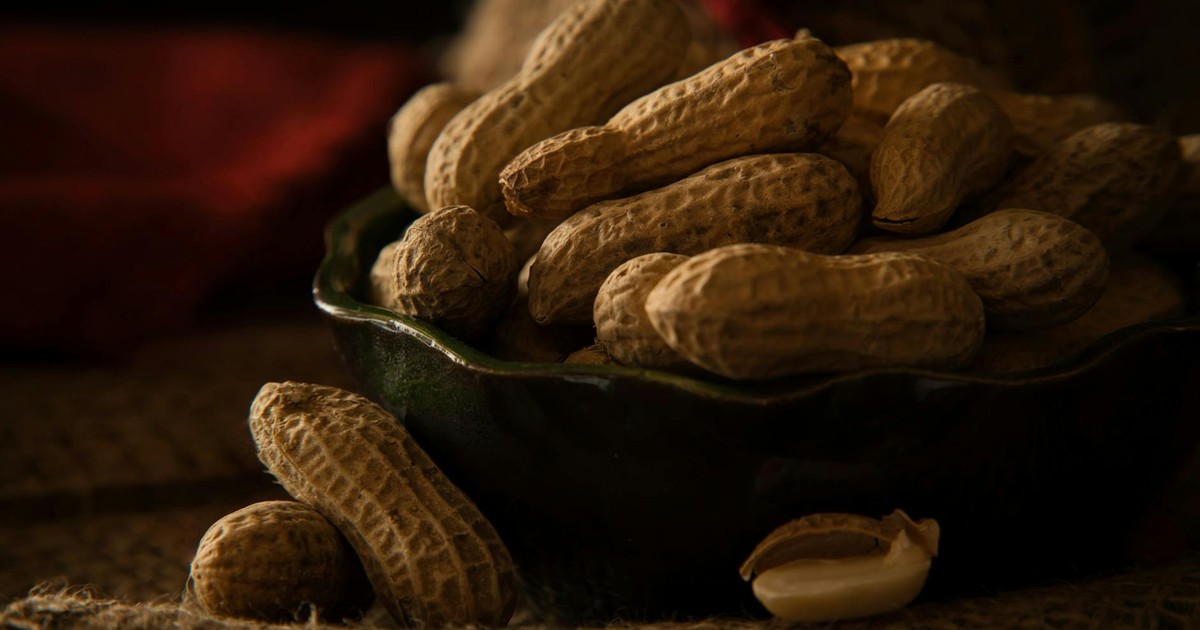
Launched in 1992, Planters PB Crisps were peanut-shaped cookies with a crunchy shell and a creamy peanut butter center, and they remain one of the most requested discontinued snacks online. The concept sounds almost too simple – a graham-style cookie molded into the shape of a peanut, stuffed with smooth peanut butter filling – but the execution was flawless in a way that nobody has managed to replicate since.
The flavor profile hit a sweet-and-salty balance that the decade seemed particularly gifted at stumbling into. The snack gained enough popularity for a second flavor to be released: Chocolate Crisps. For a snack that Planters officially chalked up to “low consumer demand,” the response to its disappearance has been disproportionately loud. Other sources have noted that the machine needed to produce the intricate shape was hard to maintain and broke often, so in order to cut costs, they stopped production.
Planters received so many requests to bring back PB Crisps that there is now a disclaimer on their website stating that they appreciate their loyal fan base, but have no plans to re-launch them. Which is, somehow, worse than silence. There are petitions. There are Facebook groups. There are adults, fully functional adults, who still find themselves thinking about a cookie that was discontinued before Y2K.
2. Keebler Pizzarias
The Keebler elves were really on to something with Pizzerias. The snack debuted in 1991 and disappeared around 1995, coinciding with the breakup of Keebler. These tasty chips tasted like baked pizza dough and came in a few flavors, including supreme pizza, pepperoni pizza, and plain cheese pizza.
The thing about Pizzarias was that they weren’t just pizza-flavored in the vague way that many snacks claimed to be. These pizza-flavored chips appear to have been the first of their kind to use actual pizza dough as an ingredient. They were crunchy chips with the shape and texture of a tortilla chip and all the cheesy flavor of a classic pizza slice, coated with a Dorito-like cheese powder that stuck to your fingers as you snacked. That pizza dough base is what separated them from every imitator – it gave them a chew and a density that a corn chip simply couldn’t fake.
Pizzerias were so beloved that snackers wrote petitions in an attempt to revive them, with no such luck. The petitions have, predictably, gone nowhere. Other brands such as Pringles and General Mills have attempted to capture the flavor of a cheesy slice in snack food form, but none have matched what Pizzarias did. If you’re craving the cheesy crunch of a Pizzaria chip today, you’re out of luck.
3. Butterfinger BBs
In 1992, Butterfinger introduced Butterfinger BB’s – basically entire Butterfinger bars shrunk down into a little ball format. From 1992 to 2006, they let fans get a literal single bite of chocolate with the flaky, buttery wafer interior the candy is known for. Instead of going to town on a full-sized bar or the more miniature fun-sized versions often distributed to trick-or-treaters, these chocolate-enrobed crunchies let you get the whole experience.
They were the movie theater snack for people who wanted to feel like they weren’t having a whole candy bar, while absolutely having a whole candy bar. Backed by major marketing including The Simpsons, they became a ’90s staple before being discontinued in 2006, reportedly due to production challenges.
Nestlé was on the receiving end of a lot of uproar over discontinuing the BBs, so in 2009 the Butterfinger Bites were relaunched – sort of. The new version was just another miniature iteration of the candy, still not quite the original BBs fans were asking for. Butterfinger BBs were discontinued in 2006, briefly returned as Butterfinger Bites in 2009, and were later reformulated again after Ferrero acquired the brand in 2018. The current iteration is fine. It is not the same.
4. Dunkaroos
Dunkaroos occupy a complicated space in 90s snack nostalgia because they technically came back – and yet the conversation around them has never fully settled. Betty Crocker released Dunkaroos in 1990 and this was one of those ’90s snacks that were the peak of cool, becoming an instant hit. It came with round cookies and frosting for dipping, and like so many snacks of the time, each packet was chock-full of sugar and artificial ingredients. Tragically, Dunkaroos were discontinued in 2012 as attitudes started to change on healthy snacks for kids. For eight years, American 90s kids had to live with the knowledge that Canada still had them.
They remained on shelves in Canada, prompting the “Smugglaroo” marketing campaign in 2016. The campaign encouraged Canadians to share them across the border – a detail that aged into something of a charming joke once the return finally happened. General Mills announced the return of Dunkaroos to American shelves in the summer of 2020, to the excitement of nostalgic fans. The snack returned in three flavors: vanilla cookies with rainbow sprinkle frosting, chocolate cookies with chocolate frosting, and cinnamon toast crunch cookies with cinnamon frosting.
Fans online debate whether the cookies taste the same as the original recipe or if nostalgia has clouded their taste buds. One nostalgic commenter on Reddit said, “Definitely not the same formula. Frosting and grahams are completely different. And it’s not just a ‘my palate changed’ thing.” Others have turned to their own devices by dipping Nilla wafers in funfetti icing, dubbing them “Adultaroos.” Which is either resourceful or deeply sad, depending on your opinion of adults recreating discontinued snack foods in their own kitchens.
5. General Mills Squeezits
If you grew up in the 90s, you remember squeezing one of these bottles so enthusiastically that the drink went up your nose. That was half the appeal. In 1985, General Mills came up with Squeezit, an artificially-flavored fruit drink conceived with kids in mind. It contained 6.75 fluid ounces in an unbreakable, squeezable plastic bottle. The first four flavors were grape, orange, cherry, and red punch.
Squeezits were released by General Mills in the mid-’80s. The snack really became a staple of the ’90s for its interactive packaging. The brand featured popular cartoon characters on its bottles, which made it even more appealing to young consumers. The bottle design was changed in 1992 to resemble cartoon characters like Grumpy Grape and Smarty Arty Orange. This was considered extraordinarily cool in approximately 1994.
You can read more about the pop culture forces behind this era of snack obsession over at the ’90s nostalgia archive.
Squeezit was very successful and was out there for over 15 years, but was discontinued in 2001. There was a glimmer of hope when Squeezits reappeared for a short time in 2006, but they were ultimately discontinued the following year. The juice box won, not because it was more fun, but because it was cheaper to produce and easier to stack. Convenience beat personality, as it so often does.
6. Orbitz
Orbitz was the drink equivalent of a lava lamp, and it had about as much practical use as one. Before the gum or the travel website, there was Orbitz, the gravity-defying drink with the floating orbs. The fruity beverage was marketed by Clearly Canadian in 1997. Inside each bottle floated small, edible gelatin balls suspended in a sweet liquid, never sinking to the bottom, never rising to the top – just drifting, cheerfully, through something you were theoretically supposed to enjoy drinking.
Orbitz got its spatial effect from gellan gum, which created a microscopic spiderweb effect that allowed the edible balls to float around. The science of the thing was genuinely impressive. The taste was, by most accounts, less so. The balls had very little flavor of their own, the liquid itself was aggressively sweet in a way that read more like candy syrup than fruit drink, and the texture of swallowing a gelatin sphere in your beverage was an experience that divided people sharply.
Clearly Canadian launched Orbitz in 1997 but discontinued it in 1998 when most people found the balls too strange to swallow. It lasted barely a year on shelves, which makes it one of the shortest-lived entries on this list. The drink does still have a cult following of nostalgic fans, but it seems unlikely that Orbitz will make a return. Original sealed bottles now sell as collector’s items, which tells you something about the specific brand of nostalgia at work here: people don’t necessarily want to drink it again so much as they want to remember when something that strange could exist.
7. SnackWell’s Devil’s Food Cookie Cakes
SnackWell’s requires a brief cultural footnote to fully understand, because the snack existed at the precise intersection of two powerful 90s forces: the low-fat diet craze and the corporate food industry’s willingness to exploit it completely. In the 1990s, low-fat diets were king of the weight loss industry. Right on cue, SnackWell’s burst onto the scene with fat-free Devil’s Food Cookie Cakes, promising consumers could have their cake and slim down, too. The signature bright green boxes of SnackWell’s cookies were a staple in diet-conscious pantries throughout the ’90s. The light chocolate cake rounds had a thin layer of marshmallow creme covered in a thin chocolatey coating.
The irony, which has been well-documented since, is that fat-free did not mean low-calorie – the missing fat was compensated for with sugar, and the cookie’s appeal had nothing to do with its nutritional profile and everything to do with the fact that it genuinely tasted good. While they were stressed as lower in fat, many Americans incorrectly believed that SnackWell’s were “healthy” and thus meant they could eat however many they wanted. The image of a woman hovering over a green box of SnackWell’s at a Weight Watchers meeting became so recognizable it practically became a cultural shorthand for the era’s complicated relationship with food and guilt.
As the low-fat craze gave way to the low-carb Atkins diet in the 2000s, SnackWell’s became less popular. The SnackWell’s brand was officially retired in 2022, and though there are plenty of purportedly health-conscious snacks on shelves today, many people still crave the fudge-and-marshmallow-covered chocolate cake cookies they remember. The cookie itself was genuinely delicious, which is the frustrating part. It got so associated with diet culture theater that people forget the base product – soft chocolate cake, a marshmallow layer, that thin dark coating – was actually excellent. It deserved to survive on its own merits and didn’t get the chance to, which is its own small tragedy.
8. Fruit String Thing
Fruit String Thing was technically a fruit snack in the same way that cotton candy is technically spun sugar – accurate in every literal sense, completely missing the point. It’s a fruit snack, but it’s also a string. The ’90s were a time of out-of-the-box ideas, and the Fruit String Things were no different. Among the gummy gushers, rollups, and stackers, Betty Crocker launched this simplified string snack in 1994. Depending on the box, the Fruit String Thing could be laid out in a design or rolled up for the consumer to create their own artistic interpretation.
The genius of it was in the interaction. You didn’t just open a bag and eat; you pulled the string apart, arranged it, wore it briefly as a bracelet (briefly, because it was sticky and you were a child with no impulse control), and then consumed it piece by piece. General Mills stated that the snack “could also be twisted, braided, tied in knots, or played with in any number of ways” before eating. Lunch table culture in the 90s ran on exactly this currency – the ritual around the snack mattered as much as the snack itself.
Fruit String Thing falls firmly into the “gone and not replaced” category. Nobody has made another snack that does quite what it did, which is perhaps the surest sign that something was actually original. The sticky strands are long gone, but the memory of figuring out the perfect pull to get a clean single strand off the sheet without tearing it in half? That’s lodged somewhere permanent.
Here’s What This Is Really About
The thing about discontinued 90s snacks is that the grief over them is never really about the food. A bag of chips can’t actually hold that much meaning on its own. What it holds is the specific afternoon you ate it – the particular couch, the particular show on the TV behind you, the particular version of yourself who had no idea those things were temporary.
Food memory is stubborn and specific in a way that other sense memories aren’t. The smell of a Squeezit cap or the weight of a Dunkaroos foil pack carries the whole context with it: what grade you were in, whose house you were at, what you were worried about before you had anything real to worry about. The snacks are gone and the moment is gone and you can’t get either one back, and somehow a conversation about discontinued snack food manages to say all of that without anyone having to say it directly.
Which is, when you think about it, exactly what the best snacks always did. They didn’t explain themselves. They were just there, loud and specific and yours, and then one day they weren’t. You get to hold the joke and the weight behind it at the same time. That’s what nostalgia is for.
AI Disclaimer: This article was created with the assistance of AI tools and reviewed by a human editor.