
Dancing is one of those things you do without thinking much about why it makes you feel good, until someone tells you that researchers have been putting electrodes on dancers’ heads and tracking their brain waves mid-shimmy, and then suddenly it stops being surprising at all. There’s an entire field dedicated to understanding what happens inside the brain when a person moves to music. It has a name: the neuroscience of dance. And what scientists in that field keep finding, across trials and brain scans and longitudinal studies, is that the dancing brain benefits are deeper and stranger and more wide-ranging than almost any other activity humans do for fun.
Most of the conversation about exercise and brain health stays at the level of “go for a walk, it’s good for you.” That’s not wrong, but it’s also not the full picture. What the research on dancing specifically has revealed is that moving to music does something qualitatively different from other forms of physical activity. The brain doesn’t just receive a cardiovascular boost. It is actively recruited across multiple regions at once, all while navigating rhythm, spatial awareness, social cues, emotional content, and choreographic memory, sometimes simultaneously. That combination is, neurologically speaking, a fairly remarkable demand.
The following sections break down what the science actually says, finding by finding, so you can understand exactly what your brain is getting out of a dance floor.
The Brain Is Doing More Than You Think When You Dance
Dancing requires the integration of different parts of the brain, according to Elinor Harrison, PhD, a movement science researcher and lecturer in dance at Washington University in St. Louis. That sentence is easy to read past, so it’s worth pausing on it. Most forms of exercise make demands on specific, somewhat predictable systems. Running taxes the motor cortex and the cardiovascular system. Lifting weights challenges the neuromuscular system. Dancing, by contrast, asks the brain to process music, coordinate physical movement, read spatial information, respond to a partner or a group, and in many styles, remember and retrieve sequences of choreography – all at once, in real time.
Researchers call this “dual-task” engagement. Unlike walking on a treadmill or swimming laps, dancing requires participants to simultaneously process music, coordinate complex movements, remember choreography, make rapid-fire decisions about spatial positioning, and interact socially. This combination of physical activity and cognitive stimulation engages multiple brain regions at once, creating a uniquely powerful stimulus for neuroplasticity – the brain’s ability to form new neural pathways and strengthen existing connections.
The practical upshot of all that cross-regional activity is that the brain gets trained in a way it simply doesn’t during standard exercise. Every time you adjust to an unfamiliar rhythm, catch a partner’s cue, or learn a new sequence, you are making new neural demands. And the brain, being the adaptive organ it is, responds.
How Dancing Literally Grows Brain Volume
One of the more startling findings in dance neuroscience concerns not just how the brain functions but how it physically changes. Research has shown that dance stimulates the hippocampus – the brain region most associated with memory – and can actually increase its volume, counteracting the natural age-related shrinkage that contributes to memory loss and Alzheimer’s disease.
A study in a 2018 issue of PLOS One compared the effects of a six-month dance program – a mix of line dancing, jazz, rock, Latin American dance, and square dancing – with conventional fitness training among older adults. While both groups increased their fitness levels, only dancing led to significant increases in blood levels of brain-derived neurotrophic factor (BDNF) and volume in key brain areas, as seen on MRI scans. BDNF is a protein that supports the growth and survival of neurons. Think of it as fertilizer for brain cells. Most forms of exercise increase it somewhat, but dancing appears to produce a measurably stronger response.
A 2025 systematic review published in the Journal of Neurology reported significant improvement across several cognitive domains in dancers, including executive function, memory, global cognition, and mood. Two studies within the review observed a positive impact of dance-based intervention over control conditions on structural neuroplasticity specifically in the hippocampus. Structural neuroplasticity means the brain is not just working differently – it is changing its physical architecture. That is a more durable effect than the temporary cognitive boost you get from, say, a cup of coffee.
What Dancing Does to BDNF and Why Your Memory Cares
Dancing may protect the brain partly by promoting the release of BDNF, a protein that helps with the growth and survival of neurons. Beyond enhancing neuroplasticity – the brain’s ability to form new connections and pathways – BDNF also protects against neurodegeneration. Neurodegeneration is the gradual breakdown of nerve cells that underlies conditions like Alzheimer’s and Parkinson’s disease. The fact that dancing raises BDNF levels above what conventional exercise achieves is significant because it means the protective effect on the brain is not just about blood flow or heart rate. There is a molecular piece to it.
A 2025 study published in the Journal of Physical Activity and Health found that dance programs improved BDNF levels, cardiorespiratory fitness, and working memory in participants. That finding extended the BDNF connection beyond older adults into younger populations, suggesting that the brain-building effects of dancing are not dependent on age. The process is happening whether you’re taking a ballroom class at 60 or moving around your kitchen at 35.
Working memory – the ability to hold and manipulate information in the short term – is the cognitive system that allows you to follow a conversation, keep track of tasks, and process new information without losing the thread. The fact that dancing specifically improves it makes sense when you consider what dancing demands: you are, in every session, holding sequences in mind while simultaneously responding to music and another person or a room.
Dancing Outperforms Exercise – and Even Antidepressants – for Mood

The connection between dancing and mood has been assumed, intuitively, for centuries. Communities have held onto dance as a ritual, a social practice, and a form of healing long before anyone was running clinical trials to understand why. A 2024 meta-analysis in The BMJ reviewed 218 clinical trials and found that dance reduced symptoms of depression more than walking, yoga, strength training, and even standard antidepressants.
That finding deserves to land with some weight. A meta-analysis reviewing 218 trials is not a small or preliminary study – it is one of the more comprehensive assessments of any behavioral intervention for depression that has been conducted. And the fact that dancing came out ahead of antidepressants is not a claim that dancing should replace medication. It is a claim that the effect on mood is real, measurable, and substantial, and that the combination of music, physical movement, and social engagement appears to do something to depressive symptoms that other interventions approach separately but rarely match together.
Julia F. Christensen, a neuroscientist at the Max Planck Institute for Empirical Aesthetics and co-author of Dancing is the Best Medicine, describes dance as a “language of the body,” explaining that “our brain understands gestures that we may do as we dance like an expressive language.” The body moving to music is not just a mood-adjacent activity. It is a mode of communication the brain recognizes at a deep level, which may be part of why it has such a pronounced effect on emotional states.
The Dementia Protection That 76 Percent Studies Keep Pointing To

Regular dancing is the hobby that reduces dementia risk by 76 percent, according to a landmark New England Journal of Medicine study. That figure has circulated widely enough to seem almost too good to be true, but the finding has held up across multiple subsequent studies and reviews. The reason dancing specifically outperforms other leisure activities in dementia prevention comes back to the dual-task engagement discussed earlier. Crossword puzzles challenge the brain cognitively. Walking challenges it physically. Dancing challenges it both ways at once, and in a social and emotional context on top of that.
A study published in the Journal of Aging and Physical Activity compared six months of ballroom dancing twice a week with six months of treadmill walking twice a week among older adults at risk of developing dementia. People in the dance group performed better on tests of executive function and memory and had reduced loss of volume in the hippocampus, according to co-author Joe Verghese, MD, professor and chair of neurology at the Renaissance School of Medicine at Stony Brook University.
The hippocampus is the part of the brain that takes the hardest hit in early Alzheimer’s disease. It is also, as the research consistently confirms, the part of the brain that dancing most reliably protects. The connection is not coincidental. The hippocampus is highly sensitive to both physical activity and cognitive novelty, and dancing provides both in a form that is not easily replicated by other exercises.
What Dancing Does for Balance, Coordination, and Neurological Health
Because dancing can improve balance, coordination, motor skills, and proprioception – the ability to determine where your body is in space – it can benefit people with impaired movement related to Parkinson’s disease or multiple sclerosis. Proprioception is the sense that tells your body where it is even when your eyes are closed. It is the system that lets you walk in the dark without falling over, and it degrades with age and with certain neurological conditions.
A study in a 2024 issue of the European Journal of Sport Science found that people with multiple sclerosis who participated in dance classes twice a week for 12 weeks demonstrated significant improvements in mobility, attention, and working memory. Those are exactly the domains that MS tends to impair, which makes the finding clinically meaningful rather than just statistically interesting. The participants weren’t learning elaborate choreography; the classes included moving to rock music and learning basics of ballroom and Latin American dances. The barrier to entry was low. The effect was not.
For people without neurological conditions, the coordination and balance improvements that come from dancing have their own practical value – particularly as a long-term investment against the physical decline that makes falls so dangerous in older age. A body that has spent years learning to move in response to rhythm, to another person, and to changing spatial demands is a body with a more sophisticated relationship to its own movement. That doesn’t disappear when the music stops.
The Social Dimension: Why Dancing Alone Isn’t Quite the Same Thing
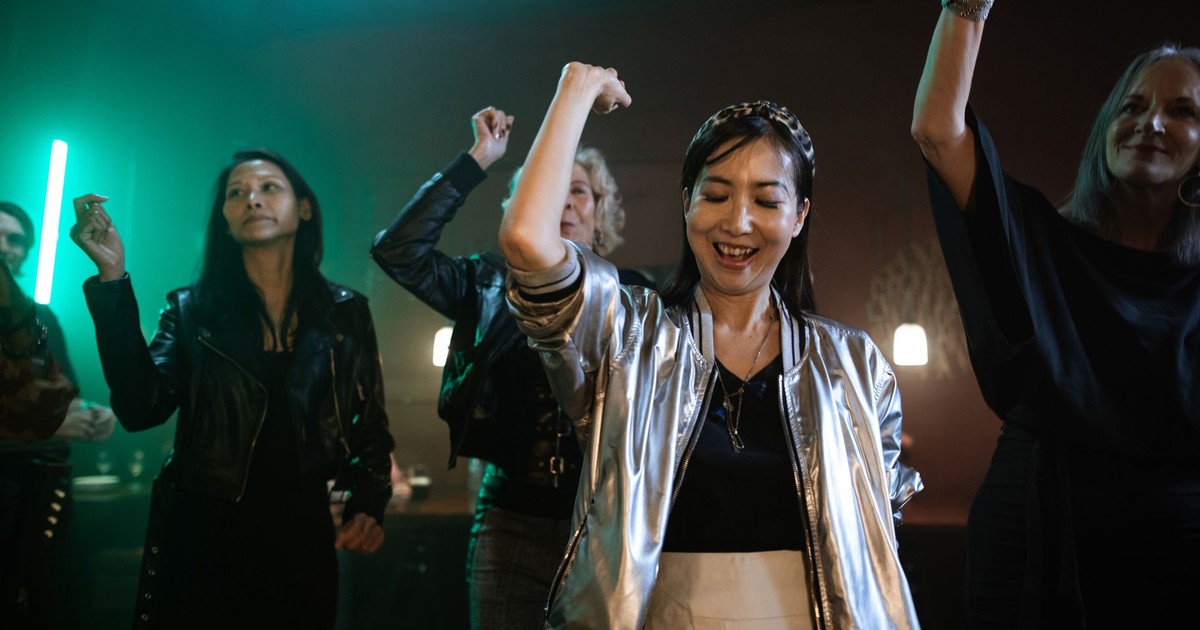
The social element of dancing is often treated as incidental to the exercise – the fun part, the reason you actually keep going back to class. But from a brain health perspective, it is a core ingredient. Social engagement independently protects against cognitive decline. Physical exercise independently protects against it. Music independently activates reward, memory, and emotional regulation circuits in the brain. Dancing, in its most common forms, delivers all three simultaneously. That convergence is what makes the effect so difficult for researchers to fully disaggregate – and so powerful in practice.
If you’re curious about how daily habits interact with long-term brain health and longevity, the habits behind a century-long life are worth reading alongside this research. The overlap is more significant than most people expect.
The evidence on group dancing versus solo dancing is still developing, but what is clear is that the presence of other people, the need to read and respond to them physically, and the shared emotional experience of moving together all add cognitive load – which, in this context, is a feature rather than a bug. More cognitive demand means more regions of the brain recruited. More regions recruited means a stronger neuroplastic stimulus. The social element isn’t the icing. It’s part of the cake.
You Don’t Have to Be Good at It
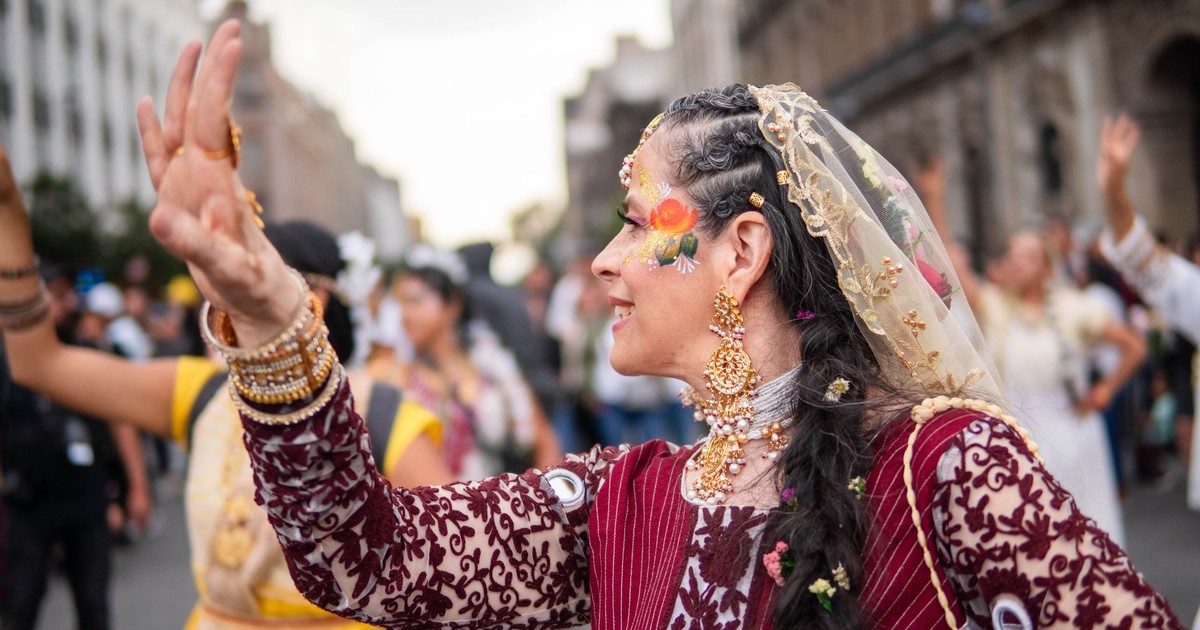
The research on dancing brain benefits covers a remarkable range of ages, fitness levels, and dance styles. The 2024 MS study used rock music and basic ballroom. The PLOS One study used line dancing and square dancing. The dementia trials used everything from contemporary dance to Latin American steps. The consistent variable across all of them is not skill level or style. It is the engagement – the fact that the person is responding to music, moving their body, and making real-time decisions about that movement.
The reason dancing may be so effective for the brain, compared with other exercises, is that it never fully becomes automatic. A practiced runner can enter a near-meditative state because the motion has been learned to the point of automaticity. A dancer who has been doing it for twenty years still has to respond to the music, adjust to the space, read a partner, or recall the next phrase of choreography. The brain cannot switch off the way it can during habituated movement. That ongoing demand is exactly what keeps the neural stimulus strong.
Put plainly: the bar for getting the brain benefits of dancing is not a performance. It is just actually doing it. Twice a week, in whatever form you can manage, at whatever skill level you currently occupy. The brain does not grade on style.
What the Research Can’t Quite Capture
The science on dancing and the brain is now extensive enough, and consistent enough across different populations and study types, that it no longer reads as a feel-good outlier finding. It reads as a robust, repeatedly replicated set of conclusions: dancing grows hippocampal volume, raises BDNF levels, protects against dementia, reduces depressive symptoms more effectively than other exercise forms, and improves coordination and cognitive function in people with and without neurological conditions. That is a long list for something people have been doing at weddings since before anyone knew what a neuron was.
What the research can’t fully capture is the reason most people actually dance, which has nothing to do with hippocampal volume and everything to do with how a particular song can reach into your chest and pull something out. The two things are not in conflict. The science arrived late to something the body already knew. The findings add evidence to what was never really in question – that dancing is worth doing, for reasons that were always enough on their own.
AI Disclaimer: This article was created with the assistance of AI tools and reviewed by a human editor.