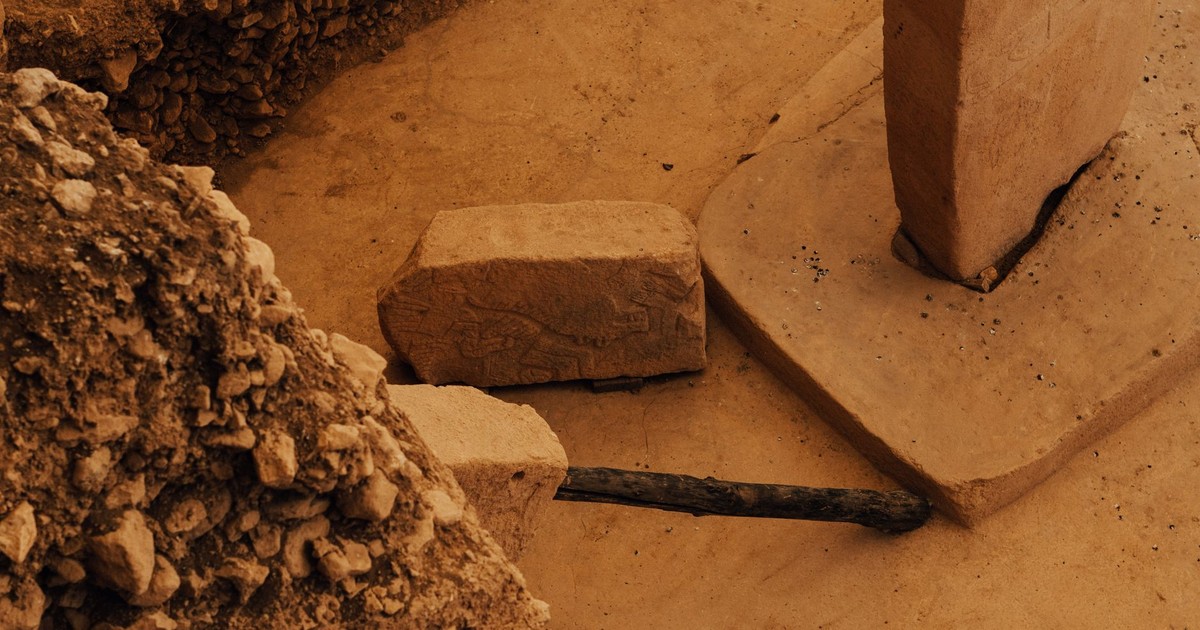

Deep beneath the sun-baked plains of southwestern Spain, sealed inside a megalithic tomb constructed from enormous slate slabs, a weapon lay undisturbed for more than five thousand years. It was not made of bronze. It was not made of flint. It was made of rock crystal – transparent, eerily beautiful, and fashioned with a level of precision that researchers have since called the most technically accomplished example of prehistoric crystal craftsmanship ever recovered from Iberia.
The 8.5-inch-long rock crystal dagger was found in one of eight megalithic tombs at Valencina de la Concepción, a site near Seville in Spain considered among the most significant for the study of Copper Age Iberia. It rested in a chamber alongside the remains of at least two dozen individuals, quantities of amber and ivory, and a suite of other crystal weapons.
Researchers from multiple Spanish institutions spent years excavating the site, then more years analyzing what they found. The resulting body of scholarship paints a picture of a hierarchical, ritually complex Copper Age society whose relationship with rare and costly materials went far beyond utility. Rock crystal was a statement.
The Tomb and the Site: Valencina de la Concepción
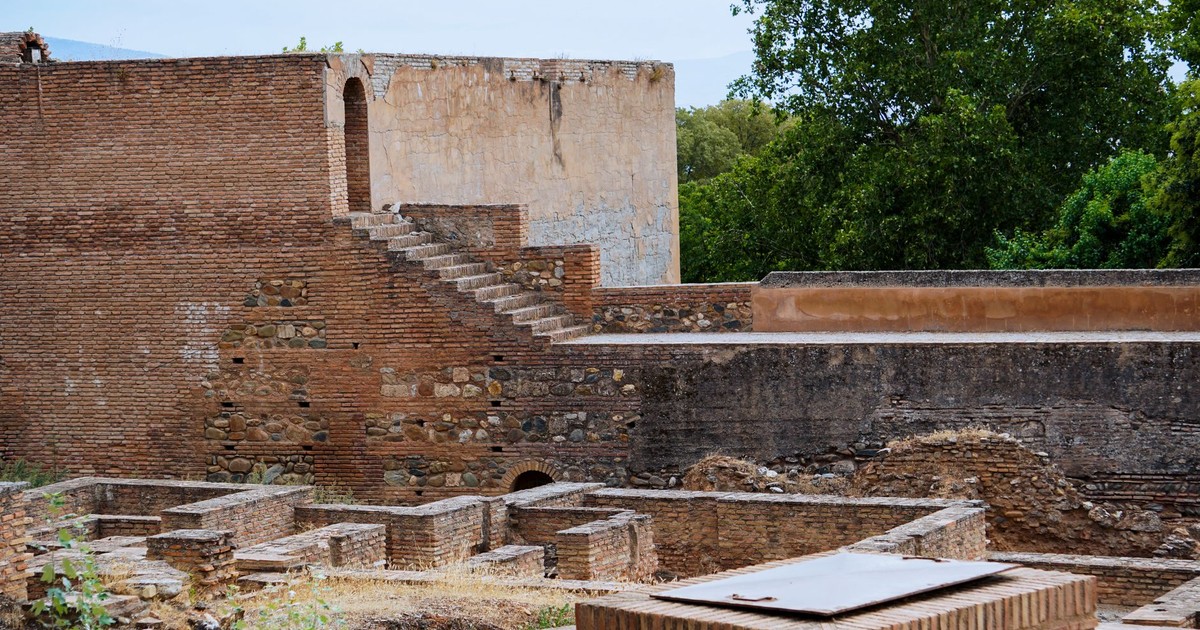
The Montelirio Tholos, the specific tomb in which the dagger was found, was excavated between 2007 and 2010. It is a megalithic construction featuring a 39-meter corridor leading to a main chamber nearly five meters in diameter, from which a narrow passage provides access to a secondary chamber.
The broader site of Valencina de la Concepción was a focal point for ritual and social display during the Chalcolithic period. Archaeological data indicates intensive monument construction and emergent social differentiation between approximately 3300 and 2500 BCE, with large megalithic tombs, special-purpose enclosures, and rich burial offerings that reflect an increasingly stratified society.
Valencina, located in the lower Guadalquivir River valley, is perhaps the largest Iberian settlement from the third millennium BCE. The site is not a single tomb but a sprawling settlement with at least eight distinct megalithic structures, each revealing different aspects of how this prehistoric community organized its social world, distributed wealth, and conducted its rituals for the dead.
The Structure of the Tholos
The enormous Montelirio tholos complex is made from large slate slabs and stretches over 143 feet. The internal layout is architecturally deliberate: a long entrance corridor feeds into a primary burial chamber, and a second, more restricted chamber branches off from it.
Archaeologists have treated the spatial distribution of objects and remains within the tholos as a meaningful text, reading the arrangement to reconstruct who was considered worthy of burial there, and which objects were deemed appropriate for which contexts.
Beneath the modern town of Valencina de la Concepción, the vaulted Montelirio tholos tomb guarded the bodies of people who lived there between approximately 2875 BCE and 2635 BCE.
The Crystal Dagger: Physical Description and Manufacture
The intricately carved crystal dagger has been dated to at least 3000 BCE, making it the “most technically sophisticated and esthetically impressive collection of rock crystal material culture ever found in Prehistoric Iberia,” according to the research team behind a 2016 study in Quaternary International who investigated the site.
The artifact is nearly 8.5 inches long and was found along with multiple rock crystal arrowheads, blades, and a core for making weapons. The dagger blade alone represents an extraordinary achievement in prehistoric lithic technology.
The Difficulty of Knapping Crystal
Tools made by knapping rock crystals (macro-crystalline quartz) were far less prevalent than flint tools, but people developed a technique for their manufacture that appeared during late prehistory in certain European regions, including the southwest Iberian Peninsula in the third millennium BCE.
Rock crystal does not behave like flint or chert when knapped. Flint fractures predictably along conchoidal lines that experienced toolmakers can read and anticipate. Crystal is more brittle, more prone to shattering, and significantly harder to control at the scale required to produce a blade nearly nine inches long.
The arrowheads have the distinctive long lateral appendices of flint arrowheads from the region, but archaeologists noted that even greater skill must have been required to produce these unique features when working with rock crystal.
Researchers noted in their paper published in Quaternary International that “the manufacture of the rock crystal dagger must have been based on an accumulation of transmitted empirical knowledge and skill taken from the production of flint dagger blades as well from know-how of rock-crystal smaller foliaceous bifacial objects.” The craftsperson who shaped this dagger trained under someone who understood both flint-working traditions and the specific challenges of crystal, and almost certainly passed that knowledge down through generations.
The Arrowheads
Pressure carving was used to create the arrowheads, a technique that involves removing thin scales along the stone’s edge. This process resembles that used for flint arrowheads, but researchers have pointed out that achieving comparable results in crystal required considerably greater skill. The arrowheads were found together in a cluster, which led the research team to interpret their arrangement as a probable ritual deposit rather than a practical weapons cache.
The Burial Context: Who Was in the Tomb?
Researchers found the remains of around 20 individuals alongside numerous grave goods, including shrouds and clothes made of tens of thousands of perforated beads decorated with amber, as well as flint arrowheads, fragments of gold blades, and ivory objects.
A multidisciplinary study cataloged the bones, garments, and adornments within the tomb. Researchers counted approximately 270,000 shell beads arranged on clothing. The labor involved in producing those garments alone is staggering. Each bead had to be individually perforated (a task performed without metal tools) and then sewn onto fabric or hide in deliberate patterns.
The Question of the Female Burials
At least several females and one male were found within the Montelirio tholos, and they are believed to have died as a result of poisoning. The remains of the women were arranged circularly in a chamber next to the bones of the male, who may have been a person of high status.
Previous analysis has found high levels of mercury in the bones of several females within the tomb, attributed to cinnabar exposure — the red mineral mercury sulfide used in prehistoric Iberia as a ritual pigment, applied as body paint or dust. Whether this mercury exposure contributed to their deaths, or whether the deaths represent sacrifice, a shared ceremony, or another cause, remains actively debated in the scholarly literature.
Led by Leonardo García Sanjuán of the University of Seville and anthropologist Timothy Earle of Northwestern University, a major study on Valencina reconstructed the complex societal dynamics of the site and argued that what makes Valencina particularly notable is the emergence of distinctive female leadership, materialized in sumptuary objects made from exotic raw materials and produced by skilled artisans, and in the association of women with esoteric, possibly sacred, knowledge.
The Dagger’s Own Chamber
The dagger was found in a different chamber “in association with an ivory hilt and sheath.” The dagger was not simply tossed among the other grave goods. It was given its own space, paired with an ivory handle and scabbard that would have required their own considerable investment of labor and imported material.
Ivory at this period in Iberia most likely came from North Africa, requiring long-distance exchange networks that few communities could access or afford to maintain.
The study published in Quaternary International concluded that these objects “probably represent funerary paraphernalia only accessible to the elite of this time-period,” and that “the association of the dagger blade to a handle made of ivory, also a non-local raw material that must have been of great value, strongly suggests the high-ranking status of the people making use of such objects.”
Raw Materials, Trade, and the Meaning of Rarity
One of the most illuminating aspects of crystal dagger archaeology at Valencina is what the raw materials reveal about long-distance exchange networks in the third millennium BCE.
Since there were no crystal mines in the immediate area, the materials for these items would have been sourced from far away. The nearest known sources of the high-quality macro-crystalline quartz used in the dagger were likely in the Betic Cordillera mountain range, significantly distant from the Guadalquivir River valley where the tomb was built.
Transporting raw crystal blocks to the settlement, then finding craftspeople capable of working them to this standard, required organization, resources, and social capital.
Material culture and isotope studies suggest long-range exchange of copper and finished goods across Iberia and beyond during this period. The Montelirio tholos is less a single burial site and more an archive of an entire trading and social system. Every exotic material in those chambers (crystal from the mountains, ivory from Africa, amber from the Baltic, gold) traces a web of relationships that stretched across a continent.
Although rock crystal tools were more difficult to fashion and the raw materials were not as abundant as sedimentary rock, prehistoric people likely cherished them due to their social value. Objects are precious partly because they are beautiful and partly because they are difficult to obtain. The crystal dagger was both. It announced, to anyone who understood the material, that its owner commanded resources and relationships most people in Copper Age Iberia simply did not have.
Ritual Function and Symbolic Power
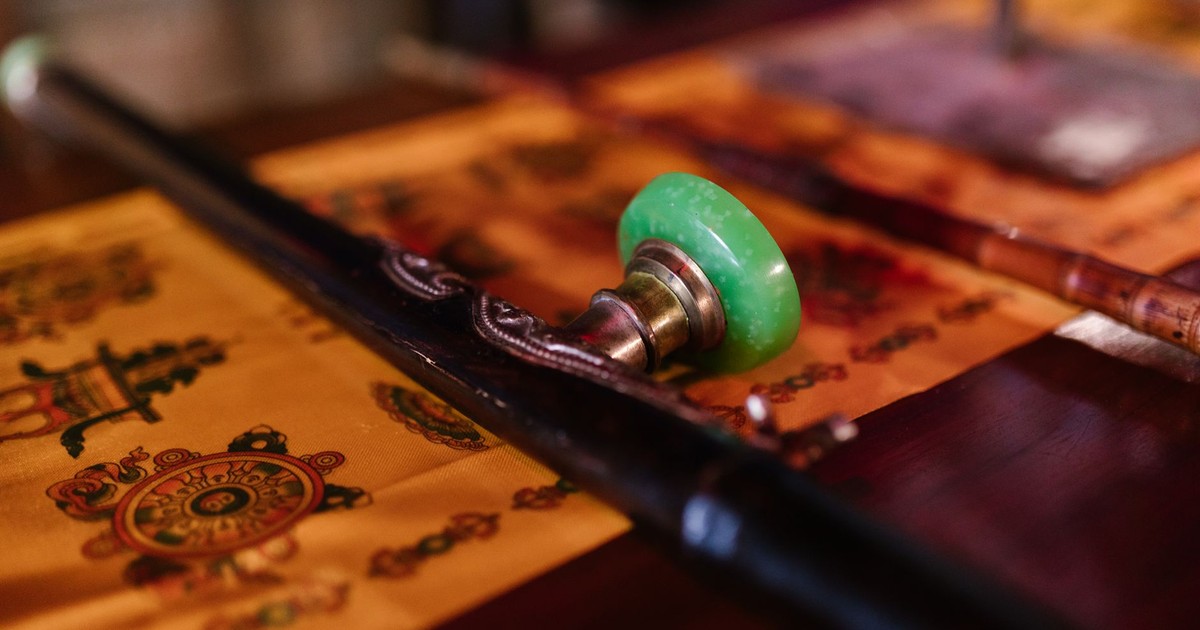
The dagger’s practical utility as a weapon was almost certainly secondary to its symbolic function, if it served as a weapon at all. An object of this fragility and craftsmanship, buried whole with an ivory handle in a sealed chamber rather than showing signs of use wear consistent with regular combat or hunting, points strongly toward a ceremonial role.
Researchers speculate that rock crystal during this period may have had a symbolic significance, and that such societies used it as a representation of vitality and magical power. Rock crystal’s visual properties (its transparency, its internal reflections, the way it refracts light) would have made it genuinely extraordinary to people who lived in a world without glass, mirrors, or optical instruments. The material itself seems to transcend the ordinary. It is stone, and yet it is not opaque like stone. It holds light inside it.
In some European regions, the exploitation of rock crystal may have been caused by the dearth of flint, although its use can also be explained by its physical properties and symbolic value. At Valencina, where flint was available, the choice of crystal was almost certainly symbolic rather than practical. Someone could have made a perfectly functional dagger from the flint already present at the site. They chose not to.
Limited evidence suggests that some elite mortuary spaces at the Valencina site were used repeatedly over generations, hinting at hereditary status or kin-based control of ritual landscapes. If access to the tholos and its remarkable grave goods was restricted to a hereditary elite, then the crystal dagger (along with everything else sealed inside that chamber) was not just the possession of one powerful individual. It was a statement about a lineage, a dynasty, a claim to a kind of authority that persisted beyond any single lifetime.
The Broader Significance for Copper Age Studies
The discovery fits into a growing body of evidence that Copper Age societies in southwestern Iberia were far more socially complex, economically integrated, and ritually sophisticated than older models of prehistoric development allowed.
The rock crystal artifacts from Valencina de la Concepción come from one of the largest third-millennium BCE sites in Western Europe. The site has now been studied by multidisciplinary teams combining radiocarbon dating, isotope analysis of human remains, archaeobotany, and materials science. Each discipline has added a dimension to the picture. The radiocarbon dates confirm the chronology. The isotope studies reveal that some individuals buried at Valencina were not local – they had grown up eating and drinking water from different regions entirely, suggesting migration, pilgrimage, or the movement of high-status individuals across considerable distances.
A 2025 study published in the Journal of Anthropological Archaeology by García Sanjuán and colleagues at the University of Seville, titled Valencina: A Copper Age Polity, represents the most comprehensive recent synthesis of the site’s evidence. It argues that Valencina functioned not merely as a settlement but as a polity (a politically organized entity with centralizing tendencies, long-distance connections, and an elite class capable of commanding specialized labor and exotic goods). The crystal weapons found in the Montelirio tholos are among the strongest material arguments for that interpretation.
The crystal dagger is evidence of governance, of inequality, of the way that societies in transition from egalitarian to stratified organization used rare and beautiful objects to legitimate and display emerging power. The same dynamics appear in early states across the ancient world – in Egypt, in Mesopotamia, in the Yellow River valley of China. That they appear in Copper Age Iberia, in a society that left no writing, no monumental art, and no narrative record of itself, makes the dagger all the more extraordinary as evidence.
What the Dagger Is Still Telling Us
The crystal dagger from Montelirio tholos is, at its core, a problem of interpretation. The physical facts are well established: an 8.5-inch blade of macro-crystalline quartz, manufactured from raw material transported from distant sources, crafted using a specialized technique that required years of accumulated skill, sealed in a secondary chamber alongside an ivory handle and sheath, within one of the largest and most richly furnished prehistoric burial monuments in western Europe. Those facts do not require interpretation. What they mean does.
The emerging consensus across the scholarship is that this object (and the suite of crystal arrowheads found alongside it) represents a category of artifact that was never primarily practical. It was elite, it was ritual, and it was almost certainly tied to a system of belief in which the material properties of rock crystal carried significance beyond aesthetics.
A society does not invest this level of labor and resource in objects intended for everyday use. It invests them in objects intended to communicate something – about power, about status, about the nature of the person who commanded them, and perhaps about the metaphysical properties those objects were believed to carry into the afterlife.
What makes the Montelirio tholos genuinely important to the broader study of prehistory is the picture it draws of a world where complexity, hierarchy, long-distance trade, and sophisticated ritual practice were already fully operational five thousand years ago in a region that rarely commands the same attention as Egypt or Mesopotamia. The people who built this tomb, who sourced its crystal and ivory from distant places, who dressed their dead in garments of hundreds of thousands of individual beads, were not primitive. They were organized, connected, and deeply invested in the meaning of things.
The dagger is still asking us to figure out exactly what that meaning was. Some questions from five thousand years ago turn out to have no clean answer – just more evidence, more interpretation, and the persistent feeling that the people who made this object understood something about the world that we are only now learning to ask about.
Disclaimer: This information is not intended to be a substitute for professional medical advice, diagnosis, or treatment and is for information only. Always seek the advice of your physician or another qualified health provider with any questions about your medical condition and/or current medication. Do not disregard professional medical advice or delay seeking advice or treatment because of something you have read here.
AI Disclaimer: This article was created with the assistance of AI tools and reviewed by a human editor.