
There is a specific kind of discomfort that doesn’t announce itself. You’re not afraid, exactly. You’re not even sure you’re unhappy. You just notice, somewhere around the third month of dating someone, that you’ve started rehearsing what you’re going to say before you say it. You screen your own texts. You consider which version of an evening to tell him about. You’ve gotten really good at reading the room that used to just be his face.
That calibration, the way you slowly start managing yourself to manage him, is usually the first sign that something has crossed a line. Not into movie-villain territory. Into the territory that’s much harder to name because it looks, from the outside, like a guy who really cares. He texts a lot because he worries. He gets upset because he loves you. He needs to know where you are because the last girl broke his heart. The logic always sounds so reasonable when you’re standing inside it.
1. He Moves Extraordinarily Fast, Then Gets Upset When You Pump the Brakes

These patterns rarely arrive as a single dramatic event. A 2025 CUNY research thesis found that repeated micro-harms, strung together across months or years, can lead to significant psychological damage, with the real danger lying not in a single act but in the slow erosion of the victim’s sense of reality, autonomy, and emotional stability. By the time the behavior is obvious, it often feels normal, because it has been normal, for a while now, in this particular relationship. The fifteen signs below are the ones worth knowing before you get there.
The beginning of a real relationship has a certain rhythm to it – curiosity, then closeness, then a deepening that happens because both people are choosing it. Love bombing doesn’t have that rhythm. Love bombing is when someone showers you with extreme affection, attention, praise, or gifts very early in a relationship. It might look like over-the-top declarations or pressure to move in together or become exclusive after just a few weeks. They might also get upset if you try to slow things down, perhaps suggesting it’s because you “don’t care as much as they do.” Beneath the surface, it builds immense emotional dependency and loyalty before you’ve even had time to properly assess them.
The reason this registers as creepy boyfriend behavior, even when it feels flattering, is the speed plus the reaction. Any person who genuinely cares about you will want you to feel comfortable. Pushing hard for commitment in the first few weeks, and then framing your hesitation as a character flaw, is not romantic urgency. It’s pressure wearing a bow.
2. He Needs to Know Where You Are at All Times
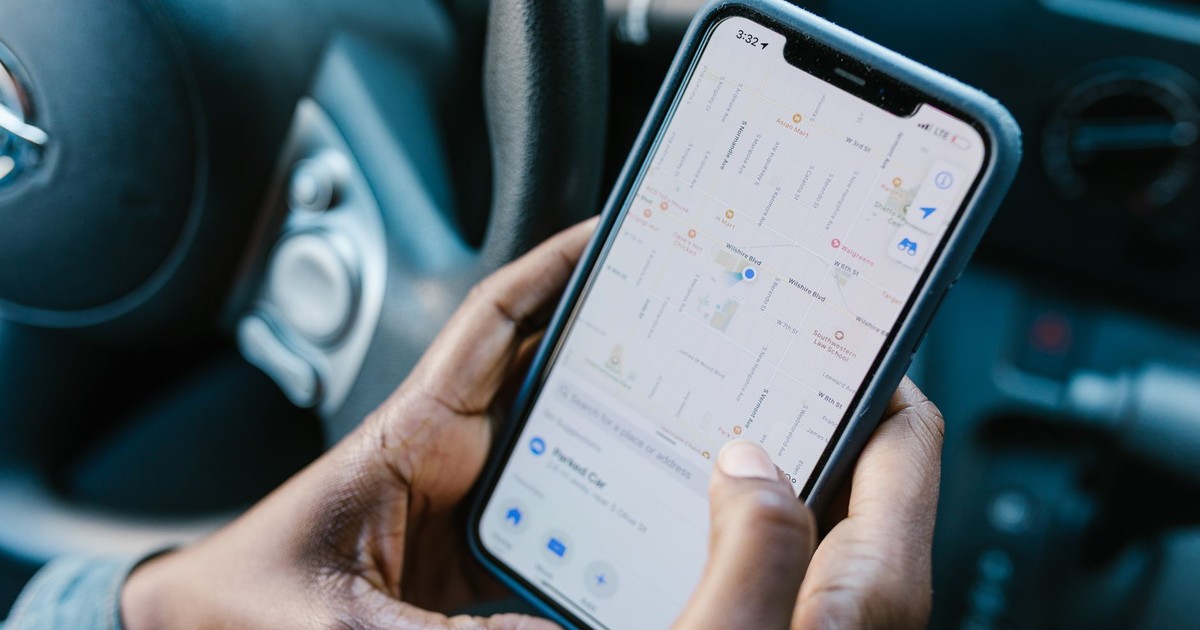
A text when you land safely is thoughtful. A text every twenty minutes asking why you haven’t responded to the last text is something else. If you leave the house without him, he starts texting or calling to check on where you are and who you’re with. What starts as “just checking in” becomes a structure you build your day around, because it’s easier than the conversation that follows if you don’t – and that shift happens quietly, one unanswered text at a time.
Monitoring your location, whether through tracking apps, constant check-in demands, or needing to know your plans in granular detail, is one of the clearest behavioral markers of a controlling partner. These behaviors can extend into monitoring your movements, isolating you from people who care about you, undermining your confidence, and creating an environment where basic decisions about your own life require his sign-off. The GPS share that “makes him feel better” is a boundary, not a comfort.
3. He Gets Angry When You Spend Time With Other People

One of the most reliable signs of creepy boyfriend behavior is a man who is fine with you, and only you. Your friends confuse him. Your family events are met with a particular kind of sulking. The morning after a night out with the girls, there’s an atmosphere in the apartment that you end up apologizing for, even though you can’t quite explain why.
If you get the sense that your partner is trying to steer you away from your loved ones, he’s not doing that because he loves you. He’s doing that to isolate and control you. The isolation often happens so gradually that the friends go first, then the family visits get shorter, and then one day you realize your whole social world has quietly contracted to include mostly just him. You’re shamed for spending time with family and friends. Sometimes this can appear as though your partner just loves you and wants to spend lots of time with you. But it’s a sign of controlling behavior if your partner isn’t supportive of seeing the people you love.
4. He Makes You Feel Responsible for His Emotional State

Emotional closeness in a healthy relationship looks like this: you know each other’s moods, you care when the other person is struggling, you check in. Then there’s what this is – a situation where his emotional state has become your daily responsibility, and any deviation from managing it well is treated as a failure on your part.
A controlling partner is likely to use manipulation tactics that may affect your self-perception and invalidate how you feel. The most insidious form of this is when he is chronically upset, and the upsetting thing is always, in some way, you. Your tone. Your timing. The way you brought something up. You learn to walk carefully, modulating everything, which is exhausting in a way that’s hard to explain to people on the outside.
5. He Denies Saying Things You Know He Said
Gaslighting is a word that gets used broadly now, sometimes loosely, but the core of it is specific and genuinely destabilizing. A 2023 qualitative study published in Personal Relationships defined gaslighting as an understudied form of abuse in which a sane and rational survivor is convinced of their own epistemic incompetence on false pretenses by a perpetrator. In practice, it sounds like: “I never said that.” “You’re remembering it wrong.” “You’re too sensitive, that’s not what happened.”
Gaslighting starts with subtle twisting of the facts and progresses until survivors are caught in a cycle of several interacting forms of abuse. The psychological consequences include depression, loss of self-esteem, and feelings of being “crazy.” If you’ve started writing things down so you have proof, or if you regularly second-guess your own memory in ways you never did before this relationship, that is important information.
6. He Goes Through Your Phone, Bag, or Personal Belongings

Privacy isn’t evidence of secrecy. A person in a healthy relationship does not need unrestricted access to their partner’s phone, email, or private messages as a condition of trust. If he picks up your phone without asking, reads over your shoulder, or goes through your bag when you’re not looking, the discomfort you feel about that is calibrated correctly.
In severe cases, which can include a pattern of behavior called coercive control, you might face threats, intimidation, or abuse. Coercive control is a pattern, not a single incident, and surveillance of this kind is one of its classic early expressions. The justification is usually “I just needed to know” or “I wasn’t snooping, I was worried.” Neither of those explains why he didn’t ask.
7. He Criticizes How You Look, What You Wear, or Who Your Friends Are

He has opinions. That’s fine – everyone does. But there’s a meaningful difference between a partner who has preferences and a partner who has a running commentary on whether you’re meeting them. Controlling people often insist everyone do things their way, even when it comes to small issues that are a matter of personal choice. Your partner might insist you change clothes if you’re wearing something they don’t like.
When the commentary extends to your friends (“she’s kind of a bad influence”), your career choices (“do you really need that job?”), or the way you carry yourself in public, the pattern becomes clearer. He is not trying to help you be your best self. He is trying to narrow the version of yourself that he has to contend with.
8. He Has a Story for Every Ex That Makes Them Sound Unhinged

Everyone has complicated relationship history. Some exes genuinely were difficult people. But a man who describes every single one of his previous partners as crazy, obsessive, manipulative, or unstable – the common variable in all of those relationships was him, and that is a data point.
A controlling person may not fully recognize their own controlling or manipulative behavior. Many people who engage in controlling behavior genuinely experience themselves as the wronged party. The “crazy ex” narrative is often, on closer inspection, a description of someone who reacted badly to being controlled. The reactions got edited into the story. The cause didn’t make the cut.
9. He Uses Your Vulnerabilities Against You

Early in a relationship, you shared things. Things about your family, your insecurities, the ways you’ve been hurt before. That’s what intimacy requires. But a partner who later deploys those things in arguments – who knows exactly which comparison will sting, which fear to poke at, which piece of your history to throw at you when he needs to win – is doing something that leaves a mark.
Research published in a 2024 study in Journal of Youth and Adolescence found that insecure attachment anxiety significantly predicted relational aggression in romantic relationships, including manipulative and controlling behaviors that manifest as coercion, guilt-tripping, and emotional manipulation. The things you shared in trust were not catalogued. But they are used with a precision that is hard to explain as accidental.
10. He’s Intensely Jealous, Then Calls It Love

Jealousy, in small amounts, is a human feeling. What it is not is a foundation for a relationship, a justification for controlling behavior, or something you should be flattered by. Becoming excessively aggressive, guilt-tripping, and being possessive are red flags. While it’s important to be understanding and patient, you should also recognize when the jealousy becomes unreasonable and detrimental to your well-being.
He gets upset when you talk to your coworker, which he says means he really cares. He checks your phone because he loves you so much he can’t stand the idea of losing you. The logic is structurally identical to any other manipulation: an action that causes harm, dressed up in the language of devotion.
11. He Apologizes Spectacularly, Then Does It Again

The apology after an incident of controlling or frightening behavior is often stunning. He is genuinely devastated. He explains himself, he promises, he may cry. For a moment, you feel closer to him than you have in weeks. That closeness is real. A 2023 qualitative study in Personal Relationships found that the four most common behavioral patterns in relationships where gaslighting is present are love-bombing, isolating the survivor, perpetrator unpredictability, and cold shouldering.
The warmth after the incident is what makes the incident survivable – and it is also what makes it harder to leave, because you are always just past the worst part and into the better part, until you aren’t anymore. That cycle is a structure, not a sign of effort.
12. He Undermines Your Confidence, Then Acts Confused When You’re Hurt

“I’m just being honest.” “You’re so sensitive.” “I was only joking, why do you always take things so seriously?” The comment itself is the problem, but the follow-up is where the damage accumulates. Every time you react to something real and are told your reaction is the issue, you lose a little more trust in your own read on a situation.
A controlling partner may avoid accountability by focusing the blame on you. This plays out across hundreds of small interactions across months and years, until the habit of doubting yourself is so ingrained that it feels like a personality trait rather than something that was done to you. The original comment about your appearance, your intelligence, or your competence was the first thing. The way he handled your hurt was the second thing, and it was worse.
13. He Has Different Rules for Himself Than He Has for You

He needs to know where you are at all times, but his own plans are communicated in generalities. He goes through your phone but would be furious if you picked up his. He makes friends wherever he goes but eyes your friendships with suspicion. The asymmetry is consistent – there are expectations for you, and there are different expectations for him, and raising that discrepancy tends to generate an argument about why you’re being unfair.
According to WebMD, one of the partners essentially dominates the other in a way that causes intimidation, insecurity, or guilt, through physical, emotional, sexual, financial, spiritual, or psychological means. The double standard isn’t a character quirk or an oversight. It’s the operating principle.
14. He Makes You Feel Like You’re the Only One Who Would Put Up With Him

This one is quieter than the others and arguably more effective. It sounds like: “I know I’m a lot.” “Most people can’t handle me.” “You’re the only person who really gets me.” Sometimes it sounds like a compliment, and sometimes it sounds like a threat. Sometimes it’s both in the same sentence.
He is controlling because he is insecure. It’s not an either-or situation – controlling behavior comes from insecurity. A controlling boyfriend may act out of fear, using manipulation to control the relationship. The message underneath “you’re the only one who understands me” is sometimes: don’t leave, because who will you be without this, and don’t leave, because you won’t find someone else who’d let you in like this. It positions leaving as a kind of cruelty, which is a sophisticated way of making the door feel very heavy.
15. Your Gut Has Been Telling You Something for Months

This one doesn’t have a tidy psychological label attached to it, but it belongs on the list. You have been feeling something. Not all the time, not dramatically, but it’s there – a low-level sense that something is off, that you’ve been adjusting to something you shouldn’t have to adjust to, that the person your friends see you becoming is not quite the person you were before this relationship.
Controlling behaviors may be subtle or crop up gradually, which may impact your ability to identify how they integrate into your relationship. Although the control may be obvious when your partner explicitly asks you to behave in certain ways, some manipulation tactics and subtler controlling behaviors might lead you to feel confused and overwhelmed. The confusion itself is useful information. Healthy relationships are many things, but confusing is not typically one of them. A partner who leaves you regularly unsure of your own reality, your own memory, or your own worth is not a difficult person you need to be patient with. He is causing harm. The archive of small moments you’ve been quietly keeping is not paranoia. It’s evidence.
What You’re Actually Dealing With

None of these fifteen signs require a dramatic incident to be real. Most of them will have been explained away a hundred times – by him, by you, by the ordinary human instinct to see the best in someone you’ve chosen. Controlling may often seem like “caring,” but how you feel about it is key. True caring behavior supports your autonomy. A controlling person disguises control as “care,” making decisions for you or intruding on your time with others.
The distinction between care and control isn’t always visible from the inside, especially early, especially when the person is also capable of real warmth. What matters is the pattern, not any single moment. One difficult conversation is a relationship. Fifteen of these things, running alongside each other in the same relationship, is something else, and you are allowed to call it what it is.
Some of these patterns go back further than the relationship does – in him, in the dynamics you’ve both grown up inside. A controlling partner isn’t necessarily a person who sat down and decided to cause harm; he is often a person who learned that control was the only way to keep anything he cared about. That doesn’t make it your job to fix, and it doesn’t make the harm less real. Naming what you’re living with isn’t the same as knowing what to do about it. But it’s usually the only place that anything real can start.
AI Disclaimer: This article was created with the assistance of AI tools and reviewed by a human editor.