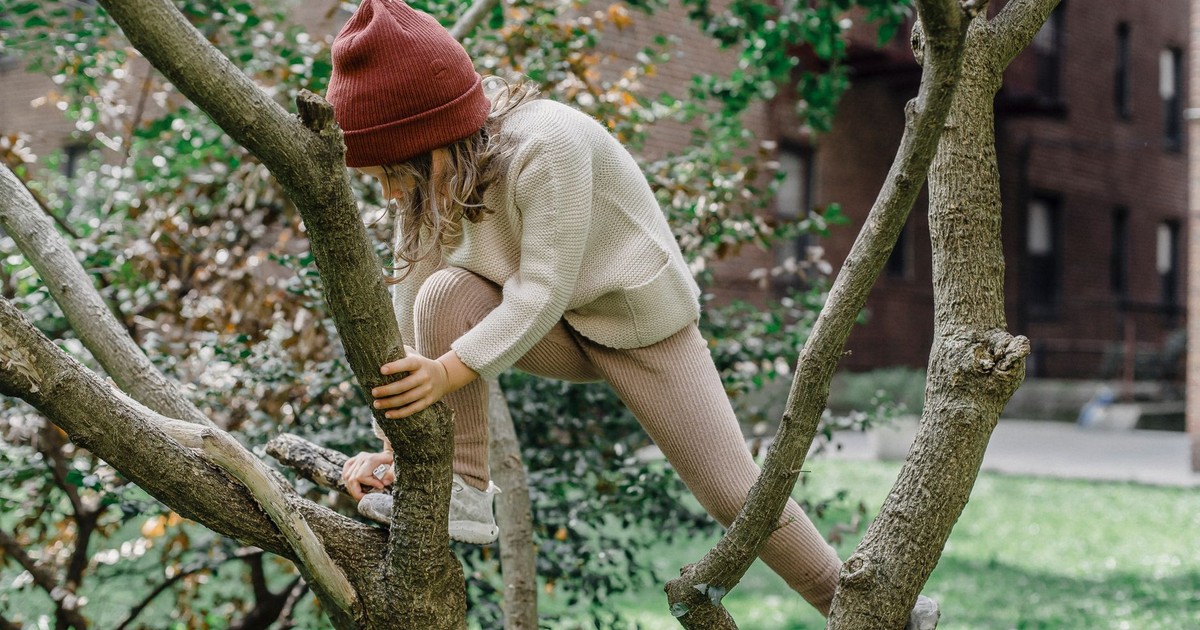

Ask almost anyone to name the one object or feature from their childhood home that stuck with them longest, and you’d expect a bedroom ceiling fan, a certain quilt, the kitchen table where everything happened. Plates of toast, homework, arguments, and card games, all at the same surface, all blurring together into something you can’t quite name but can still feel in your chest when you think about it. When a social media platform posed this question to its followers and received thousands of responses, the answer that came back most often wasn’t an object at all. It was a tree.
Not the house. Not a piece of furniture. Not the smell of dinner from a particular pot. A tree. Rooted in the yard, probably still standing, probably owned by strangers now. The kind of thing you’d drive past and slow down for without knowing why.
A tree doesn’t move when you do. It doesn’t get thrown out in a renovation or donated to a thrift store or lost in a divorce settlement. It stays. For many of us, the trees we grew up around are among the only things from that period that remained constant, watching the years pass from the same coordinates. The house gets sold. The dog dies. The people scatter. The tree just keeps going.
The Thing About Trees and Memory

Memory attaches itself to the things that didn’t change. Childhood home trees were permanent in a childhood that was, by definition, temporary. The oak in the backyard was there when you were seven and afraid of your first day of school, and it was there at seventeen when you were afraid of everything else. It didn’t ask anything of you. It just occupied space in a way that felt, across all those years, like loyalty.
Research published in 2025 found that nostalgia is associated with increases in self-esteem, meaning in life, authenticity, and social connectedness. When you think about the tree you used to climb, or the one that cast shade over the whole front yard on a summer afternoon, you’re not just accessing a nice visual. You’re pulling on a thread connected to a whole version of yourself that felt, at least in memory, safe.
A participatory citizen science project based in Glasgow called Every Tree Tells a Story found that people experience trees not only through physical proximity but through memory, family history, and emotional resonance. Urban wellbeing is shaped not only by local ecology but by remembered and imagined landscapes. People submitted postcards describing their connections to specific trees in their city. What emerged wasn’t utility. It wasn’t descriptions of shade or oxygen or property value. It was grief over removed trees, stories about climbing branches with siblings, descriptions of how a particular tree looked from a bedroom window at a specific time of year. Researchers found that strong emotional attachments to specific trees, especially mature ones, can trigger genuine distress when they’re gone.
Why Childhood Is When It Gets Wired In
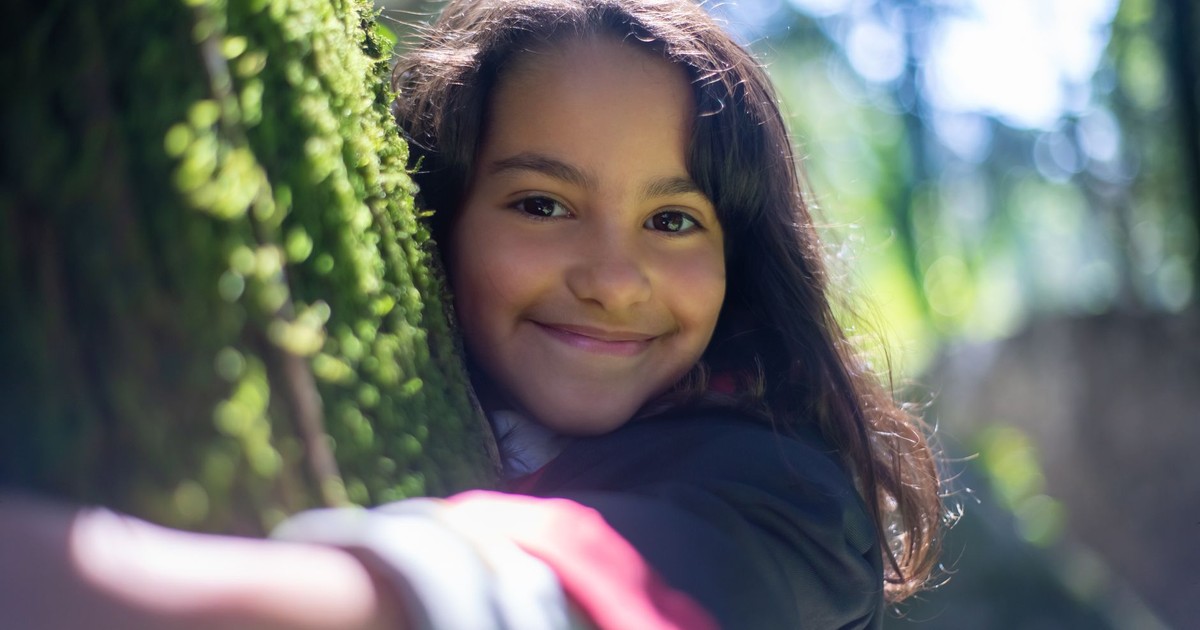
The relationship between children and trees runs deeper than nostalgia. The developmental stage of childhood makes trees particularly formative, in ways that carry forward for decades.
Researchers found that young children between the ages of two and five who live in areas with more green spaces had fewer symptoms of anxiety and depression. This wasn’t about supervised nature education or structured outdoor time. It was about proximity. Just living near green space, having trees as part of the background of ordinary life, appeared to buffer children against some of the earliest forms of emotional distress.
The effect doesn’t stop at childhood. One of the most striking pieces of research in this area tracked over 900,000 people across Denmark. A Children & Nature Network summary of the large Danish study linked individual data on mental health outcomes with levels of childhood green space and found that children living with higher levels of green space had lower risks of developing psychiatric disorders in adolescence or adulthood. Children living at the lowest levels of green space had a 15 to 55 percent higher risk of developing psychiatric disorders than those living at the highest levels.
Individuals who frequently engaged with natural environments during childhood tend to develop stronger connections to nature as they grow up, and those connections in turn enable more positive emotions as adults. The tree in the yard, the one you barely noticed because it was simply always there, was doing more than providing shade. It was building something.
What Kids Actually Did With Trees
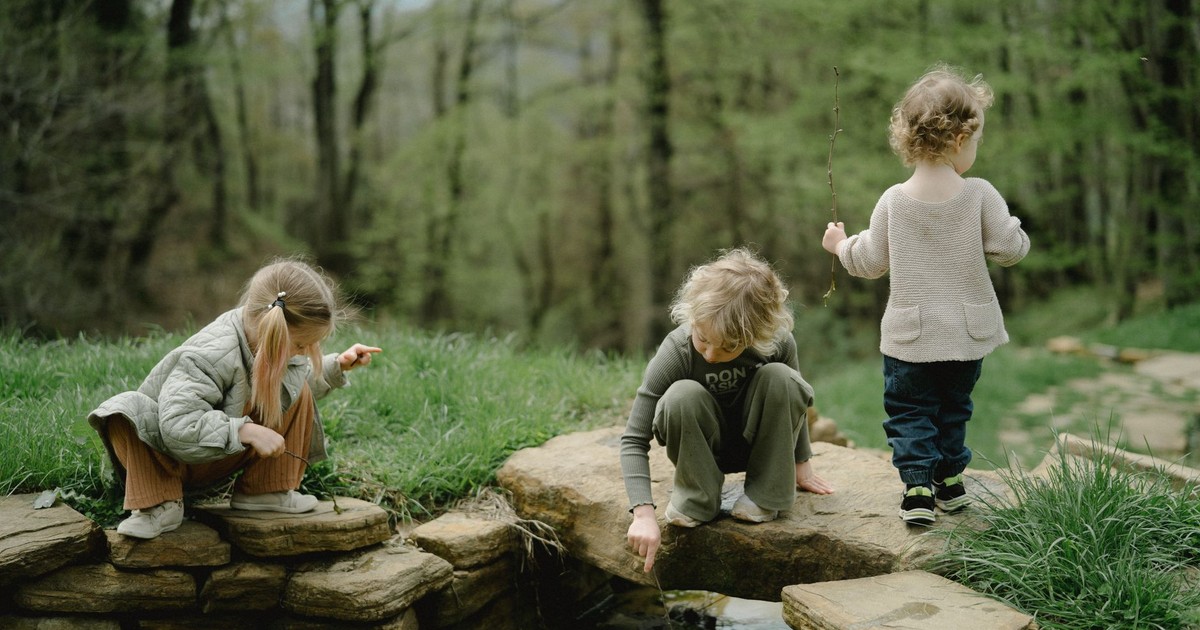
Ask someone to describe their specific memory, and what emerges is usually a place within a place. Not “the backyard” but the particular branch at the particular height that served as the first step, the gap between the roots where you used to hide things, the spot where the bark peeled and revealed something that looked, at age eight, vaguely like a face.
Trees created the conditions for what researchers call risky play, the kind where children encounter manageable physical challenges and learn by getting things slightly wrong. A 2018 study published in the International Journal of Early Childhood Environmental Education found that children afforded the opportunity to engage in risky play such as tree climbing have the potential to grow socially, emotionally, physically, cognitively, and creatively, and to develop increased resiliency. The tree was essentially an outdoor classroom with no syllabus and no grade. You figured out where your body could and couldn’t go. You figured out how to ask a friend to come up. You figured out what to do when they were afraid and you weren’t, or when you were afraid and pretending not to be.
Beyond the climbing, trees functioned as permission structures. They gave children a reason to be outside and unsupervised without anyone having to explain why. A kid headed toward a tree didn’t need further justification. In a study of a rural Vermont town conducted in the 1970s, researcher Roger Hart found that children loved to make tree houses and engage in make-believe play under the branches, activities that foster creativity and imagination. The tree was the setting that made the story possible. Pirates needed a mast. Detectives needed a lookout post. A child with something to work out needed a place to sit above the ordinary level of the ground and think.
The Long Tail of Growing Up Near Green Things
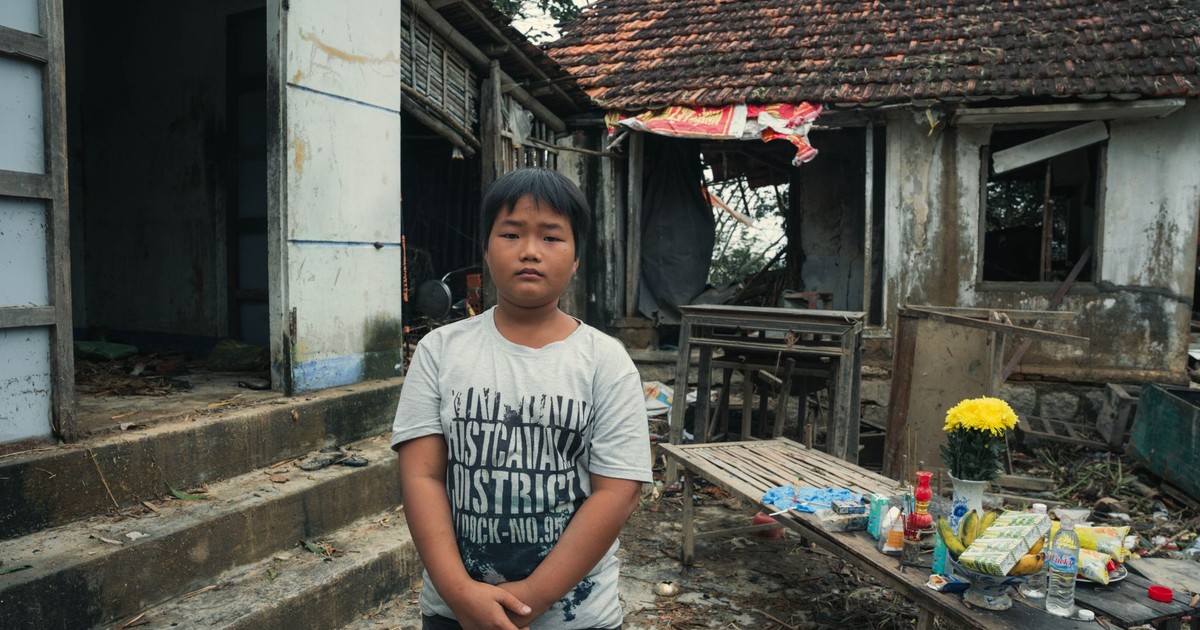
The effects don’t age out. One study found that childhood exposure to natural environments positively predicted the use of such environments for emotional comfort in adulthood. The person who finds themselves pulling over to sit near a stand of trees when they’re overwhelmed, or who always books the cabin with the forest view, or who can’t explain why a particular park feels like breathing isn’t experiencing coincidence. That’s the long tail of something that started in childhood.
A 2025 study published in the Journal of Consumer Psychology found consistent evidence that long-term exposure to the natural environment has psychological benefits, and that living in neighborhoods with more green space and trees is advantageous for physical and mental health. The language in research like this tends toward the careful and clinical, which occasionally obscures how significant the finding actually is. What it means, in practical terms, is that the tree you grew up with did something to your nervous system that the absence of trees does not. The baseline it established is real.
A 2026 study using a daily diary design found that childhood nature experiences significantly predicted wellbeing in young adults. Not just general positivity but measurable, day-to-day wellbeing tracked across time. The nature experiences didn’t need to be dramatic or unusual. They just needed to have happened, consistently, during the years when the brain was building its model of what safety felt like.
The Grief in the Whole Thing

A lot of those trees are gone.
The house gets sold to someone who wants more light in the yard. A storm takes a limb and the homeowner takes the rest. A developer buys the lot. A disease moves through a whole species of tree across a region. Ash dieback has already changed what millions of yards look like across the UK and parts of the United States, and there’s no clean end in sight. The tree in your memory may be a tree that no longer stands.
Researchers behind the Every Tree Tells a Story project note that treescapes connect people to nature, to families and friends, to childhood and joyous memories, to the countryside, and to themselves. When a tree goes, all of those connections are interrupted at once. It’s not dramatic in the way that other losses are dramatic. You don’t get a funeral. Nobody hands you a form to fill out for the grief you feel about a tree. You just drive past the yard and something feels wrong, and you keep driving.
What the Trees Were Really Holding
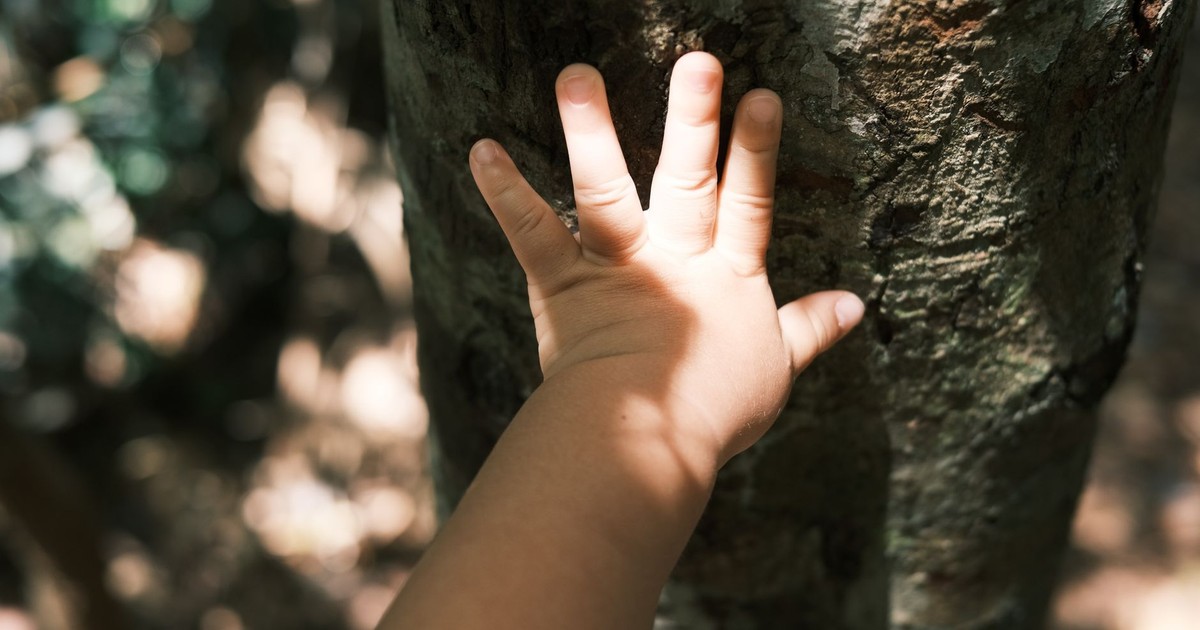
The people who answered that social media prompt about their childhood homes weren’t being whimsical. They were being accurate. When someone says the tree in the backyard was their favorite thing, they mean: that tree was where I was most myself, or where I felt most free, or where I went when I needed to think and didn’t have the words yet. They mean it was a constant in a childhood full of variables. They mean it gave them something no piece of furniture or household object could have provided: scale, presence, age, the sense of being part of something much larger and much older than their own family’s particular story.
Children who grow up around trees learn, without ever being taught, that the world contains things that don’t need them, don’t watch them, don’t want anything from them, and will outlast them. For a lot of kids, the tree in the yard was the first thing they loved that didn’t love them back, and somehow that was its own form of comfort.
Ask someone who grew up with a tree and they’ll tell you exactly where it was, what it looked like in which season, and what they did in its branches. The brain holds onto something it recognized, even then, as important.
What This Means for the Kids Growing Up Now

Children who grow up with access to trees and green space, even casual, incidental access, not structured outdoor programming, carry measurable mental health advantages into adulthood. Not because trees are magic, but because the natural environment does something consistent and documentable to developing nervous systems that built environments don’t replicate.
If there’s a yard, there’s an argument for planting something that will grow large and stay for a long time. Not a shrub, not a flower bed, but a tree. Something with branches eventually. Something that, when a child is older, will hold the same coordinates it held when they were small and the world was enormous. Something that might, decades from now, be the answer someone gives when they’re asked what they loved most about the place they grew up.
That’s a long investment to make. Trees don’t give you much back in the first few years. But then again, neither do children, and we plant those too.
Disclaimer: This information is not intended to be a substitute for professional medical advice, diagnosis, or treatment and is for information only. Always seek the advice of your physician or another qualified health provider with any questions about your medical condition and/or current medication. Do not disregard professional medical advice or delay seeking advice or treatment because of something you have read here.
AI Disclaimer: This article was created with the assistance of AI tools and reviewed by a human editor.