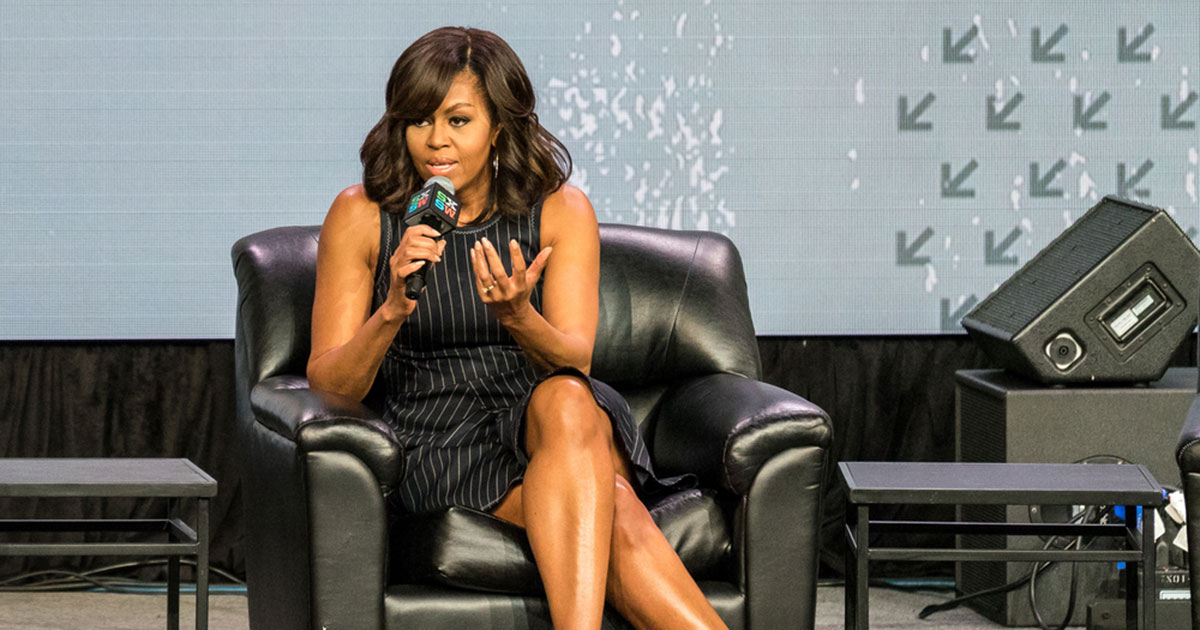

The number Michelle Obama carried for years before she ever spoke about it publicly wasn’t political. It was the pregnancy she lost, the fertility treatments she handled alone in the morning before her husband left for work. The shots she gave herself, hoping.
WhenBecomingwas published in November 2018, the revelation traveled fast. In her memoir, the former first lady shared intimate details about the troubles she and Barack initially faced when she tried to get pregnant. This includes a miscarriage, before conceiving Malia and Sasha through in vitro fertilization. For many women reading those pages, it wasn’t the political passages that stopped them. It was that sentence. It was the recognition of something they had moved through quietly themselves.
Fertility struggles, miscarriage, and IVF touch millions of families. They have long been treated as private, to the point of being invisible. When someone in the public eye names it plainly, the silence around it breaks open, even a little.
Michelle Obama?
“I felt lost and alone and I felt like I failed,” Obama said. “because I didn’t know how common miscarriages were because we don’t talk about it.” Not the grief itself, though the grief was real. The isolation that came from not knowing the grief was shared. From carrying something that felt like private failure while the same thing was happening to women on every street in every city, unspoken.
In her memoir, Obama wrote openly about the troubles she and Barack faced early in their attempts to get pregnant. She describes being alone to give herself shots to speed up the IVF process. The detail is specific, ordinary, and completely unglamorous. It cuts through any temptation to treat her story as exceptional. The former first lady of the United States, sitting alone with a needle and a hope. That image is the same image playing out in bathrooms and bedrooms across the country every morning.
She was around 34 when the urgency of her biological timeline became undeniable. She wrote that “the biological clock is real. That is because egg production is limited”, a statement so plain it almost reads as clinical. Except that it was written by a woman who had just lost a pregnancy and was weighing what came next. The decision to pursue IVF followed her miscarriage, with no certainty about what the outcome would be.
“I think it’s the worst thing that we do to each other as women: not share the truth about our bodies and how they work and how they don’t work,” she toldRobin RobertsinaGood Morning Americainterviewahead ofBecoming‘s release. The silence itself as the harm, that separated her disclosure from a celebrity confession. She wasn’t unburdening herself. She was making an argument.
Read More:After 16 Years; 18 Miscarriages, 48-Year-Old Mom Welcomed her ‘Miracle Baby’.
Abby Phillip?
CNN anchor Abby Phillip announced in May 2026 that she was expecting her second child with husband Marcus Richardson, sharing the news inan exclusive interview withPeople. She also opened up about the couple’s fertility treatment, revealing that they conceived through IVF. For anyone who had followed Phillip’s career, the long hours, the high-stakes political coverage. The particular exhaustion of being a woman doing demanding work while also being a mother. The announcement felt both surprising and true to who she is. She is direct and honest, and unwilling to perform a version of her life that leaves out the complicated parts.
“Our journey to a second child looked a little different from our first,” Phillip toldPeople. “Like so many families, we were able to conceive with the help of IVF.” That phrase. “like so many families”, is the same move Obama made eight years earlier. The turn outward, away from the singular story and toward the shared one.
Phillip described the IVF process as “challenging,” both “emotionally and physically,” but said her family “arrived at a beautiful place.” She and Marcus welcomed their second child. A baby boy named Maxwell Elias Richardson, on October 27, 2026. In her Instagram announcement, she addressed the families still in the middle of the process directly, “those of you who are still waiting, my heart is with you.”
Her announcement arrived at a moment when the conversation around IVF has grown louder, more politically charged. And more urgent for many American families. According tothe CDC’s ART Surveillance program, in 2022 there were 435,426 ART cycles performed at 457 reporting U.S. clinics, resulting in 94,039 live-birth deliveries and infants who represented about 2.6% of all infants born in the United States that year. The numbers have only grown since. IVF is not a niche medical procedure or a last resort for the few.
What These Stories Are Actually Doing?
There is a version of celebrity disclosure that functions as publicity. The reveal is timed to a book release or a career moment, shaped to get sympathy and keep risk low. And there is another kind, which is harder to fake: the disclosure that costs something. That names an experience the person in question would have been perfectly safe keeping private. And that offers it anyway because the alternative is to keep contributing to a silence that hurts people.
Both Obama and Phillip made the second kind of disclosure. The celebrity parenting secrets that tend to circulate, sleep schedules, nanny arrangements, the trick to getting a toddler to eat. Are interesting in the way small revelations always are. But the ones that actually matter are the ones that map the territory no one wants to admit they’ve been lost in. Infertility. Loss. The particular loneliness of a pregnancy that ends before anyone else knew it had begun.
The Weight of Naming It?
According tothe American College of Obstetricians and Gynecologists, early pregnancy loss happens in about 10 of every 100 known pregnancies, and yet more than one-third of women who experience miscarriage believe they could have prevented it. In part because the taboo around discussing it is so entrenched. When someone with a public platform says “I went through this and I did not know how common it was,” they are sharing a personal story, and they are also working against that statistic.
These are the stories that reach women in their own bathrooms, their own waiting rooms, their own silences. And remind them that the experience they thought was theirs alone was actually something much more universal. Obama understood it when she wrote about it, and Phillip understood it when she said it out loud in May 2026. The disclosure itself is not the gift. The recognition it produces in someone else, the small internal exhale ofI thought it was just me, is the thing that actually travels.
Disclaimer: The author is not a licensed medical professional. The information provided is for general informational and educational purposes only and is based on research from publicly available, reputable sources. It is not intended to constitute, and should not be relied upon as, medical advice, diagnosis, or treatment. Always consult a licensed physician or other qualified healthcare provider regarding any medical condition, symptoms, or medications. Do not disregard, avoid, or delay seeking professional medical advice or treatment because of information contained herein.
AI Disclaimer: This article was created with the assistance of AI tools and reviewed by a human editor.