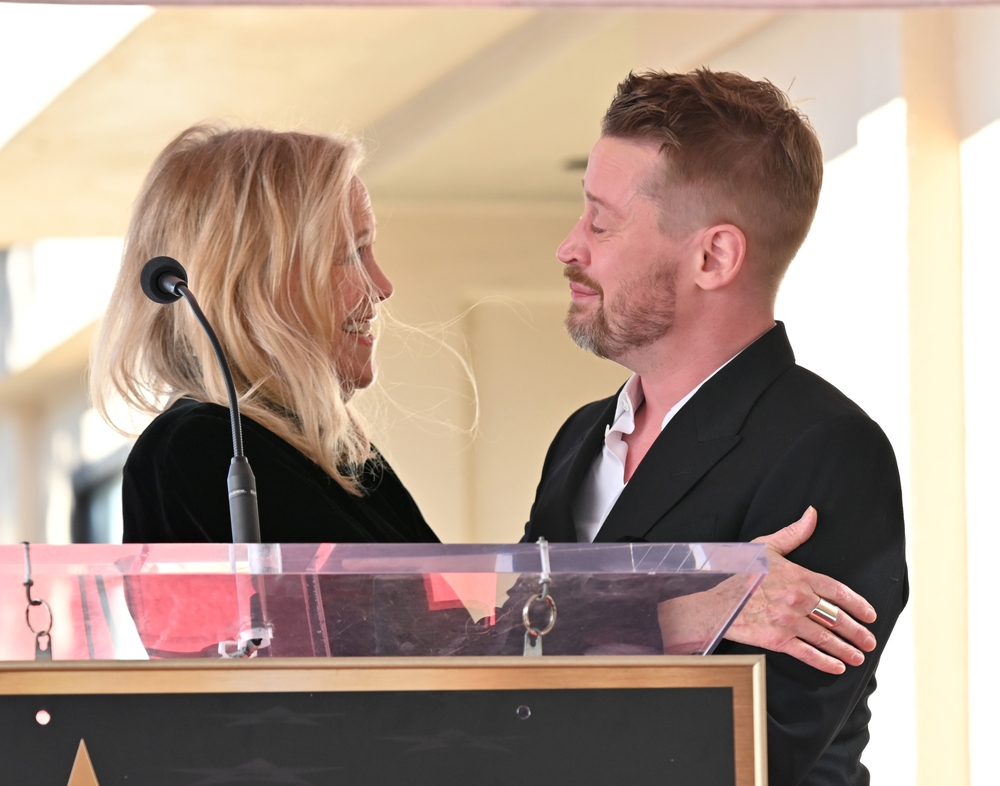

Every year carries its share of loss. But 2026 has already brought an unusually heavy procession of farewells – musicians who shaped entire cultural eras, actors whose faces felt like permanent fixtures of childhood, and cultural figures who helped define what American life looks and sounds like. Some of these deaths came as a slow goodbye, telegraphed by public health battles fought with remarkable openness. Others arrived without warning, leaving fans and collaborators stunned.
Grief is strange that way. A celebrity passing isn’t the same as losing someone close, but it can still stop you in your tracks. These are people who soundtracked your summers, appeared on the TV in the background of your childhood living room, or made you feel less alone during otherwise ordinary moments. Their work gets threaded into your life without you even noticing, and then one day they’re gone.
What follows is a look back at the famous faces the world has said goodbye to so far in 2026, the lives they built, the work they left behind, and what made each of them matter.
1. Bob Weir – Grateful Dead Co-Founder (Died January 10, 78)
Bob Weir, born Robert Hall Weir, was the singer, songwriter, guitarist, and co-founder of the Grateful Dead, a band whose music helped turn a San Francisco jam group into a 60-year musical empire. In the summer of 2025, Weir was diagnosed with cancer. Despite surviving it, he died from underlying lung problems on January 10, 2026, at the age of 78.
His family’s statement said he “transitioned peacefully, surrounded by loved ones, after courageously beating cancer as only Bobby could,” adding that he had succumbed to underlying lung issues. In 1964, as still a teenager, Weir joined guitarist Jerry Garcia in a folk music band. In May of 1965, Weir and Garcia were joined by bassist Phil Lesh, keyboard player Ron “Pigpen” McKernan, and drummer Bill Kreutzmann to form an electric, blues-based rock and roll band briefly named The Warlocks – which would soon become the Grateful Dead.
He wrote or co-wrote iconic Dead songs like “Sugar Magnolia,” “Truckin’,” “Cassidy,” and “Throwing Stones.” Dead & Company marked the Grateful Dead’s 60th anniversary with a three-night stand at San Francisco’s Golden Gate Park in August. Those concerts marked Weir’s final performances. A “Homecoming” memorial celebration was held in his honor in San Francisco’s Civic Center Plaza on January 17, 2026, with thousands attending. Speakers and performers at the event included John Mayer, Joan Baez, and Mickey Hart.
2. Scott Adams – Dilbert Creator (Died January 13, 68)
Scott Adams, the “Dilbert” creator whose cartoon was dropped by hundreds of newspapers after he made racist remarks, died months after revealing his diagnosis with prostate cancer. Adams announced he was diagnosed with prostate cancer in 2025 and retired from drawing that year, but stated he would continue writing Dilbert as long as he was able. He died on January 13, 2026, at the age of 68.
“Dilbert,” at its height, was syndicated in some 2,000 newspapers across 65 countries, with an estimated worldwide readership of more than 150 million. Adams’ “Dilbert” was first published in 1989, delighting generations of readers with its satirical look at the ridiculous elements of white-collar office life. Adams was open about his health struggles throughout his career, including the movement disorder focal dystonia – which particularly affected his drawing hand – and, years later, spasmodic dysphonia, an involuntary clenching of the vocal cords that he managed to cure through an experimental surgery.
In February 2023, “Dilbert” was dropped from syndicated newspapers in the United States following comments made by Adams on his livestream that Black people were a “hate group.” In March 2023, Adams relaunched “Dilbert” as “Dilbert Reborn” on the subscription site Locals. He stopped personally drawing “Dilbert” in November 2025 due to cramping and partial paralysis in his hands, though he continued to write scripts and have them illustrated for him.
Adams’ ex-wife Shelly Miles announced his death on Tuesday’s episode of the livestream “Coffee with Scott Adams,” which he hosted daily until his death, reading a written statement from Adams. “I had an amazing life,” Scott Adams wrote in the statement, composed on New Year’s Day. The final message was a remarkable document from a man who had spent his last months with clear eyes about his own mortality – complicated legacy and all.
3. Catherine O’Hara – Home Alone and Schitt’s Creek Star (Died January 30, 71)
Catherine O’Hara died from a pulmonary embolism – a blood clot blocking an artery in the lungs. A Los Angeles County death certificate lists the pulmonary embolism as the immediate cause of her January 30 death at age 71. Rectal cancer was the long-term cause. The oncologist who signed off on the certificate indicated he had been treating O’Hara since March of the previous year and last saw her on January 27.
Catherine Anne O’Hara was a Canadian and American actress and comedian whose career spanned over 50 years. She started in sketch and improvisational comedy in film and television before taking dramatic roles to expand her career. She received various accolades including two Primetime Emmy Awards, a Golden Globe Award, and four Screen Actors Guild Awards. The beloved Canadian-born comic actor and “SCTV” alum starred as Macaulay Culkin’s mother in two “Home Alone” movies and won an Emmy as the dramatically oblivious wealthy matriarch Moira Rose in “Schitt’s Creek.”
Her representatives initially described her death as following “a brief illness” – a phrase that, in retrospect, significantly understated what she had privately been going through. In 2025, O’Hara had a main role in the Apple TV+ satirical comedy series “The Studio,” for which she won both the Actor Award for Outstanding Performance by a Female Actor in a Comedy Series and the Actor Award for Outstanding Performance by an Ensemble in a Comedy Series at the March 2026 ceremony. She was the first woman to win any individual Actor Awards trophy posthumously. A fitting, bittersweet final chapter for an actress who could do more with a single withering glance than most performers manage in an entire scene.
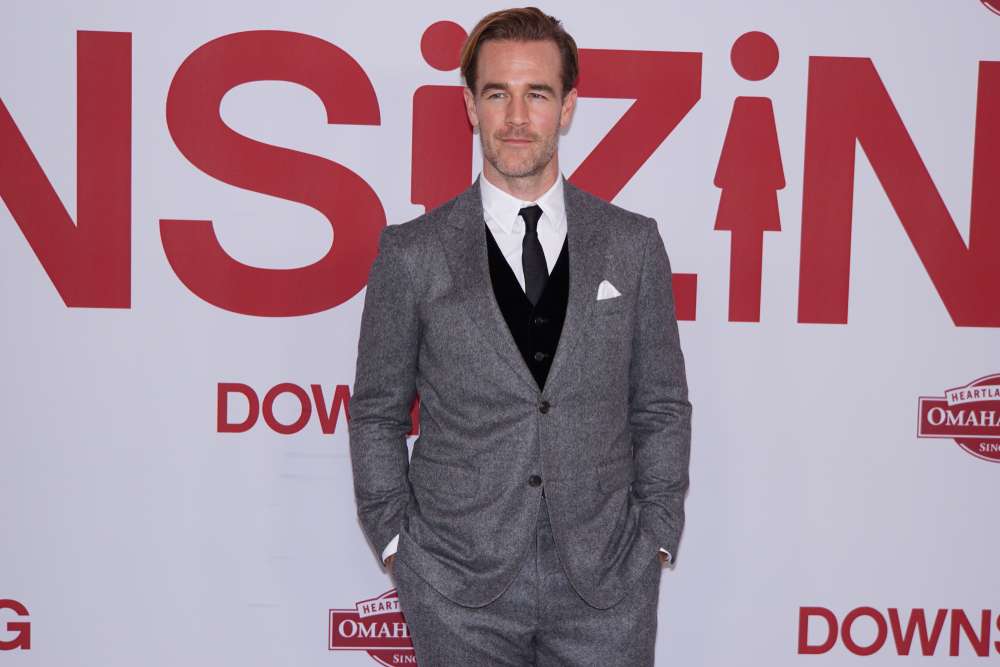
4. James Van Der Beek – Dawson’s Creek Actor (Died February 11, 48)
James Van Der Beek died after a battle with colorectal cancer. He rose to fame playing Dawson Leery on the 1990s-era hit teen drama “Dawson’s Creek,” died on February 11, and was 48. Van Der Beek announced in 2024 that he was living with stage 3 colorectal cancer. His wife, Kimberly, confirmed his death, with a statement on his Instagram account reading that he “met his final days with courage, faith, and grace.”
The timing carries extra weight for parents reading this, because Van Der Beek used his illness to do something genuinely valuable: he talked about it. Loudly, honestly, and with a level of detail that could have saved lives. If you want to understand more about how cancer can affect a family and how to talk to your kids about loss, this piece on grief and losing a parent may be helpful.
As Van Der Beek battled cancer, he used his platform to raise awareness of symptoms, especially as colon cancer rates rise in young people. He urged people to notice even the slightest changes and to get screened starting at age 45. Rates of colorectal cancer in people under 55 have been increasing by 1 to 2 percent a year since the mid-1990s, according to the American Cancer Society. His insistence on transparency about his diagnosis was one of the more meaningful public health acts of the past year.
5. Robert Duvall – Academy Award-Winning Actor (Died February 15, 95)
Robert Duvall, the Oscar-winning actor best known for “The Godfather” and “Apocalypse Now,” died on February 15, 2026. He died at the age of 95. His screen career spanned six decades and left a body of work that is essentially a master class in American character acting – restrained, precise, and unforgettable.
Duvall was lauded for his acting talent, from not saying a word while playing Boo Radley in his first big screen role in the 1962 classic “To Kill a Mockingbird” to his portrayal of a country singer dealing with alcoholism in 1983’s “Tender Mercies,” which earned him an Oscar. In 1980, Duvall won a BAFTA and a Golden Globe for his role as Lt. Col. Kilgore in “Apocalypse Now.” He was nominated for seven Academy Awards over the course of his career, and his performances consistently outpaced whatever film surrounded them.
At 95, Duvall was one of the last living links to the golden era of New Hollywood filmmaking – the period in the late 1960s and 1970s when American cinema was at its most ambitious. He died on his ranch in Virginia on February 15; no cause was given.
6. Rev. Jesse Jackson – Civil Rights Leader (Died February 17, 84)
Jesse Jackson, the civil rights activist and reverend, died on February 17 at the age of 84. He had been battling progressive supranuclear palsy – a neurological condition that affects movement, balance, and speech.
Beginning his career as a protege of Dr. Martin Luther King Jr., Jesse Jackson quickly rose to become one of the most prominent and influential civil rights leaders. Born on October 8, 1941, in Greenville, South Carolina, Jackson experienced Jim Crow segregation firsthand. His fight for civil rights began in the 1960s, when he organized protests and demonstrations across the US alongside Dr. King. His decades-long career included support for voting rights, the fight against racism, and advocacy for a higher minimum wage.
Jackson ran for president twice as a Democrat, placing third for the party’s nomination in 1984 and second in 1988. Those campaigns changed what felt possible in American presidential politics, drawing unprecedented voter registration drives and bringing new communities into the political process. His “Rainbow Coalition” approach to organizing remains a studied template in grassroots politics.
7. Neil Sedaka – Pop Songwriter and Icon (Died February 27, 86)
Neil Sedaka, singer, songwriter, and pianist, was known for his 1950s and 1960s hits. He was one of the most prolific songwriters of his era, having written or cowritten more than 500 songs, including the hits “Calendar Girl” (1959) and “Breaking Up Is Hard to Do” (1960). The Brooklyn native’s catalog also included “Laughter in the Rain,” “Bad Blood,” and the Captain & Tennille song “Love Will Keep Us Together.” Sedaka died on February 27; no cause was given.
Sedaka essentially had two careers. He had a first run of pop fame in the early 1960s, faded from prominence through the late 1960s, and then staged a comeback in the early 1970s when Elton John signed him to his record label, Rocket Records, and championed him to a new generation. Not many artists get a second act that good. His boyish soprano and bright melodies made him a top act in the early years of rock ‘n’ roll and led to that second run of success in the 1970s. He is in the Songwriters Hall of Fame and was nominated for five Grammys throughout his long career. At 86, he left behind a catalog that most songwriters would give anything to have written even one entry from.
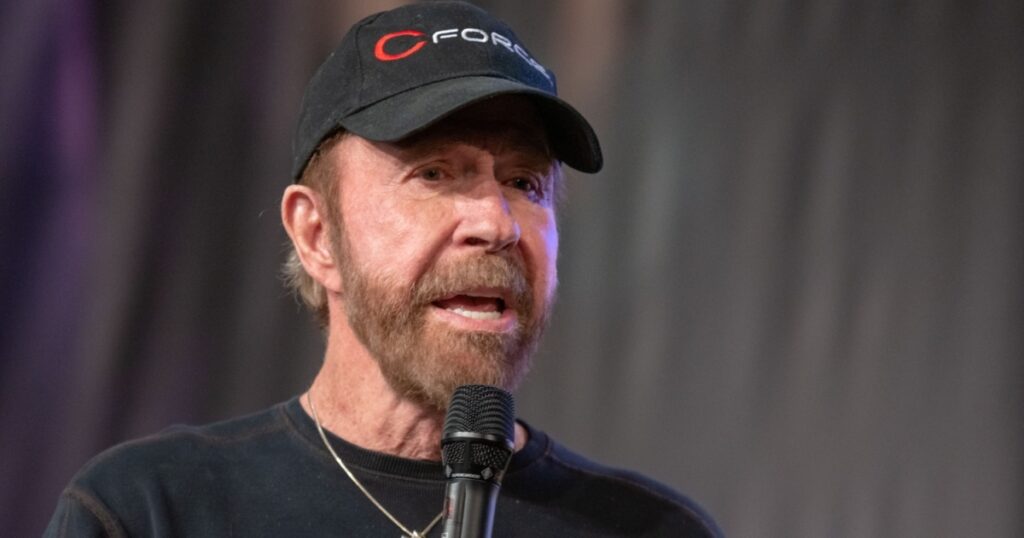
8. Chuck Norris – Martial Arts Champion and Actor (Died March 19, 86)
Chuck Norris, a martial artist and actor who became a tough-guy icon through his action movies, his starring role on “Walker, Texas Ranger,” and the enduring power of internet memes, died March 19, 2026, at the age of 86. His family confirmed the death; no cause was given.
Before he ever stepped in front of a camera, Norris was a martial arts champion and a black belt in multiple disciplines including karate, judo, and taekwondo. His profile exploded in 1972 when he faced off against Bruce Lee in “The Way of the Dragon.” In 1983, “Lone Wolf McQuade” made Norris a mainstream star and laid the groundwork for “Walker, Texas Ranger,” which made him a household name.
Through the 1980s, Norris became one of the biggest action stars in the world thanks to movies like “A Force of One,” “The Octagon,” and the “Delta Force” and “Missing in Action” franchises. He then took over the small screen, playing the lead in “Walker, Texas Ranger,” which aired in over 100 countries during its run from 1993 to 2001. For a generation of kids, Norris and his roundhouse kick were the definition of a certain brand of no-frills American heroism.
Making Space for These Moments
Collective grief – the kind we feel when a familiar public figure dies – is real, even if it sits in a different register than private loss. What these deaths share is a reminder of how much the people we watch, listen to, and read shape the texture of our daily lives, often without us realizing it. Bob Weir’s music kept going long after it seemed like it should have ended. Catherine O’Hara was still winning awards days after she was gone. Van Der Beek was using the worst chapter of his life to push strangers toward a doctor’s appointment. These were people actively giving something right up until the end.
For parents, these moments can also open unexpected conversations with kids about why the death of a stranger can still land with real weight. The answer is simpler than it seems: art and music create genuine connection. A face that appeared on your television for years becomes, in some way, familiar. A song you heard at the right moment stays with you forever. When these figures leave, it’s worth pausing – not to dwell, but to remember. And maybe to mention to your kids why an old song or a favorite movie moment still means something to you. Those are the conversations that stick, and they’re worth more than they look.
AI Disclaimer: This article was created with the assistance of AI tools and reviewed by a human editor.