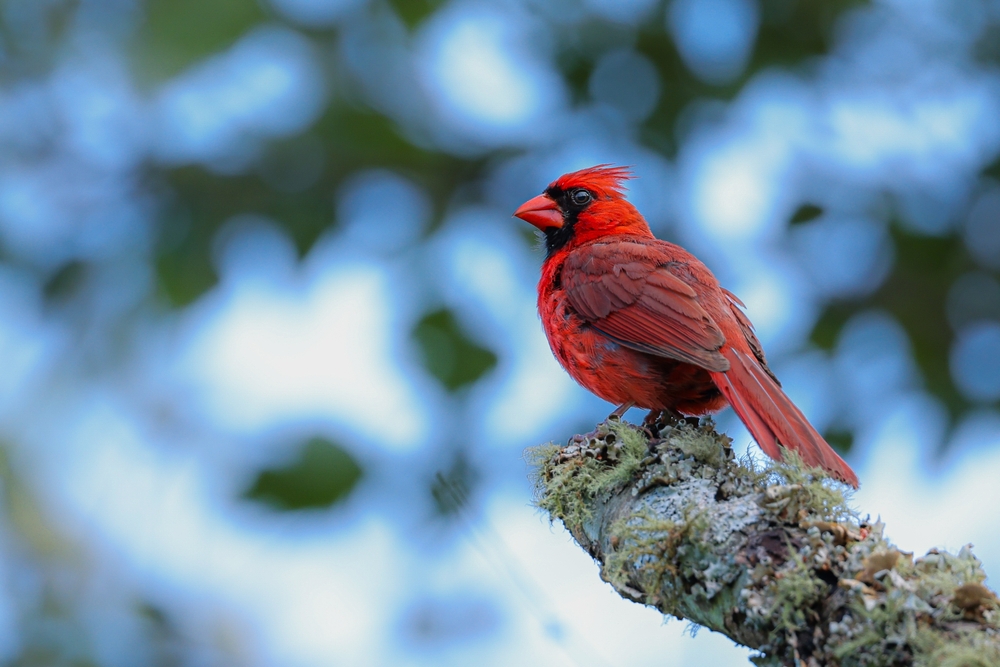

There is a particular kind of stillness that comes just after losing someone. The noise of the memorial is over, the casseroles are gone, the house has emptied out, and you are left standing in the ordinary Tuesday of it all, in the kitchen, in the backyard, in the middle of some completely unremarkable afternoon, and something catches your eye. A flash of red at the window. A small bird, impossibly bright, sitting in the bare branches of the yard like it has been placed there specifically for you. And for just a second, the world goes quiet in a different way.
People have been noticing cardinals at moments like this for as long as there have been people who grieve. It is one of those things that gets passed down in hushed tones at funerals, mentioned in sympathy cards, whispered between sisters. “Your mother came to visit.” You can take that literally or you can hold it lightly. You can be a skeptic and still feel the weight of the moment. The cardinal doesn’t ask you to decide anything.
What follows is not a claim about the afterlife. It is not a scientific case study, and it is not a theological argument. It is a walk through what people have believed, across generations and cultures, about this particular bird and its relationship to the people we have lost. Make of it what you feel.
The Bird That Does Not Leave
Most birds know when to go. Robins disappear by October. Warblers are summer guests. Half the backyard empties out by November, which is often exactly when grief lands heaviest, when the year is dimming and you most want something living nearby. The cardinal stays. Year-round, across every season, in every kind of weather, the Northern cardinal holds its territory and does not migrate.
According to Milano Monuments, cardinals are known for their resilience and their ability to thrive even in the harshest of conditions, including the cold winter months. That staying power is not incidental to its symbolism. When every other bird has moved on and the yard is bare and frozen, the red cardinal appears against the snow like a small insistence that life persists. For people who are deep in the first winter of grief, the visual is almost unbearably apt. The loved one who was here and then gone. The bird that remains.
One of the cardinal’s unique traits is its tendency to stay in its territory throughout the year, including during the winter months. This loyalty can be seen as a symbol of resilience and endurance, teaching us to persevere even in the face of life’s challenges. Cultures across centuries drew meaning from exactly this. A creature so vivid, so committed to staying put, feels less like a random visitor and more like a deliberate presence.
What Seven States Already Know
The Northern Cardinal is the state bird of seven U.S. states, more than any other species: Illinois, Indiana, Kentucky, North Carolina, Ohio, Virginia, and West Virginia. Seven separate states, independently, chose this bird. That consensus is its own kind of testament to the hold the cardinal has on the American imagination, not as an abstraction but as a daily, domestic, deeply familiar presence. This is not an exotic bird people travel to see. This is the bird at the feeder, at the fence post, at the kitchen window. Its intimacy with human spaces is part of what makes its appearances feel personal.
In Cherokee mythology, the cardinal is associated with the sun and is a symbol of protection and good luck. The sun connection runs deep in cardinal symbolism across cultures. Red as fire, red as warmth, red as the particular vitality that makes a life recognizable. The Cherokee interpretation of the cardinal as a protective presence fits neatly alongside the more modern instinct that a cardinal appearing at a difficult moment means something, that it is not indifferent to you.
Messengers Across Cultures
Long before anyone wrote a sympathy card with a cardinal on the front, Indigenous and traditional cultures were already reading these birds as intermediaries between worlds. In Native American cultures, cardinals are seen as messengers from the spirit world. They are believed to bring guidance, protection and comfort to those in need, especially during times of grief and loss.
In Christianity, the cardinal is often associated with the blood of Christ due to its red color. As such, it can symbolize spiritual vitality, resurrection and the promise of eternal life. The red of the cardinal was already charged with meaning in Christian iconography, which is perhaps why the bird settled so naturally into the role of heavenly messenger in American folk belief. Red as the blood that promises continuation. Red as the color of something that does not end.
The layering of these traditions over centuries is how a small songbird became one of the most widely recognized spiritual symbols in the country. It is not a single belief system that made this happen. It is convergence: multiple independent traditions arriving at the same conclusion from different directions. That convergence is worth noticing.
The Loyalty Angle
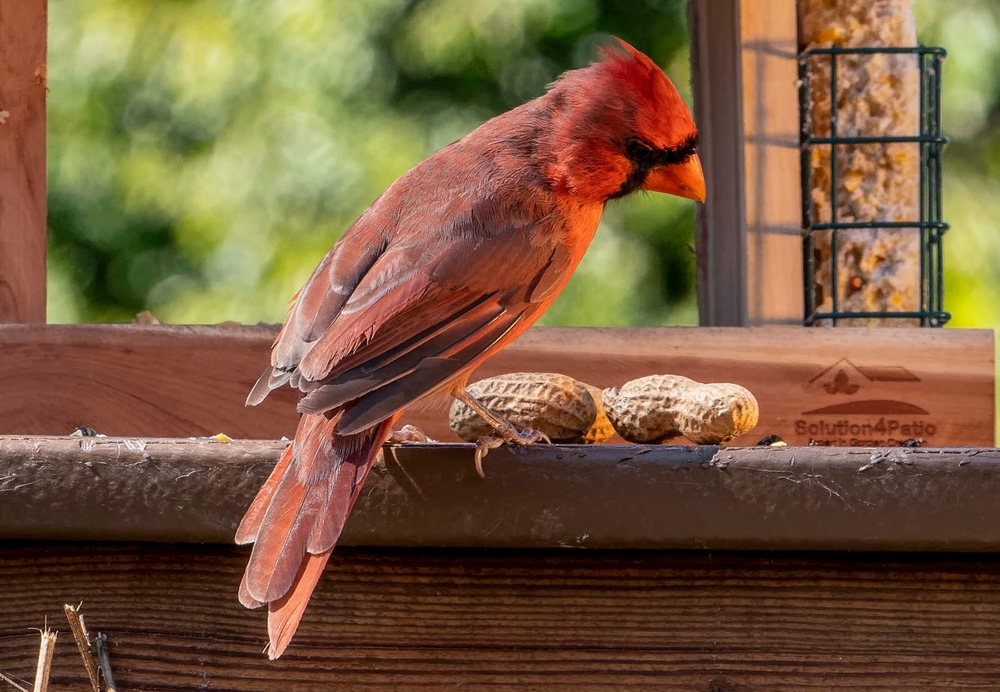
There is another layer to the cardinal’s symbolism that is easy to overlook in the grief conversation but runs underneath all of it. As Shackelford Funeral Directors notes, if you focus on the relationship aspect, cardinals are viewed as symbolic of loyalty or a strong attachment between two people, which makes perfect sense because cardinals mate for life. Rarely do they stray far from their chosen home, and even their young remain close by once they reach adulthood, expanding the family and strengthening the bond between them.
Mate for life, stay close to home, keep the family near. The cardinal’s behavior is a near-perfect embodiment of the kind of devotion people grieve when they lose someone. And so when a cardinal appears after a loss, perhaps what resonates so strongly is not only the idea of a message from beyond, but the recognition of a creature who models the exact quality you are mourning: the refusal to leave. The cardinal did not go anywhere. The cardinal is still here, in the yard, in the cold, with you.
One of the most widely held roles associated with the cardinal is that of a messenger. The content of those messages can vary, but almost always they are filled with hope and comfort and reassurance. Perhaps that’s why, when a cardinal appears, people view it as a sign from someone they have loved and lost. It is that person’s way of letting you know they have not left you; they are, and always will be, close by.
What People Actually Experience
The theory is one thing. What makes this belief so durable is not the symbolism on paper but the specificity of the encounters people describe. A cardinal showing up the morning of a funeral. A cardinal at the window on a birthday, on an anniversary, on an ordinary Wednesday when grief arrived without warning and then this bird appeared. People have often reported that after the death of their loved ones, they begin to see cardinals frequently. Seeing a cardinal for the first time or more frequently than usual can be an indication from your loved one that they will always feel your love and will be near you.
The question of whether these moments are metaphysical or simply the mind seeking pattern and comfort in a raw moment of loss is one nobody can answer for you. Both explanations are available. Both can be true at the same time. The mind reaching for meaning is not a lesser explanation than a spiritual one. It is a profoundly human one. And if seeing a cardinal slows you down in the middle of a hard day and makes you feel, for a moment, less alone, that moment is real regardless of what is behind it.
If you find yourself exploring the larger question of what connection after death might look like, the accounts from near-death experiences that people have shared over the years are worth sitting with. They don’t resolve anything, but they do speak to the same hunger: the need to know that something continues.
When a Cardinal Appears Near Your Home
Folk belief has always been specific about the circumstances of a cardinal’s visit and what they might mean. Old folk tales hold that a cardinal seen near your home could be announcing the approach of guests. In grief, the guest interpretation takes on a different weight entirely. Someone has come to see you.
One common narrative is that cardinals are believed to carry messages from loved ones who have passed away. Whether it’s a cardinal visiting a garden or perching near a window, these moments are seen as a means of communication between this world and the next.
The window is a recurring detail in people’s accounts, and it makes a certain poetic sense. The window is the membrane between inside and out, between the living room and the world, between here and wherever. A cardinal at the window is right at that threshold, neither in nor out, looking in, present but not quite reachable. It is a good metaphor for what grief feels like from the inside: someone just on the other side of something you cannot get through.
What This Is Really About
Belief in the cardinal as a messenger is, at its core, a belief that love does not simply stop when a person does. That the relationship is not over just because the conversations are. People carry the dead with them constantly, in habits picked up from a mother, in the way a father’s phrase comes out of your own mouth twenty years later, in the recipes you make exactly the way they made them because changing it feels like a second loss. The cardinal gives that carried love somewhere to land for a moment.
You do not have to believe the bird is a literal emissary from another world to find meaning in it. You can simply be someone who lost someone, who looked up at the right moment, who felt something, and who held that feeling without immediately explaining it away. Grief does not come with a rulebook about which kinds of comfort are allowed. A small red bird in the cold, staying when everything else left, being impossibly bright on a grey day. That means something, even if what it means is only yours to know.
AI Disclaimer: This article was created with the assistance of AI tools and reviewed by a human editor.