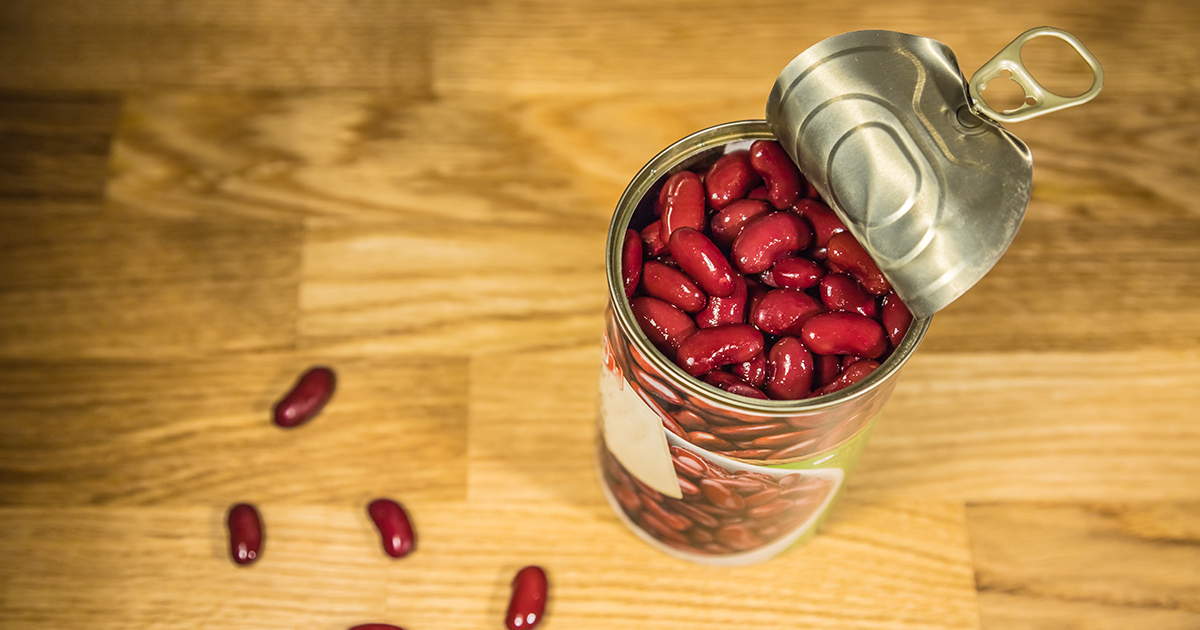

Somewhere in most American pantries, there’s a can with a slight dent in it. Maybe you noticed it at the grocery store and bought it anyway because it was on sale. Maybe it got knocked around during the last move. Maybe it has been sitting on the shelf so long you can’t remember exactly how it got there. The odds are good that the food inside is completely fine. But there are specific physical signs on a can that change that calculation entirely – signs that food safety experts and, most recently, a neurologist speaking to international media, are urging people not to ignore.
The warning that went viral in late July 2026 came from Dr. Baibing Chen, a neurologist who told the Daily Express that bulging, cracked, or severely dented cans should be treated as a hard stop, not a maybe. His explanation wasn’t just food safety boilerplate about bacteria. He went straight to the neuroscience: the toxin produced inside a compromised can blocks the chemical signals between your brain and your muscles at a level so fundamental that your body simply stops being able to move. That’s not hyperbole. That’s what botulinum toxin actually does.
The reason this warning cuts through the usual food safety noise is that the process is so specific, and so disproportionate to how ordinary and unremarkable a dented can looks sitting on a shelf. You’re not looking at something that smells off or looks visibly rotten. You’re looking at something that looks like it fell off a truck.
What’s Actually Happening Inside a Compromised Can

Bulging or swollen cans may be contaminated by the bacteria Clostridium botulinum, which causes a rare but serious illness in humans known as botulism. The bacteria itself isn’t the direct problem – it’s what the bacteria produces. These bacteria generate a neurotoxin that attacks the central nervous system. Ingestion of the toxin causes difficulty breathing, muscle paralysis, and, if not treated quickly with an antitoxin, death.
What Dr. Chen explained in neurological terms is that the toxin works by interrupting acetylcholine release at the neuromuscular junction – the point where a nerve signal tells a muscle to contract. Block that signal, and your brain becomes unable to move your body. It doesn’t attack your consciousness or your cognition. You remain aware. Your muscles simply stop responding. Respiratory failure is the primary cause of death in severe cases: the diaphragm, the muscle that drives breathing, stops working.
The toxin responsible is produced by bacteria that thrive in exactly the conditions found inside a sealed can: no oxygen, moisture, and, in many canned foods, low acid, low sugar, and low salt. The inside of a commercially sealed can is a near-ideal environment for Clostridium botulinum if the sterilization process is imperfect or the can’s integrity is compromised after the fact. The bacteria doesn’t need much of an opening to establish itself. Dented or damaged canned goods can produce pinhole-size openings that may not be obvious to consumers, and a single pinhole-size opening allows bacteria to enter, grow, and spoil the food inside while producing toxins.
The Physical Signs You Cannot Afford to Dismiss
Not every dent is a death sentence for a can of soup. The distinction matters, and food safety guidance is actually pretty clear on where the line falls.
Bulging or swelling is the most unambiguous red flag. Bulging or swelling on the top or bottom of a can signals gas-producing bacteria inside. A bulging can means microorganisms are actively producing gas – the food should never be opened, tasted, or salvaged. A can that is visibly puffed up or whose lid flexes upward under pressure is telling you exactly what is happening inside it.
Deep dents and seam dents are more dangerous than they look. Most dented cans are perfectly safe to eat, but the key distinction is where the dent is, how deep it is, and whether the can shows any other signs of damage. A small dent on the body of the can with no other issues is cosmetic. A dent on a seam, rim, or one deep enough to create a sharp crease is a reason to throw the can away. Every can has three critical structural points: the top rim, the bottom rim, and the side seam – a subtle vertical line running down the body. These seams are what keep the can airtight. Damage to any of those three points is damage to the seal, not just damage to the metal.
Leaking, spurting, or foam upon opening is an immediate discard situation. If liquid sprays when you puncture the can, or if the contents look foamy or discolored when you open it, the pressure differential tells you that something inside has been generating gas. Never taste food to see if it’s safe, because you cannot see, smell, or taste the toxin that causes botulism – but even a small taste of food containing the toxin can be deadly.
Rust and dirty labels are often overlooked but meaningful. A dirty label can be an indicator of possible leakage of food contents, and the presence of rust is another indicator of improper storage and handling that may affect the integrity of sealed products. Rust that penetrates the can wall, rather than sitting on the surface, can create the same microscopic breach that a physical dent does.
Odd odors matter, but their absence does not mean safety. The absence of warning signs is not a guarantee of safety, since Clostridium botulinum can grow and produce toxin without producing enough gas to bulge a can or enough byproducts to create a noticeable off-odor. No smell doesn’t mean no toxin.
Home-Canned Foods Carry a Higher Risk

The canned food in your pantry that came from a commercial facility has passed through industrial sterilization processes designed specifically to eliminate Clostridium botulinum. That doesn’t mean commercial cans are immune – physical damage after the fact can breach the seal – but it does mean the baseline risk from an intact, undamaged store-bought can is extremely low.
Home-canned foods present a different picture. Common sources of foodborne botulism are homemade foods that have been improperly canned, preserved, or fermented. The equipment, temperatures, and processing times that kill botulinum spores require precision. Well-meaning improvisation – skipping a pressure canner in favor of a water bath for low-acid vegetables, or shortening processing times – creates exactly the conditions the bacteria need.
In June 2024, an outbreak of eight cases of foodborne botulism was caused by contaminated home-prepared prickly pear cactus (nopales), as documented in the CDC’s Morbidity and Mortality Weekly Report. Six of those patients required ICU care and two needed invasive ventilator support. The food was served at family gatherings – people who knew each other, sharing a home-cooked dish. All eight patients survived, but survival required rapid intervention and antitoxin treatment. Enhancing community and clinician awareness of foodborne botulism and increasing access to home food preservation guidelines are what the CDC identified as the key to preventing future outbreaks.
If you do home canning, the guidelines published by the USDA and the National Center for Home Food Preservation exist for this exact reason. They are not suggestions.
What Symptoms Actually Look Like

Symptoms of foodborne botulism typically begin 12 to 36 hours after the toxin enters the body, though this can range anywhere between hours and days depending on the amount consumed. This delay is part of what makes it so dangerous. You ate something yesterday, and today you feel off. The connection isn’t obvious.
Initial symptoms often include blurred or double vision, drooping eyelids, slurred speech, difficulty swallowing, and dry mouth. Many patients also experience gastrointestinal symptoms such as nausea, vomiting, stomach pain, and diarrhea before neurological symptoms develop. The gastrointestinal symptoms can read as ordinary food poisoning. The neurological symptoms that follow – eyelids drooping, difficulty forming words, weakness on both sides of the face – are the signal that this is something categorically different.
As the illness progresses, paralysis moves downward through the body. Descending flaccid paralysis begins with cranial nerve palsies and potentially progresses to affect the trunk, arms, and legs. The end-stage risk is respiratory: when the paralysis reaches the breathing muscles, a ventilator becomes necessary for survival.
In the past 50 years, the proportion of patients who die from botulism has decreased from about 50 percent to around eight percent – a meaningful improvement driven largely by better ICU care and the availability of antitoxin. But that improvement depends entirely on getting to a hospital before respiratory failure sets in. Speed is the entire variable.
How to Actually Handle a Suspect Can
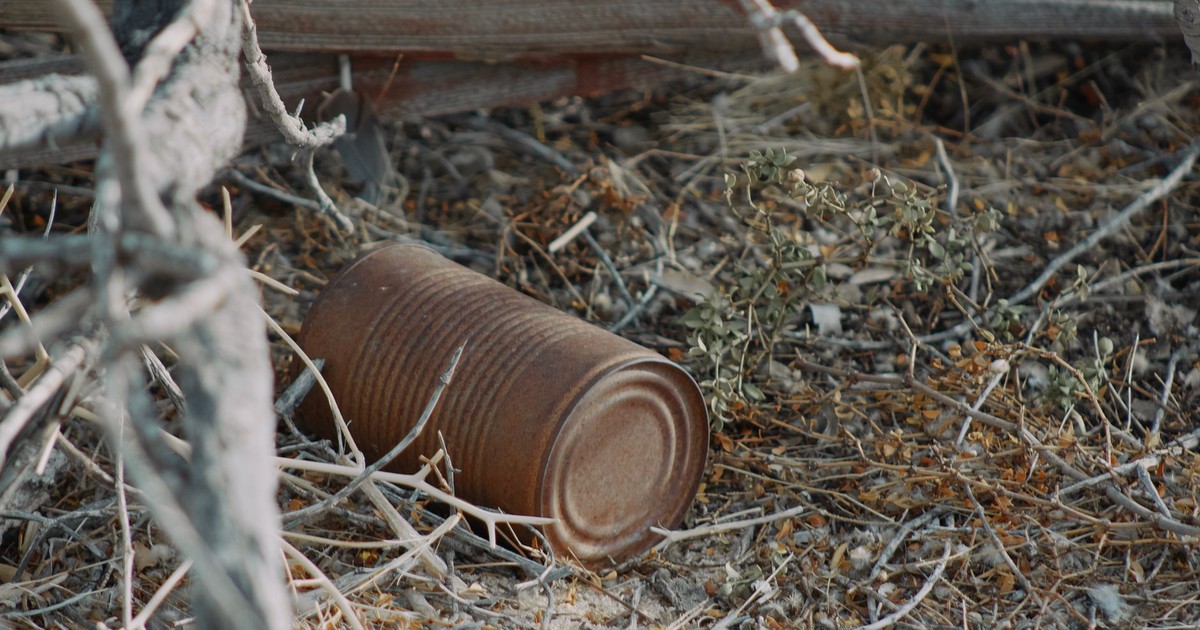
The guidance from food safety agencies is consistent and worth remembering in its exact form: when in doubt, throw it out. The USDA encourages consumers to discard cans and not eat foods from containers that are leaking, bulging or swollen, look damaged or cracked, or seem abnormal in appearance.
When you throw out a suspect can, don’t open it first to check. Don’t smell it. Don’t taste a small amount to see if it’s okay. Double-bag the can in sealed plastic bags before putting it in the trash, so that children or animals who might rummage through a garbage bin don’t encounter it. If you have any reason to believe you’ve already eaten from a can that showed warning signs and you’re developing symptoms – particularly drooping eyelids, difficulty swallowing, or any facial weakness – that is a 911 call, not a wait-and-see situation.
It’s also worth doing a periodic sweep of your pantry rather than waiting until you’re already reaching for a can in question. You can pair this with the broader kitchen items to toss that safety and organization experts recommend clearing out regularly anyway. Canned goods with dented seams or swollen lids are easier to identify when you’re looking at them calmly, not when you’re already mid-recipe and hungry.
Read More: 9 Red Flags At A Pizza Shop That Should Send You Running
The Part Nobody Talks About

It is almost impossible to tell by looking at a botulism-contaminated food whether it is safe or not. Foodborne botulism can strike without warning, causing progressive paralysis that can stop breathing within hours. There’s no visual cue in the food itself. No smell that reliably signals the problem. The only reliable cue is the can – its shape, its seams, its lid – and most of us have been vaguely trained to think “a little dent is probably fine” without ever knowing exactly when that stops being true.
Now you know where the line is. A small dent on the body of the can, no seam damage, no swelling, no leaking: probably fine, but inspect it. A dent on a seam, or a lid that has any give upward, or any can that spurts when opened: that goes directly in a bag, in the bin, without tasting.
The can looked fine from the outside. That has always been the problem with this particular risk, and it is exactly why the canned food warning signs that actually matter have nothing to do with the food and everything to do with the container holding it.
Disclaimer: This information is not intended to be a substitute for professional medical advice, diagnosis, or treatment and is for information only. Always seek the advice of your physician or another qualified health provider with any questions about your medical condition and/or current medication. Do not disregard professional medical advice or delay seeking advice or treatment because of something you have read here.
AI Disclaimer: This article was created with the assistance of AI tools and reviewed by a human editor.