
Most adults know the shape of a bad night without needing it described to them. Not a catastrophic one where something terrible happened, just the ordinary kind where sleep came in pieces, or not at all, and the next morning arrives with a verdict already rendered. Before coffee, before attempting anything, the brain has already filed its report: today is going to be slow, foggy, and difficult. And then, reliably enough, it is – which feels like evidence, but may be something more complicated than that.
What a generation of sleep research has been assembling into a coherent argument is that the relationship between how much sleep you actually got and how functional you feel the next day is not as direct as that early-morning story suggests. There is a gap between objective sleep and subjective experience. That gap turns out to be real, measurable, and neurologically grounded, with implications for the roughly one in three American adults who regularly fall short of the recommended seven hours.
The concept at the center of this is “placebo sleep,” a phrase coined by researchers studying what happens when the brain is told something different about the night it just experienced. The results, first published in 2014 and extended by subsequent research, are genuinely strange in the best way – and they raise questions about how much of what we call “sleep deprivation” is actually sleep deprivation, versus a story about sleep deprivation that the brain then faithfully enacts.
The Experiment That Started the Conversation

A pair of researchers at Colorado College demonstrated that fooling people into believing they’d had more or less than average amounts of REM (rapid eye movement) sleep could measurably impact their cognitive skill levels. According to the CDC’s 2024 analysis, 30.5 percent of adults had short sleep duration, 54.8 percent woke up feeling well-rested, 15.4 percent had trouble falling asleep, and 18.1 percent had trouble staying asleep. Women were more likely than men to have trouble falling asleep and staying asleep, and were less likely than men to wake up feeling well-rested. A 2024 study published in Scientific Reports evaluated how subjective sleep reports and objective measures of sleep capture the interaction between sleep quality and quantity on cognition and affect. Research on placebo and nocebo effects in cognitive performance has found that the expectation of receiving a performance-enhancing or performance-impairing stimulus exerts genuine influence on both subjective and objective measures of how the brain operates.
Christina Draganich and Kristi Erdal at Colorado College told 164 participants that a new technique – which in fact did not exist – could measure their sleep quality from the night before. Their findings were published in the Journal of Experimental Psychology: Learning, Memory and Cognition. Participants were randomly assigned to two groups: one told they’d received “above average” quality sleep, the other told their sleep had been “below average.” All were then given a five-minute lecture explaining how sleep quality affects cognitive function.
Each student was connected to what they were told was a high-tech device capable of analyzing brain waves to assess the previous night’s sleep. Students in the first group were told their REM sleep had been above average, at 28.7 percent of total sleep time. Those in the second group were told they had gotten just 16.2 percent REM sleep – well below the average.
Students who were told they’d gotten high-quality sleep performed significantly better on a subsequent test measuring cognitive skills including attention and information-processing. The researchers named the phenomenon “placebo sleep,” comparing it to the measurable improvements seen in patients who believe they have received pain medication when they’ve actually taken a sugar pill.
This was not a motivational boost or a confidence effect. The students who were told they’d slept well did not simply try harder. Their cognitive output – the kind measured by standardized tests of attention and processing speed – was objectively higher. The belief itself appeared to produce the function.
The Nocebo Side of the Same Coin
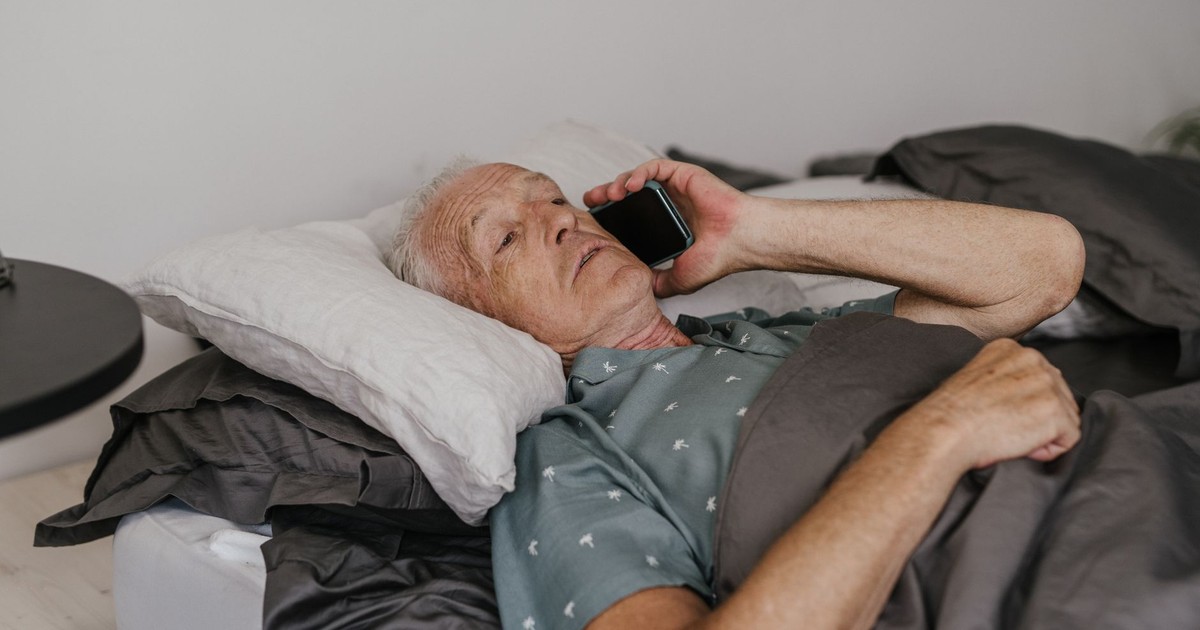
What the Colorado College study also demonstrated, though it receives less attention in popular coverage, is the reverse effect. Participants told they had received poor-quality sleep performed worse – even when their actual sleep may have been equivalent to the “good sleep” group. In sleep research, this is known as the nocebo effect: the measurable harm caused by a negative expectation.
The expectation that a given condition will impair cognitive performance strongly affects perceived performance – and perceived performance has a measurable relationship with actual output. The story you tell yourself about your night is not neutral information. It is an instruction the brain takes seriously.
This is not willpower or attitude. The evidence shows that expectations exert genuine influence on both subjective and objective measures of how the brain operates. The nocebo finding in the sleep context is particularly relevant because most people who sleep badly spend the following morning actively reinforcing the negative expectation. They announce it to themselves, they announce it to anyone who asks, and then they spend the day experiencing exactly what they predicted.
The Gap Between What You Think You Slept and What You Actually Slept
The placebo sleep findings sit within a broader puzzle that sleep researchers have been working on for some time: the disconnect between how people report their sleep and what their sleep actually looks like when measured objectively.
The 2024 Scientific Reports study collected both subjective reports using the Pittsburgh Sleep Quality Index (a standardized self-report questionnaire measuring sleep quality over a one-month window) and objective seven-day actigraphy (wrist-sensor movement recording) data from 83 participants.
The researchers found that subjective sleep reports do not reliably predict objectively measured sleep duration or quality – and that objective measures predicted cognitive performance on executive function and memory tasks primarily at the extreme ends of the sleep spectrum.
For a large portion of the population, in the moderate range of sleep variation that most adults actually occupy, how you subjectively characterize your sleep may be as predictive of your morning function as the raw hours themselves. The person who slept five and a half hours and woke up convinced she’d had a reasonable night may, in some measurable respects, outperform the person who slept six and a half hours but spent the first hour of the morning cataloguing everything that went wrong with it.
None of this is an argument against actual sleep. The data on severe sleep deprivation are not ambiguous – loss of sufficient sleep drives real physiological harm, from elevated cortisol to impaired immune function to measurably degraded decision-making. The placebo sleep research operates in the territory of ordinary variation, not in the territory of genuinely serious chronic deprivation. One is a finding about how perception shapes function on imperfect-but-manageable nights; the other is about what happens to the body over months of genuine shortfall.
The Scale of the Problem These Findings Speak To
The reason placebo sleep research matters beyond the laboratory is that the population experiencing ordinary sleep shortfalls is enormous. According to the CDC, 30.5 percent of adults had short sleep duration, 54.8 percent woke up feeling well-rested, 15.4 percent had trouble falling asleep, and 18.1 percent had trouble staying asleep.
Women and men had similar prevalences of short sleep duration, but women were more likely than men to have trouble falling asleep and staying asleep, and were less likely than men to wake up feeling well-rested. For women in the 30-55 range – the demographic most likely to be managing multiple caregiving and professional demands simultaneously – this is not an abstraction. It is Tuesday, it is Thursday, it is most of the week, most of the year.
The nocebo loop that the Colorado College research documented is particularly consequential at this scale. When nearly half the adult population wakes up not feeling well-rested, and then spends the first hour of the day reinforcing that narrative, the aggregate cognitive and functional cost is substantial – and some portion of it may be a self-fulfilling architecture that the brain has built, not the sleep deficit itself.
What the Brain Is Actually Doing

The placebo sleep effect is not purely psychological in the loose sense that word sometimes implies. The brain’s expectations shape neurochemistry, not just mood. Research on the placebo effect more broadly has established that believing you have received treatment activates the same neural pathways that the actual treatment would activate – including dopaminergic reward pathways, endogenous opioid systems, and prefrontal circuits governing executive function.
In the sleep context, the most likely explanation is that waking with a positive expectation about the previous night’s rest reduces the activation of stress-response pathways – specifically the hypothalamic-pituitary-adrenal (HPA) axis, which governs cortisol release. When you wake up telling yourself you slept terribly, cortisol rises faster and higher than the body’s baseline morning pattern calls for. Sustained elevated cortisol impairs the prefrontal cortex – the part of the brain responsible for working memory, sustained attention, and decision-making. The “fog” of a bad morning has a real neurochemical correlate, and some of it is driven by the expectation, not just the objective sleep data.
Sleep research consistently shows that the brain remains highly active during sleep, engaging in vital processes for restoring mental faculties and consolidating information – which is precisely why the perception of having received that restoration matters so much when the brain comes back online in the morning. The restoration is real. The question the placebo research raises is whether the brain’s belief about the completeness of that restoration shapes how effectively it draws on what it did receive.
Practical Implications: What Better Sleep Without Sleep Actually Looks Like
Understanding placebo sleep does not translate into a set of tips so much as a reorientation in how to think about the mornings that follow imperfect nights. The research suggests several specific things worth extracting.
Changing the Morning Narrative
The nocebo evidence is strong enough that the single most cost-free intervention is to stop actively reinforcing the negative characterization of the previous night, particularly in the first hour of the day. This is not positive thinking. It is a more accurate form of thinking – because most people genuinely do not know how much REM sleep they got, and the brain does not need to be told it got too little. Phrases like “I barely slept” repeated to colleagues and family members are, in the light of the Colorado College findings, literally instructions to perform below capacity.
Not Using Sleep Tracking as a Nocebo Device
Consumer sleep trackers – the kind built into most wearable devices – produce data that, for a large portion of users, creates more anxiety than it resolves. Subjective sleep reports do not reliably predict objectively measured sleep duration or quality, which also means a tracker’s output does not reliably predict how the brain will actually function the following day. Using a sleep score to decide how capable you are before you’ve tested it is running the nocebo experiment on yourself every morning.
Understanding the Limits of the Effect
Placebo sleep is not a substitute for sleep. The evidence applies to the moderate variation most adults experience – the difference between a so-so night and a decent one – not to the severe end of chronic deprivation. The CDC data puts 30.5 percent of adults sleeping less than 7 hours on average, and for those consistently in the five-hours-or-fewer range, no amount of expectation management compensates for the physiological debt accumulating in cardiovascular, metabolic, and immune systems. The placebo effect has a ceiling. Genuine, sustained sleep is not optional.
The Role of Pre-Sleep Expectation
The placebo sleep research focused on post-wake beliefs, but there is related evidence that pre-sleep expectations also shape sleep quality. Anxiety about sleep is one of the primary drivers of insomnia maintenance – the paradox in which worrying about not sleeping makes sleep harder to achieve. Approaching sleep with a lower threat level, even when a night looks unpromising, may reduce the arousal that makes a difficult night worse.
What This Actually Changes

What you believe about the sleep you got shapes how your brain functions the next day, independently of what the sleep actually was. This is not an invitation to gaslight yourself into thinking a five-hour night was eight hours. It is a finding about how expectations become outcomes – and about how much of what we call the experience of sleep deprivation is, in ordinary circumstances, a combination of actual physiology and a self-confirming narrative running on top of it.
The broader implication is that better sleep without sleep – in the specific sense of experiencing more cognitive function on a given morning than the objective night would seem to warrant – is real, documented, and available. It doesn’t require a supplement, a device, or a routine change. It requires not telling your brain, before it’s had a chance to find out for itself, that it’s working with nothing. Some mornings it is. But it usually isn’t. And the brain, to its credit, tends to live up to whatever story it’s been handed first.
Disclaimer: This information is not intended to be a substitute for professional medical advice, diagnosis, or treatment and is for information only. Always seek the advice of your physician or another qualified health provider with any questions about your medical condition and/or current medication. Do not disregard professional medical advice or delay seeking advice or treatment because of something you have read here.
AI Disclaimer: This article was created with the assistance of AI tools and reviewed by a human editor.