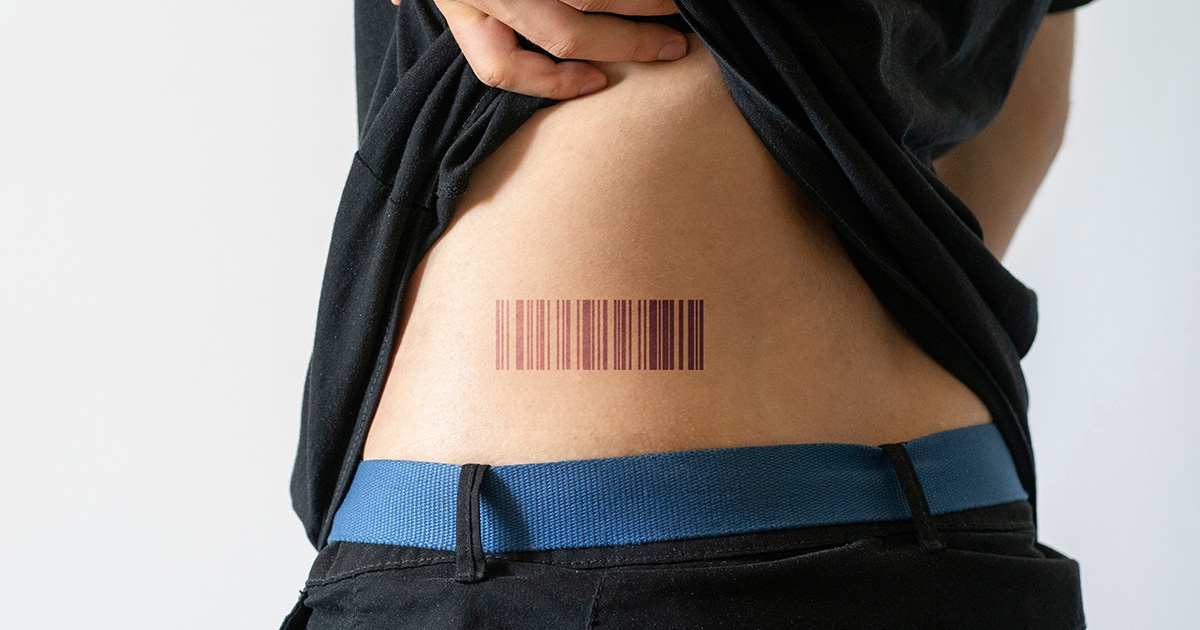

A woman notices her husband growing distant—quiet, unreachable, and withdrawn just as she learns she is pregnant. She agonizes over every possible explanation: guilt, infidelity, or sudden regret about starting a family. Then, one night, she discovers something impossible on his back: a small, precise barcode embedded in his skin. When she scans it with her phone, the revelation on her screen sends her collapsing to the floor in shock.
This striking premise captures a deeply human anxiety. While the tale is a work of speculative fiction, its core tension resonates with a fear many people carry: the unsettling possibility that the person sharing your life, your home, and your future is a complete stranger. By transforming emotional distance into a physical mystery, the narrative taps into the quiet terror of feeling isolated from someone you love most when you are at your most vulnerable.
The Setup That Won’t Leave You Alone
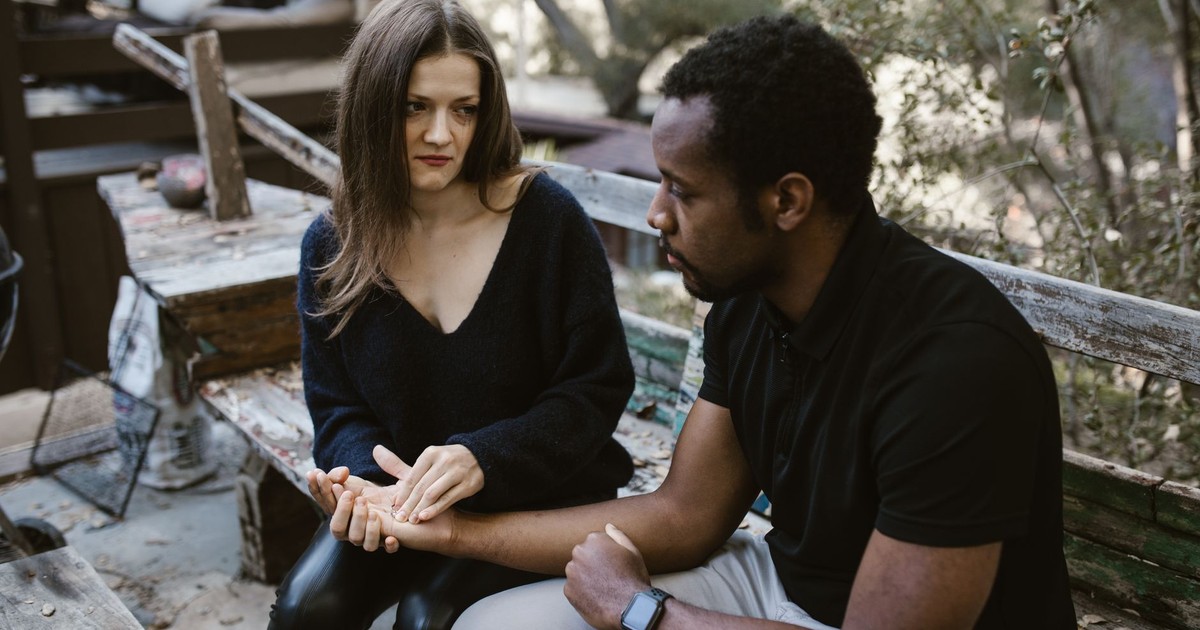
A woman, pregnant and increasingly frightened by her husband’s withdrawal, watches him disappear from inside the same room. He is pulling away in the specific, unreadable way that makes the mind run through every worst-case scenario: guilt, someone else, regret, something she did. The whole opening stretch of the story is that particular anguish of watching someone you love go somewhere you can’t follow while they’re still physically present.
What the barcode reveals is a medical record. And a phone number. When she calls it, she reaches a doctor who tells her everything her husband Daniel couldn’t. He has stage four pancreatic cancer. He has known for months. He chose not to tell her specifically because she was pregnant, because he decided that her ability to carry the baby to term without grief pressing down on her mattered more than her right to know what was happening to him. The doctor had placed the barcode on him, her idea, her act of hope, because she had lost her own husband suddenly without time to say the things she needed to say. She was not going to let that happen to this couple if she could prevent it.
Why Stage Four Pancreatic Cancer Carries the Weight It Does

The story works partly because pancreatic cancer carries a specific weight that audiences recognize, even if they can’t name exactly why. The American Cancer Society projects approximately 67,530 Americans will be diagnosed with pancreatic cancer in 2026, and the vast majority of those cases are diagnosed at later, more difficult-to-treat stages. The Pancreatic Cancer Action Network reports the five-year survival rate for pancreatic cancer across all types is 13 percent, up from 7 percent a decade ago, which represents genuine progress, but still a number that leaves very little room for reassurance.
Only about 15 to 17 percent of cases are found at the localized stage, when treatment is most effective. The vast majority of diagnoses occur at an advanced stage. Daniel keeping his diagnosis secret for months is not a plot hole. It is consistent with what this disease actually does. Symptoms can include weight loss, abdominal discomfort, back pain, and the development of type 2 diabetes, none of which, on their own, would immediately send a person to a doctor with a sense of urgency. By the time something shows clearly, the window for easy conversation has often already closed.
The story asks you to believe that a man with a terminal diagnosis might choose silence not because he does not love his wife, but because he loves her too much and in the wrong direction. A 2024 qualitative study in Scientific Reports, which interviewed ten pancreatic cancer patients and their spouses, identified “denial and silence” as one of five major themes in how patients and their partners cope with the diagnosis. The impulse to protect rather than disclose, especially when a partner is pregnant, especially when the future looks irreversible, is not fictional. It is a documented pattern in real families facing exactly this.
The Format That Made This Story Go Everywhere

The barcode on the husband’s back story is not just an emotional drama. It is a product of a very specific moment in how people consume fiction online. Micro-dramas, serialized stories with episodes that can last barely a minute, are having a significant cultural moment. According to a June 2025 Forbes report, the average attention span on any screen has dwindled to 47 seconds in recent years, down from about two and a half minutes when researchers first began tracking it in 2004. Emotional fiction that can hook a reader in a single sentence and hold them through a twist has a structural advantage in that environment.
Originating in China, this format has exploded globally and is now gaining serious traction in Western markets, particularly the US, with its addictive appeal built on heightened narratives of jealousy, betrayal, secret affairs, and shocking identity reveals. The barcode story fits every beat of what makes these viral narratives work: a sympathetic protagonist, a secret, a discovery that feels both absurd and inevitable, and an emotional gut-punch that recontextualizes everything that came before it.
What makes this particular story stand out in a crowded field is the barcode itself. It is a physical object. It gives the reader something to picture. And it does something elegant for the narrative: it turns a piece of modern technology, the kind of scan you do without thinking at a grocery store self-checkout, into an act of discovery so profound that the narrator faints. The mundane and the devastating in the same gesture.
The stories that travel fastest online tend to be the ones about love expressing itself in unusual forms, not the love that announces itself, but the love that leaves a trail for someone to follow. A barcode on a husband’s back is, when you strip it down, a love letter written in the only language a dying man felt he could use.
The Doctor’s Choice

One of the story’s most affecting elements is not Rachel or Daniel. It is the doctor. She is the one who put the barcode there. She had her own husband, her own loss, her own specific grief over the goodbye she never got to have. And rather than moving through that grief privately, she found a way to let it do something useful.
The story does not dwell on her at length, but she is the moral center of the whole thing. She made a decision that sits somewhere between wildly unethical and profoundly compassionate, and the story has the good sense not to adjudicate between those two readings. She bent the rules of medicine and maybe a few laws, and she did it because she understood something: that the person left behind carries the not-knowing for the rest of their life. Rachel deserved to know. The doctor decided that mattered more than the protocol.
What the Story Is Actually Asking
Every viral emotional story is asking one question underneath whatever drama it presents on the surface. This one is asking: if you were running out of time, what would you want the person you love most to know? And would you be able to tell them?
Daniel could not. He chose a barcode. He chose a stranger’s phone number on his skin. He chose a workaround that required Rachel to be observant and curious at exactly the right moment, which is a lot to ask of someone who is pregnant and frightened and already convinced she is losing him to something she did wrong.
You can read that as deeply romantic. You can also read it as an enormous imposition: all that love, delivered in the hardest possible way at the worst possible moment. The story does not resolve which reading is correct, and different readers land in different places. The people who find it unbearably romantic send it to their partners. The people who find it complicated send it to their friends with a “we need to talk about this.” Both responses are legitimate. Both are the story doing its job.
Grief researchers who study couples facing terminal illness describe a particular dynamic they call “mutual pretense,” the shared, unspoken agreement not to name what is happening. It protects both people. It also isolates both people completely. Daniel’s silence was not unusual. It was human. Painful and human.
The Thing That Stays With You

The barcode on the husband’s back story is fiction. It is absolutely engineered to make you cry, and it succeeds, and there is nothing wrong with that. Emotional fiction that helps people feel something real has always been worth something, even when its storytelling strategies are obvious.
What stays with you, after the twist and the doctor’s explanation and the grief of Rachel finding out too late and also just in time, is the simpler thing underneath all of it. Someone was dying and did not know how to say it. Someone else had already lived through the consequence of a goodbye that never happened. And between them, they found a way, imperfect, unusual, on the verge of absurd, to give Rachel the thing the doctor never got: a chance to know before it was over.
The internet keeps sending each other not the barcode, not the plot twist, but the idea that love, at its most desperate, will find a way to leave a message, and the hope that someone will be paying close enough attention to find it.
Disclaimer: This information is not intended to be a substitute for professional medical advice, diagnosis, or treatment and is for information only. Always seek the advice of your physician or another qualified health provider with any questions about your medical condition and/or current medication. Do not disregard professional medical advice or delay seeking advice or treatment because of something you have read here.
AI Disclaimer: This article was created with the assistance of AI tools and reviewed by a human editor.