

Every great story worth telling has, at some point, made someone uncomfortable enough to want it gone. Not mildly uncomfortable – the kind of uncomfortable that leads people to organize, petition, and pull books from shelves with the conviction that certain ideas are simply too dangerous to exist in print. The books that provoke that reaction are almost never the forgettable ones. They’re the ones that stick in your chest for years.
The history of banned classic novels reads less like a list of scandalous texts and more like a catalog of moments when society looked at a mirror and demanded someone smash it. Some of these books were banned for language, some for politics, some for intimate content so tame by contemporary standards that the original outrage now seems almost comically dated. And some were banned for reasons so contradictory – the same novel called both pro-communist and anti-communist by different censors – that you start to wonder if the specific charge ever really mattered, or whether “this makes us uncomfortable” was always the real complaint dressed up in more official language.
What follows is not a celebration of controversy for its own sake. These are ten novels that endured sustained, organized efforts to suppress them – books that found themselves at the center of court cases, school board fights, government bans, and public burnings. Most of them survived. A few are still being challenged today.
1. To Kill a Mockingbird – Harper Lee (1960)
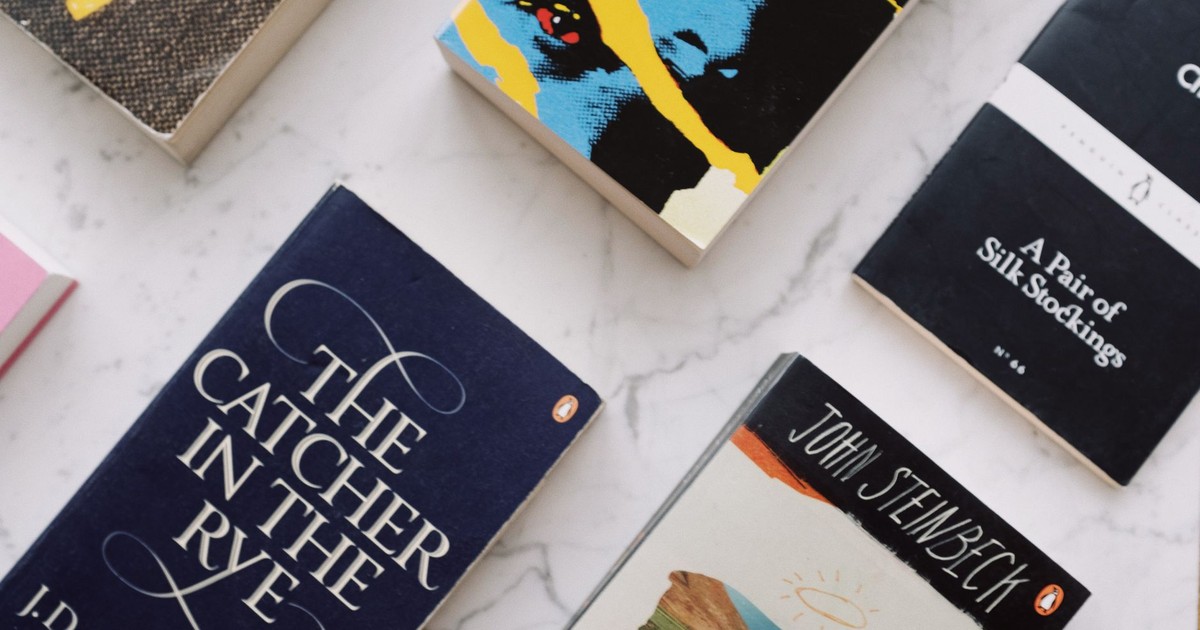
Harper Lee’s Pulitzer Prize-winning novel has been one of the most persistently challenged books in American literary history. Since its publication in 1960, the novel about a white lawyer’s defense of a Black man against a false rape charge has become one of the most frequently challenged books in the U.S. The complaints have evolved in tone and origin over the decades, but they have never entirely stopped coming.
Challenges have consistently cited its strong language, discussion of abuse, and use of the n-word, according to a History.com report on the novel’s banning history. Early challenges came from those who found the racial content inappropriate; more recent ones have come from those who argue that centering the story on a white narrator and a white “savior” figure does not serve Black students well. James LaRue, former director of the American Library Association’s Office for Intellectual Freedom, has noted that both types of challenge keep recurring, generation after generation.
Despite decades of challenges, most removal attempts have failed, and the book remains one of the most widely taught novels in American high schools. That persistence is its own kind of statement. A novel about the cost of doing right in a community that would rather look away keeps getting challenged, and keeps surviving. You almost can’t write a better irony than that.
2. Nineteen Eighty-Four – George Orwell (1949)
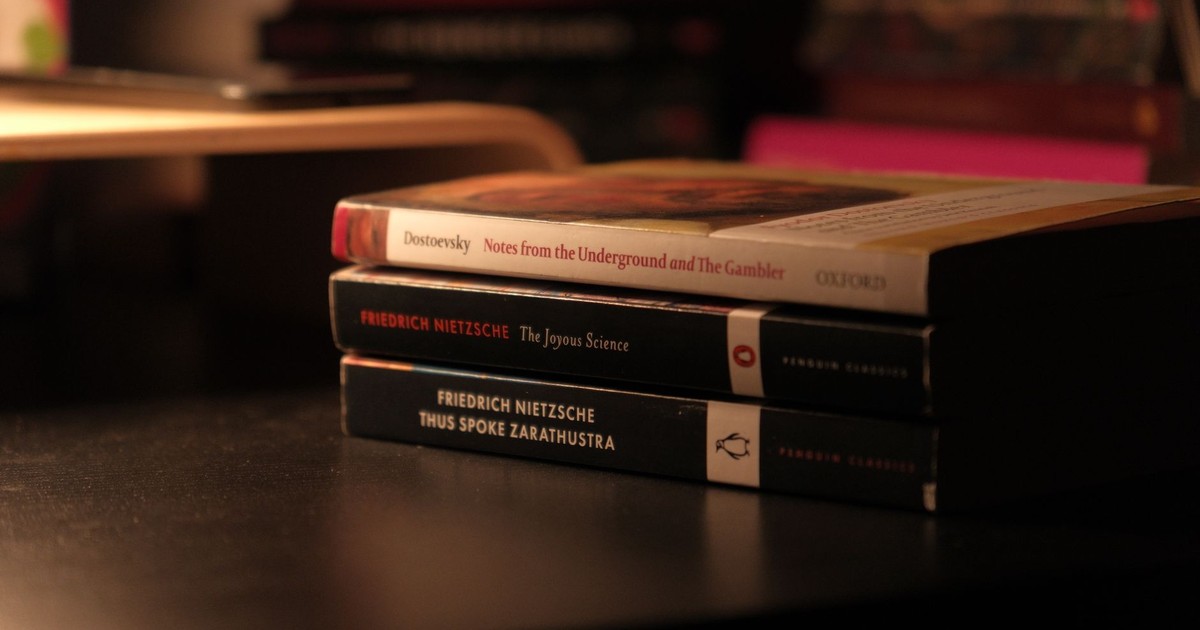
There is something almost perfectly circular about the fact that a novel written as a warning against censorship has been one of the most banned books of the last 80 years. George Orwell published Nineteen Eighty-Four in June 1949, and the suppression started almost immediately.
The Soviet Union banned the novel shortly after its publication because it was viewed as a satirical attack on Joseph Stalin and communism, and that ban lasted until 1988, when the first publicly available Russian edition appeared. In China, the novel was restricted to trusted officials and intellectuals until the late 1980s, reflecting the government’s sensitivity to its themes of surveillance and state control.
The American banning history is where things get genuinely absurd. In 1981, it was challenged in Jackson County, Florida, by parents who claimed the book was “pro-communist.” The Soviet Union had banned it for being anti-communist. The same novel, for opposite reasons. As recently as 2024 and 2025, 1984 appeared on lists of books flagged for review or requiring parental permission in states like Florida, Iowa, and Colorado under new parental rights and library transparency laws, according to a detailed account of the novel’s global banning history. The Banned Books Week 2025 campaign adopted the theme “Censorship Is So 1984” – a title that earned its irony honestly.
3. Brave New World – Aldous Huxley (1932)
Aldous Huxley’s vision of a future society built on pleasure, conditioning, and the elimination of suffering has unsettled readers almost since the day it arrived. The discomfort it produces is, in a sense, the whole point – Huxley wasn’t writing a utopia. He was writing a warning dressed as one.
The novel has faced bans and challenges across multiple countries and decades for a consistent set of reasons: explicit content, drug use (the fictional sedative “soma” features prominently), and what many conservative communities identified as a broadly anti-family and anti-religious worldview. In the United States, it has appeared repeatedly on the American Library Association’s list of frequently challenged books, with objections ranging from its depictions of casual intimacy to its portrayal of organized religion as an instrument of social control.
The novel doesn’t depict a society of jackboots and gulags – it depicts a society of comfort, compliance, and engineered happiness. That critique cuts in directions that can make people across the political spectrum uneasy, which may be why it has attracted challenges from groups with otherwise incompatible worldviews.
4. The Catcher in the Rye – J.D. Salinger (1951)

Holden Caulfield’s voice – wisecracking, wounded, and absolutely convinced that every adult in his orbit is a fraud – landed in 1951 like a small cultural explosion. It also landed on school board agendas across the country with a frequency that continued for decades.
The Catcher in the Rye faced widespread censorship and banning attempts, becoming the most censored book in U.S. high schools and libraries between 1961 and 1982. The complaints were consistent: vulgar language, and what many parents described as a generally corrupting attitude toward authority. In one particularly strange incident in 1978, the novel was briefly banned in Issaquah, Washington, when three school board members alleged it was part of an “overall communist plot.”
That same communist accusation surfaces repeatedly across the suppression histories of this era. Holden Caulfield’s problem with the world isn’t ideology – it’s phoniness. But “phoniness” applied to American institutions apparently read, to certain readers, as a political statement. Despite these challenges, generations of young readers found the novel immensely relatable, and it remains an American classic. Salinger’s work is credited with revolutionizing young adult literature, and its intimate, slangy style set the template for countless coming-of-age stories.
5. Ulysses – James Joyce (1922)
James Joyce’s Ulysses is the kind of novel that gets described as one of the greatest books ever written by people who have also, in many cases, not finished it. It is long, deliberately difficult, and in 1920 – two years before its publication as a complete book – sections of it were ruled obscene by an American court.
The legal case centered on the “Nausicaa” episode, in which the protagonist Leopold Bloom’s inner monologue includes explicit content. The U.S. Post Office seized and burned issues of the literary magazine The Little Review that had serialized the episode, and the two editors were convicted of publishing obscene material and fined. The complete novel was banned in the United States until 1933, when Judge John Woolsey ruled in a landmark decision that the book, taken as a whole, was not pornographic – a judgment that opened the door for a new generation of literature to enter American bookshops.
Britain’s ban lasted longer. The novel was not freely available for sale there until 1936. It remained a restricted title in various countries well into the mid-twentieth century. The irony, which Joyce would have appreciated, is that the explicitly intimate passage in question is also one of the most technically admired pieces of prose in the English language.
6. Lady Chatterley’s Lover – D.H. Lawrence (1928)
D.H. Lawrence published Lady Chatterley’s Lover privately in Italy in 1928 because he knew no mainstream publisher in Britain or the United States would touch it. He was right, and the novel spent more than three decades as a legally obscene text in much of the English-speaking world before a courtroom finally changed that.
The novel’s offense was explicit: it depicted a relationship between an aristocratic woman and her working-class gamekeeper, described in language that left nothing to suggestion. The class element scandalized as much as the intimacy- the idea that a woman of social standing might find herself drawn, body and mind, to a man from a lower class ran against assumptions that had nothing to do with obscenity law and everything to do with who those laws actually protected.
Though Lady Chatterley’s Lover was banned across the English-speaking world, a landmark trial happened in the UK in 1960, and a jury ultimately ruled in favor of publisher Penguin, leaving it free to publish not only Lady Chatterley’s Lover but a range of other previously “obscene” works. The British trial became a cultural event, with the prosecution famously asking the jury whether this was the kind of book they would wish their wives or servants to read – a question so spectacularly tone-deaf that it arguably sealed its own defeat.
7. Lolita – Vladimir Nabokov (1955)

Vladimir Nabokov’s Lolita is perhaps the most genuinely difficult entry on this list, because the reason it was banned and the reason it remains studied are, in a way, the same reason. The novel is a formally brilliant piece of fiction. It is also a first-person account of child abuse, narrated by the abuser with an eloquence designed to make him seem sympathetic. Both things are true simultaneously, and neither cancels the other.
Published by Olympia Press in Paris in 1955 after being rejected by multiple American publishers, Lolita was banned in England and then, under pressure from the British government, in France as well, according to the Antiquarian Booksellers’ Association of America. The book that was initially turned away by publisher after publisher went on to become a bestseller in the United States after its 1958 release, despite – or perhaps partly because of – its notoriety.
The novel’s defenders have consistently argued that Nabokov is not endorsing Humbert Humbert – that the prose is doing something more complex, indicting the narrator even as it gives him the floor. Its critics argue that the beauty of the language is precisely the problem, that there is something troubling about rendering predation in gorgeous sentences. Both positions have serious literary thinkers behind them. It is one of the few banned classic novels where the conversation about whether it should have been suppressed never quite settles.
8. The Grapes of Wrath – John Steinbeck (1939)

John Steinbeck’s novel about the Joad family’s migration from Oklahoma to California during the Dust Bowl was published in 1939, won the Pulitzer Prize in 1940, and was being actively suppressed by the time the ink was barely dry. The speed of the reaction said something about how precisely the book had landed.
The Grapes of Wrath was banned in several California counties almost immediately after publication, with particularly fierce opposition from agricultural interests in Kern County – the very region depicted in the novel as exploiting migrant workers. The Associated Farmers of California, a group with financial ties to large growers, organized opposition to the book and called Steinbeck a communist. Libraries in several communities removed it. Some copies were burned.
The charges of communism were a way of delegitimizing a book whose actual offense was reporting. Steinbeck had spent time with migrant workers, hired a private investigator to document conditions in the camps, and written a novel that made it impossible to look away from what was happening to American families. The bans didn’t stop the book. It has been in continuous print since 1939, and Steinbeck received the Nobel Prize for Literature in 1962.
9. Fahrenheit 451 – Ray Bradbury (1953)
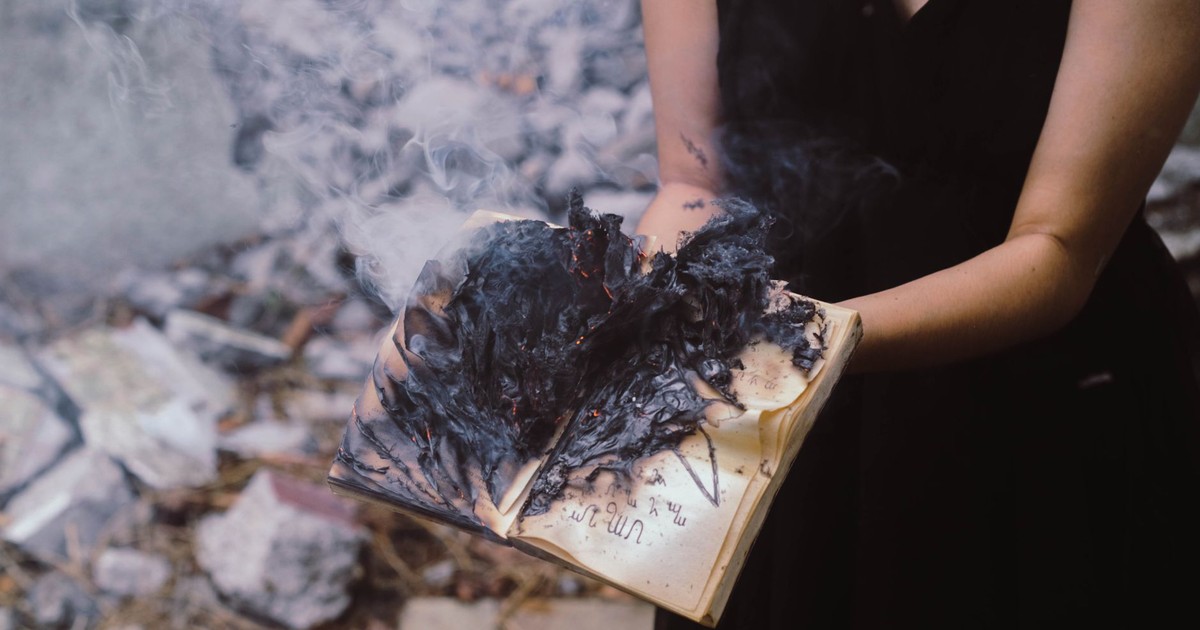
The particular cruelty of Fahrenheit 451‘s censorship history is that the book is literally about what happens when a society decides to burn its books. Ray Bradbury wrote the novel in response to McCarthyism and the cultural paranoia of the early 1950s, and the irony of it then being banned in the places it was meant to protect is the kind of thing that would be funny if it weren’t also completely predictable.
Fahrenheit 451 was banned in apartheid South Africa and expurgated by its own publisher for use in U.S. high schools. In 1992, students at a middle school in Irvine, California were given copies of the book with numerous words blacked out by school officials – censoring a book about the dangers of censorship – which led to public outcry and substantial media coverage. The words that prompted the blackouts included profanity and what officials described as inappropriate references to religion.
Bradbury’s inspiration for the novel included the Nazi book burnings of 1933 – a historical atrocity the book explicitly engages with. The fact that communities then turned around and performed their own smaller version of that act on his novel is the kind of historical recursion that’s almost too neat to believe. The book has since been restored to its original text in most editions and continues to be taught widely, which Bradbury, who died in 2012, described as the outcome he’d always believed was inevitable.
10. The Picture of Dorian Gray – Oscar Wilde (1890)
Oscar Wilde published The Picture of Dorian Gray in Lippincott’s Monthly Magazine in 1890, and the response was immediate revulsion from critics who called it immoral, corrupting, and unfit for publication. The moral panic was not entirely divorced from the subtext. Wilde was gay, and the novel’s portrayal of male beauty, obsession, and the aesthete lifestyle carried unmistakable homoerotic currents – currents that could not be named explicitly in Victorian England but could certainly be felt and condemned.
The novel follows Dorian Gray, who remains physically young while a hidden portrait ages and reflects his moral corruption. That premise – that the consequences of a life of pleasure and self-indulgence could be displaced onto an object, hidden from society while the outward appearance stayed pristine – read to Victorian critics as an endorsement of exactly what it depicted. The fact that Dorian’s choices ultimately destroy him did not seem to provide sufficient moral cover for a novel that had treated his pleasures so sympathetically.
Wilde revised and expanded the novel for book publication in 1891, but the damage to his public reputation had already begun. The novel was cited during Wilde’s 1895 trial for “gross indecency” – the prosecution used passages from it to argue that Wilde was, in effect, writing autobiography. He was convicted and sentenced to two years’ hard labor. The novel he had tried to defend as a work of art became evidence in a criminal proceeding that destroyed him. It is still read. He is still celebrated. The law that imprisoned him was repealed in Britain in 1967.
What Survives the Ban

Every book on this list was suppressed, challenged, burned, or declared legally obscene. Several were targeted by multiple governments with opposing political motivations. A few are still being challenged in American school districts right now, in 2026, by organized groups who have developed increasingly efficient processes for doing so.
PEN America’s 2024-2025 report documented 6,870 instances of book bans across 23 states and 87 public school districts – more than double the number tracked in the 2021-2022 school year. The targets are not always the same books – the list adjusts with the political moment – but the impulse behind it is recognizable across every era these books have survived. The novels that drew the most organized suppression were almost always the ones that forced a community to confront something it preferred to keep unexamined: the reality of racial injustice, the mechanics of authoritarianism, the fact that desire and class and power do not obey the rules society claims to live by.
The Same Argument, Different Century
What these ten banned classic novels share is not a unified ideology or a consistent type of objectionable content. What they share is the capacity to make a reader see something she might prefer not to see – about race, power, desire, class, authority, or herself. The censors and the literary scholars agree on at least one thing: that it matters which books get read.
The arguments made against these novels – they corrupt youth, they undermine authority, they normalize the unacceptable – are the same arguments that have appeared in every era of recorded censorship. The specific titles rotate. The specific charges rotate. The underlying anxiety, that certain ideas are too dangerous to circulate freely, has not changed at all. What has changed is that every single book on this list survived its ban, found its readers, and is now considered essential. The people who tried to disappear them are, almost without exception, remembered only for having tried.
That’s not a guarantee that every book currently under challenge will find the same outcome. But it’s a pattern consistent enough to notice.
Disclaimer: This information is not intended to be a substitute for professional medical advice, diagnosis, or treatment and is for information only. Always seek the advice of your physician or another qualified health provider with any questions about your medical condition and/or current medication. Do not disregard professional medical advice or delay seeking advice or treatment because of something you have read here.
AI Disclaimer: This article was created with the assistance of AI tools and reviewed by a human editor.