
Baby Boomers, born between 1946 and 1964, came of age in a world where customer service meant a person looked you in the eye, transactions were completed in a predictable amount of time, and complaining loudly about the state of things was practically a civic duty. That world has changed. A lot. And while every generation accumulates its list of grievances, Boomers have cultivated theirs with particular care, honing it over decades of watching institutions, customs, and common courtesies dissolve. Some of their complaints are, frankly, generational static. Others are observations that anyone paying attention can’t really argue with.
Baby Boomer patience is not an infinite resource, and the list of things that reliably drain it has grown considerably longer as daily life has reorganized itself around priorities they did not endorse and technologies they were never consulted about. Some of these irritants are mundane. Some run deeper than they appear. Most of them say something real about the distance between the world this generation was built by and the one they’re being asked to inhabit now.
1. Self-Checkout Machines

Self-checkout was sold to everyone as a gift – faster, easier, more autonomous. For a large portion of the Boomer generation, it has been none of those things. When asked to choose between self-checkout and cashier-assisted checkout with equal lines, 62% of respondents aged 65 and older said they preferred the cashier, according to a YouGov survey reported by Fox News. That preference is not simply technophobia. It is a response to a machine that demands you bag items in a precise order, flags your groceries for employee approval, and then asks you to confirm three times that yes, you did in fact scan that can of soup.
The deeper irritant is the principle of it. Boomers built careers and spent lifetimes patronizing businesses that employed people to do jobs. Self-checkout, in their view, is a store asking the customer to perform unpaid labor while simultaneously reducing staff. Cleanliness and service top the list of what Boomers actually prioritize in grocery stores, according to a 2024 Feedback Group survey – and neither of those things is well-served by a machine with a flickering screen and a weight sensor that treats a reusable bag like a federal crime.
2. Tipping Prompts for Everything

A coffee handed over a counter. A bag of dog food loaded into a car by a teenager. A digital tablet rotating to face you with three suggested tip amounts, starting at 25 percent, at a bakery where no one sat you down and no one refilled anything. The expansion of the tipping prompt has been one of the more quietly maddening developments of the past decade, and Boomers – who traditionally tip consistently and more generously than younger generations – have reached their limit with tip creep. A 2024 Bankrate survey found that 35% of Americans believe tipping culture has gotten out of control, and that more than 8 in 10 Baby Boomers say they always tip servers, compared to just 35% of Gen Zers – making Boomers among the most reliable tippers for traditional service contexts.
The irony is that Boomers are not actually bad tippers. They are, by the data, among the most reliable ones for traditional service contexts. What they cannot abide is the manufactured social pressure of a screen pointed at their face, in a setting where tipping was never an expectation before, making them feel guilty for clicking “no tip” in front of a barista.
3. Talking to a Chatbot Instead of a Human
Call a utility company, an insurance provider, a bank, or an airline and the odds are strong that you will be greeted by an automated voice or a chatbot that wants to walk you through a series of menu options before connecting you – maybe, eventually – to a human being. For Boomers, who came of age when calling a company meant speaking to a person, this is a genuine source of rage.
The automation is not the only problem. The chatbot often cannot solve the actual issue, and by the time a human appears on the line, the caller has already spent twelve minutes explaining their problem to a robot. Boomers are acutely attuned to the feeling of being managed rather than helped, and automated phone trees are the clearest expression of that dynamic.
4. The Death of Cursive and Handwriting

Ask a Boomer to admire a handwritten note and you will likely receive genuine appreciation. Ask them to watch a teenager stare blankly at a document written in cursive, unable to read it, and you will unlock a lament that can last the rest of the meal. Many American schools phased out cursive instruction over the past two decades, and from the Boomer perspective, this represents not just a lost skill but a lost cultural thread – one that connects people to personal letters, historical documents, and a time when communication required a certain deliberateness.
Whether cursive instruction belongs in the curriculum is a legitimate debate. But the Boomer frustration is less about penmanship itself and more about what its disappearance represents: a broader willingness to abandon skills and traditions simply because technology makes them technically unnecessary.
5. People Who Don’t Answer the Phone

A text arrives: “can you talk?” The reply comes back four hours later. Meanwhile, the call that would have resolved the matter in three minutes was never made, never answered, and never returned. For Boomers, who built their communication lives around the telephone – the landline, the long-distance call, the courtesy of picking up – the widespread millennial and Gen Z preference for text-only contact reads as avoidance dressed up as preference.
There is real Baby Boomer patience for a lot of things, but waiting hours for a text response to a question that a thirty-second call would have settled is not typically one of them. This is not purely generational stubbornness. Boomers genuinely experience voice calls as more efficient and more connective than a chain of texts. The friction here is real on both sides – one generation sees the phone call as courtesy; the other sees it as an ambush.
6. Poor Workmanship and Disposable Products

A refrigerator purchased in 1978 ran for thirty years. Its replacement, bought in 2019, needed a repair call within four. This is not a complaint unique to Boomers, but they carry it with particular weight because they remember when things were built to last – furniture, appliances, shoes, cars. The economic and manufacturing changes that produced cheaper, faster, more replaceable goods made sense from a business perspective. From the Boomer perspective, they represented a slow surrender of quality for convenience.
The irritation extends beyond nostalgia. Many Boomers were raised by parents who survived the Great Depression and passed on a genuine reverence for objects that were well-made and worth keeping. A world of planned obsolescence and throwaway culture runs directly against that inheritance.
7. Slang They’re Expected to Keep Up With

Language changes. Every generation leaves its mark on the vernacular. Boomers know this because they, too, had words that baffled their own parents. But the pace of slang evolution has accelerated alongside social media, and the expectation that everyone should instantly absorb and correctly deploy new terminology strikes many Boomers as, at minimum, exhausting and, at maximum, a moving target designed to make them feel like outsiders.
The irritation is not usually with the language itself. It is with the eye-roll that follows when they use a term incorrectly, or the moment when something they said in good faith turns out to carry a connotation they were entirely unaware of. Being made to feel foolish for not knowing the current rules of a language they’ve spoken fluently for sixty-plus years is a reliable way to test Baby Boomer patience.
8. The Assumption That They’re Technologically Helpless
Around 70% of adults aged 57 to 75 describe themselves as curious about new tech, devices, and apps, according to a 2023 Razorfish survey. They are online. Many of them bank, shop, video call, and stream with complete fluency. The caricature of the Boomer who cannot operate a smartphone is both reductive and increasingly outdated.
What Boomers legitimately object to is the automatic assumption of incompetence – the over-explained instructions, the slow and loud repetition, the look of mild surprise when they navigate something without assistance. They may have learned these tools later in life, but that is different from being bad at them. Being talked down to by someone forty years younger, about a skill the Boomer has been using for a decade, is a specific and recurring indignity that does not get less irritating with repetition.
9. Lack of Punctuality
If a Boomer tells you they will be there at two o’clock, they will be there at 1:55. The expectation is that you will also be there at 1:55, or at least at 2:00, and that if you are going to be late, you will have called ahead. The cultural loosening of punctuality norms – the “I’m on my way” text sent from a stationary couch, the fifteen-minute-late arrival treated as a rounding error – registers for many Boomers as a fundamental disrespect of other people’s time.
This is not purely a personal preference. Boomers entered professional life at a time when being late was a statement, and not a good one. It signaled that your time mattered more than the other person’s. That understanding is bone-deep. The current cultural norm, where a ten-minute delay is basically expected, reads to them not as flexibility but as a kind of collective rudeness everyone has agreed to pretend is fine.
10. Dismissal of Mental Toughness

A 2024 study by the Policy Institute at King’s College London and the Orygen Institute in Australia found that Baby Boomers and Gen X are around twice as likely as millennials and Gen Z to say that youth mental health problems have increased because young people today are “less resilient.” That finding makes Boomers sound dismissive. And sometimes they are. But the frustration is often rooted in something more specific than callousness.
Boomers were raised in environments that actively discouraged emotional expression and rewarded stoicism. That produced real psychological costs – costs many of them have only come to reckon with in their fifties and sixties. But it also produced a genuine capacity for pushing through difficulty without falling apart, and Boomers can struggle to reconcile what they learned to value with a cultural conversation that increasingly frames that very capacity as a form of damage. The frustration is less “your feelings aren’t real” and more “I had to figure out how to carry mine alone, and nobody called it resilience – they just called it Tuesday.”
11. The Subscription Economy

You used to buy software once and own it. You bought a CD and kept it. You bought a newspaper and held it in your hands. Now you subscribe to your photo editing software, your music, your movies, your TV shows, your news, your cloud storage, your gym, your meal kits, your razor blades, and somehow also your car’s heated seats. For Boomers, who built financial lives around ownership rather than access, the subscription model is a psychological and practical irritant that never fully fades.
The issue is partly financial: subscriptions add up invisibly, buried in bank statements, quietly renewing every month. It is also philosophical. You are paying indefinitely for something you will never own and can lose access to the moment the payment fails or the company decides to raise its price. Boomers did not grow up in a world where access was contingent on a monthly fee. They grew up buying things. The switch has never felt like progress.
12. Volume and Noise Everywhere

Restaurants with exposed concrete ceilings, speaker systems cranked to a decibel level that makes conversation physically impossible, music piped into hardware stores, shopping centers, and parking garages. The ambient noise floor of modern public life has risen considerably, and Boomers – many of whom have some degree of age-related hearing loss – find it genuinely exhausting. The request to lower the volume is not a sign of frailty. It is a request to exist in a space without having to shout to be heard.
There is also a generational component to this. Boomers came of age in an era when background music stayed in the background. The current convention, in which any space without music feels somehow wrong, strikes many of them as an affectation.
13. Planned Obsolescence and Constant Updates

The phone update that moves the settings menu to a completely different location. The app redesign that removes the button you have been pressing for three years. The operating system that abruptly stops supporting the hardware you bought eighteen months ago. From a purely engineering standpoint, there are reasons for all of this. From a Boomer standpoint, it is a treadmill that runs faster than it needs to, and one that exists primarily to sell more things.
What makes this a particular patience-tester is the assumption that everyone will simply adapt without complaint. Boomers are not necessarily opposed to updates. They are opposed to updates that make things worse and are presented as improvements, followed by updates that fix the things the previous update broke, followed by the quiet suggestion that the whole problem could be resolved by buying a newer device.
14. The End of Legible Receipts and Paper Trails

A receipt sent to your email that you cannot find because it went to a spam folder. A return policy that lives on a QR code. A warranty that requires you to register online within fourteen days using a serial number printed in four-point type on a sticker behind the battery compartment. For a generation that grew up with physical documentation – the paper receipt in the wallet, the warranty card mailed in a week after purchase – the dematerialization of the paper trail is a constant low-grade frustration.
The Boomer relationship with documentation is partly about trust and partly about control. A piece of paper is evidence you can hold. An email confirmation is something that can vanish, be filtered, or suddenly be unavailable when the server goes down.
15. Overcomplicating a Simple Order
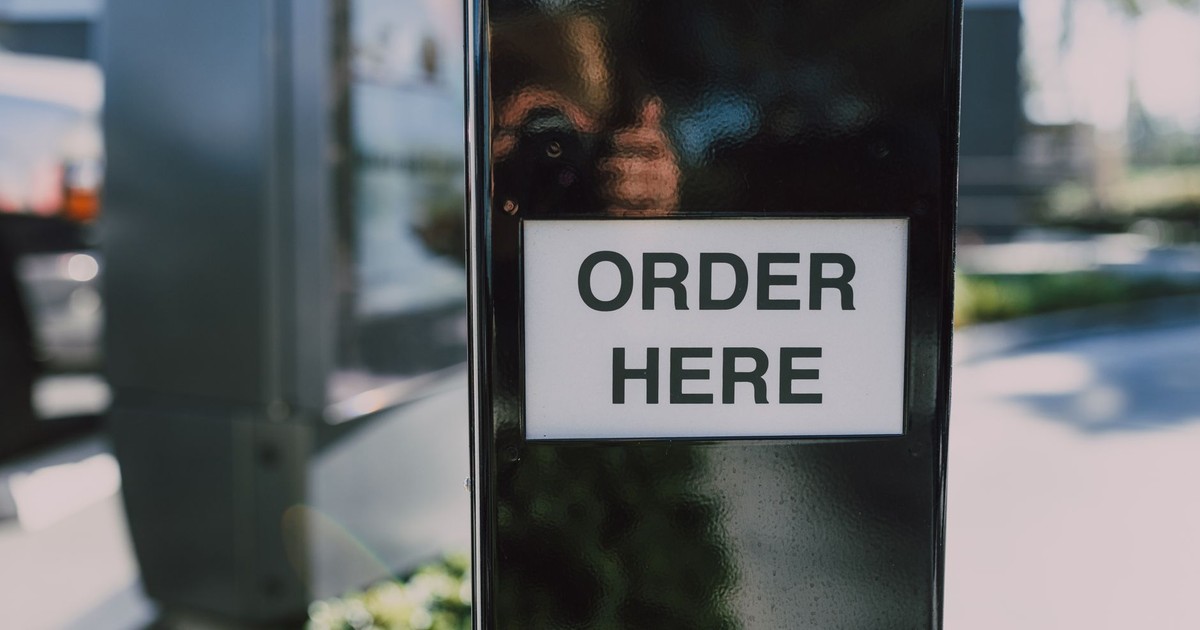
Boomers, as a general rule, would like to order a cup of coffee. Not a “large oat milk cortado with two pumps of vanilla and a dash of cinnamon, lightly iced.” Coffee. They would like to drink it, pay for it at a price that reflects what coffee costs, and leave. The elaborate customization culture of modern coffee shops, fast-casual restaurants, and even basic lunch counters can feel, to someone who grew up ordering from a menu with six items on it, like a performance rather than a meal.
This is not about being inflexible. Boomers have personal preferences just like everyone else. The frustration is with a culture that treats the ordering process as a form of self-expression and then builds transaction times accordingly. A six-minute wait at a coffee counter – when Boomers remember a diner counter producing coffee before you finished sitting down – is not a small thing.
16. Nobody Writes Thank-You Notes Anymore
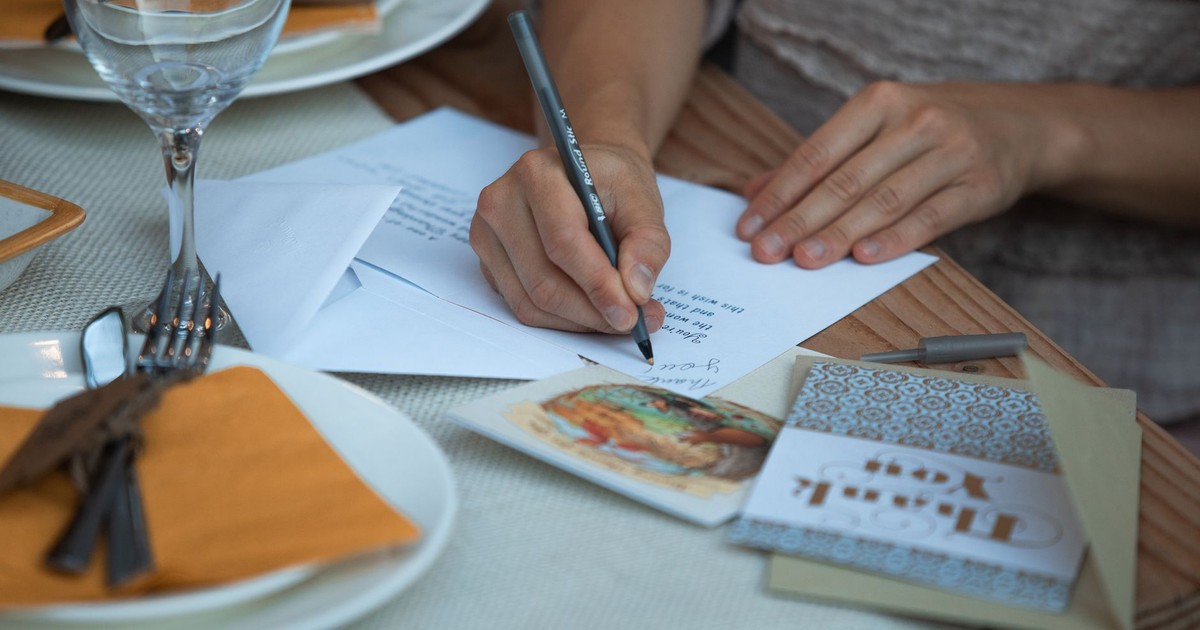
A gift arrives. It is the right size, the right color, exactly what was asked for. No acknowledgment appears. No card, no email, no text, no phone call. Six weeks later, a status update on social media suggests the gift was received. For many Boomers, the decline of the written thank-you note is not a minor etiquette complaint. It is a real and ongoing source of hurt feelings, even when they would rather not admit it.
The thank-you note was, in the world Boomers grew up in, a basic obligation – not because it was performative, but because it acknowledged that someone did something for you. The move to implicit acknowledgment, or no acknowledgment at all, reads as a fundamental change in how people relate to gratitude.
17. Remote Work Skepticism Runs Both Ways

Much has been written about Boomer skepticism toward remote work – the conviction that presence in an office equals productivity, that working from home is a polite fiction covering a couch and a streaming service. Remote work became a norm after the pandemic, but Baby Boomers, who built their careers in traditional office environments, often view working from home as less efficient or even lazy.
What gets less attention is that this frustration is also about something they experienced themselves. Boomers built careers through visibility – being seen, being available, putting in face time that was also relationship time. Mentorship happened in hallways. Professional networks were built over lunch. The things they believe work generates for a young professional are things they genuinely received from physical proximity, and they cannot always separate their own experience from universal prescription.
18. The Cost of Absolutely Everything

A dozen eggs. A tank of gas. A movie ticket. Home insurance. A plumber. A dental cleaning without insurance. The specific combination of things that have become dramatically more expensive in the last several years has hit Boomers – particularly those on fixed retirement incomes – in ways that feel both financially concrete and symbolically enormous. They remember specific prices. They can tell you exactly what a house in their neighborhood sold for in 1987 and what it sells for now, and the math produces a particular kind of quiet fury.
The frustration here is not unique to Boomers. Inflation and housing costs have reshaped financial reality for every generation. But Boomers carry an additional layer: they made decisions based on projections that assumed a certain relationship between earnings, costs, and savings. When those projections fail, the anger is not abstract.
19. Entitled Behavior in Public

Someone cutting a line. Someone playing a video on speakerphone in a waiting room. A dog on a restaurant patio that is barking while the owner stares at their phone. A shopping cart abandoned in the middle of a parking lot four feet from the cart return. These are the recurring small crimes against communal life that reliably eat through Baby Boomer patience. And while plenty of people of every generation commit them, Boomers tend to notice them, catalog them, and feel their accumulation as evidence of a broader social unraveling.
Boomers were raised in a post-war cultural climate that placed real emphasis on civic participation, community obligation, and the idea that public spaces were shared resources to be maintained by everyone. The current norm, in which individual convenience is routinely prioritized over communal consideration, strikes them as a failure of civic character.
20. Being Talked About in the Third Person While Present

At a family gathering, or a doctor’s appointment, or a parent-teacher conference gone sideways: the moment when a Boomer is in the room and someone begins discussing them, their habits, their limitations, or their future as though they have already left. This one is perhaps the most cutting on the list, and the least discussed. It happens in ways both large and small. A younger family member explaining their parent’s technology situation to a tech support person while the parent stands right there. A doctor addressing questions to an adult child instead of the patient. A gathering where the conversation about “what we’re going to do about” a Boomer parent happens in full earshot.
That is where generational tensions around Boomer grandparents often come into sharpest focus – not in the grand ideological arguments, but in the small daily moments of being seen as a problem to be managed rather than a person to be spoken to. Boomers are, by any measure, a generation accustomed to being at the center of cultural conversation. Being slowly written out of it, while still present, is a specific and pointed kind of patience-testing that no amount of generational framing makes easier to absorb.
Read More: Xennials – Who They Are and How They Are Different From The Millennials and Gen X’ers
What This Actually Is

Every generation is frustrated by the world it did not design. Boomers grew up in one America and are aging in a substantially different one, and the list above is, in part, a portrait of that distance – the gap between a set of expectations formed in the 1960s and 70s and a daily reality that looks almost nothing like them. Some of what they are frustrated by is genuinely worth being frustrated by. Self-checkout really is slower than it should be. Tipping prompts really have gotten out of hand. Public rudeness is real, and legible receipts were useful.
Some of the rest is the entirely normal experience of watching a world you understood get replaced by one you have to keep learning. That is not unique to any generation. It is the condition of living long enough. The frustration is real, even when the only available response is patience – the very thing these twenty items are in the business of spending.
What is easy to miss, when compiling a list like this, is how many of these grievances are actually about respect: for time, for quality, for the social contracts that hold communities together, for the basic dignity of being spoken to rather than processed. Boomers did not invent those values, and they will not be the last generation to mourn their erosion. The argument between them and everyone younger is often not really about self-checkout or slang or thank-you notes at all. It is about what a well-functioning world owes the people living in it – and who gets to decide when that changes.
Disclaimer: This information is not intended to be a substitute for professional medical advice, diagnosis, or treatment and is for information only. Always seek the advice of your physician or another qualified health provider with any questions about your medical condition and/or current medication. Do not disregard professional medical advice or delay seeking advice or treatment because of something you have read here.
AI Disclaimer: This article was created with the assistance of AI tools and reviewed by a human editor.