

Every time an angel appears in Scripture, the first thing out of its mouth is not a greeting or introduction. It is a command. “Do not be afraid.” The greeting comes second, if it comes at all.
The phrase has circulated so widely in devotional culture that it has taken on the warm, fuzzy texture of a refrigerator magnet. But when you look at the actual encounters in the biblical text, the people receiving that command were not mildly startled. They were flattened. They fell on their faces. They fainted. They lost the ability to speak. These were not people being told to calm down about something ordinary. They were people face to face with something their minds could not organize or contain.
Ten distinct reasons this phrase appears again and again across both Testaments add up to a theology of courage.
1. Angels Are Nothing Like the Art Suggests

The seraphim of Isaiah 6 have six wings each. The cherubim in Ezekiel possess four faces simultaneously – human, lion, ox, and eagle – and their bodies are covered with eyes, according to Ezekiel 10:12. These are not soft-focus beings in flowing robes.
Contemporary media typically portrays angels as soft, comforting figures adorned with two wings and flowing white robes. While Scripture doesn’t explicitly contradict these images, since many angels do appear in human form, such depictions capture only a fraction of the biblical picture. The sanitized version is a Renaissance invention, not a biblical one. The cherub of popular imagination – round-cheeked, hovering – is a figure borrowed from classical Roman art, not from Ezekiel’s vision of creatures whose presence made the prophet collapse.
Any being radiating divine glory, burning with holiness, and bearing multiple faces would produce a terror response in any human being with functional senses. The command is functional, not formulaic. It is clearing the path so the actual message can land.
2. The Frequency Is Deliberate

One popular claim holds that the phrase “do not be afraid” appears exactly 365 times in the Bible, one for each day of the year. It is not accurate. According to biblical scholars at Catholic Resources, the phrase “Fear not!” (or equivalent translations) appears only slightly over 100 times in the Old Testament, as well as about 44 times in the New Testament.
The real number makes the same point the myth was trying to make: this reassurance is among the most repeated commands in all of Scripture. Across different authors, different centuries, different languages, different contexts, the same instruction keeps appearing. Repetition at this scale in ancient text is not filler. It reflects a recognition that fear is one of the most persistent and universal obstacles to receiving divine communication.
The actual count reveals that the message was calibrated to the human situation, not to a calendar. God’s messengers appeared when something was about to change. And almost every time, the first order of business was the same.
3. An Angel’s Arrival Always Signals a Turning Point

Angels do not appear to deliver routine news. The Annunciation. The birth of John the Baptist. The resurrection. The vision that redirected Paul’s entire missionary journey. These are not minor updates.
The human nervous system responds to significance. Something in us already knows, at the moment of encounter, that what is about to happen will be irreversible. That recognition produces fear before the content of the message is even delivered. The “do not be afraid” that opens each encounter acknowledges that. The angel is not pretending the moment is small. It is naming the fear and moving past it.
This is also why the command carries weight when humans say it to each other. When a doctor, a parent, or a friend opens with those words, the effect is similar. The phrase acknowledges that fear is reasonable here, then asks for something beyond it.
4. The Messengers Carry Divine Glory

Angels in Scripture are not autonomous beings operating on their own authority. They carry the presence and power of the one who sent them, which means encountering an angel is, in some sense, the nearest most humans in the Bible ever come to encountering God directly.
In Luke 2:9, the shepherds are terrified not by the angel’s appearance alone but by the “glory of the Lord” that shines around the angel, flooding the dark hillside.
Humans are not built to process an encounter of that magnitude without a significant recalibration. The command to not be afraid is part of that recalibration. It does not remove the glory. It asks the recipient to hold still long enough to receive what the glory is carrying.
5. Fear Would Block the Message

If the person receiving the message is in a state of paralyzing terror, the message itself will not land. High fear narrows attention, contracts the field of awareness, and prioritizes escape over comprehension.
Medical professionals know that a patient in acute distress cannot absorb clinical information in the same way a calm one can. Teachers know that a child flooded with anxiety cannot learn in the same way a settled child can. The biology is consistent. Angels saying do not be afraid is not merely spiritual ceremony. It is strategic.
The message matters enough to warrant clearing the emotional field first. The angel is not rushing past the fear; it is making room.
6. The Recipients Are Often the Least Expected

One of the striking patterns in angelic appearances across both Testaments is who receives them. Not kings, not high priests, not the powerful figures who would seem to have the infrastructure to handle extraordinary news. In the book of Luke, angels twice say to the cowering faithful “Do not be afraid.” First, the angel Gabriel says to the Virgin Mary: “Do not be afraid, Mary; you have found favor with God” (Luke 1:30). Then an angel addresses shepherds in the fields: “Do not be afraid. I bring you good news that will cause great joy.” In both cases, God sent his messengers to highly vulnerable parties: an unwed young woman alone in her room; humble night laborers in the chilly dark.
The command is especially significant in these cases because vulnerability magnifies fear. An unwed young woman in first-century Judea who is told she will conceive a child has more reasons to be afraid than just the apparition in front of her. The social, familial, and legal implications alone are devastating. The angel’s reassurance reaches into all of that, not just the immediate visual shock.
The same message goes to the shepherd in the field and to the prophet in the palace. The reassurance is offered without qualification, to whoever needs it.
7. Fear Is Described as the Enemy of Faith
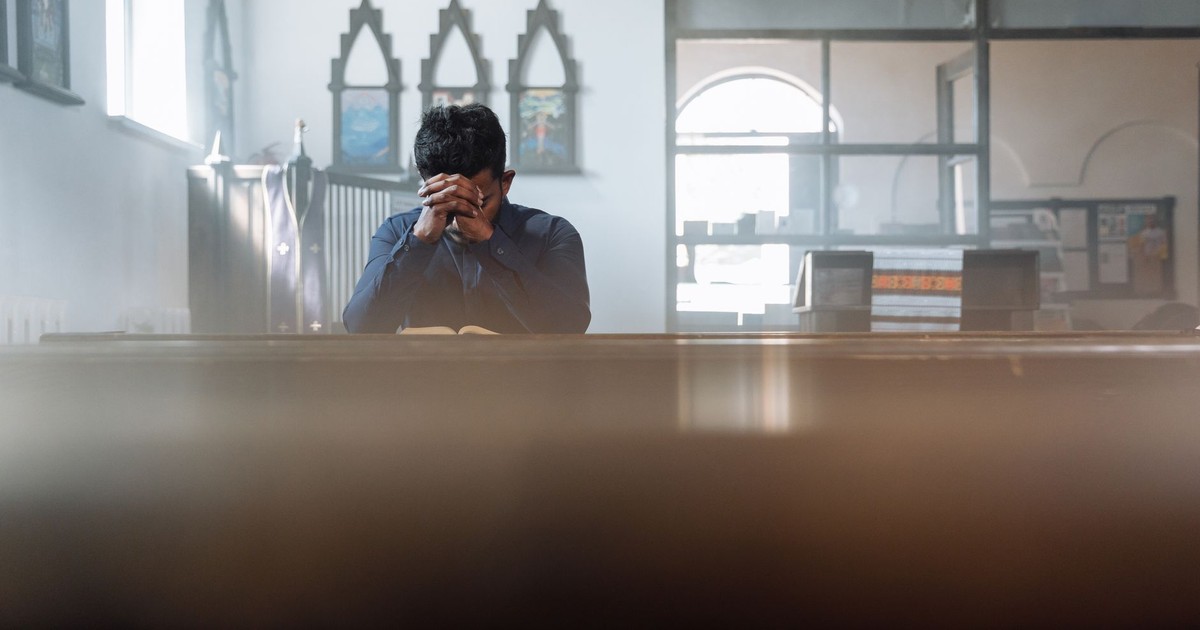
Across the biblical text, fear and faith occupy opposite ends of a spectrum. This is not a sentimental observation; it is a consistent theological position that runs from the Hebrew scriptures through the New Testament epistles.
If fear is understood in this tradition as the primary weapon against human receptivity to the divine, then the angelic command to not be afraid is not a pleasantry. It is a counter-move. It is disarming the opposition before the real conversation begins. In Hebrews 2:14-15, the logic is made explicit: through the death and resurrection of Christ, the very chain by which fear enslaves – the fear of death itself – is broken.
Each instance is a data point in a pattern: the divine operates by invitation, not coercion, and fear closes the door to invitation.
8. The Command Distinguishes Holy Reverence from Paralyzing Terror

The biblical tradition does not ask people to feel nothing in the presence of the divine. It asks them to feel the right thing. The fear they should have is different from being afraid.
So when the angel says “do not be afraid,” it is not eliminating the appropriate awe. It is redirecting a survival-level panic response toward something more sustainable: reverence. The distinction matters because the same word in both Hebrew and Greek covers emotional terrain that English splits into separate words. Fear and awe, dread and wonder, terror and respect all move within the same linguistic neighborhood. The angel’s command is calibrating which kind of response is called for here.
This is why the angelic appearances in Scripture so often produce two stages: first the collapse in terror, then the restoration. Daniel falls on his face; the angel touches him and lifts him up. The women at the tomb run in fear and great joy simultaneously, which is an honest description of what happens when two legitimate responses occupy the same moment.
9. Angels Are Delivering News That Changes Everything

The news that comes next is always life-altering. When people in the Bible saw angels, they often reacted with fear and awe, such as when Daniel fell on his face and was terrified by an angel’s appearance. In each case, the person receiving the message is about to find out that their life is going in a direction they did not plan for.
Human beings are wired for predictability. The announcement that something unprecedented is about to happen activates not just spiritual awe but a very ordinary, very human fear of the unknown. The angel addresses both layers. It is saying: this is going to be bigger than you can picture right now, and you do not need to be afraid of it.
You can explore accounts of near-death heavenly experiences that echo this same interplay between overwhelming encounter and unexpected peace.
10. The Reassurance Is a Promise, Not Just a Greeting

There is a difference between a social formula and a covenantal statement. “How are you?” is a formula. The angelic “do not be afraid” carries the weight of a promise, because in the tradition from which it comes, divine words are understood to have performative force. When God or God’s messenger says something, it does not merely describe a reality; it participates in creating one.
The reassurance is offered precisely because the thing being announced is going to require something significant from the person receiving it. It is not comfort offered before bad news. It is authorization offered before a calling. Mary will need this. The shepherds will need this. Paul, on a storm-tossed ship, will need this. The “do not be afraid” is given in advance of what it will take to carry the message forward – which is to say, it is given when the recipient needs it most.
What the Angels Already Know

The command appears so often across so many centuries and so many different kinds of encounters because the thing it addresses never changes. Human beings encounter the unfamiliar, the enormous, the sacred, and the irreversible, and fear is the first response every time. It was true for shepherds on a hillside in Bethlehem. It is true for anyone standing at the edge of something that cannot be undone.
What the angels already know, and what the repeated command acknowledges, is that fear is not disqualifying. None of the people in Scripture who received this instruction were fearless. They were afraid, and they stayed anyway, and they heard what came next. The command does not ask for the absence of fear. It asks for something harder and, in the long run, more durable: the willingness to remain present while afraid, long enough to receive what has been sent.
Some of these encounters changed the entire course of human history. The people at the center of them were ordinary, frightened, and completely unprepared. The angels said do not be afraid not because the situation didn’t warrant fear, but because fear was the one thing standing between those people and everything that came next. Not the elimination of fear, but the refusal to let it close the door before the message arrives.
Disclaimer: This information is not intended to be a substitute for professional medical advice, diagnosis, or treatment and is for information only. Always seek the advice of your physician or another qualified health provider with any questions about your medical condition and/or current medication. Do not disregard professional medical advice or delay seeking advice or treatment because of something you have read here.
AI Disclaimer: This article was created with the assistance of AI tools and reviewed by a human editor.