

There’s a little thrill that comes when you read about people from long-vanished worlds. Their ruins whisper, their myths pulse with strange familiarity, and suddenly the present day feels like a costume party where your true self is hidden under modern clothes. What if your personality, your deepest desires, your instinctive rhythms match an ancient culture more than the one you were born into? This playful portrait quiz of the imagination isn’t about archaeology or history as a test of facts. It’s about resonance—how certain eras and peoples can reflect parts of you so clearly they might as well be mirrors for the soul.
Below are six ancient civilizations, each sketched as a personality map: virtues, tensions, loves, and a few lifestyle notes for the person who would feel most at home in that world. Read each profile and notice which one makes something stir inside you. Don’t worry about accuracy or ancestry; this is pure soul-styling.
Some birth date personality archetypes based on history match with striking precision to the people who built the great wonders – the pyramid engineers, the Senate philosophers, the stargazing priests. So what ancient civilization matches your birthday personality? Keep reading.
What Does Your Birth Date Actually Say About Your Personality?
Before we get into civilizations, it helps to understand what birth date personality even means – because it’s not the same as your sun sign. Birth date personality is a broader idea. It combines the season you arrived in, your numerological profile, and the specific traits researchers have consistently observed in people born at similar points in the year’s cycle.
Season of birth functions as a stand-in for the whole environment a baby is exposed to during early development – light exposure, nutrition, temperature, and maternal health all cluster differently depending on the time of year. That doesn’t make it destiny. But it does mean the world that greeted you on day one wasn’t neutral. Just because the exact day of your birth might not carry special weight doesn’t mean the same is true for your season of birth – scientists have been building a small but increasingly persuasive body of evidence that there may be some cause and effect at work.
Studies using big-five personality traits found that winter-born individuals showed lower agreeableness scores, summer-born males showed lower conscientiousness, and people born during the cold months tended toward higher extraversion scores. None of this means you’re locked into a personality script. But it adds a real dimension to the conversation. The Babylonians knew this intuitively several thousand years before any study confirmed it.
The 6 Ancient Civilizations and Their Personality Matches
These six civilizations weren’t picked randomly. They represent radically different ways of being human – different values, different relationships to power, creativity, and community. What’s striking is how cleanly the birth date personality archetypes based on history align to each one.
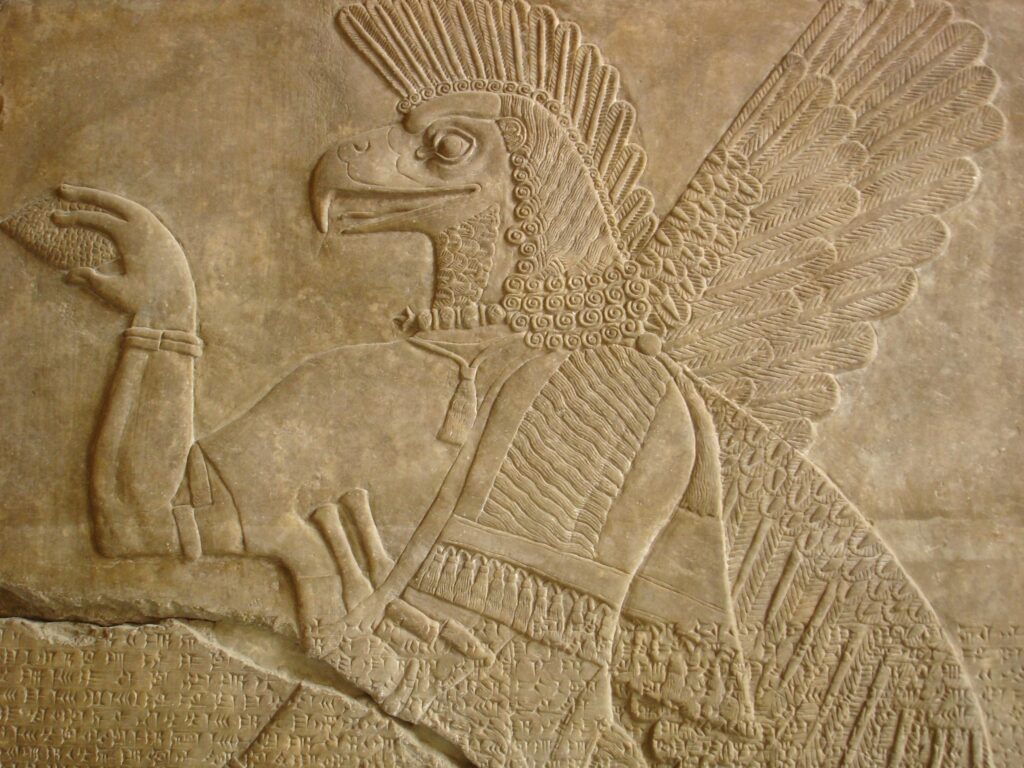
Babylonia: The December and January Born: The earliest beginnings of astrology can be traced back to the Babylonians, a civilization deeply interested in mathematics and the heavenly bodies. The Babylonians excelled in astronomy and mathematics primarily for astrological purposes. They were the original systems thinkers – people who looked at chaos and saw patterns.
If you were born in late December through late January, your personality archetype fits Babylonian culture like a glove. These are the people who write their grocery lists in categories. Who know where every document is, even when the desk looks like a crime scene. The Babylonian personality type is driven by a genuine need to impose order on the world, not out of fear, but because they can see the underlying structure that everyone else is missing. The Code of Hammurabi, created by the Babylonian king around 1754 BCE, is one of the earliest written legal codes, and that instinct – to codify, standardize, and make the world fair through structure – is deeply characteristic of the late-December to late-January personality. They make incredible parents, actually, because their kids always know the rules. Which can be both a comfort and, depending on the kid, a source of significant eye-rolling.
Ancient Egypt: The February and March Born: The Egyptian personality archetype is one of the most misunderstood of the six. People think Egypt and picture quiet, serene, maybe a little obsessed with death. That’s the monument talking. The actual cultural personality of ancient Egypt was profoundly life-affirming, deeply spiritual, and laser-focused on legacy.
People born in February and March tend to carry this intensity around meaning. They’re not just asking what to do with their life – they’re asking what their life is for. Ancient Egyptian religion centered on the pharaoh serving as an intermediary between the divine and human worlds, and the Egyptians believed in the afterlife, practicing mummification to preserve the body for the journey to the underworld. That sense of sacred duty, of acting in this life in ways that echo forward, maps directly onto the February-March personality archetype. These are the parents who plant trees they’ll never sit under, the ones who are already thinking about what they’re teaching their kids about values – not just rules.
The roots of the practice of reading meaning into birth go back to ancient civilizations such as Egypt, Babylon, and China, which means the Egyptians were doing this reflection long before anyone wrote a self-help book about it.
Ancient Greece: The April and May Born: This is the civilization that gave us the idea that asking questions out loud is not only acceptable but a civic duty. Ancient Greece emerged as a significant turning point where rational thought and empirical inquiry began to take precedence, and it was the Greek approach to knowledge – emphasizing the separation of natural laws from mythology – that catalyzed the evolution of science into a distinct discipline.
April and May personalities are relentlessly curious. They’re the ones in the carpool who say “but why does it work that way?” about absolutely everything. They love debate, but not the aggressive kind – the collaborative kind, where everyone leaves smarter. The Greek archetype is also stubbornly independent. They’ll take advice, but they’ll test it first. They’re the parents who explain the reasoning behind every household rule, which is wonderful until you’re in a hurry and your seven-year-old wants to debate the ontological basis of bedtime.
Carl Jung, the renowned psychologist who explored astrology’s archetypal symbols, suggested that astrology provides a language for understanding universal patterns of human experience, – and the April-May archetype, the Greek soul, is perhaps the most archetypal of all: the eternal student, the one asking the next question before the first one’s been fully answered.
Ancient China: The June and July Born: Chinese astrology dictates that an individual’s destiny can be decided by the placement of planets and other astrological phenomena at the time of a person’s birth. But the Chinese philosophical tradition goes beyond prediction. It’s about harmony. About knowing your role in a system larger than yourself, and filling that role with full commitment.
June and July personalities are the connective tissue of every group they belong to. They’re the ones who remember birthdays without a calendar reminder, who notice when someone at the table goes quiet, and who somehow make every gathering feel like home even when it’s in a parking lot. Ancient China placed enormous value on filial piety – the love and care of family – and on the understanding that individual wellbeing is bound up with collective wellbeing. Confucianism emphasized the importance of social harmony, filial piety, and the cultivation of moral virtues, and for parents born in June and July, this probably sounds less like ancient philosophy and more like their actual Tuesday.
The Second Half of the Year:
Ancient Rome: The August and September Born: Rome built an empire on administration, ambition, and the absolute refusal to accept that something couldn’t be improved. The Romans developed an elaborate system of standardized roads that connected Europe and made travel, trade, and warfare faster and easier. They were practical to their bones – not dreamers, but builders.
The August-September personality archetype shares that same drive. These are the birthday month personality traits of the organizer, the efficiency seeker, the person who redesigns the kitchen workflow while everyone else is still complaining about it. Roman culture was intensely civic – your reputation, your role in the community, your contribution to the whole – and August-September people feel this deeply. They want to be good at what they do, and they want that competence to matter to the people around them. Research has found that people born in January and February tend toward creativity, but it’s the summer-to-early-autumn window where something quieter but equally powerful emerges – a kind of methodical precision that Rome would have recognized instantly.
As a parent, the Roman archetype is the one with the color-coded family calendar and the emergency kit in the car. Their kids are probably the most prepared kids at school. Whether they’re the most relaxed is a separate conversation.
The Maya: The October, November, and December Born: This is where it gets interesting – and where the answer to “which ancient civilization are you based on birth date” takes its most unexpected turn.
Astrology for the Maya was not about natal divination or a zodiacal system but the organization of time, which they recorded in great detail. The Maya are famed for creating the most accurate of ancient calendars from their careful and thorough observations of the sky. Maya culture was built around the deep awareness that everything cycles. Nothing is ever truly linear. Endings are beginnings. A priestly elite kept astronomical and calendrical knowledge, recording it with a sophisticated writing system.
People born in October, November, and the first half of December carry this cyclical awareness in their bones. They’re the ones who see patterns in situations everyone else thinks are random. They understand that people and relationships and families move in seasons. They tend to be the most perceptive people in the room, often sensing a shift in the air before anyone’s said a word. The Mayan archetype is intense, yes – but the intensity is directed inward as much as outward. These are the parents who do the emotional work. Who think carefully about how their own upbringing is shaping how they parent. Research has found links between birth season and temperament – particularly in cyclothymic and hyperthymic tendencies, which describe rapid cycling between high and low moods and a generally elevated sense of awareness, traits that would have found a natural home in a civilization that tracked time as a living, breathing force.
What do Ancient Civilizations Have to do With Your Personality?
Astrology has shaped civilizations for centuries, from Babylonian priests to Roman emperors, and continues to provide guidance for younger generations seeking clarity today. What historians have done here is flip the lens. Instead of asking what the stars say about you, they’re asking: which civilization would have claimed you? The answer isn’t just fun – it’s a surprisingly useful mirror.
The Science That Makes This More Fun
Look, you’re a grown adult. You don’t need to believe that the universe stamped your soul with a zodiac sign at birth to find value in birth date personality archetypes. The science here is genuinely interesting on its own terms.
There is a significant association between season of birth and personality traits. Season of birth is often considered when assessing environmental impacts associated with psychological and psychiatric phenomena. It’s a non-specific environmental variable that includes various lifestyles, including latitude, sunshine, nutrition, infection, and stress. That’s peer-reviewed material from PLOS ONE, not a personality quiz from a cereal box.
A flurry of studies in recent years profiled the temperaments of college students and adults and traced them back to birth seasons, looking for broad seasonal patterns – and consistently, if preliminarily, found them. Nothing is deterministic here. Time magazine puts it plainly: “your personality is much less about the season you’re born than the things you experience in all of the many seasons of life that follow.” But the seasonal influence is a starting point – a tendency, not a sentence.
What makes the ancient civilization matching so compelling is that it takes those tendencies and gives them a cultural home. It’s one thing to read that autumn-born people show a slightly higher score on novelty-seeking measures. It’s another entirely to think: oh, that’s the part of me that would have fit right into the Mayan temple district.
Which Ancient Civilization Would You Have Belonged To?
The honest answer is that you probably contain more than one. Most people do. You might recognize your relentless organizational streak in Babylonian culture and your emotional radar in the Mayan worldview. The power of your birthday is determined not just by one factor but by a number of invisible influences and patterns in place the day you were born, reaching through the lens of psychological astrology, numerology, tarot, and other ancient arts.

But if you had to land somewhere – if someone pointed at a map of the ancient world and said, “You belong here” – the birthday personality archetype based on history gives you a genuinely interesting place to start. Not because it tells you who you are with certainty, but because it hands you a frame that’s been pressure-tested across millennia.
Astrology has profoundly shaped civilizations across millennia, despite criticisms from skeptics who cite its lack of empirical evidence and scientific rigor. But the question of what birth date personality archetypes based on history reveal about us isn’t really an astrology question. It’s a human one. We’ve always wanted to know whether our moment of arrival in the world left some kind of mark. Six civilizations – each brilliant, each distinct – suggest that maybe it did.
The next time you’re doing that late-night laundry and the documentary mentions ancient Babylonian sky-watchers, maybe don’t dismiss the instinct to see yourself in them. The Babylonians were obsessed with understanding human personality through the lens of birth and the cosmos. So were the Greeks, the Egyptians, the Chinese, the Romans, and the Maya. That’s six wildly different civilizations across six wildly different eras, all independently concluding the same thing: when you were born matters. They were probably onto something.
Disclaimer: This article was written by the author with the assistance of AI and reviewed by an editor for accuracy and clarity.