

You know the feeling before you’ve even fully opened your eyes. The chest is already tight. The thoughts are already moving. Something is wrong, or might be wrong, or will be wrong by afternoon – you’re not entirely sure which, and the uncertainty is doing most of the heavy lifting. The clock says 6:47 a.m. You haven’t checked your phone. Nothing has happened yet. And still, here you are.
Morning anxiety is one of those experiences that is both completely common and bizarrely hard to explain to anyone who hasn’t had it. It doesn’t behave the way anxiety is supposed to behave – as a response to something. It’s already running when you arrive. It has beaten you to your own morning, set up camp, and is waiting with a list of things you forgot to do yesterday and a preview of everything that could go sideways today. The question most people end up asking, usually around the third time this happens in a week, is: why does this happen before the day has even had a chance to be bad?
The answer is more specific than “stress,” and understanding it doesn’t make the anxiety disappear – but it does make the 6:47 a.m. version of yourself feel slightly less like something is permanently broken. There are real, documented reasons this happens.
Your Body Has Already Started the Day Without You
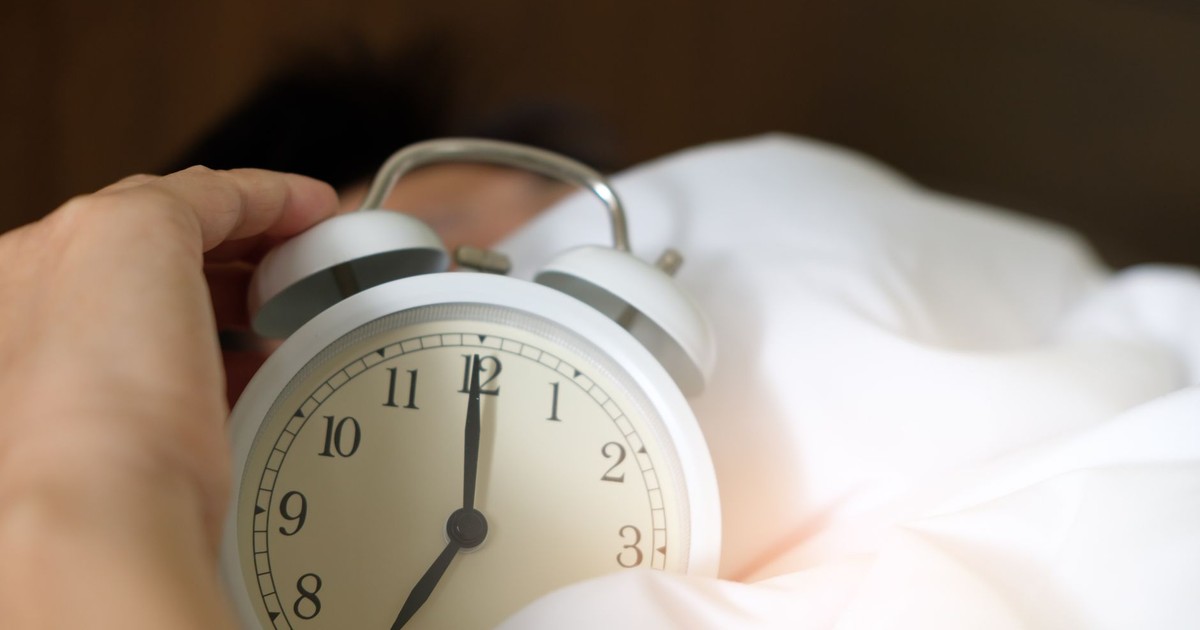
The most concrete explanation for morning anxiety causes sits inside a biological process most people have never heard of: the cortisol awakening response, or CAR. The cortisol awakening response refers to a phenomenon characterized by a significant increase in cortisol levels following morning awakening. Cortisol is the body’s primary stress hormone, the chemical that tells your brain and body to get ready for demands. Every single morning, whether you have anything stressful planned or not, your adrenal glands flood your system with it.
Within the first 30–45 minutes after waking, cortisol levels rise substantially from their baseline — a normal part of the body’s process of mobilizing energy and increasing alertness for the day ahead. That spike happens before you’ve drunk any coffee, checked any notifications, or remembered anything you’re behind on. For most people, this is just the engine turning over. For people already prone to anxiety, it’s more like a car alarm going off in a quiet neighborhood at dawn. The body intended it as a gentle ignition. It registers as a five-alarm situation.
Alterations of the cortisol awakening response – either insufficiently low or excessively high cortisol levels upon awakening – are associated with stress-related disorders such as cardiovascular disease, major depression, and anxiety. The body’s attempt to prepare you for the day can tip an anxious nervous system into that tight-chest, racing-thoughts state before breakfast.
Your Brain Did Homework Overnight

The brain doesn’t fully stop processing during sleep. It sorts, consolidates, and anticipates. If you went to bed with unresolved stress – a difficult conversation, a deadline, a worry you were too tired to deal with properly – that material doesn’t get filed neatly away. It stays active.
The cortisol awakening response has been hypothesized to prepare the body for anticipated demands of the upcoming day, and a 2024 PubMed study found that anticipated stress is predictive of the CAR on the following morning, with higher anticipated stress associated with increased cortisol levels at post-awakening time points. The stress you were anticipating yesterday influences how much cortisol floods your system tomorrow morning. Your body is pre-loading anxiety based on what it expects the day to ask of it. Physiologically, it’s trying to help. Practically, it’s catastrophic for anyone who already carries chronic worry.
This pattern is particularly pronounced in overachievers, perfectionists, and chronic problem-solvers, whose brains stay “on call” even at night, ready to receive more information and stay “ready” in case of a threat. If you’ve spent decades being responsible for a lot of things – a household, children, a career, aging parents, a mental list that never fully empties – your brain has essentially trained itself to never fully stand down. The cortisol awakening response then has a very eager audience.
Sleep Quality Is Part of the Equation

Anxiety can make it harder to fall asleep or stay asleep, while poor sleep makes stress feel much more intense the next day. Sleep and anxiety don’t just relate – they feed each other, each making the other worse.
A 2024 cross-sectional study analyzing data from nearly 10,000 Korean adults found that sleep duration of less than six hours, evening chronotype, and social jet lag of more than two hours were significantly associated with a high prevalence of anxiety disorders in women. The chronotype finding is particularly striking: women who are natural “evening types” forced by school runs, work schedules, and general life to wake up early are operating in a kind of permanent biological mismatch. Their bodies would prefer to wake at 8 or 9; instead they’re up at 6, and their nervous systems are paying for it. The sleep disruption and anxiety cycle disproportionately affects mothers, precisely because their schedules are so rarely their own.
Fragmented sleep – waking once or twice in the night, getting six hours instead of eight across a run of days – compounds the problem without ever tipping into what most people would call “bad sleep.” You didn’t lie awake for hours. You just didn’t get quite enough, or quite the right kind, repeatedly. Research consistently shows that partial sleep deprivation impairs emotional regulation, leaving you with a shorter fuse, a louder inner critic, and less capacity to talk yourself down from that first cortisol hit.
When Morning Anxiety Points to Something Bigger

Morning anxiety is not an official diagnosis. You won’t find it listed in any clinical manual. It’s a pattern – one that can exist on its own, or as a regular symptom of something broader. Medical News Today notes that although it is common to wake up feeling anxious occasionally, if a person does so frequently, it may indicate generalized anxiety disorder: a condition that causes uncontrollable and excessive worrying that affects everyday life, and which may cause a person to wake up due to anxiety or have difficulty falling or staying asleep.
Generalized anxiety disorder, or GAD, can look exactly like morning anxiety for long stretches before anyone names it. The worry is not attached to one specific thing – it moves. Today it’s money. Tomorrow it’s a health symptom you half-noticed last week. The day after, it’s whether you said the wrong thing at school pickup. Morning anxiety often comes with heightened symptoms right when you wake up, driven by elevated cortisol levels and stress, and these feelings can be intense but typically subside as the day progresses. With GAD, the subsiding doesn’t really happen – the anxiety relocates rather than resolving. The morning spike is just the loudest version of something running at a lower volume all day.
According to a psychologist writing for Forbes, “One major reason people wake up with anxiety could be chronic stress and our bodies being in a constant state of fight or flight. Even if we are shutting it down for a few hours, anxiety will quite literally be there waiting for us to wake up.” The nervous system doesn’t take the night off when chronic stress has been running long enough. It pauses, briefly, and resumes.
The Role of Rumination (And What It Does While You Sleep)
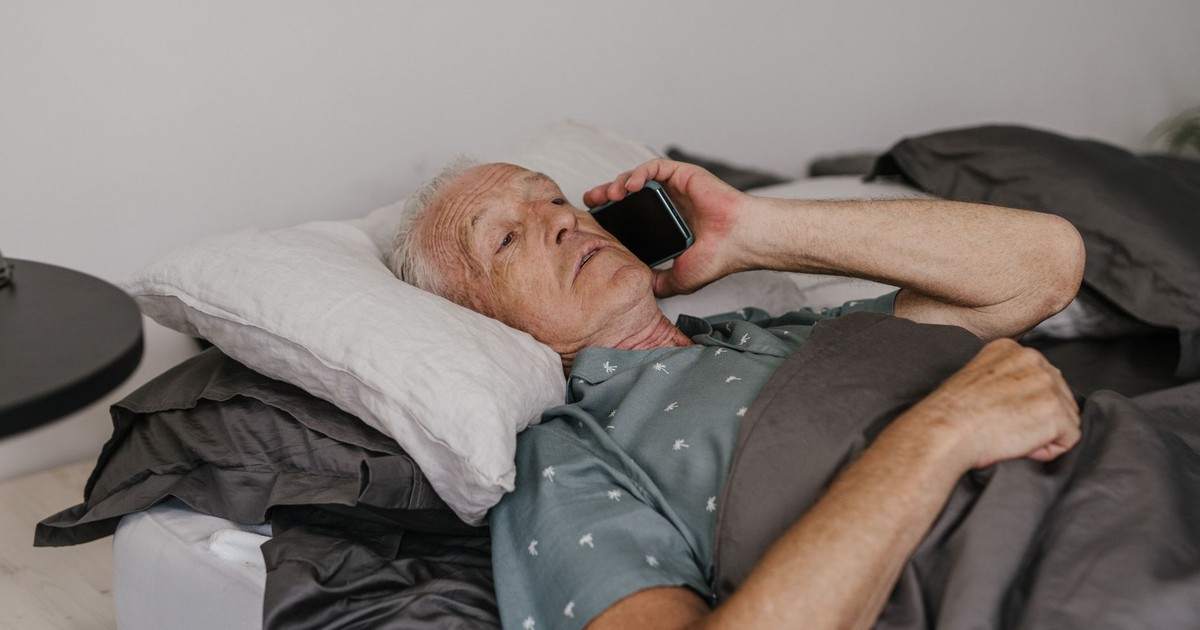
Rumination is the technical term for what most people would describe as “going over things in your head” – not problem-solving, not planning, just replaying. The same conversation, the same worry, the same worst-case scenario, slightly rearranged each time. It is extraordinarily common, and it is extraordinarily bad for morning anxiety.
Evening rumination – lying in bed running through the day’s frustrations, pre-loading tomorrow’s problems – doesn’t just make it hard to fall asleep. It also primes the cortisol awakening response for the next morning, reinforcing the anticipatory stress loop described above. The mind that chews on problems at 11 p.m. hands them directly to the body that wakes at 6 a.m. The handoff is seamless.
Biological rhythms, cognitive patterns, and stress responses that activate automatically can all prime the brain for a heightened morning state. The rumination and the cortisol and the poor sleep and the chronic background stress are not four distinct causes – they are one continuous system, each element reinforcing the others. Morning anxiety is rarely the product of a single cause; it’s the output of a system that has been running hot for a while.
Genetics, Chronotype, and the Things You Didn’t Choose
Some people are simply more predisposed to anxiety than others. This is not a character flaw or a failure of resilience – it is biology. People with a personal or family history of anxiety may be more at risk than others, but anyone can develop anxiety. Genetic vulnerability affects how sensitively the hypothalamic-pituitary-adrenal axis – the body’s central stress-response system – reacts to triggers, including the cortisol awakening response.
Chronotype matters too. “Larks,” people whose internal clocks naturally orient them toward morning, tend to have a steeper and faster cortisol awakening response at dawn. In most people, that produces the crisp morning alertness that early risers describe and night owls cannot comprehend. In anxious individuals with an already-reactive stress system, a steep cortisol awakening response can tip from alertness into full dread before the alarm has finished sounding.
None of these factors – the CAR, the anticipatory stress, the sleep disruption, the rumination, the genetic predisposition – are things you caused. They are things happening in your body, shaped by biology and reinforced by circumstance. The anxiety arrived before your brain was fully awake to supervise it. You didn’t summon it. You woke into it.
What You’re Actually Waking Up To
The most disorienting part of morning anxiety is how convincing it is. It arrives with the full weight of certainty – something is wrong, something will go wrong, you are already behind – without any specific evidence to examine. That certainty is the CAR. That is cortisol arriving in a nervous system primed by anticipatory stress and depleted by imperfect sleep. It is real. It is physical. It is not a character assessment.
Morning anxiety causes, at their core, a collision between a biological process designed to help you and a nervous system that has learned to treat “prepare for the day” as equivalent to “brace for impact.” The two have become the same instruction. That conflation didn’t happen overnight, and it doesn’t resolve overnight either. Knowing that your body fired up before your brain was awake to supervise it changes the conversation you have with yourself at 6:47 a.m. You’re not irrational. You’re not broken. You woke up at the wrong moment in a very normal chemical process, in a body that has been on alert for longer than it should have been.
Some of these patterns go back further than the past week or the past year. Naming that isn’t a solution – but it’s usually where any real conversation about it starts.
Disclaimer: The information provided here is for educational and informational purposes only and is not a substitute for professional psychological, psychiatric, or mental health advice, diagnosis, or treatment. Always seek the guidance of a licensed mental health professional, therapist, psychologist, or psychiatrist with any questions or concerns about your emotional well-being or mental health conditions. Never ignore professional advice or delay seeking support because of something you have read here.
AI Disclaimer: This article was created with the assistance of AI tools and reviewed by a human editor.