

Most women can name the exact moment they realized a man was doing something genuinely sweet – not because he announced it or expected applause for it, but because it landed without any of that noise. He remembered a throwaway thing she mentioned three weeks ago. He got up to refill her glass before she finished asking. He defended her in a room where she wasn’t there to hear it. Those moments collect, and they’re the ones still remembered years into a relationship when the grand gestures have long since blurred together.
The trouble is that dating in 2026 is awash in performance. For women, the rise of the performative male can feel like progress on the surface, but it can also come across as exhausting – another form of labor to sift through, trying to discern which men are genuine and which are simply wearing a costume. It’s gotten harder to trust the flower delivery when you’re not sure whether he ordered it because he was thinking of you or because he’d seen it on someone else’s Instagram story.
The twenty behaviors below – ten that genuinely move women, ten that reliably don’t – are rooted in what research and lived experience keep pointing back to: authenticity is magnetic and performance is, eventually, exhausting to be around.
1. Remembering the Specific, Useless Detail

He knows your coffee order. He remembers the name of your college roommate who wronged you in 2011. He brings up a podcast episode you mentioned in passing two months ago and asks if you ever finished it. None of this requires a particularly good memory – it requires paying actual attention, which is rarer than it should be.
A 2023 Human Nature study of 17,254 single heterosexual women across 147 countries found that preferences for “kindness-supportiveness” remained consistently high regardless of a woman’s age — women across the full age range, 18 to 67, rated it among their top priorities in a long-term partner. Remembering the small things is kindness made concrete.
The memory doesn’t even have to be impressive. It just has to be real. “Didn’t you say your sister’s recital was this weekend? How did it go?” is worth more than any elaborate gesture that required a credit card but not a single moment of actual attention.
2. Being Gentle With Something She Loves That He Doesn’t Get

He’s not a dog person. He is, however, a person who greets her dog with genuine warmth every time he walks through the door, because he understands that the dog is not up for debate. He asks about her mother with real interest even though her family dynamics make his head spin. He sits through a movie that is absolutely not made for him and doesn’t make it a whole thing.
This is what respect actually looks like in daily life – not a grand statement about accepting someone fully, but the daily practice of treating the things she loves as worthy of care even when they’re not your things. She watches how he handles the parts of her life that offer him nothing, and that tells her everything.
The inverse is immediate and readable. The man who makes a face at her taste in music, mocks the show she watches to decompress, or passive-aggressively tolerates her interests communicates his priorities more clearly than he probably intends to.
3. Defending Her When She’s Not in the Room
She finds out later, always. Someone mentions that he corrected a friend who said something dismissive about her career. He told his mother – his mother – that a comment she made was unkind. He didn’t do any of it to be reported back; he did it because it was the right call in the moment. The fact that she found out at all was an accident.
A man who advocates for his partner in private, without the performance of doing it in front of her, is demonstrating something far more durable than chivalry. He’s demonstrating integrity.
The defense doesn’t have to be dramatic. Sometimes it’s just declining to laugh at a joke at her expense. Sometimes it’s simply changing the subject when someone says something unfair about her. The size of the act is almost irrelevant. The fact that it happened when she wasn’t watching is everything.
4. Showing Genuine Curiosity About Her Inner Life

Not “how was your day?” as punctuation – as an actual question. He follows up. He asks what specifically made a meeting frustrating rather than accepting “it was fine” as a complete answer. He wants to understand how she thinks about things, not just what happened to her. He asks about the friend she mentioned having a falling out with three months ago, not because he tracked it on a spreadsheet but because he actually wondered.
Genuine emotional attentiveness registers as both warmth and competence. Curiosity about a partner’s interior life – the specific, follow-up kind – is one of the more reliable signals that someone is actually present rather than performing presence.
The curiosity that moves women is specific. “Tell me more about that” works. “So what did you actually think about it?” works. “That’s interesting” followed by an immediate pivot to his own story does not.
5. Physical Affection That Asks for Nothing Back

He reaches for her hand in the car. He puts a hand on her back walking into a room. He kisses her on the forehead and keeps moving. None of these are setups; they’re just contact. Small, habitual, non-negotiating touch that says “I like being near you” without requiring anything from her in return.
Couples with strong, lasting bonds keep expressing affection in simple ways – holding hands, hugging, sitting close, a kiss on the cheek before heading out – because these small acts reinforce emotional closeness. The touch that registers as genuinely sweet is the touch that carries no agenda.
The version that doesn’t land is the touch with subtext – the one that starts warm and becomes a request. Non-transactional affection is a different animal entirely, and women know the difference within the first second.
6. Taking Something Off Her Plate Without Being Asked
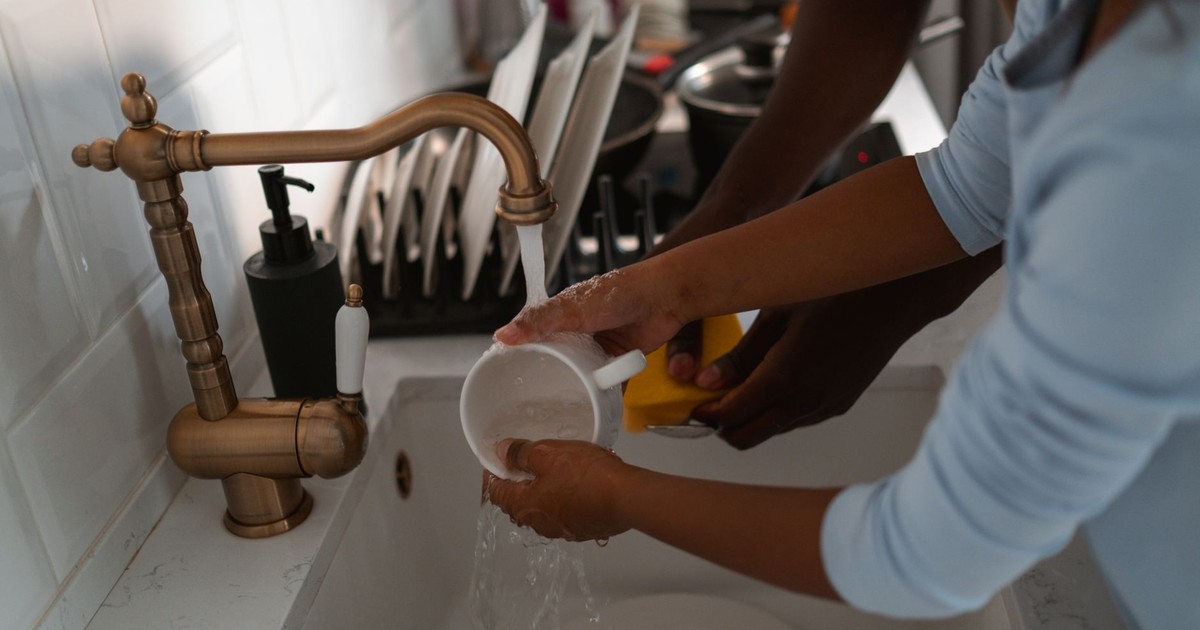
He just did it. The thing that had been sitting on the invisible to-do list that lived in her head rent-free for two weeks. He noticed, he handled it, and the first she knew about it was that it was done. He didn’t need a medal for it. He didn’t announce it. He just saw that it needed doing and did it.
The term “mankeeping” – coined by Stanford postdoctoral fellow Angelica Puzio Ferrara and published in Psychology of Men and Masculinities – refers to the emotional labor that many heterosexual women end up shouldering in romantic relationships, including acting as their partner’s informal therapist, social coordinator, and emotional manager. Against that backdrop, a man who can read the room and act on what he sees without needing to be directed, reminded, or thanked in advance is not just doing his fair share – he’s actively reducing her cognitive load.
The key is the “without being asked” part. Helping enthusiastically when asked is perfectly fine. Doing it unprompted, with no expectation of credit, is something else entirely.
7. Being Genuinely Kind to Service Workers

She watches. She always watches. How he treats the server who got something wrong. Whether he says thank you to the person bagging groceries. Whether he’s patient with the phone support rep who clearly had nothing to do with the problem he’s calling about. His behavior in those moments is not performed for her – he doesn’t know she’s taking notes – and that’s exactly why it matters.
Data from the 2024 Evolutionary Psychology study showed that kindness played a pivotal role not only in initial attraction but also in ongoing relationship satisfaction after people coupled up. A man who is kind in the moments that don’t benefit him directly is demonstrating his actual character, not his social intelligence. The two are not always the same thing.
The man who is charming to her and dismissive to the waitress is showing exactly who he is. Most women have learned this particular lesson at least once, and they don’t forget it.
8. Making Her Laugh on a Hard Day

Not deflecting with humor when she needs to be heard. Not using a joke to avoid the heavy conversation. The specific, welcome version: reading that today is a day for comedy rather than gravity, and delivering it. The impression he does of a co-worker that is accurate enough to be funny. The willingness to be ridiculous for her benefit on a Tuesday when everything felt like too much.
A study involving 130 married couples found that a wife’s use of humor predicted greater marital stability over six years — but only when it lowered her husband’s heart rate. The broader finding holds in both directions: humor that serves the other person, rather than the person performing it, is the version that actually strengthens the bond.
The distinction between sweet and annoying is timing and read. He read the room correctly. He knew she needed to laugh more than she needed to talk. That particular skill is underrated and not as common as people think.
9. Saying the Hard Thing Kindly
He told her the truth about the situation even when it was easier not to. He didn’t agree just to avoid conflict. He didn’t lie by omission. He picked the honest answer and found a way to deliver it that wasn’t cruel – which is a much harder combination to pull off than either lying or blurting the truth without care.
Emotional intelligence in this context means knowing how to hold two things at once: the truth and the relationship. It’s easy to be honest and brutal. It’s easy to be kind and dishonest. Finding the narrow path that is both honest and kind requires actually caring about the other person, and that caring is what women detect.
The cultural script equates honesty with bluntness and kindness with softening hard truths until they disappear. The sweet version is neither. He respected her enough to tell her the real thing, and he cared enough to say it well.
10. Sitting With Her in the Difficult Thing
He didn’t try to fix it. He didn’t offer four solutions in the first ninety seconds. He just stayed. He asked questions. He let her be in the middle of the hard thing without rushing her to the resolution. He was more interested in understanding what she was going through than in making himself feel useful by solving it.
Communication, respect, and emotional vulnerability are consistently among the most attractive qualities men can demonstrate in relationships. All three are present simultaneously when a man simply stays in a difficult moment without converting it into a task.
The opposite version – the problem-solving pivot, the “well have you tried..” response, the way some men seem physically incapable of hearing a feeling without converting it into a task – is not malicious. But it is exhausting. The man who can just stay, without fixing, is doing something genuinely rare.
Now for the ten things that feel performative.
11. Grand Public Gestures at Significant Milestones

The flash mob proposal. The billboard. The one hundred roses at the office. These are gestures designed to be witnessed, photographed, and shared – and there’s nothing inherently wrong with that, except that they communicate very little about the relationship itself. They communicate something about his willingness to spend money and organize logistics. They don’t communicate that he knows her.
The scale of a gesture is not evidence of its sincerity. The personalization of a gesture is. A grand gesture that is also specific to her as a person is a different thing entirely. But the grand gesture as substitute for actually knowing her? She can smell it.
12. Complimenting Only the Physical, Always

He tells her she looks beautiful constantly and says very little about anything else. Which is a kind thing to say, for the first thirty or forty times. But if the compliments never make their way to her ideas, her humor, her judgment, her opinions on anything at all, the pattern starts to read less as devotion and more as a limited scope of attention.
Women are paying attention to the whole person, not just the surface. A partner who only engages with the surface is communicating, whether intentionally or not, that the surface is all he’s really seeing.
13. Social Media Affection That Has No Private Counterpart

The birthday post with the four paragraphs and the eighteen throwback photos. The anniversary caption. The public “I am so lucky” proclamation. None of which he has said out loud to her, in a room, in recent memory. Performative intimacy is nothing new – it’s just Instagram with candles, and genuine connection is built offline, not in the comments section.
Women are perceptive about this particular disconnect. When the public gesture is consistently louder than the private one, the public gesture stops functioning as evidence of love and starts functioning as evidence of image management. She doesn’t need the caption. She needs the Tuesday.
14. Helping Ostentatiously With “Her” Tasks

He unloads the dishwasher with the energy of someone completing a triathlon. He announces that he’s going to do the grocery shopping “this week” and then discusses this decision for approximately four minutes longer than the task itself will take. He wants some acknowledgment that he is actively participating in domestic life, which would be perfectly understandable if he didn’t require quite so much acknowledgment per individual task.
The issue is not the help. Help is welcome. The issue is the accounting – the implicit expectation that noticeably pitching in earns a withdrawal from some emotional debt she is carrying. Genuinely helpful is quiet. Performatively helpful comes with a subtle invoice.
15. The Weaponized Vulnerability Monologue

He opens up – really opens up – usually around the time something has gone sideways between them, or when he senses her pulling back. The emotional disclosure arrives with excellent timing. It has the architecture of vulnerability: the admission, the backstory, the implication that she is the only one who has ever really gotten through to him. And yet something in her is not quite moved.
Real vulnerability is not timed for maximum effect. It tends to arrive inconveniently, without narrative polish, and usually involves some discomfort for the person sharing it. The version that arrives perfectly packaged is worth examining.
16. Performing Feminism as a Dating Strategy

He mentions his female friends. He brings up the pay gap. He uses phrases like “emotional labor” correctly in a sentence and makes sure she knows it. All of this can, of course, be completely genuine – many men are genuinely thoughtful about these things. The version that registers as performance is when the language and the behavior don’t match: he says all the right things and then, as the months pass, the actual patterns of the relationship tell a different story.
Women who have encountered this particular dynamic tend to become very good at noticing when what someone says and what they actually do diverge. It usually doesn’t take long.
17. Gift-Giving as a Substitute for Presence

He buys her good things. He remembers birthdays and anniversaries in the sense that he purchases something appropriate for them. The gifts are often very nice. What she actually wanted was for him to be present – in the conversation she tried to have three times, in the situation that required his attention, in the version of intimacy that can’t be outsourced to a retailer.
Gifts mean something. They mean less when they are a replacement for something harder to give.
18. The Elaborate Gesture After the Argument

He made a mistake. The mistake was significant enough that something had to happen. So something happened: he arrived with her favorite meal, or he organized a weekend away, or he wrote a long message that took him several drafts. The gesture is real and probably came from a real place. What it is not, necessarily, is a repair.
Grand repairs that are not followed by actual behavioral change are a specific kind of exhausting, because they require her to receive the gesture sincerely and also somehow hold the unresolved thing that the gesture has not actually addressed.
19. The “I’m Not Like Other Guys” Framework

He says it, or he implies it, usually early on. He is different. He is more evolved, more emotionally aware, more respectful than the men she’s been dealing with. He may even enumerate specific ways in which he is distinguishably better. This is, if nothing else, a very interesting opening position.
Women have learned, often from experience, that the man who spends the most energy distinguishing himself from other men is frequently the most recognizable installment of the type he’s claiming to transcend.
20. The Publicly Doting but Privately Absent Partner

He is exceptionally present at parties. He brings her drinks, introduces her warmly to people, keeps a hand on her at social events in a way that reads, from the outside, as deeply attentive. Privately, he is on his phone, distracted, or simply not there in any of the ways that count. The performance is genuinely impressive. It is only on the inside that the structure holding it up is visible.
Women who live inside this dynamic know exactly what it feels like to be well-represented and poorly seen at the same time. The social proof of his affection is impeccable. The actual experience of being known by him is something else.
Read More: 9 Habits of Couples Who Keep the Spark Alive, No Matter How Many Years They’ve Been Together
What Separates One From the Other

The line between genuinely sweet and performative is not about effort or cost or even intention. It’s about audience. Gestures performed for her – for the specific, private version of her that exists in ordinary life – tend to land differently than gestures performed for the relationship as a social object, for external validation, or for the relief of having done a visible thing.
When people do choose a relationship, they’re looking for someone genuine and authentic. That shift explains why so many women are getting better at naming what they actually want: not the performance of care, but the practice of it. Not the gesture that photographs well, but the one that arrives on an unremarkable Wednesday with no occasion to justify it and no audience to appreciate it.
The things men do sweet that actually register are almost always the ones he didn’t announce. The ones that weren’t planned for maximum impact. The ones that nobody else in the room clocked, but she did, immediately, and filed away somewhere she won’t forget.
The Thing Nobody Says Out Loud
A particular kind of weariness accumulates when a woman has spent long stretches of a relationship being impressed and not quite known. The grand gestures were there. The public warmth was there. And still, at the end of a hard Thursday, she was essentially alone in it, because he was already three steps ahead trying to fix what she hadn’t finished describing yet.
That weariness is not about wanting less from a partner. It’s about wanting something different. The things men do sweet that actually last – the ones that build something durable rather than dazzle briefly – are almost never the things that required an audience. They’re the things that happened because he was paying attention when nobody was watching and nobody was keeping score. The remembered detail. The handled task. The stayed-in conversation. None of it photographs well.
AI Disclaimer: This article was created with the assistance of AI tools and reviewed by a human editor.